



The sirens may have faded, but the echoes of displacement linger long after you cross the border. It echoes in the mind that never rests. It catches you off guard when you are least prepared, and for a moment, you’re clueless on how to keep going.
It’s never easy starting over when you’re forced to abandon everything and flee to a different country. In the span of a single heartbeat, your home, your life, your entire history, all ruthlessly stripped away.
You are left standing in an unfamiliar landscape where even the very air feels heavy and foreign. Yes, Egypt has always felt like a home to me — perhaps because we spent our childhood summer holidays there, or because my mother is Egyptian, a beautiful, grounding detail that connects me to this soil. But visiting during holidays and knowing you’ll be returning to Sudan is not even remotely the same. It strips away the feeling of belonging.
It feels strangely like COVID-19 — a surreal reality where everything outwardly looks the same, but the internal world is completely shattered, leaving you entirely unsure of how to process feelings. It is a sudden, collective disorientation where the life you spent decades building vanishes into thin air, yet survival demands that you keep moving. Act now, process later. You force yourself to adapt on autopilot, just to get through the day. It helps that even in displacement, we are surrounded by familiar, beloved faces from back home. Yet, when we look at each other, the pain is undeniable. Somewhere underneath the brave fronts, there is a crushing heaviness behind every smile, buried deep within a sea of unspoken words.Unspoken words that ultimately build up to form invisible knots that settle permanently, hindering whatever good moments come your way.
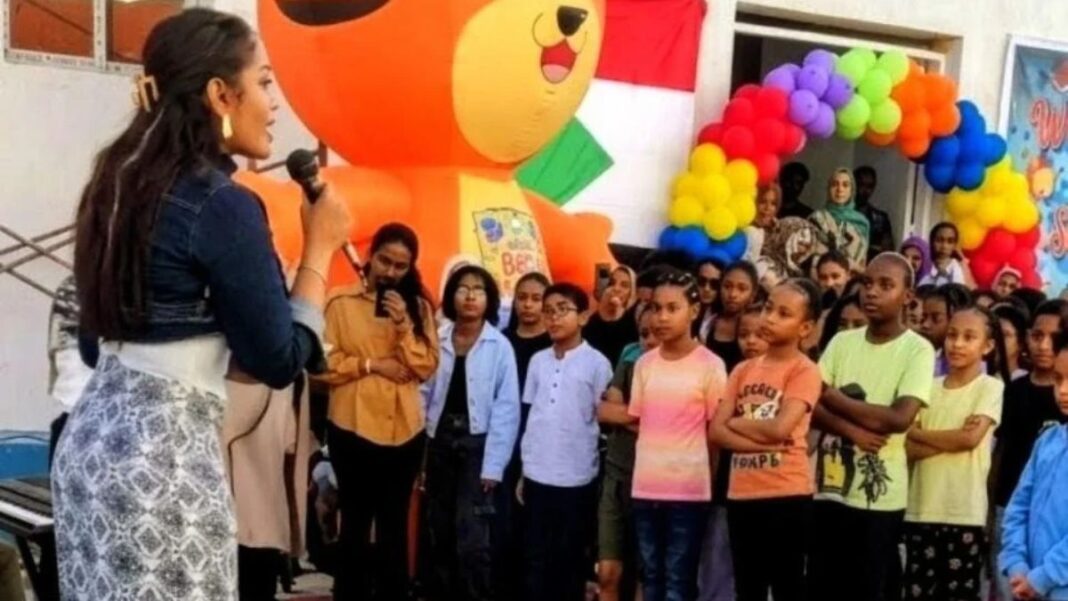
Adapting is a challenge that demands everything from you when you feel you have nothing left to give. The thing is, when you’re a teacher, there isn’t much time to dwell. There’s no time to focus on how you feel about it all. No time to process the sudden shift. There is only one objective — to teach those kids how to survive it, bring out the best in them and push them to focus on their future.
Your own heart might be heavy with the weight of everything you left behind, but the moment you step into that classroom, your grief has to wait. For me, that’s probably the most challenging part. You look into the eyes of children who have seen things no child ever should, and your own fear dissolves into a fierce determination to protect them. On some days, you swallow your burdens so they can find their smiles. You tuck away your own trauma so you can build a safe harbour for theirs. Every lesson plan becomes a life lesson, and every classroom a safe space.
Yet, we were blessed in so many ways that I thank God every day for. For me to be able to continue doing what I’ve been doing for the last 23 years is indeed a blessing. Even if I don’t feel like the same person on the inside, I’m still the same teacher who walks into that classroom. Ready, determined and striving to extract those students’ full potential. I do not have the luxury to fall apart, because as teachers , we are the anchor they need to hold onto while everything else is drifting away.
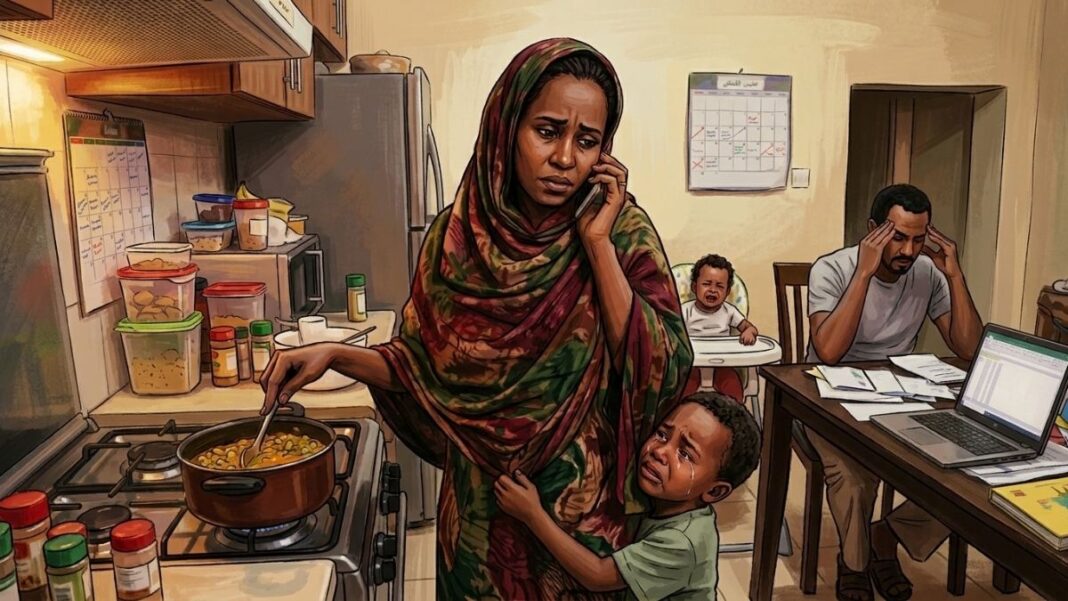
And yet, on those heavy mornings when the weight of the world makes it a struggle just to drag myself out of bed, my mind drifts back. A haunting thought lingers constantly in my subconscious: what about the students we left behind? If we are barely coping here, surrounded by safety and considerable stability – what must it be like for them back home in Sudan? I ache thinking about the teachers there, trying to deliver hope under the most dire, impossible circumstances. I think of the parents, drowning under the high cost of education while trying to provide the bare essentials. I think of students fractured by separation from family and friends, fighting a daily battle just to adapt, learn, and grow among the ruins.
Every day as an English teacher, my classroom transforms into a battleground for their hearts and minds. Standard lesson plans won’t cut it here; instead, I pour my energy into making every lesson have just enough spice and humour to mask the reality. I have to pull out every creative trick in the book, turning syntax into survival tools and essays into grounds for self expression. It takes an exhausting level of imagination to break through to the high schoolers, who mask their raw insecurities behind total defiance, testing even my 23 years of experience. However, I refuse to take the bait of their hostility. The secret is looking past the eye-rolls and sharp remarks to see the insecurities underneath. Beneath all that is a kid who had to lock away pieces of an abandoned home, bury the vision they had for their lives, and force themselves to accept this new reality. When I look at them, I don’t see troublemakers. I only see their vulnerability.
So from time to time, I practice the pause,for myself and for them. I gently bring their focus to the profound blessing we’ve been given. This fragile, yet beautiful second chance at life. A privilege stolen from a vast number of Sudan’s youth because of the war.
When the final bell rings and the classroom empties, the silence returns, and with it, a profound ache. I close my eyes and pour all my exhaustion, all my grief, and all my love into a silent, burning prayer for Sudan. I pray for our beautiful, bleeding Sudan. I may not have the courage to go back just yet, but still, I pray. More than anything, I pray for the youth of Sudan. Whether they are dodging the shadows of conflict back home or in foreign lands, I pray they find the strength to carry our history without letting it crush their spirits.
Today, although schools and universities are slowly returning in Sudan, the educational crisis has deepened into an even more devastating reality. Millions of children across the nation remain entirely cut off from formal learning as classrooms continue to serve as makeshift community shelters or lie ruined by conflict. For the teachers who stay, delivering an education under these dire circumstances is nearly impossible, often working without pay, stable infrastructure, or safety. Parents face the brutal, daily trauma of balancing the skyrocketing cost of scarce resources with the fading hope of schooling for their children. Caught in this crossfire are the students themselves. Separated from loved ones, displaced within their own borders, and enduring immense mental and physical strain as they fight to hold onto a future that the ongoing war threatens to steal away entirely.
A prayer for every child: May the words we teach them today become the very tools they use tomorrow to rewrite our nation’s story, proving to the world that though our buildings may fall, the brilliance and resilience of Sudan’s children can never be extinguished.

Nasreen Mukhtar is a writer and educator who believes that words are never just ’empty’ — they are the most powerful tools for transformation we possess. With 23 years of experience in educational leadership and a deep specialisation in ESL (English as a second language), she blends technical structure with a passionate commitment to the ‘soul’ of every message. Her mission is to bridge the gap between clarity and emotion, using her passion for storytelling to spark meaningful change and foster authentic self-expression. She doesn’t just write to inform; she writes to reach others on a deeper level.