


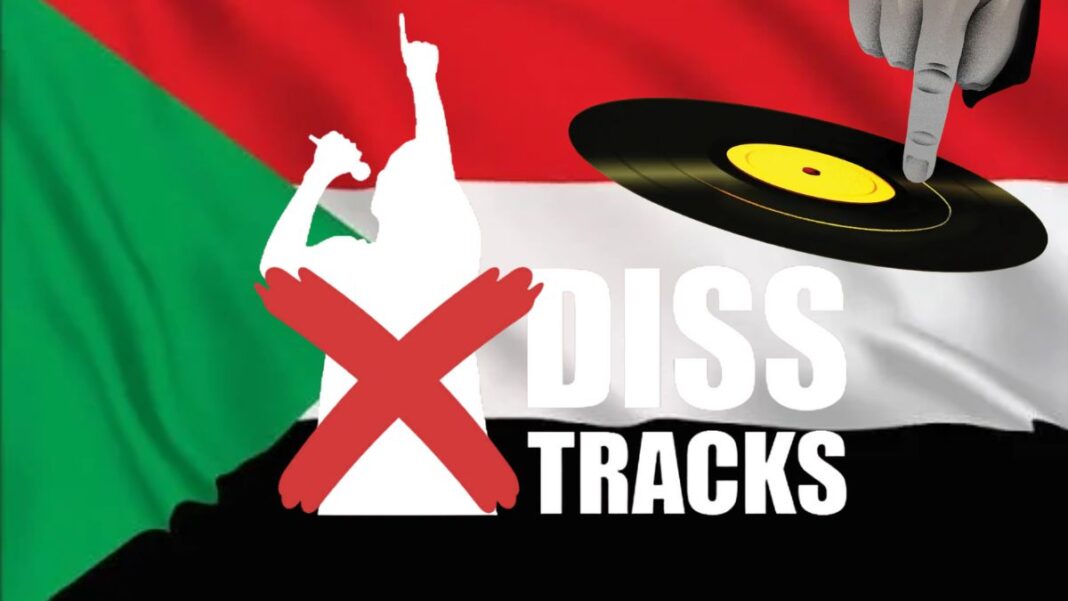
Sudanese hip-hop, a scene that has been growing for over two decades, has finally reached the international spotlight over the past five years.
Sudanese rap, the most major element of Sudanese hip-hop, is becoming more recognised globally for its authenticity, unique production, and its rappers’ smooth flows. Instead of expanding on its creativity, however, the scene is now one diss track away from turning into a battlefield.
The Sudanese hip-hop scene began to surface as early as the early 2000s, with rappers such as Ali G.X. and Ayman Mao at the forefront of this new venture at the time. Soon after, in the 2010s, other rappers began to gain recognition, from Flippter to TooDope and Rotation. The scene was always known for its dynamicity, changing and evolving on itself to find its authentic sound.
It was not until the 2020s that Sudanese hip-hop began to have its own unique, recognisable sound, with rappers Soulja and Hleem Taj Alser, now leading the scene into a new direction, and younger rappers such as Colo, EZ9, and Veto cementing the place of Sudanese hip-hop in the global music scene.
Recently, however, unique sonic identity and fusion experiments took the backseat as trappers began to take to the boxing ring. The scene became less about the music and more about rappers’ egos and music rivalries, with rappers releasing diss track after diss track targeting each other, and leaving fans reaching for popcorn rather than earphones.
Historically, diss tracks and beef have always been a part of rap culture, especially in the West – competition, battles, and rivalries are a significant part of it. Any fan of hip-hop knows that Biggie and Tupac, just like Kendrick Lamar and Drake, do not mix. The long-standing rivalry between rappers Soulja and Hleem Taj Alser, for instance, is the equivalent of these aforementioned feuds in the Sudanese hip-hop scene. There are also a few other rivalries allegedly between rKay’O and Mandila, and Black Gak and Sane. While rivalries can be entertaining, challenging rappers’ lyrical abilities and pushing them to improve, conflict should not be the defining factor of a rapper’s sonic identity, let alone the foundation of an entire music scene.
Recently, as I combed through the latest tracks that have been released in the past months for New Sounds of Sudan, I found that many of them were diss tracks. It is likely that just like me, listeners have found themselves drawn away from the music of it all to attempting to understand which rappers are beefing. While the diss tracks released by each of those rappers demonstrated a new aspect of their lyrical abilities, they drew listeners away from the true goal of Sudanese hip-hop, which I believe is reflecting the colourful blend of traditional influences and the contemporary sounds of rap.
In an attempt not to generalise this phenomena on all Sudanese rappers, it is important to mention that other rappers have been making significant contributions to the scene in spite of the many diss tracks. Rappers Colo and EZ9 released their joint EP B7riii on 17 October 2026, which blended hip-hop and traditional Sudanese party music so smoothly, it took the listener straight to Bahri (Khartoum North), Khartoum State. Veto, on the other hand, has been experimenting with a diverse range of influences, including Nubian sounds and Afrobeats, for the upcoming second chapter of his EP Sound Storm. However, it seems as though their powerful contributions to the scene are being swallowed up whole by the rivalries that are now swarming the scene.
Sudanese hip-hop is a vehicle for story-telling that, unlike other genres in Sudanese music, holds a truly significant power: addressing the youth, reflecting their struggles, and providing a sense of connection and feeling understood. Alongside the lyrics, the music itself is also telling a story of its own. The growth in Sudanese rap culture has pushed the boundaries of Sudanese music as we know it, creating a new medium for artistic expression and sonic experimentation. So, what happens to the untold stories and the untapped melodies while these rappers are busy addressing each other?
While some rappers leading the Sudanese rap scene focus on their rivalries, beef and egos, they are missing an opportunity to tell vital stories through their music at a particularly challenging time. They could be amplifying the voices and struggles of Sudanese youth, people in Sudan, the diaspora and even their own. Rappers such as AwabTheRapper, Kordofani, and Essam Satti, however, are seizing this opportunity and using their music to do just that.
Diss tracks can produce some of the most culturally significant moments in hip-hop, leaving the listeners with songs that are technically and lyrically impressive. However, what happens when the diss track is met with a response? And the response is met with another diss track, and so on? Are these feuds going to bring us better music, or just another round of releases where rappers are tearing each other apart? A little rivalry is healthy, but not full blown lyrical wars.
For a genre and scene that is yet in its new stage, it should not be defined by rivalries and diss tracks when it has great potential to be so much more. The rap scene is not an entity of its own, but a part of a bigger music scene that reflects Sudan as a whole, contributing to a musical imprint that is becoming more defined every day. There is an entire soundscape waiting to be explored. Rappers need to refocus on experimentation, sonic creativity, and self expression. When they move beyond diss tracks and channel their artistry into the music itself, rappers can finally decide what their place is in Sudan’s music legacy.
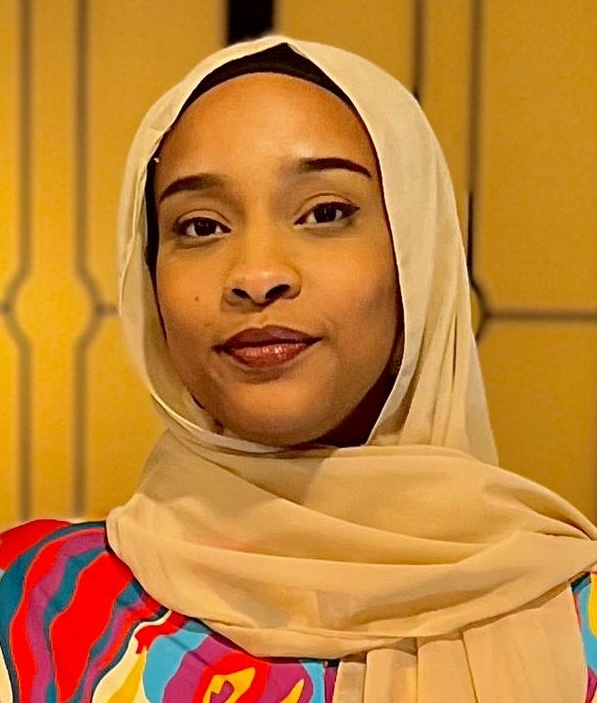
Samar Bengawi is a medical student by day, and a literature and music enthusiast by night. She was born and raised in the UAE and is now based in Georgia. She is never without a cup of coffee in hand, and is always “on the go,” chasing after one hobby or another. Passion in Sudanese politics runs in her blood and she considers herself a patriot who hopes to leave a memorable mark in the world.