


After the war broke out in Sudan in April 2023, over one million Sudanese were forced to leave their homes, many carrying the same question as they crossed into Egypt after April 2023: how long would this last?
What began as temporary displacement has, for over one million Sudanese refugees in Egypt, become something much more complicated. Egypt has offered safety, education, work and new relationships. But it has also become a place where some Sudanese describe discrimination, rising costs and uncertainty over whether they will ever truly belong.
At the same time, Egyptian conversations about the Sudanese presence have changed. On social media especially, arguments about housing, employment, public services and identity have become increasingly visible.
But how closely does that online picture resemble everyday life?
Through the experiences of Sudanese people living in Egypt and Egyptians who live, study and work alongside them, a more complicated picture emerges, one that sits somewhere between refuge and belonging, hospitality and resentment, home and temporary exile.
A Country She Is Forced to Live In
Wesal Ahmed Abdullah, 26, arrived in Egypt in early May 2023, just three weeks after the war broke out in Sudan on 15 April.
“I was with my family and everything was fine,” she said. But beneath that relative comfort was a feeling she struggled to explain. “There was this disbelief, how is this happening in Sudan? When are we going back?”
That uncertainty has remained part of the way Abdullah experiences Egypt. She does not describe her relationship with Egyptians as entirely negative, but says many encounters have made her cautious.
“My friends think they’re good and I’m the difficult one, that I’m always the one who starts with a bad attitude.”
Abdullah disagrees.
“I swear, I’ve tried hundreds of times to give them a chance and be a nice person, even when they did things that hurt me.”
That caution sometimes affects how openly she identifies herself as Sudanese.
She recalls booking a Comfort ride for herself and her family, expecting air conditioning (AC). During the trip, the driver claimed it was not working. When she questioned him, she felt his attitude changed after he realised they were Sudanese, leaving her with the impression that their nationality influenced his refusal.
On another Comfort ride, a driver claimed the AC was not cooling properly and had an unpleasant smell. Abdullah insisted that he turn it on. When he did, she found that it worked perfectly well and there was no smell.
For Abdullah, the significance of the incident was not simply the AC. It was the feeling that revealing her identity, being Sudanese, could change the way someone dealt with her.
Yet Abdullah believes the tension she experiences also reflects a broader change since the war.
She believes the arrival of large numbers of Sudanese people changed how some Egyptians perceive them, particularly around housing and education. She remembers hearing that university tuition had increased significantly and believes some Egyptians began to see Sudanese people as wealthy newcomers able to afford homes, better neighbourhoods and university places.
These are Abdullah’s perceptions rather than independently established figures, but they help explain how she understands the tension around her and some of the wider experiences of Sudanese refugees in Egypt.
“There is a lot of anger from Egyptians toward us because of something none of us had anything to do with,” she said.
She has Egyptian neighbours and classmates whom she likes, but says those relationships rarely become deeply personal.
“There is a gap between us that I don’t think I can cross.”
That gap makes it difficult for Abdullah to think of Egypt as home. She appreciates the education and opportunities she has found there, but gratitude and belonging are not the same thing.
When asked whether Egypt could ever become her home, her answer remains uncertain.
“I don’t think it will ever be a homeland for me.”
Abdullah’s experience is only one version of what life has looked like for Sudanese refugees in Egypt since the war.
Learning to Belong
When Haifa Fath Alrahman, 23, arrived in Egypt on 28 November 2023, she left behind her pharmacy studies in Khartoum and the future she had imagined.
“At first, the fact that I had been forced to leave was very painful,” she said. “Everything I had was stolen from me. Moreover, I felt like I did not belong to Egypt. Honestly, I hated Egypt at first.”
For almost a year, she remained mostly at home, struggling to trust others.
“I could not trust anyone, and I tried to isolate myself and only deal with people when necessary,” she said.
Gradually, her outlook changed.
“With time, I was able to accept the situation and move past it,” she said. “I learnt how to understand people here and how to deal with them.”
She later joined the Faculty of Medicine at Ain Shams University, where she is now in her third year.
Her encounters with Egyptians also challenged her early fears.
“Since I came here almost three years ago, I can say that the negative situations I experienced can be counted on the fingers of one hand,” she said. “The vast majority were kind.”
One memory from her first weeks in Egypt stands out. While travelling on the Cairo Metro, she and her mother got lost on their way to visit relatives. An older Egyptian man they approached for directions got off with them and guided them to the right place.
“He waited until we got on, said goodbye and left,” she recalled. “It was a very kind moment, and I will never forget it.”
Such encounters gradually restored her trust. Although the pain of leaving Sudan remained, Egypt began to feel less like a place of forced exile and more like somewhere she could build a life.
A Home Away from Home
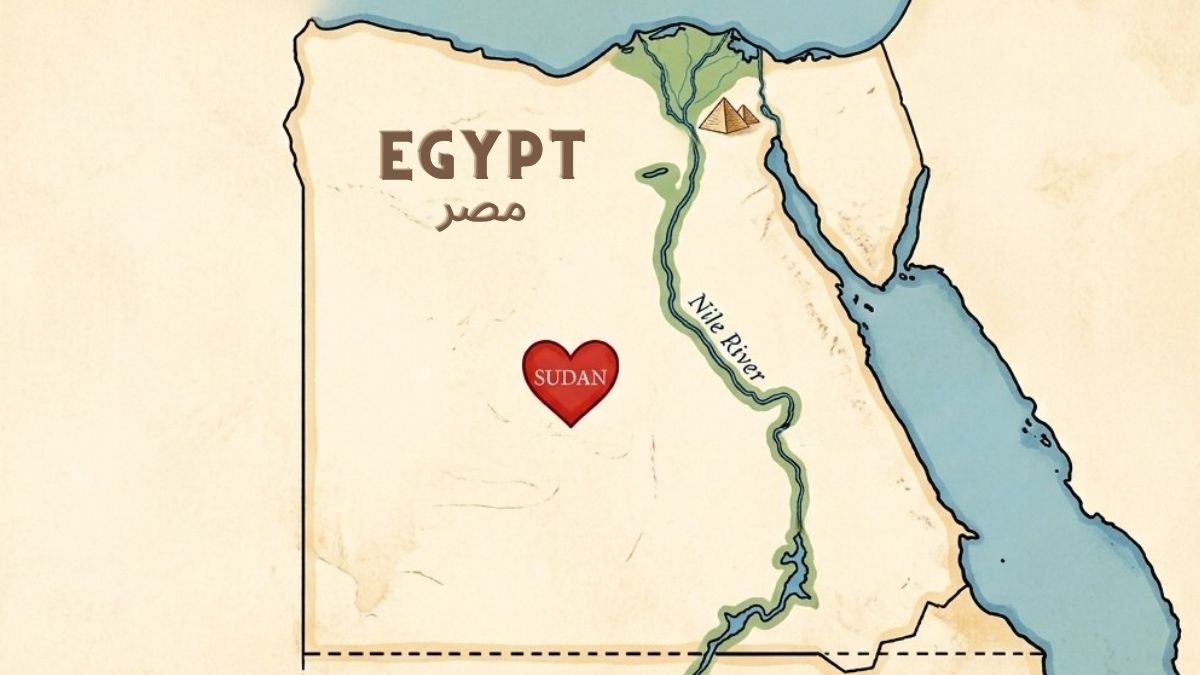
Unlike those who arrived after the war, Bahja Abdullah, 36, has lived in Egypt since 2014.
Abdullah came as a newlywed and later began working as a teacher.
Over more than a decade, she built a family and social network in Egypt. Her experience reflects another side of the Sudanese community in Egypt. She is married to a Sudanese man who was born and raised there, and they have a son who is 11 years old.
“Generally, Egyptian people are very respectful,” she said. “When I first came, most Egyptians believed that Egypt and Sudan were one country and one people.”
Her workplace became one of the places where she felt welcomed.
“The way Egyptians dealt with me at work was very nice,” she said. “Even when I wanted to leave my job, they encouraged me to stay.”
Her strongest relationships were built through ordinary daily interactions, particularly with neighbours.
“I learned how to cook Egyptian food because of my neighbours,” she said. “Sometimes they bring me food, and I give them something in return, just like we do in Sudan.”
Abdullah loves Egypt and has Egyptian friends and neighbours who share family occasions with her. But she still separates loving a place from calling it home.
“I love Egypt, but it is not my homeland,” she said. “My homeland is Sudan, and I have to return someday.”
Finding Refuge, Facing Hardship
For Mohamed Alhassan Alhaj, 21, fleeing Sudan shortly after the war began in April 2023 was his first journey abroad.
“I had a strange feeling, a mixture of leaving my country, my family and the people I loved,” he said. “It was difficult knowing that this was a separation.”
He first arrived in Aswan, where cultural similarities and warm encounters eased his displacement.
“Every time I go to the grocery store or the market, the Egyptians behave in a way that always lifts my spirits,” he said. “People would usually say, ‘Welcome to your second country.’”
One day, Mohamed collapsed on his way to a shop and woke up in a hospital. An Egyptian man had taken him there and, according to Mohamed, covered his medication and immediate expenses.
“He stood beside me like a brother,” Mohamed said.
Yet housing became one of the biggest challenges facing Sudanese refugees in Egypt. Mohamed moved several times because of rising rents and believes some landlords charged Sudanese tenants more, assuming they were wealthy.
He recalls one landlord repeatedly raising the rent and delaying the return of his security deposit.
“I felt that I was being exploited because I was Sudanese,” he said.
Still, he refuses to generalise.
“Bad behaviour represents the one who made it.”
Finding jobs for Sudanese refugees in Egypt presented another challenge. Without the required documents, Mohamed struggled to secure formal employment and continue his education.
Despite these obstacles, friendships with Egyptians helped him feel at home. They welcomed him into their families, inviting him to weddings and other gatherings.
“I had Egyptian friends and neighbours,” he said. “They loved me and included me. They became like brothers and supported me in a foreign country.”
Those relationships gave him a sense of belonging.
“I felt that I belonged to Egypt,” he said. “Egypt was not just a piece of land to me. Coming here was like moving from one state to another.”
For Mohamed, Egypt became more than a temporary refuge.
“Egypt was a safe refuge when the roads were closed,” he said. “Even in the most difficult circumstances, Egypt gave me safety and peace.”
Seeing Sudanese Life Through Egyptian Eyes
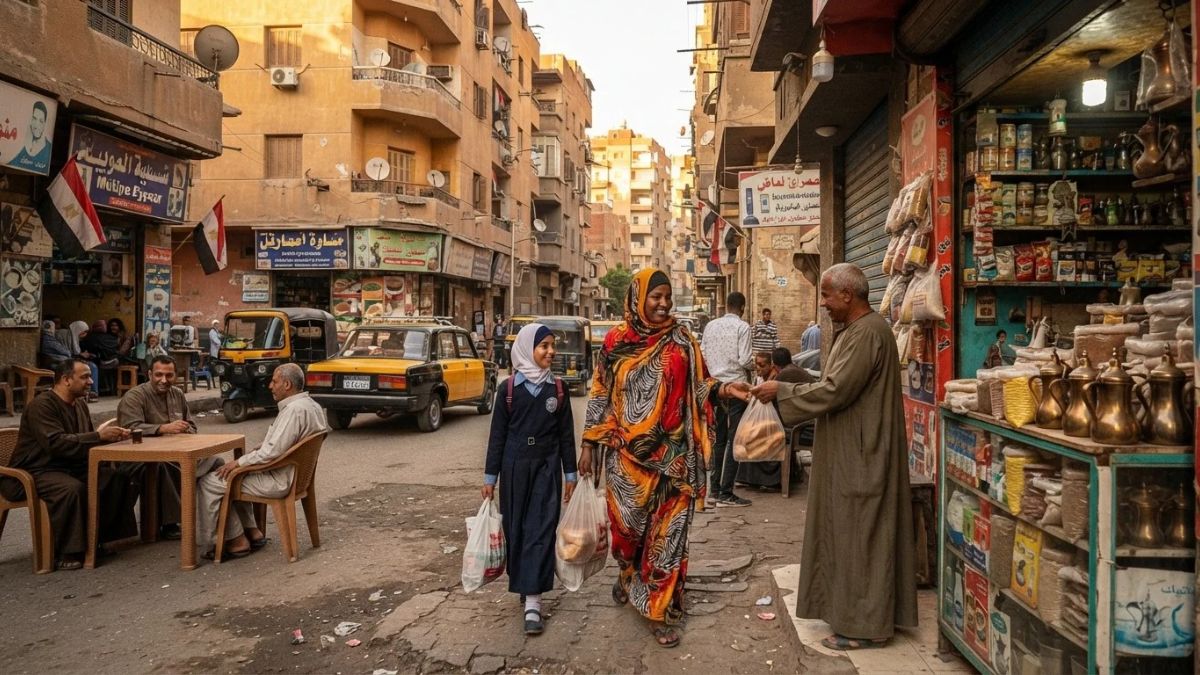
The Sudanese experience is only one side of the relationship between Sudanese refugees and Egyptians.
Ahmed Harb, 28, an Egyptian supermarket worker in Helwan, Cairo’s largest industrial centre, says he has dealt with hundreds of Sudanese customers over the past three years.
Despite noticing a significant increase in their numbers, Harb’s impression has remained largely positive.
“Honestly, from dealing with such a large number of Sudanese, I noticed that they are very kind and peaceful,” he said. “They are ordinary people like us.”
One thing he repeatedly noticed was generosity between Sudanese friends.
“I noticed that many Sudanese, especially friends, would argue with each other at my shop because each one of them wanted to pay for the other,” he said.
Harb has also seen more Sudanese people at the local mosque and in the market.
“Honestly, I feel happy and joyful because they are here,” he said.
His perspective extends to the debate over rising rents.
“Yes, rent has increased in most areas of Egypt, but that is not because of Sudanese people,” he said.
He does, however, believe some landlords may have taken advantage of the situation.
“Maybe some landlords became greedy because of the Sudanese people,” he said. “But that is not because of them. That is because of us.”
Harb also sees a gap between online rhetoric and everyday interaction.
“On social media, I feel that Egyptians speak without fear of being held accountable,” he said. “Everyone just vents their anger.”
Direct contact has made his own view more nuanced.
“I saw some people I never imagined could be Sudanese, with behaviours that were wrong,” he said. “But to be fair, that is normal in every society. Every community has good people and bad people.”
Mohamed Osama, 33, who works in laptop maintenance and deals with customers from different nationalities, approaches the issue in a similar way.
“I am not against having people of any nationality in Egypt,” Osama said. “None of us chose the nationality we were born with.”
For him, nationality should not determine how someone is judged.
“As long as someone who lives here respects the country, its people and its culture, we should welcome them and treat them with respect.”
Nour El Din, 24, an Egyptian medical student at Ain Shams University, has Sudanese classmates and friends.
“My relationship with my Sudanese classmates is very good,” El Din said. “If I’m late for a lecture or need help with anything, I ask them. They’re very cooperative, sometimes even more than Egyptians.”
El Din noticed more Sudanese people in Egypt after 2023 but says this did not change his personal view. When asked about rents or pressure on employment, he was cautious.
“I haven’t gone out and asked about rental prices, so I can’t judge,” he said. “And I don’t have enough knowledge about the job market either.”
He is equally cautious about treating social media as representative of society as a whole. People, he believes, are often more willing to make negative comments online when they feel less likely to be held accountable.
Three Egyptian voices offer three slightly different perspectives, with none describing the Sudanese presence in exactly the same way.
The Gap Between Social Media and Real Life
The Egypt described by the people in this story does not always look like the Egypt that appears online. The debate about Sudanese refugees in Egypt has become particularly visible on social media.
For Abdullah, the hostility she sees on social media is not entirely separate from what she experiences in daily life. Fath Alrahman has also heard stories from friends about racist and hurtful encounters. Bahja Abdullah believes the atmosphere has changed since the war and the increase in Sudanese arrivals.
Mohamed sees something different.
“What saddened me most was the false image that social media reflects for the sake of trends and fame,” he said. “It promotes the idea that Egyptian people do not like Sudanese people and presents a picture that is different from what happens in real life.”
Looking at the posts collected for this article, it is easy to understand why people can come away with different impressions.
Some posts are openly hostile. A Facebook post calling for Sudanese people to be removed by force argued that Sudanese people were living comfortably in Egypt while their country was suffering.
Another Facebook post questioning why Sudanese refugees remain in Egypt described them as a burden on the state and its services and portrayed their presence as a threat to Egypt’s security. These are claims made by the writer of the post, not independently verified facts.
A different Facebook post questioned whether Sudanese people were being unfairly generalised or whether some behaviours within the community had contributed to tensions.
One post written from a Sudanese perspective criticised what its author described as disrespectful behaviour by some Sudanese people towards Egypt.
But the conversation is not entirely hostile. Another Facebook post called for stronger action against content insulting either Egyptians or Sudanese and warned that online hate speech could divide the two communities.
Taken together, these posts do not produce one clear picture.
Neither do the interviews.
Mohamed remembers an Egyptian stranger taking him to hospital and paying for his medication. Fath Alrahman remembers an older man helping her and her mother when they were lost. Bahja Abdullah describes neighbours who exchange food and share family occasions.
At the same time, Mohamed describes what he believes was exploitation by a landlord, while Wesal Abdullah says she sometimes hides her Sudanese identity because she fears being treated differently.
Online, people often speak about communities.
In everyday life, they meet individuals.
Somewhere between those two versions of reality lies a more complicated story.
What Changed After the War?
If Egypt has a long history of receiving Sudanese people, why does the relationship feel different to some people now? The scale of Sudanese migration to Egypt after the 2023 war has made that question increasingly important.
A 2025 research report by Queen Mary University of London and researchers from The American University in Cairo examined this tension. The report, The Refugee Influx from Syria and Sudan in Cairo: An Analysis of the Dynamics of Resilience, Hospitality and Hostility, describes a complicated relationship shaped by economic hardship, changing public discourse, evolving national policies and growing hostility towards immigrants. Read the original research report.
That picture echoes the interviews.
Bahja Abdullah noticed a change after the war. Wesal Abdullah believes the increase in arrivals affected how some Egyptians see Sudanese people. Harb does not believe Sudanese people are responsible for rising rents. El Din does not want to make claims about issues he has not personally investigated.
For a Sudanese family looking for housing, a higher rent may feel like exploitation. For a landlord, increased demand may look like an opportunity. For a Sudanese shop owner, a larger community may create customers and a livelihood. For an Egyptian already struggling with rising costs, the same demographic change may feel like another source of pressure.
The relationship did not simply move from friendship to hostility. It became more complicated at a time when Egypt itself was facing economic pressure and when far more Sudanese people were arriving in a relatively short period.
But how much of what people believe about this change is supported by evidence?
When Perceptions Meet Reality: Challenges Facing Sudanese Refugees in Egypt
Even the number of Sudanese refugees in Egypt needs explanation.
According to UNICEF, government figures indicated that more than 1.2 million Sudanese had arrived in Egypt since the conflict began by November 2024.
By June 2026, the International Labour Organization (ILO) referred to more than 1.5 million Sudanese arrivals since 2023.
But this does not mean 1.5 million Sudanese people are currently living in Egypt.
As of 30 June 2026, 851,947 Sudanese were registered with UNHCR.
An arrival figure measures people who entered during a certain period, while UNHCR registration measures those formally registered. Some Sudanese were already living in Egypt before the war, some arrivals may not be registered and some may have left.
There is therefore no single figure that represents a complete census of every Sudanese person currently living in Egypt.
Housing
Housing is one area where personal experiences and public debate overlap, making housing for Sudanese refugees in Egypt one of the most visible challenges.
Mohamed believes some landlords charged Sudanese tenants more because they assumed they could afford it. His experience does not establish that this happens systematically across Egypt.
But housing is clearly a major financial burden.
The 2025 Egypt Vulnerability Assessment for Refugees, conducted by UNHCR and WFP with support from CAPMAS, found that rent represented around 30% of average refugee household expenditure and around 32% among newly arrived Sudanese households.
That does not prove Sudanese refugees caused Egyptian rents to rise. It does show why housing is a major source of pressure for newly arrived families.
Work
Employment presents another gap between perception and evidence and another challenge affecting Sudanese refugees living in Egypt.
Mohamed said finding work was difficult because he lacked the necessary official documents.
International organisations have also identified legal and structural barriers to formal employment among refugees. The ILO’s PROSPECTS programme focusses partly on improving livelihoods and access to decent work.
This is different from proving that Sudanese refugees are taking jobs away from Egyptians.
The evidence available for this article shows that refugees themselves face barriers to entering formal employment. It does not establish that their presence caused a measurable increase in unemployment among Egyptians.
Education and Healthcare
Education is another major concern for Sudanese refugees in Egypt.
In August 2024, UNICEF, UNHCR and Education Cannot Wait reported that around 9,000 children were arriving in Egypt each month and that approximately 54% of newly arrived children were out of school.
Healthcare presents similar challenges.
According to UNHCR, one in three Sudanese refugees cannot access medical care when needed, while about half of Sudanese refugee children are out of school, mainly because of documentation problems and costs.
These figures show that the arrival of large numbers of people has created additional needs in education, healthcare, housing and livelihoods.
But they do not establish that Sudanese refugees are responsible for Egypt’s existing shortages or wider economic problems.
The more complicated picture is that Egypt has absorbed a large and sudden influx of people fleeing war while Sudanese refugees themselves face significant economic and legal vulnerabilities.
A Country Under Pressure
Egypt itself is also under pressure.
In June 2025, the Egyptian government, UNHCR and UNDP launched the Egypt Refugee and Resilience Response Plan, seeking $339 million to support refugees and affected host communities in areas including education, health, livelihoods, food security and social cohesion.
Egyptian officials said that public infrastructure and resources were under pressure amid the arrival of more than 1.5 million Sudanese since the conflict began.
At the same time, Egypt maintains a policy under which refugees largely live within Egyptian communities rather than in refugee camps. The country adopted its first national asylum law in December 2024, while asylum based residence permits were extended from six months to one year in April 2025.
None of this means that every Sudanese person has had a positive experience in Egypt or that every concern raised by Egyptians is unfounded.
It means the situation is more complicated than either side of social media often makes it appear.
Egypt is trying to absorb numerous people fleeing war while dealing with its own economic difficulties. Sudanese people, meanwhile, are trying to rebuild their lives with varying levels of financial security and access to education, healthcare and employment.
The challenge is therefore not simply whether Egypt should host Sudanese people.
It is how both communities can live together while the country hosting them is itself under pressure.
Between Two Homes
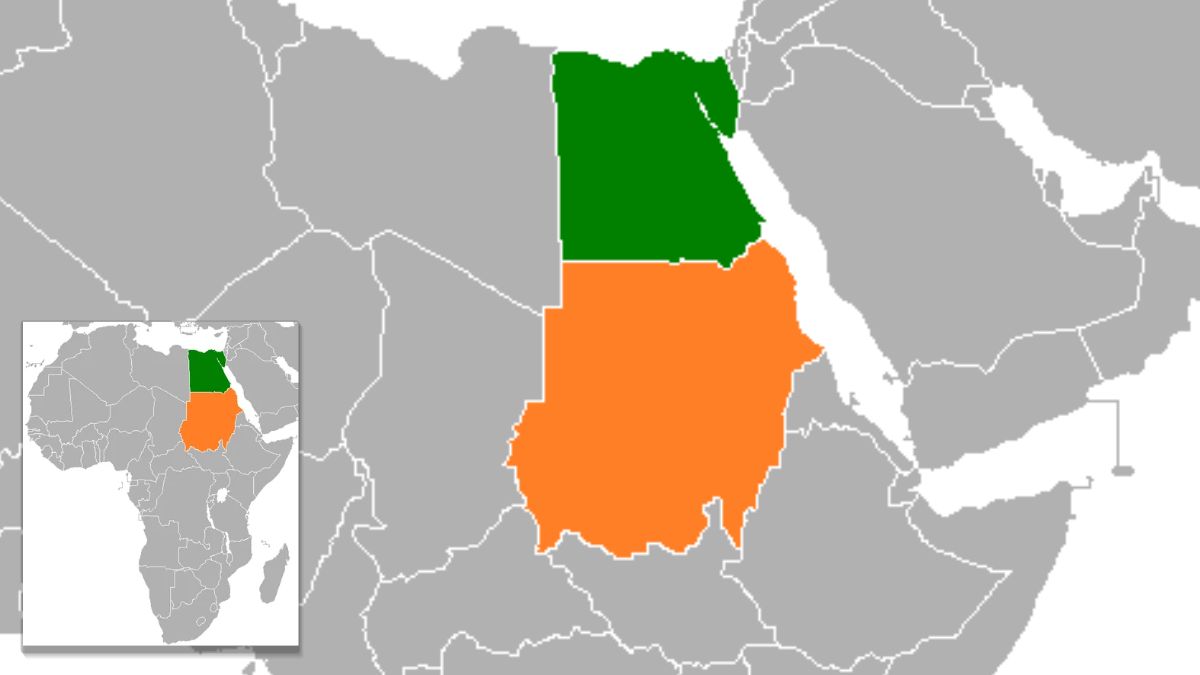
For Wesal Abdullah, Egypt is a place she is grateful for but does not believe will ever become her homeland.
For Fath Alrahman, it began as a place she hated and slowly became somewhere she could belong.
For Bahja Abdullah, Egypt has become part of her life after more than a decade, even though Sudan remains home.
For Mohamed, Egypt became a refuge that eventually felt close to home.
For the Egyptians in this story, the Sudanese presence is not one thing either. It is customers, classmates, neighbours, friends, workers and strangers.
Perhaps that is why there is no single answer to what the relationship between Sudanese refugees and Egyptians looks like today.
There is kindness and frustration. There is distance and friendship. There are people who feel welcomed and others who feel they have to hide where they come from.
The war changed where large numbers of Sudanese people live and increased the frequency of everyday encounters between Sudanese and Egyptians.
What happens next may depend less on how either community describes the other online and more on what happens when they meet in the places where life actually happens, universities, markets, streets, workplaces and homes.