



Leaving Sudan was not an easy decision, but it was one I made in search of a better opportunity. After graduating from nursing school and working for several years, the economic situation had become too harsh to offer any real chance of building a stable future.
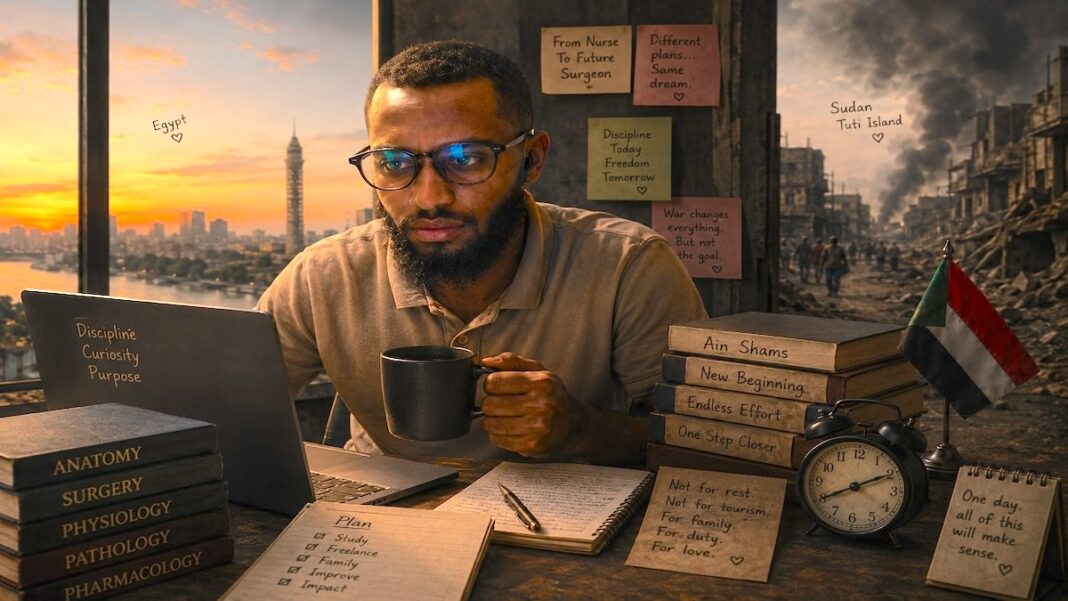
On 21 November 2021, I made a decision that would completely change the course of my life: I decided to shift my entire career. It was far from easy. As a registered nurse who had always dreamed of becoming a surgeon, I knew that pursuing this ambition would demand enormous sacrifices. I had to return to high school studies, sit for the required examinations again, and compete with thousands of students for a place in medical school.
At the time, I had lost much of my hope in the future of my country, and I was fortunate to leave before the war began. For that reason, studying medicine in Sudan was no longer a realistic option. Egypt eventually became the most practical path available to me. Egyptian universities offered a substantial tuition discount, making it the most accessible and affordable choice I had.
And so, I began again from scratch at the Faculty of Medicine at Ain Shams University.
Studying medicine was not my only pursuit. Another path was unfolding alongside it: the world of freelance work. My goal was never simply to earn extra income. I was driven by an endless curiosity and a constant desire to learn and acquire new skills. My days became carefully structured, with hours set aside for studying, others for work, and a clear schedule that gave everything its place.
Despite the difficulty of studying medicine, I carried a constant feeling that each day was bringing me one step closer to the future I wanted.
Then came the summer break.
The plan was simple. I would dedicate myself to freelance work and make up for the time I had lost during exams. But the war had written an entirely different plan.
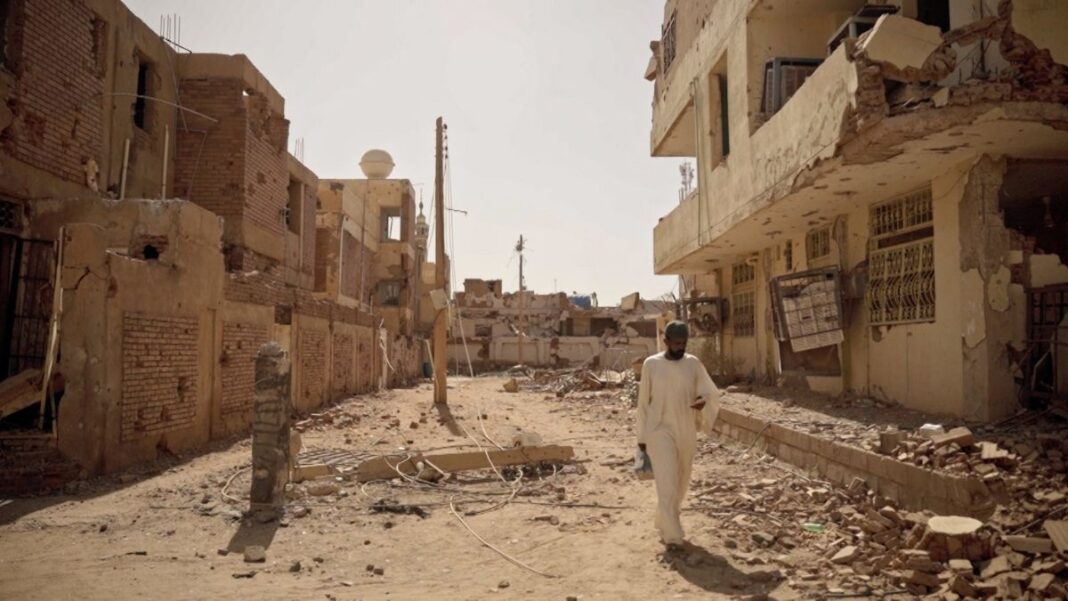
I had returned to Sudan not for rest or tourism, but to stand beside my family during one of the most difficult periods the country had ever endured. Thus, after living in Egypt for five years, I finally returned to my homeland, Sudan, and to Tuti Island, the place I had once called home.
Since returning, I have not seen the change I had hoped for. Instead, I found people more exhausted than before. I found that many young people and workers had left the country, perhaps forever. I found a society trying to survive, a country being drained by war, and a daily life that consumes people before their real work even begins.
I am writing these words after a long period of struggle. I wake up with something moving through my mind as constantly as blood moves through my veins. Ideas, tasks, ambitions, and countless plans. I rush toward my cup of coffee, hoping to calm myself at the beginning of the day. If luck is on your side, there will be cooking gas. If it is not, the struggle begins with charcoal, lighting a fire, and all the work that comes with it.
I drink my coffee, only to become even more frustrated by its taste.
Yes, ladies and gentlemen, it is that terrible coffee that has flooded the Sudanese market. I do not know what it contains, where it was made, or when it was produced. All I know is that if I want a decent cup of coffee, I have to find the beans myself, roast them, grind them, and prepare the coffee from scratch. Sometimes I wish I had enough money to buy a supply that would last an entire month, but there is always something more important that needs the money first.
Talking about coffee may seem trivial in the face of war, hunger, and displacement, but it is only a small example of what daily life in Sudan demands today.
Every simple thing becomes a task.
Every small task takes away a piece of your energy.
By the time you finally reach the work that truly matters, you discover that you have nothing left to give.
My family lives through the same reality. There is no regular work, no clear sense of time, and no defined goal. There is only the continuous effort to survive. In the middle of all this, I try desperately to return to the schedule and responsibilities I once followed so naturally. Yet sometimes, I feel as though something is stopping me from sitting down in front of my computer.
The truth is that there is nothing mysterious stopping me.
It is my own mind.
Its reserves have already been consumed before I even begin.
That is when I understood the real difference between my life in Egypt and my life in Sudan. In Egypt, I did not have abilities that I suddenly lost. I was not more intelligent or more disciplined. I was the same person. The difference was that I did not have to spend my energy fighting endless small battles. I had enough time and mental space to learn, work, plan, and think about the future.
Here, daily life itself is a full time job. And the greatest problem is that material hardship is only part of the story.
The home, which should be a place where I can focus, has become a space filled with constant interruptions. There is a mother who missed her son after a long absence, and there are neighbors exhausted by war who have come to depend on one another for even the simplest needs. Sitting for hours with a book or in front of a computer screen is no longer as easy as it once was.
Gradually, opening a book became a heavy task. Writing an article began to require energy that was no longer as available as before.
In moments like these, a person may begin to believe that they have lost their discipline or passion. The truth, however, is more complicated. The ambition is still there, but it has collided with a reality designed for survival rather than creativity.
The difference between these two lives is not a matter of willpower. It is the difference between an environment that allows determination to become achievement and one that consumes it before it has the chance.
War does not only destroy buildings. It changes the rhythm of life itself. It steals routines, concentration, and the feeling of being in control of one’s own day. It turns the simplest tasks into daily challenges.
Perhaps this is the side of war that receives less attention. War does not always stop dreams, but it makes reaching them slower, more exhausting, and far more costly than it should ever be.