It’s strange where a football debate can lead you. It was during the World Cup, and I found myself in a heated defence of Argentina. As a die-hard Messi fan and passionate Barcelona supporter – a legacy inherited from my dad before we agreed to disagree when I moved on to Liverpool while he stayed forever loyal to Manchester United – I was arguing that sports should be enjoyed without dragging every political grievance onto the pitch.
When critics started picking apart entire nations over historical injustices, I pointed out the slippery slope: if we judged every team by their country’s historical sins, we’d have to answer for the colonial legacies of England, France, Portugal, and yes, even Spain to name a few – all of whom reshaped global cultures by force, discovering and dominating lands, redefining their essence.
That debate lingered long after the final whistle. I was actually enjoying it all, but all the while a specific thought pondered in the background. Football aside, it got me reflecting on the real mechanism of colonialism. Not just how borders were drawn, but how colonialism quietly reshaped human minds, language, and culture. When we talk about imperial conquest, we usually picture maps being redrawn, troops marching, or resources extracted. But one of the quietest and most enduring tools of colonial rule didn’t happen on a battlefield. It happened in the classroom, to put it both metaphorically and literally. Nowhere is that subtle shift clearer than when education and culture are placed under a microscopic lens.
During the Anglo-Egyptian Condominium, which served as the governing instrument from 1899 until the independence of Sudan in 1956, British administrators faced a problem: how to rule a vast, culturally diverse territory without spending a fortune on hiring foreign bureaucrats? The answer lay in education and language policy. What emerged as a result was a carefully engineered two-tier system that split Sudan down its cultural and linguistic seams, leaving a legacy of division that echoed long after independence.
Before colonial intervention, Sudan possessed vibrant indigenous learning spaces. Traditional Khalwas (Quran schools) and deeply rooted oral and scholarly traditions anchored local communities. Colonial administrators largely sidelined community-driven development. Instead of supporting community-driven development, they replaced local learning networks with a two-part plan focused on strict government control.
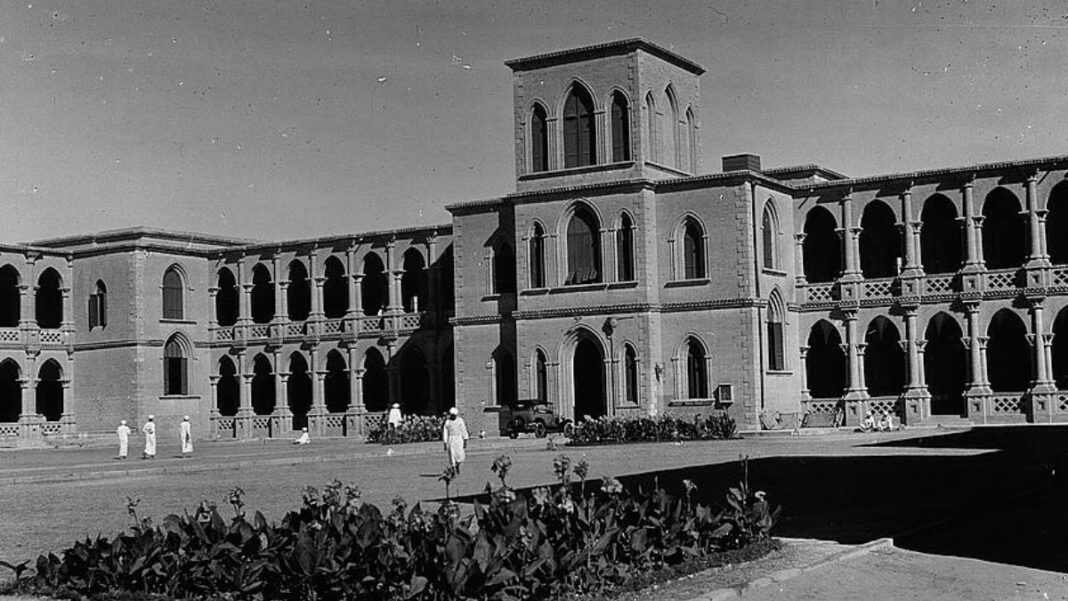
In northern Sudan, the government established a centralised, secular system centred around institutions like Gordon Memorial College to train a small, loyal elite for civil service positions, while relegating traditional Khalwas to mere basic literacy nodes or ignoring them entirely. This was carried out while simultaneously outsourcing education in the south to Christian missionary schools, enforcing a linguistic and cultural barrier between the two regions. On the positive side, this system introduced modern administrative training, technical instruction, and standardised infrastructure that eventually produced a highly skilled bureaucratic elite key to early statehood. However, on the other hand, by suppressing community-driven scholarship, it cemented deep regional and socio-economic inequalities and created a lasting North-South educational divide that directly triggered post-independence civil war.
Ultimately, while the system laid the structural foundations for a functioning modern state, its deliberate neglect of indigenous knowledge and institutionalised regional disparities left behind a fragile social fabric. The short-term gains of bureaucratic efficiency were far outweighed by the long-term cost of a deeply fractured nation, serving as a stark reminder that administrative progress built on structural inequality inevitably undermines lasting stability of culture-based education.

Nasreen Mukhtar is a writer and educator who believes that words are never just ’empty’ — they are the most powerful tools for transformation we possess. With 23 years of experience in educational leadership and a deep specialisation in ESL (English as a second language), she blends technical structure with a passionate commitment to the ‘soul’ of every message. Her mission is to bridge the gap between clarity and emotion, using her passion for storytelling to spark meaningful change and foster authentic self-expression. She doesn’t just write to inform; she writes to reach others on a deeper level.