


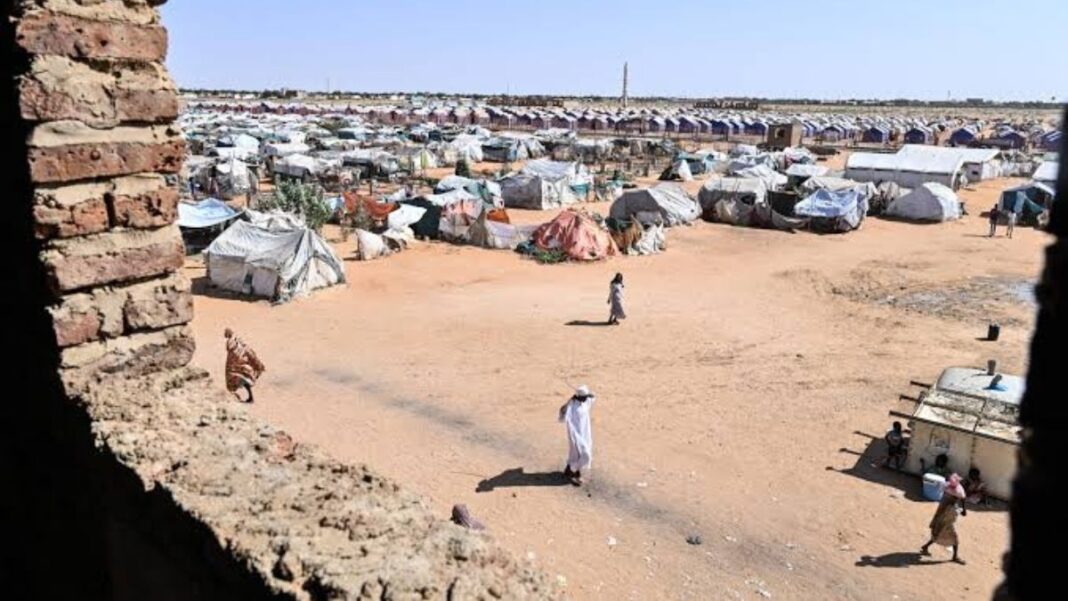
In November 2025, after two years of ongoing conflict, the world finally woke up to the war in Sudan. This shift came after violent and graphic videos and pictures flooded social media, exposing the atrocities the Rapid Support Forces (RSF) were committing in Al Fasher, Darfur, following the Sudanese Armed Forces’ (SAF) retreat from the region on 28 October 2025.
Ironically, many of these killings have been documented by the RSF themselves and audaciously shared on social media for the world to see — a pattern of behaviour that has persisted since the war began on 15 April 2023 between the RSF and the SAF. The conflict has displaced between 12 and 14 million people and killed more than 150,000.
The worldwide outrage and international pressure applied heat on the RSF. It later resulted in the RSF leadership arresting some of its soldiers, who appeared in videos, torturing and executing civilians, including Al Fatih Abdallah Idris, better known as Abu Lulu, a notorious brigadier general and commander for the RSF. Dubbed the “Butcher of El Fasher,” he gained international infamy for live-streaming and boasting about mass executions of civilians and captives during the RSF’s brutal takeover of Al Fasher. However, he was reportedly released and returned to the battlefield in March 2026 in Kordofan. In May 2026, Amnesty International issued a statement calling for the removal of Abu Lulu from the battlefield so he may be held accountable for his actions by competent and credible judicial mechanisms guaranteeing the highest standards of fair trial without resort to death penalty.
Now, the RSF have advanced into Al Obeid, the major capital city of North Kordofan. Over the past few weeks, repeated drone strikes on Al Obeid have killed civilians and driven acute shortages of fuel, food, and water. In addition, humanitarian workers continue to provide life-saving assistance, but are being deliberately targeted.
The RSF’s encirclement of Al Obeid is the most consequential operational development in Sudan’s war since the fall of Al Fasher in October 2025. International concern is growing over Al Obeid and Sudan’s war in general, with warnings from the UN and foreign governments about an expanding conflict and worsening humanitarian conditions.
Al Obeid has become the focus of mounting international concern, with diplomats and aid agencies warning that it could face a similar fate to Al Fasher, where months of fighting have been accompanied by widespread reports of atrocities and civilian suffering.
On 24 June 2026, a joint statement issued by the German Foreign Ministry on behalf of the foreign ministers of France, Germany, Ireland, Italy, the Netherlands, Norway, and the UK warned of an imminent escalation in Al Obeid, calling on the RSF to halt its attack immediately, allow civilians to leave safely, and ensure rapid, safe, and unhindered humanitarian access.
The ministers expressed their deep concern over reports of the RSF’s continued assault on Al Obeid, despite calls for a halt to the attack and protection of civilians. The statement noted that last year, the world witnessed with horror the atrocities in Al Fasher — crimes that are assessed to bear the “hallmarks of genocide”, stressing that such failures should not be repeated. Beyond Al Obeid, the conflict continues across multiple fronts.
Continuous conflict in Sudan has been overshadowed by the recent return of over 3 million people to Sudan, specifically to safe zones in and around Khartoum and Al Gezira. However, the Darfur and Kordofan regions are still under threat by the RSF. While danger is far from Khartoum, Al Gezira, and other safe states in Sudan, it is close to the Darfur and Kordofan regions.
The wider Kordofan region remains the epicentre, with intensified fighting around Dilling, Kadugli, and Babanusa as the parties contest strategic areas. Recent drone strikes on bridges and transport corridors across Darfur and Kordofan have disrupted humanitarian routes and left communities isolated. The security situation also remains volatile in White Nile and Blue Nile states with continued clashes in Kurmuk, Geissan, and Bau localities. Meanwhile, the human cost is mounting. As long as the paramilitary force exists, it will continue to be an imminent threat of instability to Sudan and its people.
The UN warns that the window is closing to prevent wider escalation in Al Obeid. Escalation would yet again put hundreds of thousands of civilians at immediate risk of large-scale violence and trigger a new displacement to areas that were already overstretched. With international attention diverted elsewhere, this impending catastrophe serves as a brutal reminder that Sudan has been forgotten again, and the war is far from over.

Ola Diab is the new founder and editor of 500 Words Magazine, and the deputy editor of Marhaba Information Guide, Qatar’s premier information guide. Based in Qatar, the Sudanese journalist graduated from Northwestern University in Qatar (NU-Q) in 2012 with a Bachelor of Science in Journalism and has since built a successful career in the print and digital media industry in Qatar. Find her on X (formerly Twitter) @therealoladiab or on LinkedIn.