


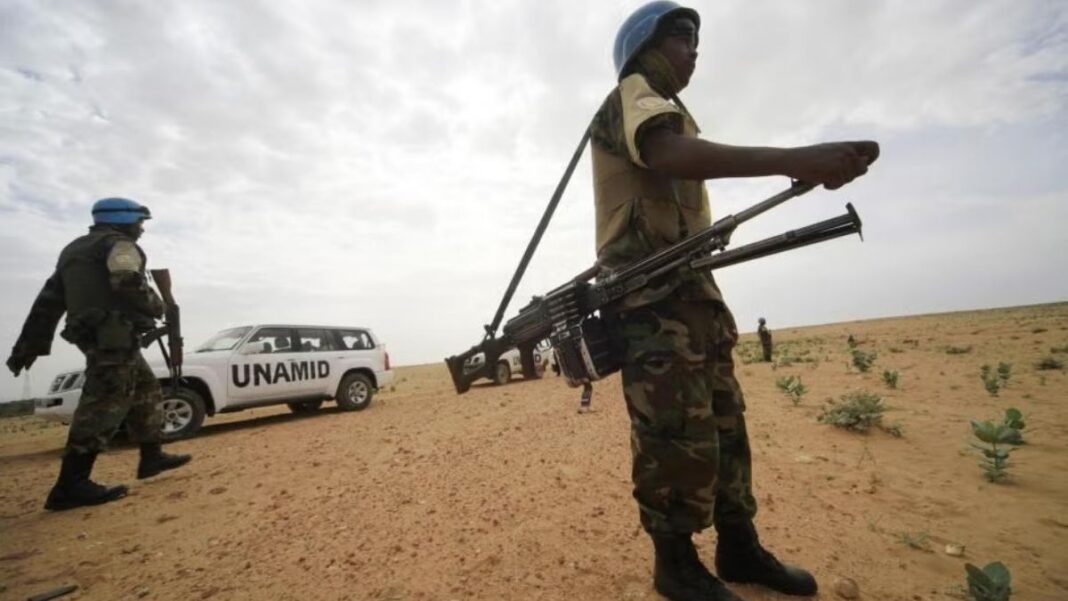
Sudan ranked as the world’s second-deadliest active conflict zone for humanitarian personnel in 2025, with 71 aid workers killed, according to data from the UN Office for the Coordination of Humanitarian Affairs (OCHA) and the Aid Worker Security Database. The high number of fatalities was driven by intense urban warfare and localised fighting, with armed drones increasingly affecting civilian and humanitarian areas.
Gaza maintained its status as the world’s deadliest location for humanitarians for the third consecutive year, primarily due to heavy bombardment and air strikes, with 186 aid workers killed in 2025. Together, Gaza and Sudan accounted for nearly three-quarters (75%) of all aid worker fatalities recorded globally in 2025.
The global number of aid workers killed in 2025 reached 350, according to figures from research and advisory group Humanitarian Outcomes, cited by OCHA in a statement marking World Humanitarian Day.
Observed annually on 19 August, World Humanitarian Day honours aid workers killed or injured in the line of duty and recognises those providing lifesaving support to people affected by crises around the world. The day was established by the United Nations (UN) to commemorate the 2003 bombing of the Canal Hotel in Baghdad, Iraq.
“More than 1,000 aid workers have been killed in just three years and that is utterly unacceptable,” Tom Fletcher, Under-Secretary-General for Humanitarian Affairs, said in the statement.
“But just calling it out will not protect the next aid worker. States must uphold international humanitarian law and use every tool to protect civilians and our colleagues,” he said. “And for those who break the rules, there must be real consequences.”
Since the beginning of 2026, a further 82 aid workers have been killed, 97 injured and 39 abducted worldwide.
OCHA also voiced particular concern over the proliferation of armed drones, which it said are “putting lethal power into ever more hands and sending more explosive weapons into towns and cities”.
In Sudan, intense urban warfare and localised fighting, including the widespread use of armed drones, have heavily affected civilian and humanitarian areas. Armed drones caused 80% of civilian deaths during the first four months of 2026, striking markets and health facilities, according to the statement.
The war in Sudan, which began on 15 April 2023, is a devastating power struggle between the Sudanese Armed Forces (SAF) led by General Abdel Fattah Al Burhan and the paramilitary Rapid Support Forces (RSF) led by Mohamed Hamdan Dagalo (Hemedti). The conflict has resulted in the world’s largest internal displacement and hunger crisis, leaving tens of millions in urgent need of humanitarian assistance.
Major agencies like the International Rescue Committee, CARE, International Committee of the Red Cross (ICRC), Médecins Sans Frontières/Doctors Without Borders (MSF) and various UN organisations maintain operations on the ground or in neighbouring countries to support displaced populations.
Amid severe funding shortages and restricted access driven by the ongoing conflict and rainy-season infrastructure challenges, local and international organisations continue to face extreme threats from small arms fire, aerial bombardments, and drones. International humanitarian response plans remain severely underfunded, forcing agencies to scale back critical life-saving operations.
Related posts