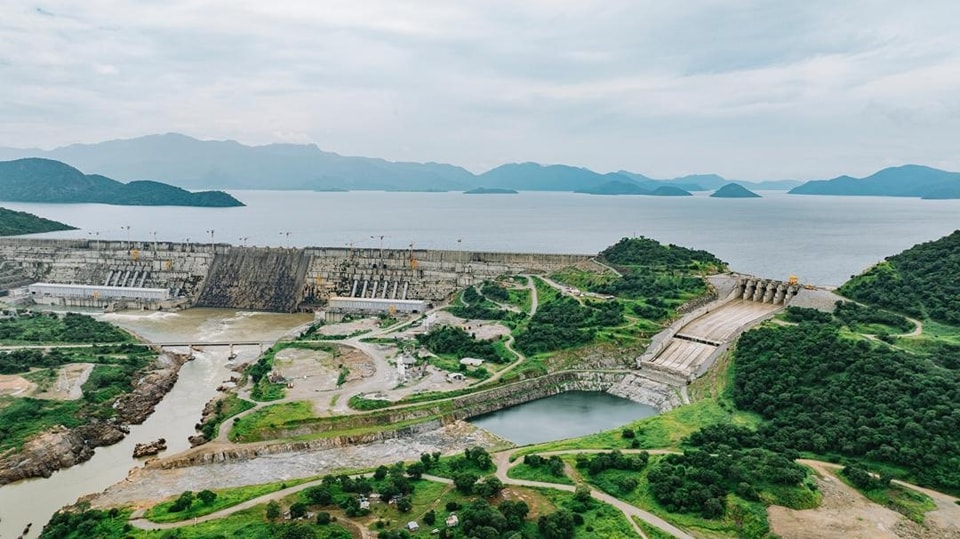

On 3 July 2025, Ethiopia’s Prime Minister Abiy Ahmed announced that the country’s power-generating dam, known as the Grand Ethiopian Renaissance Dam (GERD), on the Nile is now complete and that the government is preparing for its official inauguration in September.
Invitations have been to the controversial dam extended to Sudan and Egypt, both have long opposed the building the dam and spoken out about their concerns it would deplete their share of Nile River waters.
While Ethiopia views the GERD as essential for economic growth and energy access, the project has raised serious concerns in downstream countries. Sudan sees potential benefits, including more regulated water flow and access to cheaper electricity, but also fears risks to its water security and dam safety if Ethiopia does not coordinate releases. Egypt, which relies on the Nile for over 90% of its freshwater, is worried about reduced water flow, particularly during dry years. The three countries have yet to reach a legally binding agreement on the dam’s filling and operation, making the GERD one of the most contentious water issues in Africa today.
The Grand Ethiopian Renaissance Dam
The GERD is a major hydroelectric project constructed by Ethiopia on the Blue Nile River, near the border with Sudan. Begun in 2011, it is the largest dam in Africa, designed to generate over 6,000 megawatts of electricity. The dam’s reservoir holds approximately 74 billion cubic meters of water, and its primary purpose is electricity generation, not irrigation or direct water consumption. For Ethiopia, the GERD represents a critical step in expanding energy access, boosting economic development, and becoming a regional power exporter. It is also a strong symbol of national pride, as the project has been financed without foreign aid.
The Nile River
The Nile is a major north-flowing river in northeastern Africa. It flows into the Mediterranean Sea. The Nile is the longest river in Africa. It is also considered the longest river in the world, though this has been contested, suggesting that the Amazon River is slightly longer.
The Nile River flows through 11 countries: Egypt, Sudan, South Sudan, Eritrea, Ethiopia, Uganda, Tanzania, Kenya, Rwanda, Burundi, and the Democratic Republic of Congo, making it a vital resource for millions of people in Africa. The Nile is formed by the confluence of the White Nile and the Blue Nile, with the White Nile originating from Lake Victoria and the Blue Nile from Lake Tana in Ethiopia.
Impact on Sudan
Sudan has had mixed concerns — possible benefits from regulated water flow and flood control, but also risks to existing dams.
The GERD will have both positive and negative impacts on Sudan, depending on how the dam is managed and how regional agreements evolve. Here’s a breakdown of the key potential impacts on Sudan:
Potential benefits:
- Improved water regulation:
- The dam could help regulate the flow of the Blue Nile, reducing seasonal flooding that has historically affected parts of Sudan.
- More stable water levels may support better irrigation planning and year-round agriculture.
- Cheaper and reliable electricity:
- Sudan may benefit from importing surplus electricity generated by the GERD at lower costs.
- The dam could improve grid stability in the region.
- Reduced sedimentation:
- The dam will trap sediments upstream, potentially reducing sediment buildup in Sudanese dams like the Roseires Dam, increasing their operational lifespan.
Potential risks and concerns:
- Water flow disruption:
- Sudan relies on the Blue Nile for a significant portion of its freshwater. Rapid or uncoordinated filling or operation of the GERD could cause water shortages, especially during drought years.
- Dam safety:
- There are concerns about the structural integrity of the GERD. A failure or mismanagement could pose a flooding threat to downstream areas in Sudan, particularly those close to the Roseires Dam.
- Lack of information and coordination:
- Sudan has expressed frustration over the lack of data sharing and coordination from Ethiopia regarding the dam’s operation, which is crucial for managing its own water infrastructure.
- Legal and diplomatic uncertainty:
- Without a binding trilateral agreement (Sudan, Ethiopia, Egypt), Sudan is caught in a politically tense situation that may limit its influence over water management decisions.
Sudan stands to gain significantly from the GERD if there is clear coordination, transparency, and legal guarantees about how the dam will be filled and operated. However, in the absence of a binding agreement and proper safety protocols, the risks — particularly to water security and dam safety — remain serious. Ongoing negotiations among Ethiopia, Egypt, and Sudan have failed to reach a binding agreement on the dam’s operation and filling schedule. A long sought binding deal on water sharing between the three countries is yet be to be signed.
This article has been produced with AI.