The AA Visiting School in Warsaw, Poland is open for applications to explore the heritage discourse in the 1960s through collaborative projects involving data, research, and artistic practices, with a focus on climate change and heritage.
The AA Visiting School programme in Warsaw, Playful Cartographies, explores the evolution of heritage discourse in the 1960s, a period during which the city played a significant role. Through the collection from Faras Cathedral and the museum as a site of study, the School aims to explore the infrastructure, both visible and invisible, that is required to maintain heritage. The programme will take place from 26 July to 3 August 2025.
The School’s agenda in Warsaw examines the intersection of climate change and heritage, while considering innovative ways of mapping these themes through play as a method and using tools such as Unreal Engine and Unity for game design as a medium.
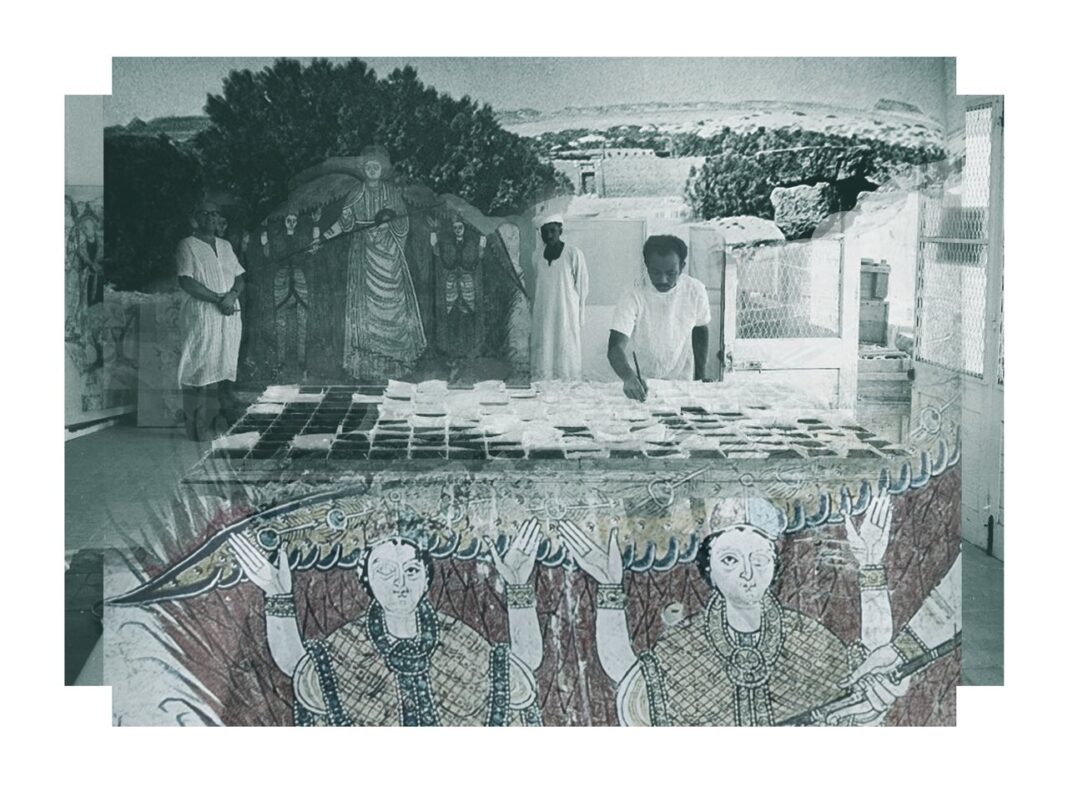
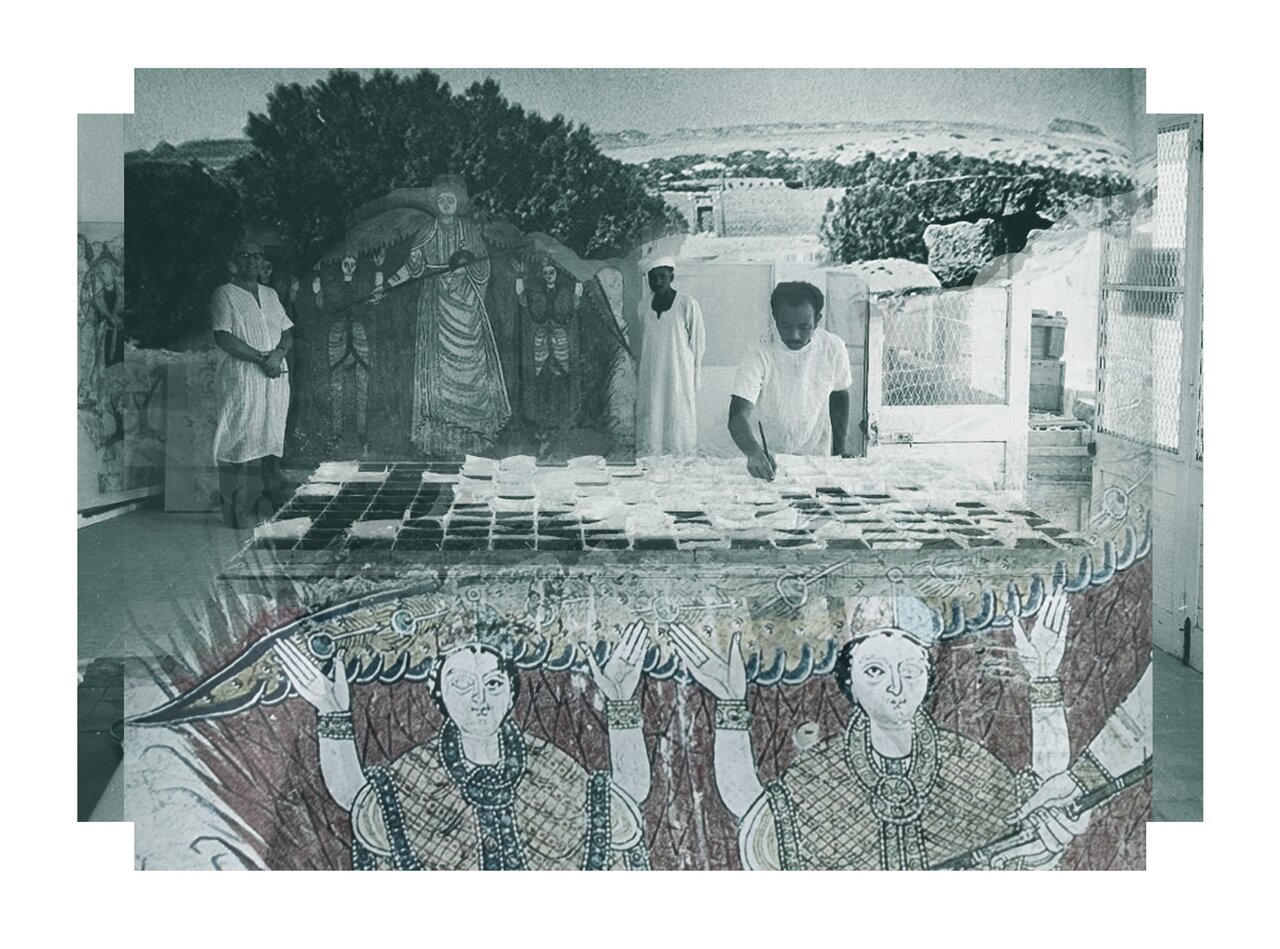
The Faras Gallery at the National Museum of Warsaw serves as a starting point for rethinking the role of the museum in the context of current climate challenges. Faras, a site now submerged under water, is
conceptualised as a constructed world dispersed across museums in Khartoum, Warsaw, and beyond. It
serves as a departure point for exploring climate and heritage. The programme is the third iteration of the Climate Cartographies School.
Faras was flooded by the Nile due to the construction of the High Dam. It was excavated in the early 1960s as part of the International Campaign to Save the Monuments of Nubia. The discovery of the cathedral and its vibrant wall paintings was celebrated from Khartoum to Warsaw, where they were relocated and became intertwined with narratives of nationalism. Meanwhile, Nubians who inhabited the land from which the site was excavated were displaced before any opportunity to connect with the heritage of their ancestors. The paintings, now housed in museums, offer insights into the moment in the 1960s when the largest archaeological project took place, driven by the development of a major infrastructural project. They also reveal the value assigned to these objects and the evolution of heritage discourse in relation to the infrastructure, both visible and invisible, that is required to maintain heritage.
The AA is the abbreviation for the Architectural Association, a school based in London. Their Visiting Schools have taken place in multiple cities around the world. AA Visiting School Khartoum, their first Visiting School in Khartoum, took place in August 2021 (online) and December 2021 (on-site).
Encompassing myriad forms and agendas, AA Visiting School courses, competitions and workshops are built around agenda driven project briefs that are pursued and shaped by participants working intensively in small groups, and are led by AA tutors and other international experts. Central to each is the idea that experimental, new and provocative forms of architecture are best learned by doing. The school promotes, tests and challenges contemporary global interests and issues in architectural learning and exchange by embedding a diverse group of creative participants and tutors in an array of unique rural, urban, international and online contexts. Places on each course are limited, and anybody who would like to further their architectural knowledge and skills can apply.
For the AA Visiting School programme in Warsaw, participants are invited to collaboratively interact with data, research, artistic practices, and the complexities of heritage discourse to develop projects that emerge from the specifics of the museum and its broader context.
The programme is open to current architecture and design students, PhD candidates, post-docs, and young professionals. See the application link aaschool.ac.uk/academicprogrammes/visitingschool/climatecartographies
For more information, visit aaschool.ac.uk/academicprogrammes/visitingschool