

The tales of Sudan have always been told best through the strums of oud, the strokes of violin, and the melodic voices of musical pioneers. Throughout history, music has been embedded within the roots of Sudan, fueling revolutions and inspiring unity.
The origin of music in Sudan dates back to ancient Nubian times, where music was an essential tool in spiritual and tribal rituals. It was connected to story-telling and rituals like zar, a traditional healing practice performed primarily by women and believed to expel evil spirits. The style of music was rhythmic, created by percussion, flutes or pipes, and ancient string instruments played in the pentatonic scale, a music scale typically used in folk music, which remains a classic style of Sudanese music until modern times.
In the late 1800s, Sufism dominated the music culture of Sudan. Music became centred around religious practice, with madeeh, melodic chants or music with light percussion, usually performed in groups, praising Prophet Muhammad (PBUH), being widespread across communities, especially in Omdurman. In that era, music also played a significant role in boosting the morale of soldiers through motivational war chants that were centred around themes of victory and resistance against the Turko-Egyptian colonial forces.
Early modern era and the rise of haqeeba
During the Anglo-Egyptian colonial period, practices such as zar persisted, especially in the east, and Nubian-inspired tunes flourished in the north, but the capital city of Khartoum began to sing a different melody. Omdurman Radio sprang to life in the 1940s, introducing a music style that blends influences from tribal chants, Arab music and Western culture. At the opening of Omdurman Radio, the late Sudanese singer and the king of oud Hassan Atiya (1921-2993) performed, and this marked his first public appearance. The other founders of haqeeba songs, the classic genre of Sudanese music, began to gain widespread popularity through live performances on Omdurman Radio. The term haqeeba, meaning briefcase in Arabic, is used to describe a style of music that originated in the 1920s and became popular in the 1940s, and it stemmed from the practice of musicians carrying their records in handheld bags.

Ibrahim Al Kashif, father of modern Sudanese music.
Image source: Assayha.net
Late Sudanese musicians such as Abdelkarim Karouma, Al Haj Mohammed Ahmed Saroor, ِAl Amin Burhan, Fadl Al Mawla Zangar, and Ahmed Al Mustafa, who was the first to sing the popular song Ya Raaye’, were some of the first to record on radio and become mainstream. While Ibrahim Al Kashif is considered the father of modern Sudanese music, iconic composer and musician Ismail Abdel Ma’een,, has an equally profound impact, but is less recognised by the public. The sound created by these musicians laid the foundation for Sudanese music, and the haqeeba era birthed the classic style that continues to inspire modern generations of Sudanese artists.
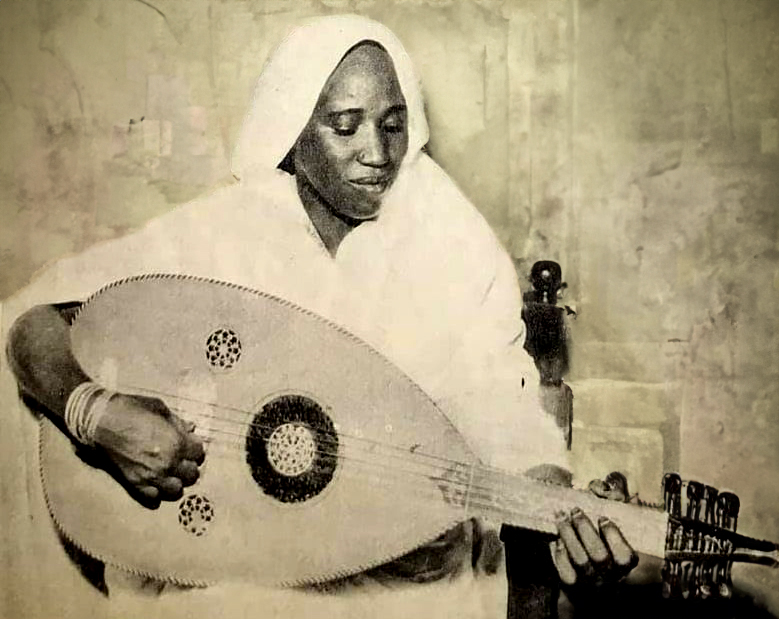
A young Asha Al Falatiya.
Image source: SSLH Museum
There were countless notable male icons in the music industry at that time, but the conservative nature of Sudan’s society resulted in restrictions on female artists. Despite resistance, however, the first woman to record on radio, Aisha or Asha Al Falatiya, became a symbol of artistic courage, and is still widely respected as one of the legends of haqeeba. In the 1950s, composer and activist Hawa Al Tagtaga, joined Asha Al Falatiya as one of the few leading women in the music industry. She later set the stage for what is now known as aghani al banat, or girls’ songs, which are by women to women, revolving around womanhood and love, and mainly performed at wedding occasions. At that time, despite societal backlash, female singers such as Hawa Al Tagtaga, Muna Al Khair, Mahla Al Abadiya and Fatima Al Haj were also well-known female pioneers of Sudanese music.
Colonial rule introduced Western instruments such as accordion and violin, and Arab influence popularised the use of oud in Sudanese music, and Al Kashif was the first musician to introduce the use of these instruments in Sudan’s music scene. During that period, singing in Sudanese dialect became mainstream, and the lyrics of most songs circled themes of romance, patriotism or nationalism, and even religious beliefs such as sufism.
Many iconic songs were born from the words of famous poets such as Khalil Farah, who wrote Azza fi Hawak, and was the first to perform it as a song. Meaning “Azza, for your love”, the song was essentially a love letter to Sudan, and served as coded resistance to colonial rule. Revered across many generations, Azza fi Hawak became a musical symbol of nationalism and resistance. The word Azza itself is still used today to show love and pride for Sudan. Other classic patriotic songs such as Ana Sudani by Al Atbarawi and Al Watan Al Aziz by Al Kashif were released in the 1940s, and often highlighted the beauty of Sudan and the desire for freedom from colonialism.
Post-independence music and the golden age
The golden era of Sudanese music blossomed shortly after independence in 1956, with a rising number of musicians emerging on the radio and recording music with full orchestras. Most musicians who surfaced during the 1930s and 1940s became more widely recognised, and others such as the late Abdel Karim Alkabli (1933-2021), the late Mohammed Wardi (1932-2012) and the late Sayed Khalifa (1931-2001) rose to their peak popularity.
A prominent figure during the golden age was the late Ibrahim Awad (1933-2006), who introduced a delicate, melodic style of singing to Sudanese music, which complemented the orchestral style of music at the time and further contributed to the transformation from haqeeba to modern Sudanese music. His smooth, mellow voice made him a staple on Omdurman Radio, but what truly cemented his legacy was his dignified stage presence and graceful performance style. His polished public image earned him the nickname Al Dhura, or “The Heights,” referring to his cultural and musical elevation.
In the mid-1950s, the late composer and singer Othman Hussein (1927-2008) pioneered the production style of long instrumental intros in songs, a style that was adapted by many iconic artists after him. Hussein drew inspiration from Arabic, particularly Egyptian, music, and used this style to highlight the intricate musical composition of songs.
In this chapter of Sudan’s music story, themes of beauty, love, longing, sorrow and national identity prevailed. The post-independence period witnessed an expansion of radio broadcasting, especially Omdurman Radio. At this time, musicians used music as a means of creative experimentation and expression of personal identity.
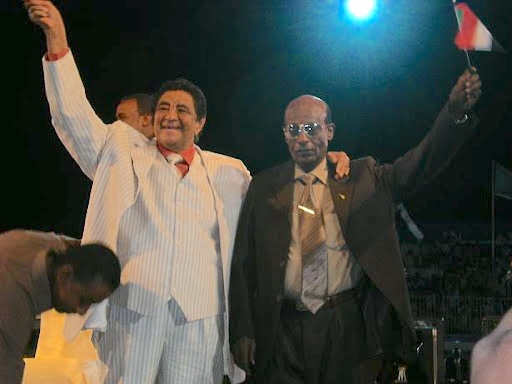
Mohammed Wardi and Mohammed Al Amin, 2009.
Image source: Sudanese Online Forum
Shortly after Sudan’s independence from colonial rule in 1956, the country was subjected to the dictatorship rule of military officer Ibrahim Abboud, resulting in the revolution of October 1964. During his rule and the period of the revolution, music continued to be a form of coded resistance and served as a fuel for revolution. Wardi, who rose to fame in the late 1950s, was widely known as the voice of the people, and sung songs of revolution and nationalism, becoming one of the most influential voices in post-independence Sudan, especially during the October revolution. Revered musician and composer Mohammed Al Amin (1940-2023), also used music as a symbol of resistance and caught the nation’s ear with his song, Malhamat October, or The Epic of October, after the 1964 revolution.
Between the 1960s and 1980s, Sudan’s music industry flourished immensely. Some musicians such as Mohammed Merghani continued producing songs similar to the pioneers before them while others contributed modern sound to Sudanese music. Sharhabil Ahmed and Salah Brown surfaced with a unique blend of Western jazz and traditional influences, further modernising the music style at the time. Late legendary musician Mustafa Sid Ahmed (1953-1996) also experimented with blending funk and jazz with traditional sounds, creating songs such as Fe Iyoonik, meaning In Your Eyes, while Wardi’s music explored a fusion of reggae and folk sounds.
Additionally, at this time, more female musicians such as Hanan Bulu Bulu entered the spotlight, further opening doors for female duo Thuna’ee Al Nagham in the 1960s, and girl and sister group Al Balabil in the 1970s who brought emotional depth to Sudanese sound, with their lyrics revolving around a love for Sudan, womanhood and female perspectives on romance and longing.
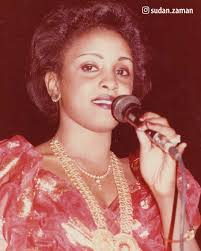
Image source: Last FM

Image source: Al Nilin
During the golden era, artists continued to compose songs in pentatonic style, and drew inspiration from haqeeba songs while producing more vibrant music using full orchestras. What used to be sung with oud and percussion now came to life with accordions, flutes, saxophones, and violins. Traditional influences remained afire through percussion styles, but the exposure to Western culture allowed composers to expand their creativity.
In the 1970s, artists such as Ibrahim Musa Abba, Abdalrahman Abdallah and Abdel Gadir Salim began bringing music from the west of Sudan to the mainstream. While they created music similar to Omdurman style, they drew inspiration from western Sudan music which is typically rich, rhythm-driven, dominated by drums and percussion and deeply rooted in tribal identity. Their work paved the way for other artists that came decades after them, such as 1990s music icon Omer Ihsas from Nyala in South Darfur.
The era of restrictions, resistance and revival
In 1989, former Sudan President Omer Al Bashir assumed leadership of Sudan, and under his rule, a censorship movement was instilled. Musicians, particularly those singing political or resistance music were censored and persecuted by the government. Many musicians, including Wardi and Alkabli were forced into exile, where they continued to record resistance music and perform for diasporic populations.
Although restrictions were imposed, new musicians continued to surface. Igd Al Jalad, a music group that was founded in 1984, became increasingly popular in the 1990s. The large group featured both male and female singers and is still well known in the modern Sudanese music scene for singing songs with metaphorical lyrics that had underlying political meanings.
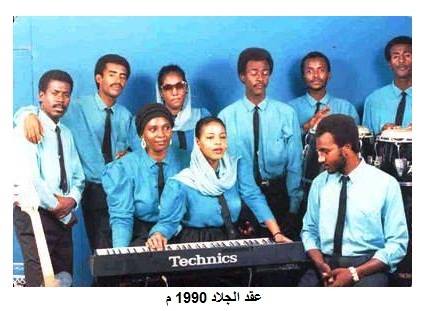
Igd Al Jalad, 1990.
Image source: Al Sudan Zaman (Facebook)
Many modern legends, such as the late Nader Khider, Asim Al Banna, and Esam Mohammed Nour, soared to fame during the 1990s, reviving songs from the haqeeba era in their own style. While traditional sound was preserved, the introduction of digital keyboards and newer music technologies further modernised music at the time.
Mahmoud Abdelaziz
Image source: Al Daleel Al Sudani (Facebook)
In the 1990s, the late Mahmoud Abdulaziz, also known as Al Hoot or The Whale, whose legacy remains afire even after his passing in 2013, became the voice of the youth despite limited media exposure at the time. His fanbase expanded exponentially through production of cassette tapes and live performances. He sang songs revolving around themes of romance and defiance, and his message connected with the oppressed Sudanese society, his music giving them hope of freedom through resistance.
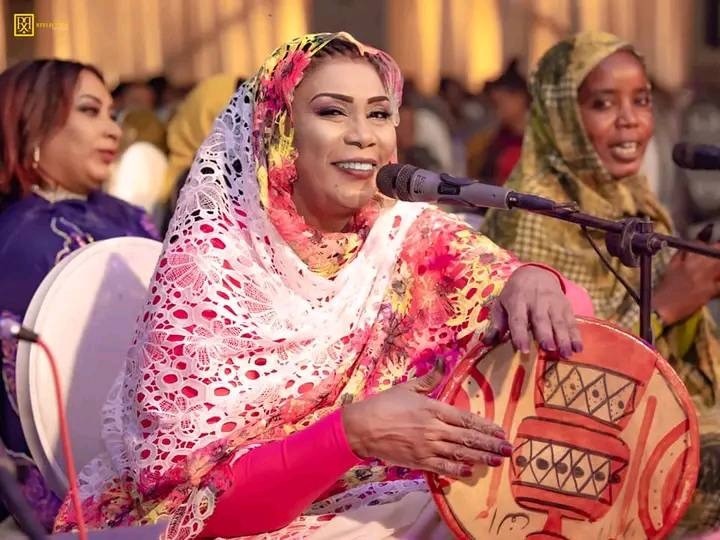
Gesma performing at ragees aroos.
Image source: Photos From Sudan (Facebook)
During the rule of Al Bashir, female musicians suffered restrictions, but continued to perform in closed spaces and private events such as weddings and other celebratory occasions, and their music was primarily for women. Following in the footsteps of Hanan Bulu Bulu, artists such as Gesma gained widespread recognition by playing dalouka, a traditional percussion instrument, and singing songs about womanhood and love. Gesma rose to popularity in the 1990s and became the leading performer for ragees aroos, a traditional wedding ceremony where the bride dances for the groom in the presence of a female-only audience of family and relatives, friends and other close people. Some female musicians who were popular during that time such as Nada Al Gala’a did not face persecution for live performances due to their widespread popularity and strategic conformity to the regime.
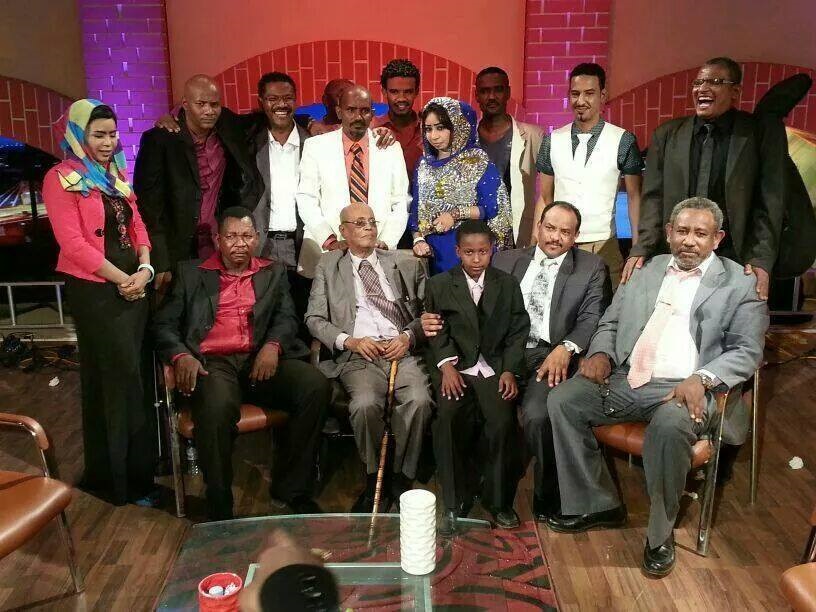
TV show Aghani wa Aghani.
Image source: Al Nilin
While censorship prevailed during the early 2000s, certain music free of political messages was advocated by the government. The iconic Ramadan show, Aghani wa Aghani (Songs and Songs), hosted by the late Sudanese poet Al Sir Gaddour (1934-2022), came to life, bringing together both male and female mainstream singers, such as Taha Sulieman and Makarim Basheer, to perform original music and renditions of classic Sudanese songs. The show remains highly acclaimed even after the passing of Al Sir Gaddour.
The early 2000s witnessed a grand revival of Sudanese music, especially with youth icons such as Ahmed Al Sadig and late Nader Khider (1971-2012) surfacing. Most musicians during this time resorted to covering older songs and producing music that resembled a slightly modernised style of music from the golden age. Few pioneers at the time such as Hybrid Band and Sudanese Band, which are both boy band groups, brought bold unconventional changes to the music scene by producing Sudanese songs in Western pop style using newer technology and digital tools, and this was successful in introducing younger generations to iconic Sudanese lyrics. The late Mohammed Faisal Al Jazzar (1986-2025) was a member of Sudanese Band who later went on to have a solo career, continuing the group’s modernised style of music, with songs such as Makashifi Al Qawm, which became his greatest hit, gaining popularity across the world.
Ayman Al Rubu’.
Image source: Al Mamlaka (Facebook)
The persistence of restrictions through the early 2000s deepened the disconnect for marginalised youth from Sudan’s music culture, which left them yearning for music that reflected their identity and experiences, and this led to the rise of legendary musician Ayman Al Rubu’, son to Sudanese jazz musician Salah Brown and a talented keyboardist. He began playing in small youth gatherings, introducing Sudan’s popular underground genre, zanig, for the first time. Zanig is a genre of Sudanese music that draws from traditional and African, specifically Congolese music. It is primarily keyboard oriented and can be described as fast-paced and rhythmic, its lyrics filled with slang and revolving around themes of everyday experiences of youth. Thriving on the streets of Omdurman and Khartoum, the genre quickly became a culture for youth, rooted in expressive style, unique dance style, and attitude. While zanig began as an underground genre two decades ago, it is now becoming mainstream, with many surfacing keyboardists such as zanig icon Nejery and Basil Hollandy incorporating their distinct style into the genre.
In the early 2000s, one of the major changes that affected the Sudanese music industry was the establishment of Blue Nile TV, a comprehensive government-run Sudanese television channel that covers several areas such as economics, culture, and sports. Blue Nile TV introduced the show Aghani wa Aghani (Songs and Songs) and Njoom Alghad (the Stars of Tomorrow). At the time, Sudan TV aired some music performances, but it often followed strict censorship and conservative programming. Blue Nile TV opened doors for numerous music acts and gave them an opportunity to gain popularity, especially female musicians who would otherwise be restricted to perform, such as Al Toumat, the twin sister duo Eman and Amani, and Nancy Ajaj, a highly acclaimed composer and singer. For musicians, Blue Nile TV was a platform for innovation, creative liberty, and revival at a time where the music scene was heavily restricted by the regime.
Modern era: transformation, innovation and global reach
Many elements of the music scene in Sudan remain the same today. Musicians that rose to fame in the 1990s and early 2000s, such as Asim Al Banna and Jamal Farfour, still receive widespread respect for performing the classics they are well known for. Their work has resonated with the public so profoundly that it inspired other emerging musicians to follow in their footsteps. Many young musicians including Hussein Al Sadig and Ahmed Fathallah, produce new songs that resemble the style of legends that came before them, and still sing with full orchestras in pentatonic style.

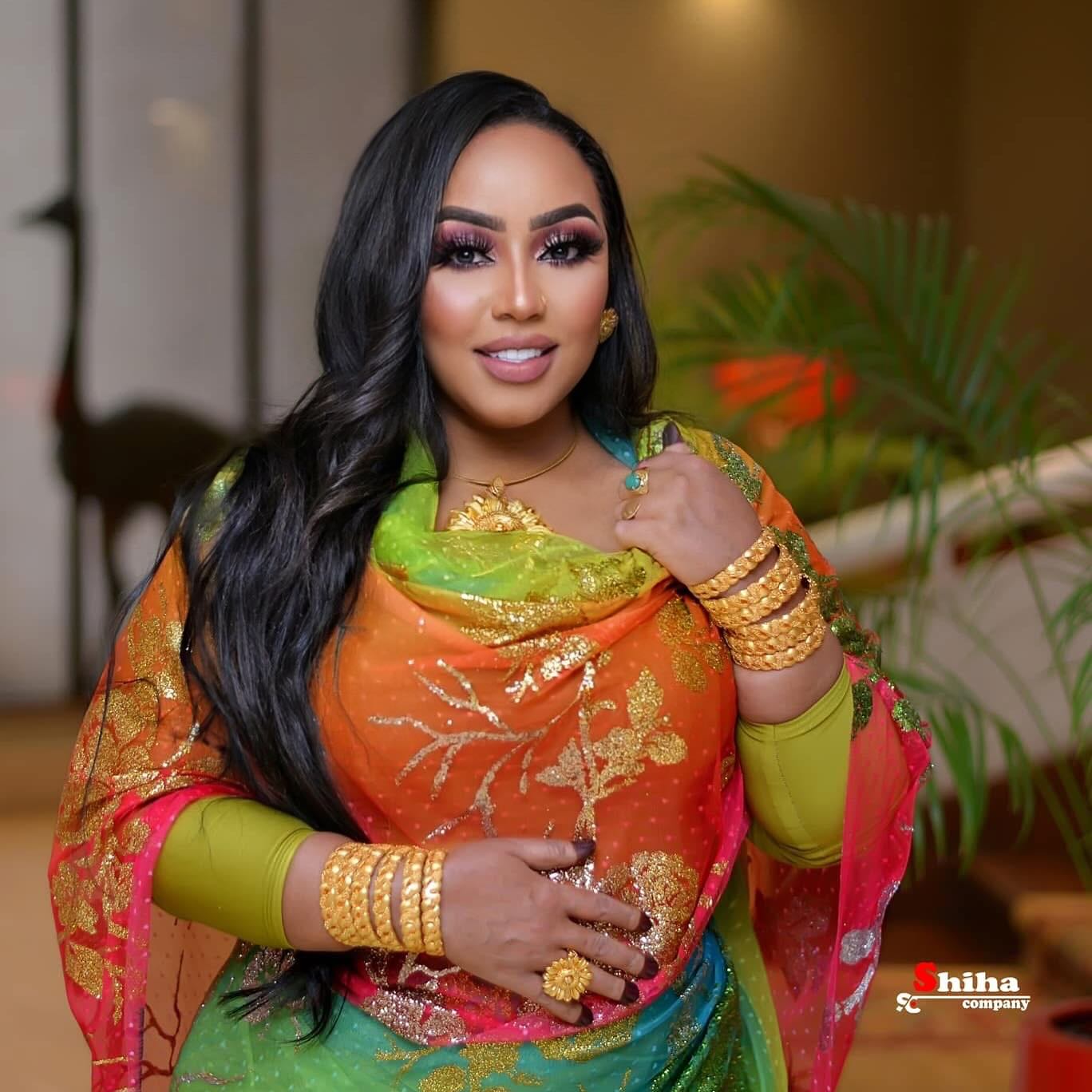

Female musicians such as Nada Al Gala’a continue to record new songs, but remain steadfast in their lane in the music industry, while Gesma remains the leading performer for ragees aroos. The traditional girls’ songs from Sudan’s music history continue to inspire an expanding circle of women to produce songs, most of which are collectively still referred to as aghani banat. Ensaf Medani, Huda Arabi, Mayada Gamaraldin and Eman Al Shareef are some of the leading singers in the field, and like the first female musicians, their music is primarily characterised by percussion or dalouka and is mainly performed at wedding ceremonies. While the music style remains the same, the production quality is immensely improved in modern times, with digital production being at the forefront.
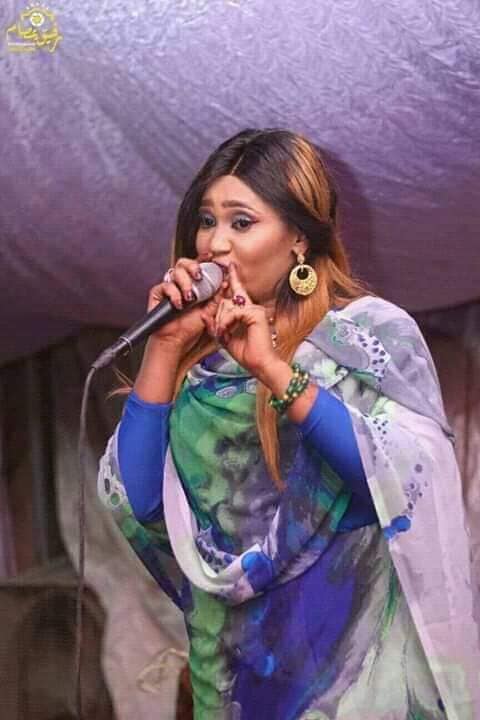
Asha Al Jabal
Image source: Asha Al Jabal (Facebook)
Gonat (gonat, plural; gona, singular), known for their socially controversial style of performing, surfaced in the early 2000s. Some of these singers, such as Marwa Al Duwaliya, have gained popularity from singing alongside famous zanig keyboardists, and later went on to have solo careers, while others such as Asha Al Jabal were never part of the zanig scene. Their style of music is typically described as party music, with heavy percussion, high energy singing, and often improvised lyrics.
Traditional Sudanese music from past eras is still popular today, especially across the older generations of Sudanese and in traditional weddings, but several pioneers in the field are now experimenting with complete modernisation of Sudanese sound. Mazin Hamid, for instance, is a singer, producer, composer and sound engineer who is well-respected for profoundly revolutionising the style of Sudanese music while still preserving traditional sound and identity. His fresh take on modernisation is continuously succeeding at introducing younger generations to classic Sudanese music.

Nancy Ajaj
Image source: Nancy Ajaj (Facebook)
Singer Nancy Ajaj, who began her journey covering classic songs by legends of the music scene, has now redefined her style to incorporate modern sounds influenced by both traditional and Western music. She has worked with Sammany Hajo, a young Sudanese music artist based in Doha, Qatar who produced the album Briefcase, a contemporary reimagination of haqeeba music. She is one the most international and accomplished Sudanese singers as a former UNICEF national ambassador, which resulted in her collaboration with English singer and songwriter Joss Stone. She has also recently been invited on talk shows such as ABtalks with Emirati Interviewer and entrepreneur, Anas Bukhash, and Arab Cast with Emirati media personality Jamal Al Mulla.
Other musicians such as the UAE-based dentist and singer Dr Omer Elamin and Azza249 are releasing covers of old Sudanese music in a modern style, preserving much of the traditional sound, but using hints of Western influence in production. Aswat Al Madina (Sounds of the City) is a popular all-males band that releases and performs original tracks that bring a unique fusion sound to traditional Sudanese music.


The modern style of music in Sudan also leans on the influence of reggae, with popular singer Wd Alzain being the leading music artist of the genre, followed by rapper AG Nimeri incorporating reggae into his rap style as well as beats. Globally prominent artist duo Marsimba, consisting of Mazmars and Seidosimba, have been pioneers in the Afrobeats genre of Sudanese music, becoming some of the first artists to attract the spotlight to the music scene in Sudan. Saudi-based singer Ahmed Amin has incorporated various modern music styles and genres from reggae to Afrobeats to rap into his music, creating a library of versatile Sudanese songs. Rapper Hleem Taj Elsir also released his popular hit, Ya Njoom, meaning “Oh Stars”, in Afrobeat style, and even musician MaMan is becoming a staple in the genre, describing himself as a Sudanese Afrobeats musician. This Western and African influence opened the door for the DJ culture in Sudan, introducing icons such as DJ Phisics and DJ Toxic, who perform at concerts and many occasions, typically for younger audiences.
In the late 2010s, the rise of Sudanese hip hop transformed the scope of Sudanese music. Sudanese hip hop is mostly shaped by a thriving Sudanese rap scene, which is enriched by rappers such as Flippter, Rotation, Too Dope, Hleem Taj Elsir, Dafencii, Mvndila, Wad Almzad, AG Nimeri, and many more. Rappers such as Ali GX, Flippter, Tayeb Hajo (TooDope), and Rotation, introduced a fresh take on music by singing and rapping in a mixture of Sudanese Arabic and English, which had a remarkable impact on the visibility of Sudanese musicians, helping them reach a broader audience across the diaspora and other nationalities. In the modern era, Sudanese rap has become a vehicle for cultural expression, with rappers such as Soulja releasing hip hop music with hints of traditional sound, such as zanig-inspired beats. Mshakil Beats, a producer who collaborates with rappers such as Awab The Rapper, Esaam Satti, Wad Almzad and Shaikh Altareeg, has played a key role in integrating Sudanese orchestral and percussion sounds from the golden era into rap songs, further pushing the limits of genre blending in Sudan’s rap scene. Female rappers such as Nadine El Roubi and RANA have also been challenging social norms and bringing female perspectives to the Sudanese rap scene.
Some musicians of Sudanese origin such as Bas, Elmiene, Mustafa The Poet, and Gaidaa are growing in popularity across the globe, and while their music style is heavily influenced by Western music and bears little to no resemblance to traditional Sudanese music, their success continues to inspire other rising stars from Sudan to transform their sounds and experiment with genre fusion.
In contemporary times, artists of all genres are working hard to broaden the global reach of Sudanese music. Many artists are constantly scheduling concerts and performances across the globe for diasporic populations, which increases their visibility among other nationalities. Festivals in places such as Egypt and Gulf countries are offering platforms for Sudanese artists including Nancy Ajaj, Ensaf Medani, Dr Omer Elamin, and Hleem Taj Elsir to showcase Sudanese musical culture. Several Sudanese artists, including Sammany Hajo and Flippter, have been hosted on the popular music platform COLORS.
The evolving nature of the global music scene has also driven countless Sudanese artists to prioritise new digital technologies. Efforts have been made by many artists, including traditional folklore singer Eman Al Shareef, to shoot music videos of their songs, and many videos by various artists have reached over 5 million views on YouTube. In the past, archives of Sudanese music were difficult to recover, with most recordings of older songs available only in poor quality, but now artists are utilising platforms such as Spotify, Apple Music, and Anghami to release their discographies, thereby enhancing the future preservation of music from the modern era.
The rise of TikTok as a music-dependent platform, where the use of many Sudanese songs in videos became popular amongst other nationalities, has also significantly contributed to the globalisation of Sudanese music. With the help of Sudanese influencers on the platform, countless people of different nationalities and across the globe are discovering and enjoying the glory of Sudanese music.
The future of music in Sudan
Revival and reinvention have woven into Sudan’s music history since its origin, and while artistic expression has suffered under government-imposed restrictions until the early 2000s, Sudan’s music scene has undergone a profound transformation in recent years. The era of censorship is left far behind as artists today continue to push the limits of experimentation.
The global impact of Sudanese music is steadily growing and this newfound spotlight further inspires artists to break boundaries and move beyond familiar sounds. Reflecting on the future of Sudan’s music scene, musician MaMan remarked, “some still sing the same lyrics that have been written 50 years ago, but hopefully now it has changed because the world is giving it acknowledgement.”
Blending tradition and innovation is significant in Sudan’s music scene for the creation of subgenres that honour the cultural roots, but still resonate with younger and diverse audiences. Fusing elements from tribal rhythms, haqeeba influences and golden era orchestral sounds with modern age afrobeats, hip hop, and pop can enable emerging Sudanese artists to create unique music while showcasing their cultural identity. The preservation of traditional influences is significant in the future of Sudanese music, because without it, the cultural richness of Sudanese music risks dilution in the face of globalisation.
As the music of Sudan continues to evolve, every note carries with it the struggles and victories of a population who used their voices and strings for resistance and resilience time after time. The future of Sudanese music is not only about innovation, but about reclaiming identity and building a bridge between the people of Sudan and the rest of the world. With every strum of oud and every beat of dalouka, the world is finally beginning to listen.
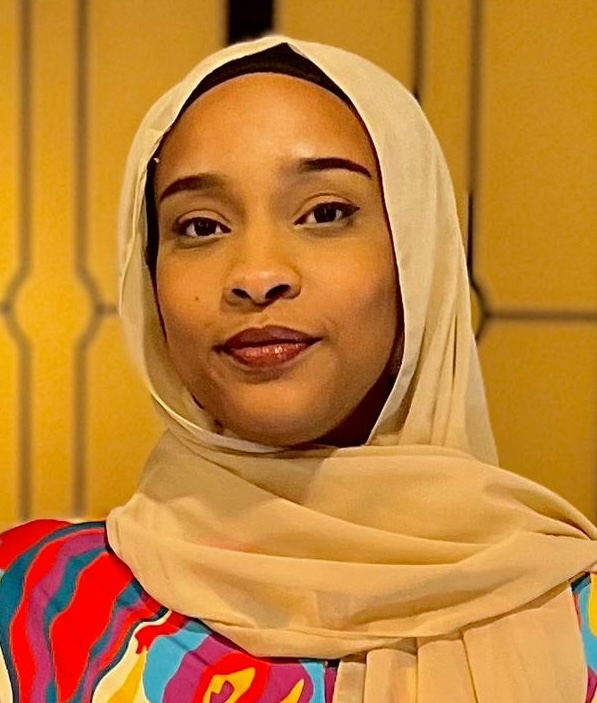
Samar Bengawi is a medical student by day, and a literature and music enthusiast by night. She was born and raised in the UAE and is now based in Georgia. She is never without a cup of coffee in hand, and is always “on the go,” chasing after one hobby or another. Passion in Sudanese politics runs in her blood and she considers herself a patriot who hopes to leave a memorable mark in the world.