


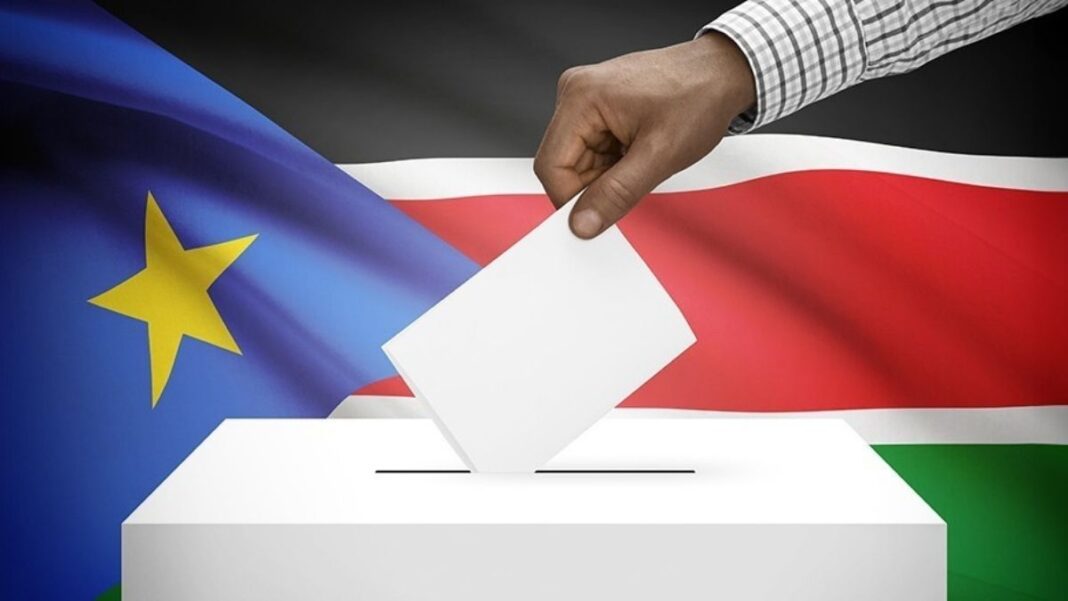
South Sudan is scheduled to hold its first-ever national elections since independence on 22 December 2026. With the country on the cusp of its first national elections since independence, the UN Commission on Human Rights in South Sudan warned that “multiple risk factors for atrocity crimes are converging… The window to prevent a return to the scale of atrocities and displacement South Sudan endured between 2013–2018 is closing, but it has not yet completely shut.”
The vote has been postponed multiple times since the country became independent in 2011, making this election a major test of whether the country can move from a prolonged transitional government towards a more democratic system.
The warning comes amid a resurgence of armed conflict in several parts of the country, particularly in Upper Nile, Jonglei and Unity states, while clashes and civilian deaths have also been reported in Western and Central Equatoria states.
A total of 407 ceasefire violations were recorded between August 2025 and January 2026.
“Fifteen years after independence, South Sudan is at one of its most dangerous points,” the Commission said, noting that “rushing to elections” without essential safeguards risks deepening existing conflicts and increasing the risk of the atrocity crimes genocide, crimes against humanity, war crimes and ethnic cleansing.
Today’s concerns over renewed atrocities are in line with the UN Framework of Analysis for Atrocity Crimes, which sets out eight warning signs of genocide, crimes against humanity, war crimes and ethnic cleansing. “The Commission finds most are present and intensifying at once in South Sudan,” it said.
Chief among South Sudan’s problems are “renewed armed conflict, weakened institutions, entrenched impunity, exclusionary governance, corruption, shrinking civic space and inflammatory rhetoric”, the Commissioners said.
At the same time, the mechanisms that could mitigate these risks – including ceasefire monitoring, independent justice institutions and inclusive political dialogue – “have been weakened or suspended”.
In a statement, the Commissioners also alleged that inclusive politics were now “being abandoned” in Juba; civic space and constitutional safeguards have also been weakened, they said, while accountability mechanisms “remain largely absent”.
At the same time, significant sections of the population remain excluded from meaningful political participation, the panel noted. “Without a return to genuine and inclusive dialogue, the political contest surrounding the elections risks deepening existing divisions rather than providing a peaceful means of resolving them,” they said.
Commission Chair Sooka insisted that South Sudanese who have “waited 15 years to cast their first ballots” had the right to choose their government through free, peaceful and democratic elections.
“Elections must not be allowed to create another violent battleground,” said Commissioner Afako. “The guns are returning while the safeguards for peaceful political competition are disappearing. That is a profoundly dangerous trajectory,” he added.
“An election cannot be credible simply because it is held on schedule,” said Commissioner Fernández. “It is credible when citizens can vote without fear, political opponents can participate freely, courts can resolve disputes independently, and institutions can constrain the exercise of power.”
Source: UN News
Related posts