


The history of Sudanese music is rich, and almost always a topic of conversation, and when this conversation happens, it is common to find people immediately reaching for the names of Sudan’s greatest musicians such as the late Mohammed Wardi, Mohammed Elamin, and Othman Hussein. The list goes on, but it almost never includes names of female musicians.
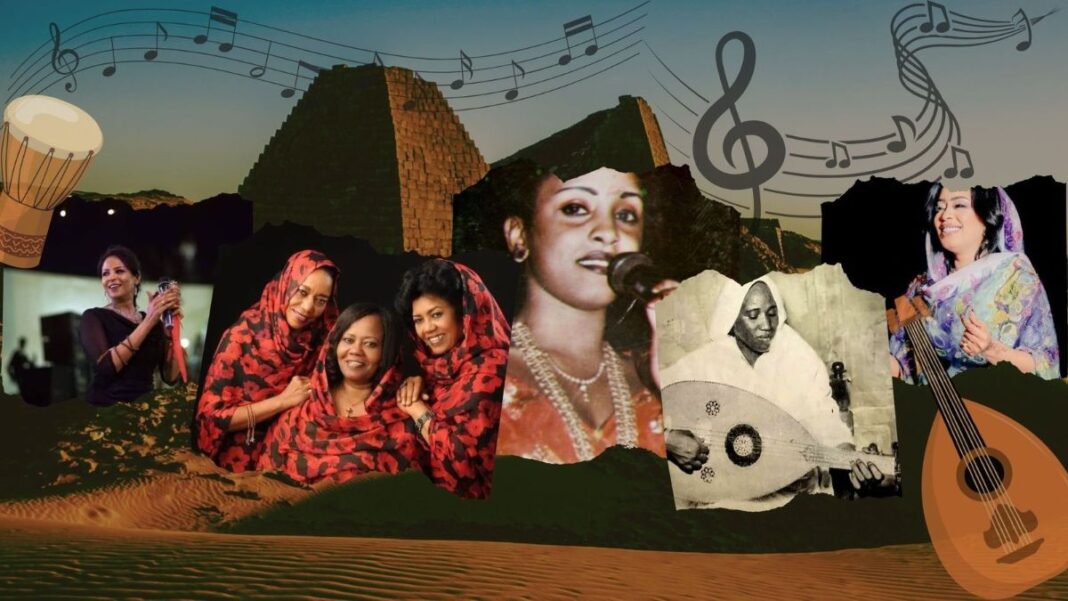
Now, I ask you, how would Sudanese music sound without Asha Al Falatiya, Al Balabil, or Nancy Ajaj? The answer is simple: it would sound completely different, because the women in Sudan’s music scene did not just contribute to it, but expanded its sound and vocabulary beyond imagination.
Women have always been a part of Sudan’s music
Long before Sudanese music made it to record labels and radio broadcasts, music lived and breathed through women in the form of what we now know as aghani banat (girls’ songs). Women in communal spaces would drum on their dalouka, Sudan’s percussion instrument, and sing during celebratory occasions. The music women sang at social gatherings was always part of Sudan’s history, passed down until our current generations. The songs told tales of life and love and revolved around themes of togetherness, celebration, and of course, marriage.
Perhaps this is why Sudan’s music history was predominantly male, because while male musicians made music, women doing the same thing was thought of as social traditions. The truth, however, is that women never really “entered” the music scene – they had always made music, but they were never in the spotlight, because Sudan’s music scene was, in fact, a man’s world.
Women in the early music industry and the introduction of the feminine sound
Soon after the music scene started forming, Asha Al Falatiya, icon and pioneer of music, brought her voice and her music to the Sudanese music scene, shattering all social norms at the time. Despite the challenges that stood in the way of women, her voice became known to the public as early as the 1930s. Through her fearlessness and bravery, Asha opened the door for many other Sudanese women to join the music industry. Her powerful contributions to Sudanese history and the music scene are discussed in detail in my piece Sudan’s First Lady of Song: The Story of Asha Al Falatiya.
After the independence in 1956, the music scene grew, experiencing its golden years, and women, including Hanan Bulu Bulu, Al Balabil, and Thuna’ee Al Nagham (The Music Duo) were a huge part of those years. Sudan’s iconic sister trio and girl group, Al Balabil (The Nightingales), rose to fame quickly, introducing the new sound of female harmonies, the concept of feminine performances and unique stage presences. They brought a distinct female identity to the music scene, and changed the sound of Sudanese music, incorporating the concept of emotive delivery. Their music was so powerful that even today, it is still known across younger generations for instilling a sense of nostalgia and longing to home.
Challenging societal norms and surviving the era of censorship
After the golden era, former President Omar Al Bashir assumed leadership of Sudan in 1989, bringing the growth of the music scene to a halt through the enforcement of censorship and persecution of musicians who defied the government. Part of the censorship included placing many social barriers upon women in Sudan. From strict dress codes to censorship in the media, including the music industry. Few female musicians would perform at the time, and when they did, they would have to abide by dress codes and be in alliance with the government at the time. The space for women to be creative within the music industry once again became limited to performances that were deemed socially acceptable, such as in wedding occasions.
Despite restrictions and censorship, however, women continued to make music. Some women continued to perform in public spaces, such as Nada Al Qalaa, who was an alleged ally of the regime at the time. And others, such as Gisma and Ensaf Madani, gained popularity in the daluka and aghani banat music genres, mostly performing wedding music and singing during celebratory occasions. On the other hand, revolutionary icon Nancy Ajaj also rose to fame during this time despite not fitting the societal expectations at the time. In addition to her original songs, she also performed songs known and loved by all and gave them a new sound, making them entirely her own and leaving her mark on the music scene. She took songs, such as Othman Hussein’s Musamhak Ya Habibi (I Forgive You, My Love) and Fel Dawahi (In The Suburbs) which was written by Khalil Farah, and turned them into her own, making it so that these songs cannot be heard or imagined by any vocalist that was not her.
The early 2000s also brought the genre of zanig to the music scene. A genre that functions as “street music” in Sudan, known for its rich percussion and Congolese-influenced melodies. While the music in zanig is rich on its own, female singers who accompanied the keyboardists in their performances made the music richer. The women who performed alongside zanig musicians were the biggest challengers of the social norms at the time, singing lightheartedly but with complete transparency about the struggles that youth faced. Their performances were a culture shock, because society was not accustomed to their stage presences – from the choice of fashion and their dancing to the majority male audiences, they simply did not fit the social norms.
Modern era, women in the spotlight, and the challenges that persist
Although the days of Al Bashir are long gone, the restrictions imposed by Al Bashir’s regime continued to box most female singers into the genre of aghani banat, which throughout the times was never taken seriously by people, and was never considered sonically creative. Although in my personal opinion, the music that forms aghani banat is the root of all traditional music in Sudan, from which lyrics and melodies are derived to create other music projects. Even after all the inspiration drawn from it, however, it was always looked down upon as music only girls would listen to, and enjoying it usually meant you did not know good music.
When we take a closer look at the evolution of Sudanese music over time, the impact that women made is quite apparent. Other than unique stage presences, style and glamour, music itself had a new depth. While Sudanese music is known for its emotive lyrics and rich melodies, women added to the emotions, bringing new themes to the table – in addition to the themes of womanhood, they also brought feminine perspectives to the topics of friendship, romance, Sudanese identity, and resilience.
Even after the early 2000s, people in the music industry were not respected in society – their careers were thought to be less than or immoral and not in alliance with traditional beliefs. Still, women in the music industry suffered more than their male counterparts to be accepted and were frowned upon for the longest time. Conversations that were supposed to revolve around the music itself, became about much heavier topics, where judgement and criticism took the forefront every time a female singer challenged the social norms on stages. Suddenly, music is no longer the focus, but audiences started fixating on the way the women performing were dressed, how they sang, how they interacted with male audience members, and how they danced. Audiences turned from criticising a song or a performance, to policing women and calling them out for being inappropriate, loud, or attention-seeking – women in Sudanese music always had to live up to much greater expectations than male musicians.
In recent years, women broke past these boundaries in traditional music, and musicians such as Eman El Shareef and Huda Arabi surfaced, taking the genre of aghani banat to a new realm. While they still continue the tradition of singing at weddings and celebratory occasions, they also began expanding the borders of the genre, experimenting with contemporary sounds and collaborating with rappers such as Esaam Satti and Soulja to show audiences that they are here to stay even in the dynamic state of today’s music scene.
Female musicians are now becoming a larger part of the Sudanese music industry, and they have grown beyond the box aghani banat and made their mark in almost every genre. Even aghani banat are being given their due, their creativity is acknowledged and the musicians are gaining more respect. This growing acceptance and recognition of aghani banat is largely attributed to Ensaf Madani, who rose to fame in the early 2000s. With her witty personality and unique stage presence, she was able to take the sound of daluka and feminine music from homes and special occasions to stages, growing the audience of the genre from girls and women to everyone. Ensaf opened the door for many icons after her, such as Huda Arabi and Eman El Shareef, who continued Ensaf’s mission of making aghani banat accessible and enjoyable by all, even beyond the Sudanese community.
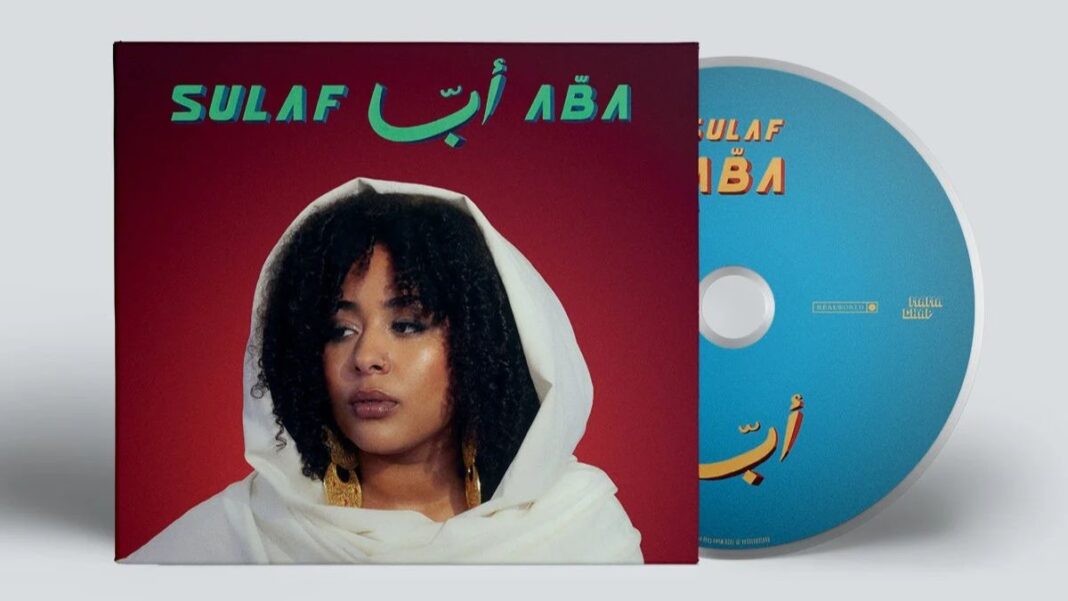
Today, the soundscape is becoming recognised globally and a lot of that is credited to female musicians just as much as male musicians, with female musicians, such as Sulaf and Nancy Ajaj, experimenting with fusion of genres, nodding to traditional music while still making visible efforts to modernise Sudanese sound. Not only are women reframing the sound in traditional music, but they are also making their mark in the Sudanese hip hop scene, with female rappers Nadine El Roubi, Zara Musa, better known by her stage name Nubia, and Rana at the forefront of this change.
Despite this growth in recognition, there are still many conversations taking place about the history of Sudanese music and Sudan’s music scene, where women are left out. So, it is finally time that these conversations shift, and we acknowledge the monumental effect that women had on Sudan’s soundscape. Credit must be given where credit is due, for without the female musicians from different eras, Sudan’s music would not be where it is today. The depth and emotional delivery it is well known for would not be possible if female musicians did not add their touch. The women in Sudan’s music scene walked so everyone else could run, and it shows in every melody we hear today.
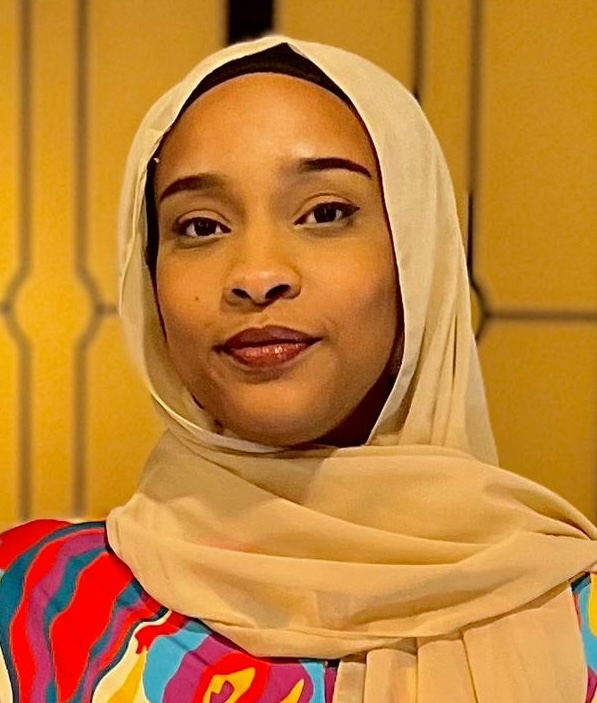
Samar Bengawi is a medical student by day, and a literature and music enthusiast by night. She was born and raised in the UAE and is now based in Georgia. She is never without a cup of coffee in hand, and is always “on the go,” chasing after one hobby or another. Passion in Sudanese politics runs in her blood and she considers herself a patriot who hopes to leave a memorable mark in the world.