


What makes a person a villain?
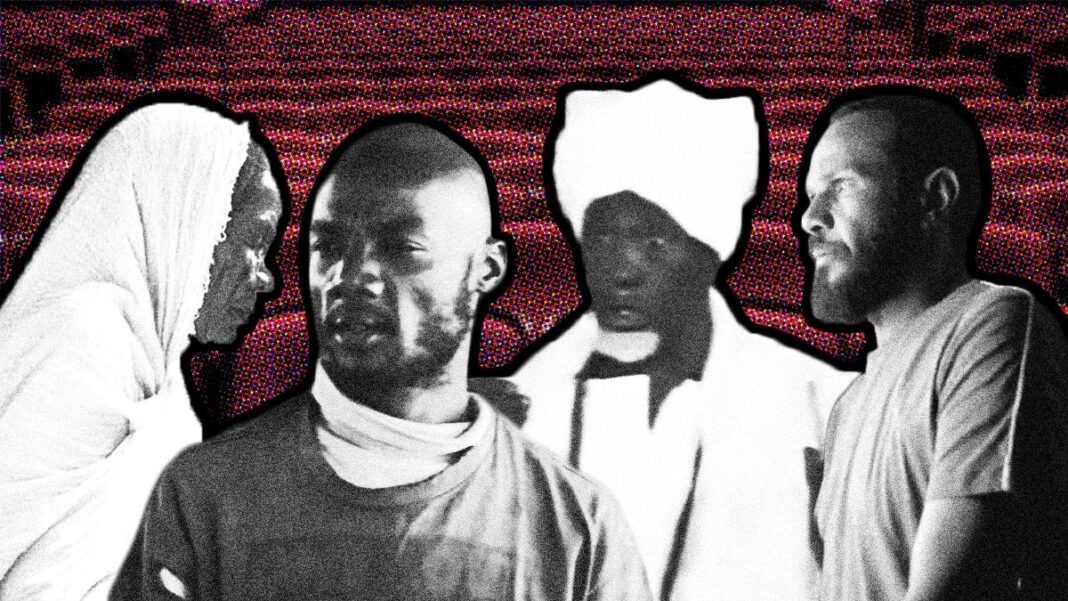
A natural question raised by stories featuring conflict between good and evil, to ask this in regards to Sudanese narrative films is to open a window into what Sudanese — specifically, the globalised, relatively affluent Sudanese behind the industry — consider “evil.” With that in mind, here are four Sudanese cinematic antagonists who represent different ways villainy can manifest in Sudanese film, each of them a message about what the filmmakers consider broken in society.
Note: This article will contain spoilers for The Sheikh’s Blessing, Nyerkuk, Goodbye Julia, and Cotton Queen.
Sheikh Abu Tagiya (The Sheikh’s Blessing)
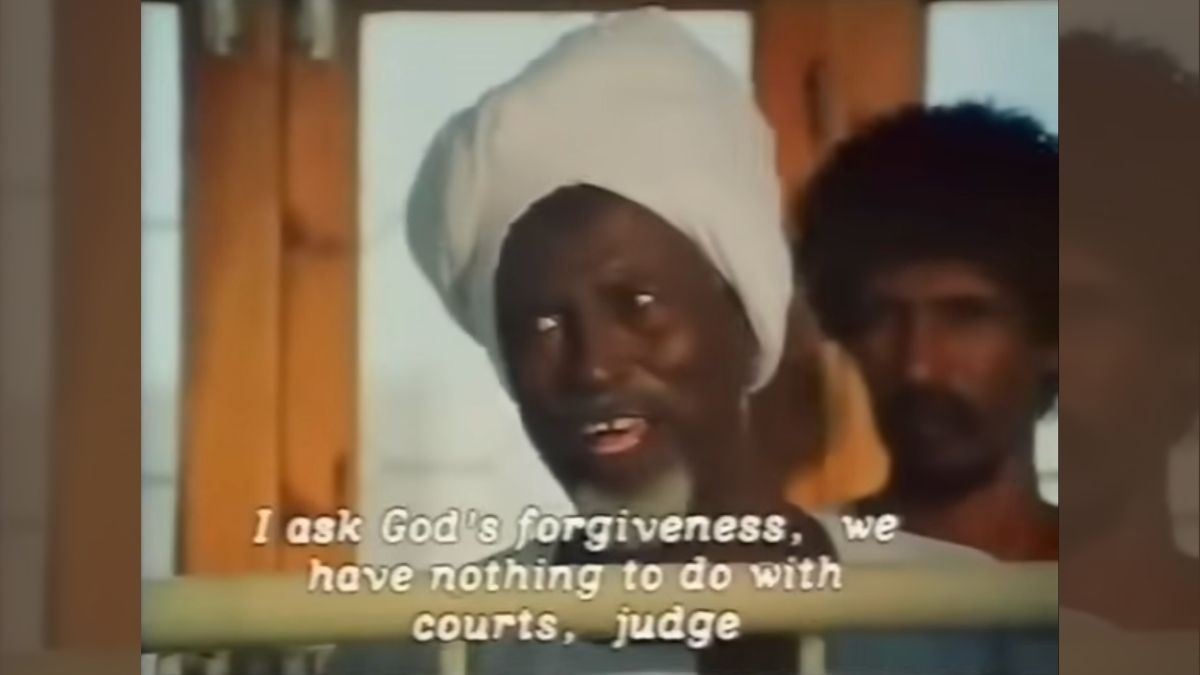
As discussed in my column “Your Sheikh’s a Crook,” one of Sudanese cinema’s oldest tropes is a charlatan who manipulates people by making bogus claims to supernatural power. Of the many examples, Sheikh Abu Tagiya from Gadalla Gubara’s The Sheikh’s Blessing is perhaps the most fully realised. Arriving in the humble village of Zouzaya with his purported disciples, Abu Tagiya builds trust by miraculously healing sick villagers. As he faces skepticism from two of the film’s protagonists, Amin and Sheikh Abd Alrahman, he gradually turns the villagers against them. This culminates in his gang’s murder of Amin and framing Abd Alrahman, who is then expelled from the village. It is not until the film’s ending that the people of Zouzaya shed their blind faith in Abu Tagiya, after he is arrested by the Sudanese police and revealed in court to be a scammer with no religious credentials.
This presentation of Abu Tagiya as a con artist manipulating people’s faith for his own gain embodies a common critique of rural Sudanese religious hierarchies, showing how they can be seriously abused. This theme can appeal to the educated audiences who make up Sudanese filmgoers, representing their concerns for villagers, who they view as uneducated, superstitious, and therefore vulnerable to scams that claim to provide needs (such as medicine) that the state cannot.
Mazda (Nyerkuk)
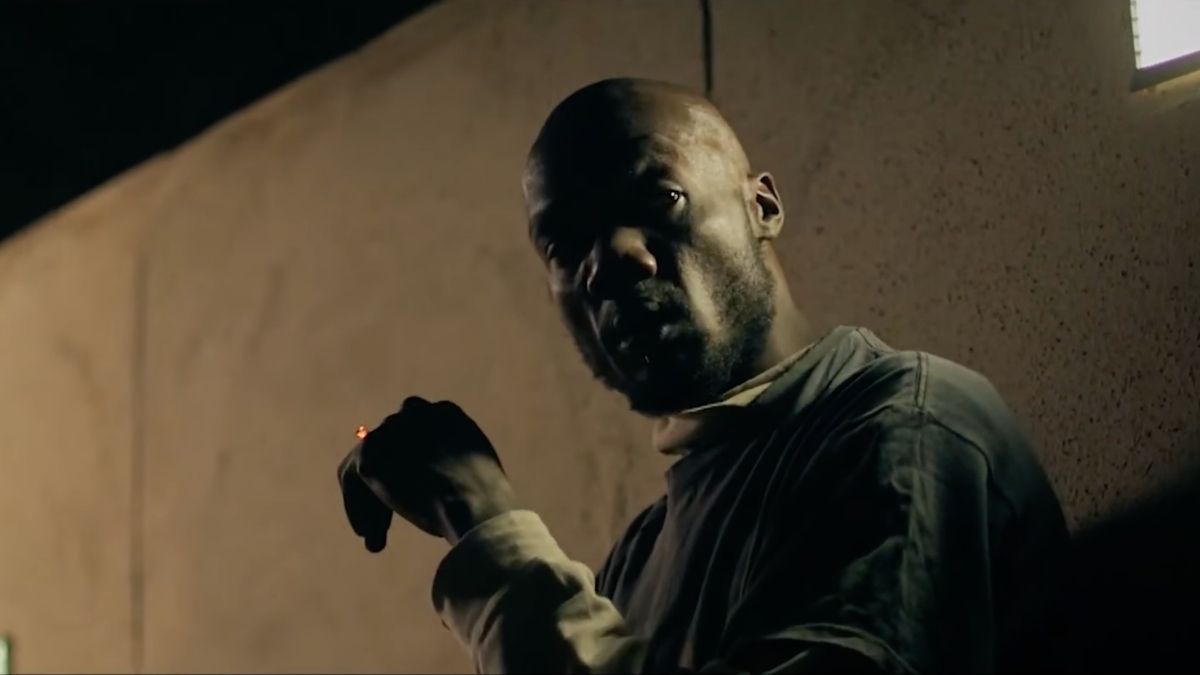
In a film that is principally about how internally displaced, non-Arab Sudanese respond to poverty, Mazda, the main villain of director Mohammed Kordofani’s 2016 short Nyerkuk, represents those who turn to a life of crime. Failing to find human or divine help as a beggar, Mazda becomes a thief who uses children to help him in his robberies, including the film’s protagonist, Adam. Mazda is intimidating and cruel, torturing children who attempt to run away from him, and using Adam’s war trauma to keep him under his thumb.
It is easy to read Mazda as a straightforward vilification of Khartoum’s non-Arab criminals, and by extension, Nyerkuk as a morality play, preaching the long-term pursuit of honest work rather than a quicker but unethical turn to crime. Such a message may resonate among many middle class, Khartoumite audiences, who are represented in the people Mazda steals from. Yet, Kordofani’s incorporation of Mazda’s background complicates this picture. Displaced by war, Mazda narrates how he sought aid in the capital city of his government which displaced him, and found none. In turn, he inflicts theft and violence on both the citizens of the capital and displaced children like Adam, who, by the film’s ending, is left with the choice to inflict violence on a man he’s robbing from. This backstory, in my view, recontextualises Nyerkuk’s story as a cycle of violence beginning in government policy, making Mazda a critique of the moral and economic impact of Sudan’s wars on individuals.
Akram (Goodbye Julia)
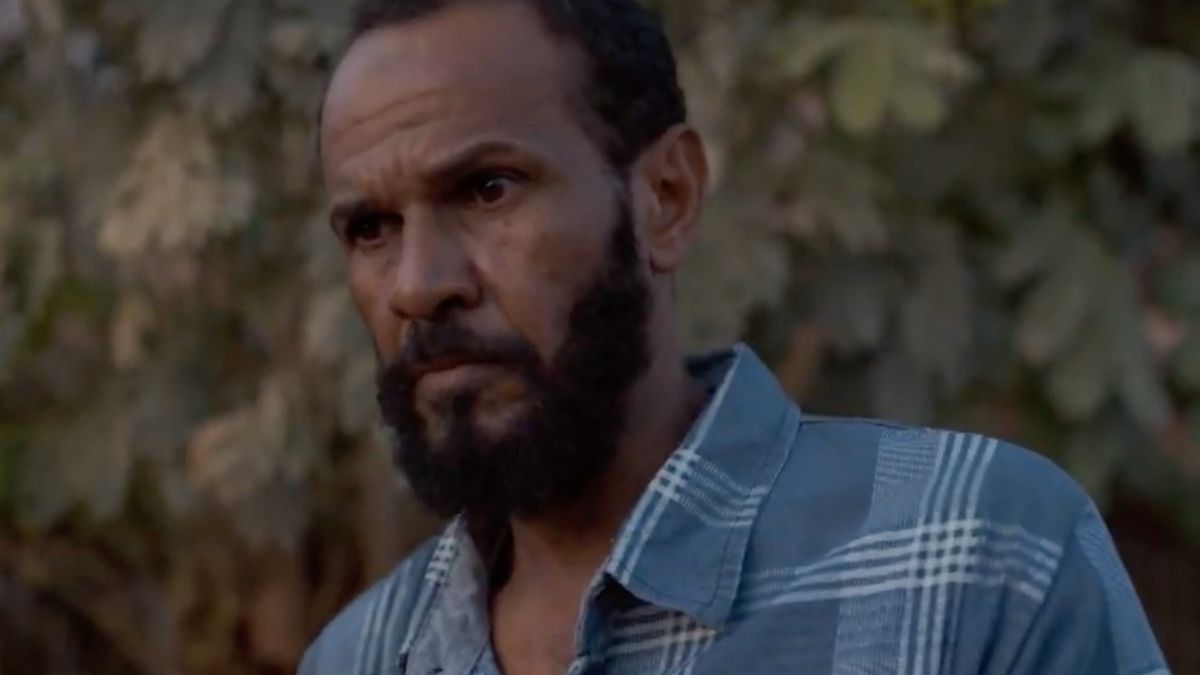
While writer-director Kordofani, in his own words, tried to “make [his] characters morally grey,” it’s difficult to watch his debut feature, Goodbye Julia, without getting the sense that Akram, the husband of the main character, Mona, is the story’s villain. In a film about Sudanese race relations, Akram is the most openly racist character. His remorseless killing of Santino, a South Sudanese man, covered up by his connections in the government, kickstarts the plot, throughout which he spouts anti-Black slurs and stereotypes. He is also a controlling husband, forbidding Mona from her greatest passion — singing — and policing her comings and goings constantly.
While these traits make his character eminently dislikable, his character is enriched with nuances. While he is a harsh husband, Mona is shown to be constantly dishonest to him, giving his mistrust of her context. He is racist, but also traces those views to his slave-owning family and Islamic history, making his outlook a byproduct of upbringing. Although he kills a man at the film’s start, when presented with a similar situation during the climax, he expressly chooses not to kill. These qualities make Akram very human despite his villainy, and, as is the case with Mazda, a character whose evil qualities reflect his political and cultural environment, in particular the racism and sexism of Sudanese society.
Al-Sit (Cotton Queen)
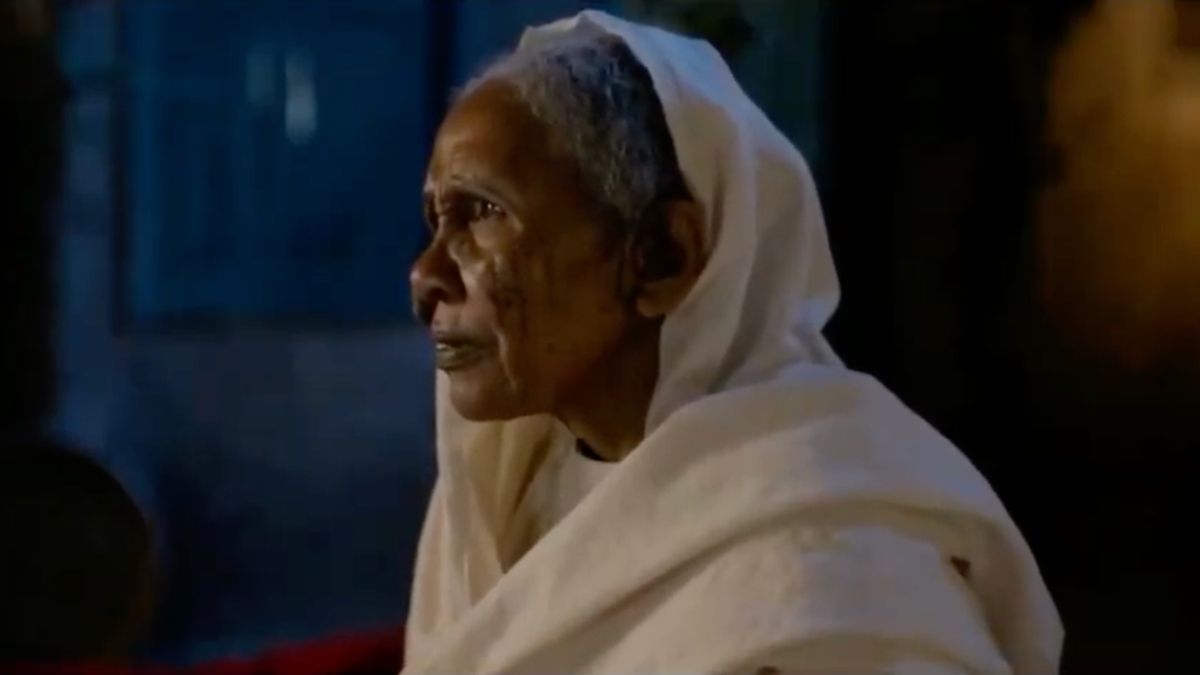
Some may be surprised to see Al-Sit, the grandmother of Cotton Queen’s protagonist, Nafisa, listed as a villain. She’s not a thief, and the only time she kills someone, it’s in justifiable self-defense. Most of all, she always acts with the belief that what she does is best for her family.
These good intentions are little comfort to Nafisa, however, who experiences her grandmother as domineering, intimidating, and manipulative, punishing her for things that give her joy. This makes Al-Sit the antagonist of Nafisa’s story, where she wields her massive social influence as a weapon. While this is sometimes to her granddaughter’s benefit, such as her intervening to prevent Nafisa’s circumcision, it can also be to her detriment, such as when Al-Sit arranges for her to marry her crush’s dying old father. While this is, in part, a punishment for Nafisa’s disobedience, Al-Sit’s stated intention is to give Nafisa freedom by allowing her to become a widow.
This duality between good intention and oppressive action makes Al-Sit a compelling antagonist, whose conflict with Nafisa mirrors generational conflict among Sudanese women, particularly young feminists struggling against the patriarchal norms enforced by older, conservative women.
While these four characters come from different films, some of them share traits, revealing a few trends in Sudanese film antagonists. Firstly, there’s a tendency to portray villains as reacting to Sudan’s cultural, economic, and political realities. Mazda is driven by his poverty, while Akram and Al-Sit are socially indoctrinated to act as they do. Aside from Abu Tagiya, effort is made to make the audience sympathise with the villains, or at the very least, understand them.
Secondly, all these characters are authority figures, whether it be due to their religious position (like Abu Tagiya), their marital position (like Akram), or their age (Mazda, Al-Sit). This authority, however, is always small-scale and interpersonal, exercised over their spouse, family, or immediate social circle. In each of these four cases, the protagonists overcome these villains by disobeying them.
Because the characters in question are byproducts of Sudan’s social and political organisation, these conflicts also double as a systemic critique: Abu Tagiya’s exploitation of superstition can be expanded to a critique of Sufism, Mazda’s criminality a critique of the conditions faced by internally displaced persons, etc. The protagonists’ disobedience, then, becomes an implicit endorsement of rebellion, be it social or political.
In regards to the question posed at the beginning of the article — what makes someone a villain — it’s clear that, at least for these filmmakers, it is social conditioning, which turns people abused by Sudan’s social and political systems into abusers, that makes people villains.
It is notable that, despite this deeply political idea of villainy, the people who head Sudan’s sociopolitical institutions — wealthy politicians, military generals, and so forth — go unrepresented as antagonists. This indirect approach to political commentary, that focusses critique on individuals who are quite powerless in the grand scheme of Sudanese society, may be a response to a history of political repression in Sudan, where the politically outspoken can face imprisonment and exile.
Regardless, the absence of this more direct critique of the powerful can leave the impression that Sudanese films are more concerned with liberal, middle class anxieties about their property and social freedoms, which can help explain conservative backlash to Sudanese film. Even from a non-conservative perspective, however, there is a benefit to having films which interrogate those who create the conditions for restrictions in freedom and property. As Sudanese cinema grows, it will be worth seeing whether filmmakers will find a way to accord these real power holders a narrative place as antagonists, and broaden their political lens outside the world of interpersonal character drama.
500WM Columnist Hatim Eujayl is a Sudanese-American writer involved in various projects to promote Sudanese culture. His most famous works include the Sounds of Sudan YouTube channel, the Geri Fai Omir Kickstarter, and the Sawarda Nubian font. More of his writing can be found on his Substack, ‘My Sudani-American LiFE,’ where he discusses Sudanese literature and cinema. He can be reached on Instagram @massintod or by email at [email protected].