



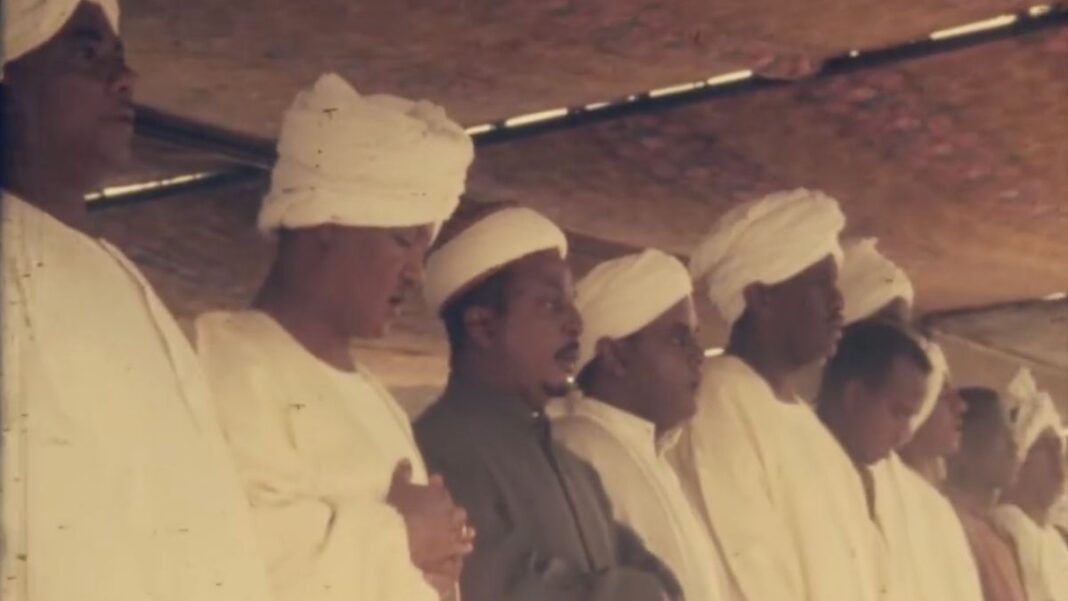
Among the many themes Sudanese films tackle, religion – specifically Islam – is one of the most common.
In a country with over 50 million Muslims, Islam’s influence cannot be overstated. Muslim holidays, rituals, and spaces bind communities together, while texts such as the Qur’an and hadith are used to articulate social values. Islam is also a powerful political force, informing party platforms and government policy since the early days of the Sudanese state.
Sudanese people’s relationship with Islam, however, is not static. The past century in particular, thanks in part to encounters with secular and Islamic thought across the globe, has seen religious perspectives diversify. This ranges from pious condemnation of local traditions, to a total rejection of religion, and everything in between.
The Sudanese screen is but one area where these varied perspectives can be seen. It acts as a compelling lens to explore attitudes towards the Islamic faith in narrative cinema, especially in regards to metaphysical frameworks.
A Brief Overview of Sudanese Metaphysics
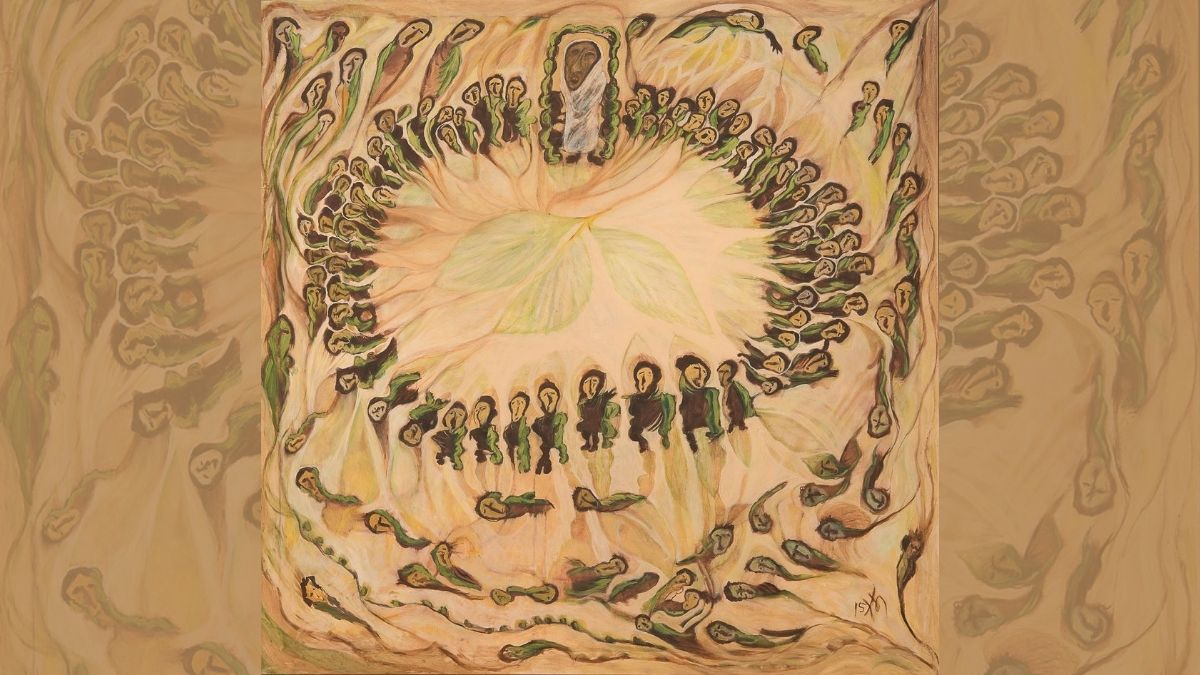
Metaphysics is the branch of philosophy dealing with beliefs about the nature of reality. This includes questions about the origin of existence, the relationship between mind and body, and so forth. While it sounds abstract, metaphysical beliefs play a concrete role in informing people’s actions. For instance, one common version of Sudanese Muslim metaphysics envisions a world influenced by the interventionist creator, God/Allah, lesser supernatural beings such as angels and jinn, and human forces such as the envious gaze (al ’ayn) and the blessing of saints (awliya). As a consequence, people pray to secure Allah’s favour, engage in rituals such as zar to negotiate with jinn, wear amulets to ward off al ’ayn, and visit living and dead saints to seek blessings.
While these ideas are all grounded in Islamic thought, outlooks vary within the religious community. For example, one can easily find Muslim Sudanese who affirm the existence of jinn, while viewing the zar ritual as mere superstition. Similarly, the veneration of saints may be important to Sufi Muslims, whose tradition centres on the teachings of Islamic mystics, while non-Sufi Sudanese may view these saints as ineffective at best, and outright con artists at worst.
Metaphysical understandings differ from person to person, making broad categorisations difficult. People’s beliefs can also evolve, so that many people may, for example, reject their Sufi upbringing or adopt the Sufi path after being raised in a non-Sufi community. Still others, after encountering anti-religious arguments, may embrace naturalist metaphysics, rejecting the supernatural beliefs they grew up with.
Just as these ideas influence people’s daily lives, they influence Sudanese cinema as well. While all the films below portray Sudanese Muslim spirituality, their differing metaphysics change what these practices mean in a given story.
The Wedding of Zein (1976)
In Kuwaiti director Khalid Al Siddiq’s The Wedding of Zein, Sudanese Sufi beliefs are treated as legitimate, and influence the story in tangible ways. For instance, during the film’s portrayal of Zein’s childhood, Zein falls ill after playing in some ruins. The village’s adults attribute this to a demonic haunting, and then take him to a sheikh, whose Sufi medicinal practices succeed in healing him. No character questions the supernatural explanation nor cure. Likewise, the film portrays the mystic Sheikh Al Haneen as a positive social influence capable of supernatural feats. By presenting these phenomena as real and effective, the film encourages the audience to see the world through a Sufi metaphysical lens, just as the characters do. This is consistent with the film’s source material, which is similarly sympathetic to Sudanese Sufism.
The Tomb (1977)
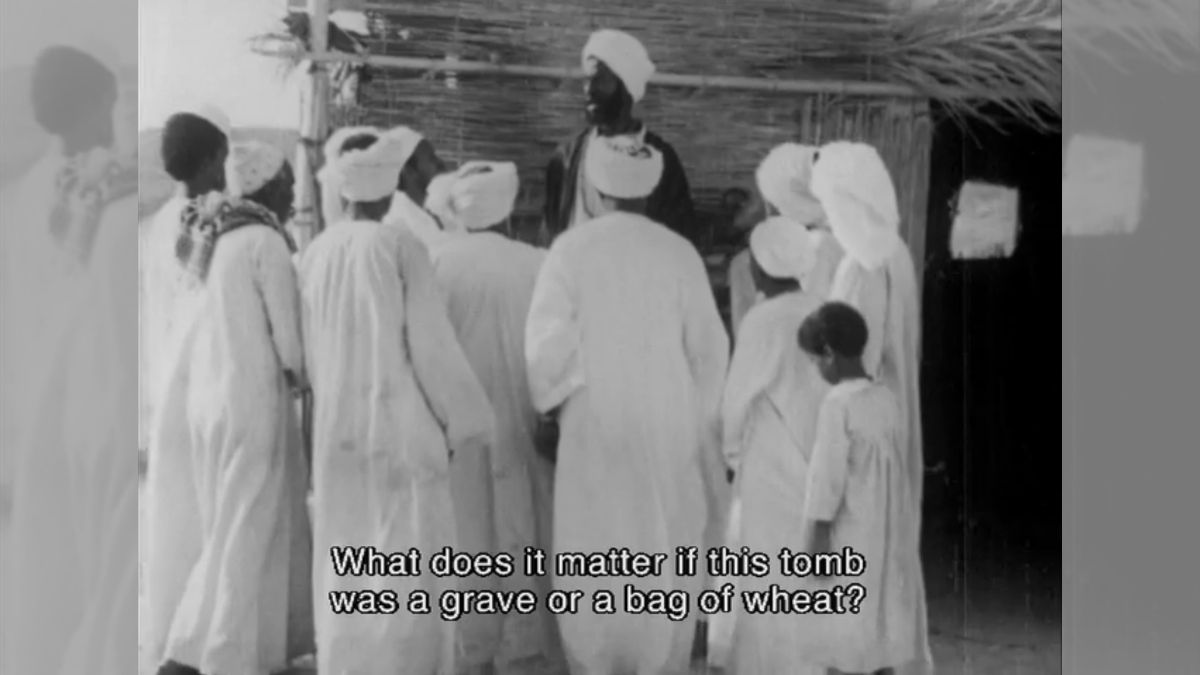
By contrast, Sudanese director Eltayeb Mehdi’s The Tomb, despite also focusing on Sufi characters, embodies naturalist rather than Sufi metaphysics, portraying the sheikh as a charlatan and his followers as gullible. In the film, a wandering Sufi claims a grain silo to be a saint’s tomb, building a shrine and claiming to heal those who come to visit it, using the very practices depicted in The Wedding of Zein. The visitors are none the wiser, including one of the men who buried the grain. After the ruse is exposed by the police, the sheikh does not lose his followers; instead, they continue to follow him as he insists on his miraculous power. This ending offers a grim perspective on faith as essentially irrational, allowing its satire of core Sufi practices to be extended to supernatural beliefs as a whole.
Tajouj (1977)
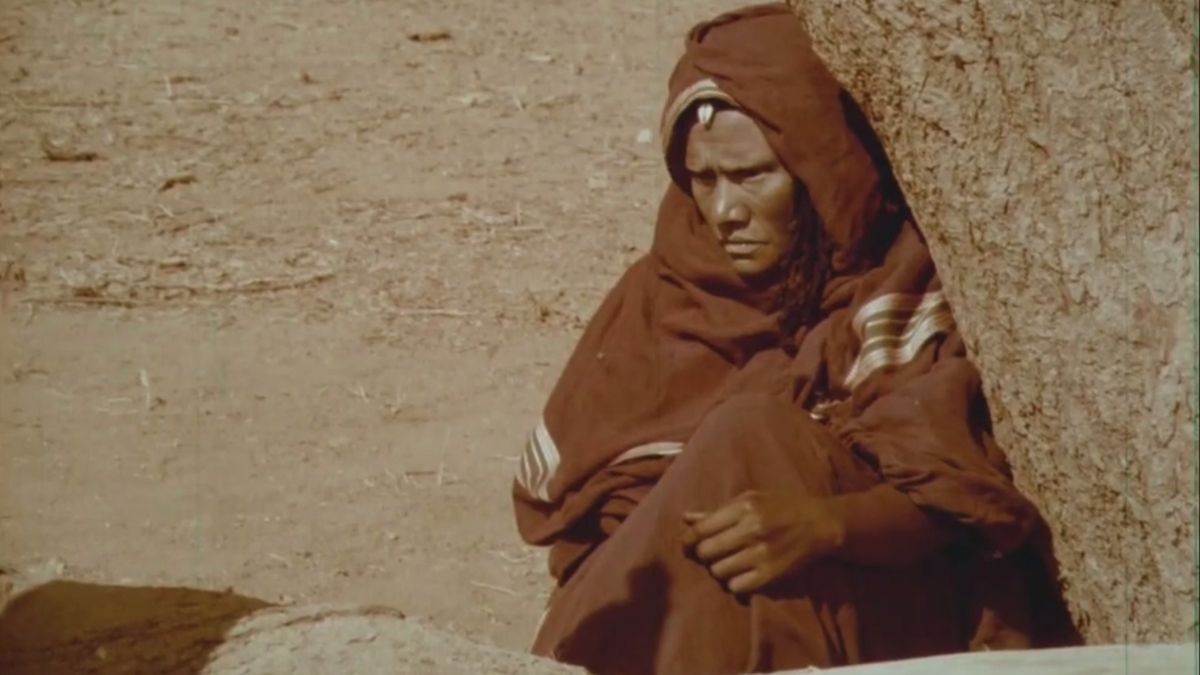
While director Gadalla Gubara’s first feature film, Tajouj (1977), does not focus on Sufism, it is no less imbued with Sudanese metaphysics. The film’s secondary antagonist is a woman who tells fortunes via seashells and practices zar as many Sudanese women do. Similar to the sheikh in The Tomb, she is portrayed as deceitful, working with the main villain to sabotage the protagonists’ marriage. This echoes real-life stigmatisation of these practices as sihir (magic), but while many Sudanese view sihir a real danger, in Gubara’s film, the fortune teller’s spiritual practices have no impact. Rather, she uses the characters’ belief in their efficacy to manipulate them, implying a rationalist critique of these rituals.
At a more abstract level, Tajouj’s narrative progression is governed by a degree of divine justice. Characters who adhere to Islamic values survive, while those who are swayed by un-Islamic influences (such as the fortune teller) experience misfortune. While not explicitly portrayed as divine intervention, this reinforces a Muslim metaphysical worldview where religious disobedience brings punishment.
The Sheikh’s Blessing! (1998)
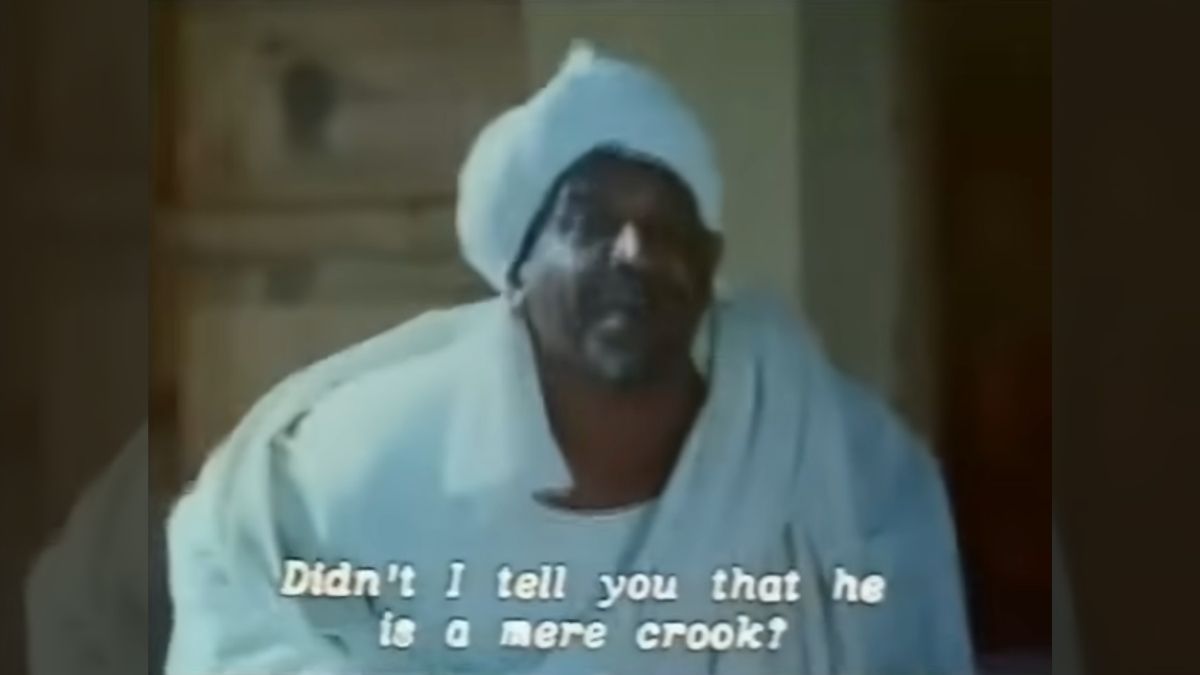
Gubara’s second feature, The Sheikh’s Blessing!, based on a novel by Sudanese author Mustafa Ibrahim, follows the precedent set by The Tomb in its general outline. In the film, a sheikh arrives in a rural Sudanese community, claiming to perform miracles before being exposed as a charlatan. Gubara’s spiritual perspective differs, however, in its representation of, for lack of a better word, a “good” Islam, characterised by ethical behaviour and rationality, that is contrasted with Sufism, which is portrayed as dogmatic, superstitious, and duplicitous. Where The Tomb offers a grim ending, The Sheikh’s Blessing! — similar to Tajouj — sees divine justice prevail. The charlatan sheikh is exposed before the village, and his opponents, upright Muslims ostracised by the villagers for their scepticism of the sheikh, are redeemed and healed miraculously. While The Sheikh’s Blessing! can be described as anti-Sufi, it is decidedly not materialist: God responds to the heroes’ prayers, and even preserves the corpse of a hafiz (man who has memorised the Quran) from decay.
You Will Die at Twenty (2019)
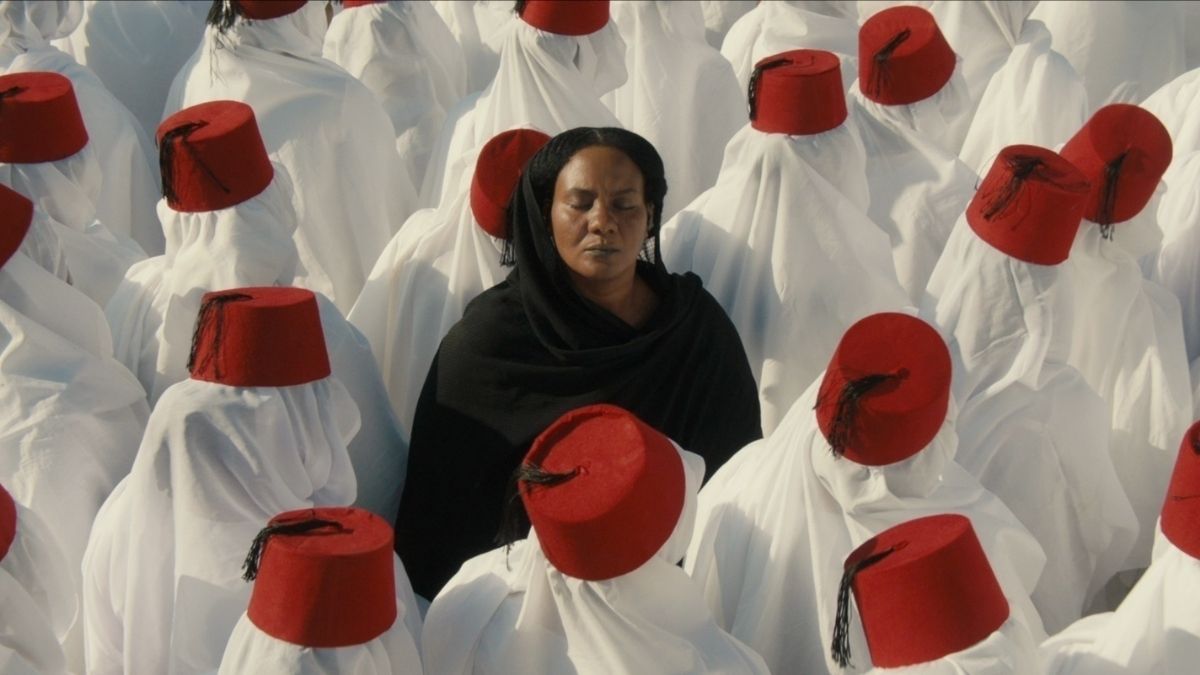
Director Amjad Abu Alala’s You Will Die at Twenty, an adaptation of a short story by Sudanese author Hammour Ziada, is another example of anti-Sufi cinema, portraying Sufi rituals as ineffective, and its religious authorities and its authorities as deluded and dishonest. The film centres around a protagonist prophesied by a sheikh to die at the age of 20, a fate which encourages him to live as a pious Muslim boy, until his encounter with a man named Suleiman, a rare example in Sudanese cinema of an outright religious skeptic. He casts doubt on the sheikh’s prophecy and the existence of jinn, and outright mocks the boy’s memorisation of the Quran while encouraging him to defy Muslim morality. This anti-metaphysical commentary attracted controversy upon release, giving the film an anti-religious reputation, although some have interpreted it more as a critique of dogmatism as opposed to Islam as a whole.
Cotton Queen (2025)
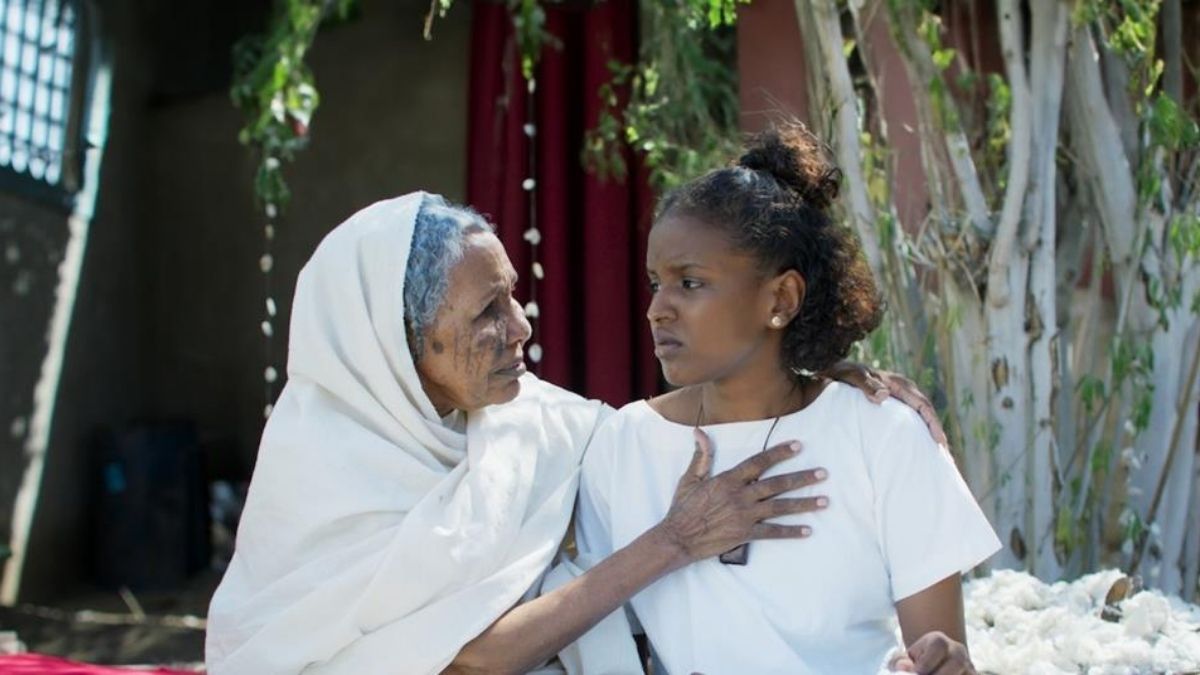
Director Suzannah Mirghani’s Cotton Queen stands out among the previous films in a number of ways. Unlike You Will Die at Twenty and The Tomb, metaphysical forces are shown to be present and effective. At the same time, Gubara’s narrative reinforcement of scriptural Islam is substituted with a positive approach to the spiritual practices unique to Sudanese women. Although its characters are almost certainly Muslim, male religious authorities, such as imams and sheikhs, have no role in Cotton Queen. Universal Islamic practices such as prayer are left undepicted, while feminine practices such as fortune telling and potion making are narratively significant. The protagonist also experiences angelic intervention, a theme uncommon in conventional Sudanese spirituality, which tends to centre the influence of male saints, keeping the film’s focus on female spiritual agency.
While Sudanese, like other Muslims (and Africans in general) may have a reputation for dogmatism, Sudanese film stands as a visual representation of the more complex religious dialogues happening in Sudanese society. Sudanese people are not unaffected by global shifts in religious thought, which is reflected in Sudanese Muslim cinema, where one finds both righteous Sufi shuyukh and deceivers claiming religious authority; both endorsement and condemnation of institutional spirituality, and so forth. Rather than essentialise this discourse in a framework of authentic religious values versus local distortion or invading Western materialism, each representation deserves a more thorough dissection as an expression of Sudanese Islam at a particular period of time, conditioned by the social and material reality of the country and its global diaspora. In this way, Sudanese film parallels other Sudanese art forms, where Islam has often been a major theme, and will likely continue to be so due to its embeddedness in almost every facet of Sudanese life.

500WM Columnist Hatim Eujayl is a Sudanese-American writer involved in various projects to promote Sudanese culture. His most famous works include the Sounds of Sudan YouTube channel, the Geri Fai Omir Kickstarter, and the Sawarda Nubian font. More of his writing can be found on his Substack, ‘My Sudani-American LiFE,’ where he discusses Sudanese literature and cinema. He can be reached on Instagram @massintod or by email at [email protected].