


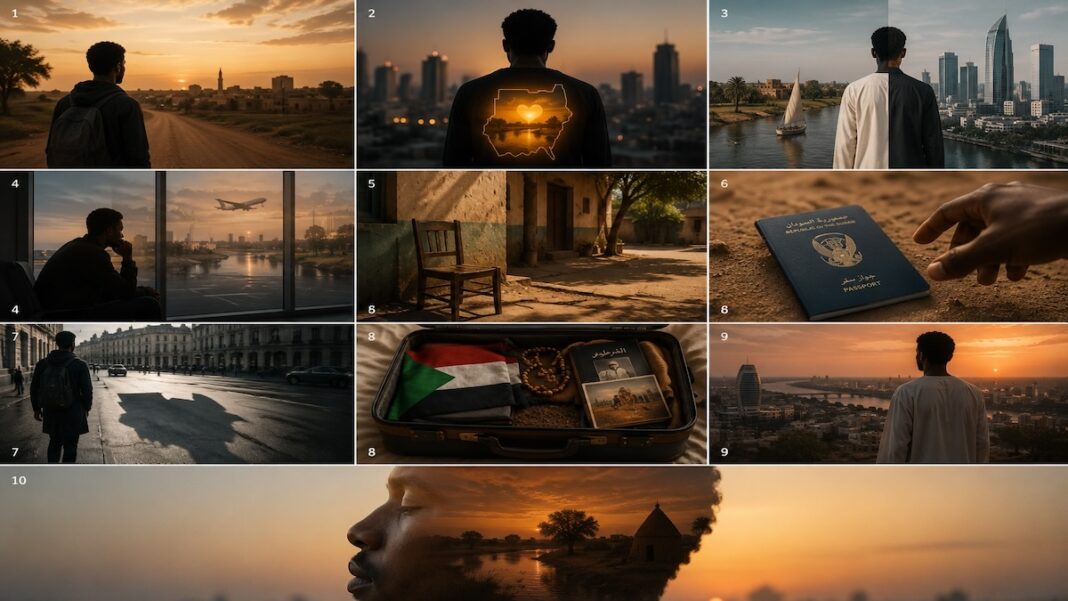
Through years of conflict and hardship, many Sudanese have found themselves asking an unimaginable question: “Do I really love Sudan?”
It is a question that often remains unspoken, carried quietly beneath the weight of disappointment, loss, and uncertainty.
Perhaps I am projecting my own thoughts onto others when I imagine that people question my love for my country. I may be wrong. But leaving your country in search of a better life has never been a simple choice. It is often the result of circumstances far greater than ourselves, shaped by forces, systems, and decisions that ordinary people never had the chance to control.
The Conflict We Carry
For me, the story started long before I ever thought about leaving. It started with a real and painful question, which was never whether I loved Sudan. The question was: Why did I have to walk nearly 1,000 km just to get home? Why do I have to buy 5 kg of something just to live a little better? Why do we suffer from electricity shortages while living beside one of the largest rivers in the world?
Is it government corruption? Yes, of course. But corruption exists in many countries around the world. So, what is it then?
As I searched for answers, I found myself wondering whether Sudan’s struggles could really be explained by corruption alone. I began thinking about the longer history of colonialism, unequal global economics, and the cultural influence of wealthier nations. Over time, I came to see what I think of as an invisible influence, one that quietly shapes economies, cultures, and even the choices people make without realising it. Whether others agree with me or not, this is how I have come to understand the conflict inside me.
At the same time, rejecting these thoughts and refusing to leave creates another conflict. You want a better life, yet you feel guilty for chasing it. You think about staying because your country needs you, but you also know that surviving under constant shortages of electricity, transportation, food, and water slowly drains every dream you once had. It becomes a battle between your future and your loyalty, and neither side ever truly wins.
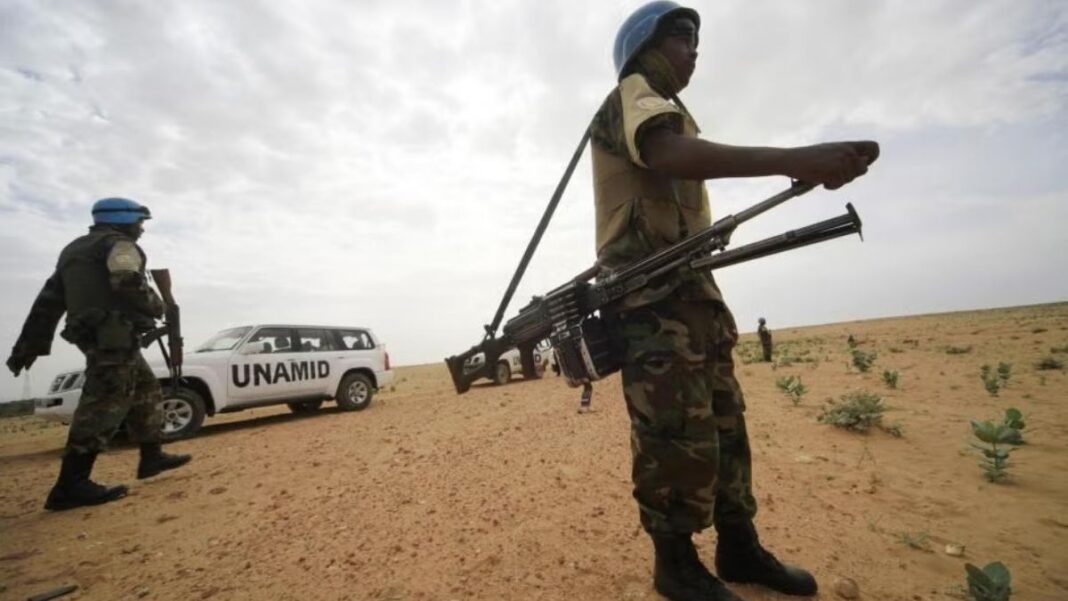
Then, on 15 April 2023, Sudan entered its deepest crisis yet. War between the Sudanese Armed Forces (SAF) and the Rapid Support Forces (RSF) devastated the country and its people, forcing an estimated 12 to 14 million people to flee their homes while countless others remained trapped between violence and uncertainty.
When enough people carry this conflict within themselves, the outcome becomes only a matter of time. Why? Because our brains are naturally designed to escape pain. We move away from anything that constantly hurts us. Working hard for your country while living through war, shortages, uncertainty, and exhaustion asks more from a person than most people can give forever. Eventually, millions of people choose relief over suffering. Not because they stopped loving their homeland, but because they simply reached their limit.
So, do I really love Sudan?
Definitely yes.
I carry Sudan with my heart. It is always present in my prayers, always lovable in a way that no other country on Earth could ever replace. I love it because I grew up on its land. I connected with its people. I felt safe. I never loved any place the way I loved Sudan.
Yes, I may leave, but thankfully not forever.
For those who carry the same feelings I do, those who are studying abroad or searching for a better future, don’t let your journey become only an escape. It would be a waste of time if we didn’t return from it with something valuable. We should collect the most useful skills, knowledge, experiences, and habits we can. Every lesson we learn, every challenge we overcome, and every connection we build should have a purpose beyond ourselves.
We may not be physically present in our homeland for a while, but Sudan is always present within us. Whether we admit it or not, it quietly shapes the decisions we make. Deep inside, I believe it remains the destination behind every purpose we chase, even if we cannot return today.
Coming Back Stronger
The first step begins with making peace with your inner conflict. Make peace with the pain of watching your country unravel before your eyes. Make peace with the guilt that comes every time someone asks why you left. Maybe there is nothing you can do today to stop a war or solve an economic crisis. Maybe your hands are simply too small for problems that big.
But there is always something you can do: work on yourself with the hope that one day you will become part of the solution instead of another victim of the problem.
Many things we inherited from Sudan are beautiful. Our generosity, kindness, sense of community, and the way we stand with one another are things I will always be proud of. However, we also inherited habits that do not help us grow. Perhaps the most dangerous one is living without a clear purpose. I am not talking about choosing a university, a job, or a profession. I mean something much deeper than that. I am talking about the psychological side of growth.
I believe that awareness is the only fuel capable of helping a country grow rapidly after everything it has been through. Buildings can be rebuilt. Roads can be repaired. Economies can recover. But without awareness, people repeat the same mistakes generation after generation.
Awareness means knowing the difference between right and wrong. It means respecting time instead of wasting it. It means building relationships that make you stronger instead of pulling you backwards. It means understanding yourself, understanding your emotions, and recognising who truly stands beside you. Most importantly, it means realising that without consistency and discipline, even the best principles remain only beautiful words.
Perhaps that is the greatest lesson our journey should teach us. If we are forced to leave our homeland, let us not also leave behind our responsibility to become better people. Distance should not weaken our connection with Sudan. Instead, it should strengthen our determination to return one day with something worth bringing back.
Don’t think that asking yourself whether you love your country is a sign that you have accepted defeat or rejected reality. The answer is probably much simpler than you think.
Yes, you do love it.
The circumstances simply became so painful that you started questioning something you never imagined you would question. Pain has a way of making us doubt even the things we know are true. It can make us believe that leaving means giving up, when in reality it may simply mean surviving long enough to come back stronger.
Maybe you have already convinced yourself that you left your country forever. Maybe you tell yourself that there is nothing waiting for you anymore. I don’t believe that is true. Your country follows you wherever you go. It appears in your memories, your language, your habits, your prayers, and the stories you tell about your childhood. No matter how far you travel, a part of Sudan quietly travels with you.
That is why I no longer think the real conflict is about staying or leaving. The real conflict is deciding who you become because of that journey. Will you spend years carrying only regret, blaming yourself for every step you took away from home? Or will you accept that this chapter of your life has a purpose and make every day count?
If life has forced us to leave Sudan, then let us leave with intention. Let us learn from societies that succeeded where we failed. Let us study harder than we ever imagined. Let us build useful skills, strong character, meaningful relationships, and a deeper understanding of ourselves. One day, whether we return physically or contribute from wherever we are, those things will matter far more than the guilt we carried.
I don’t know when Sudan will heal, or when the Sudanese people will heal after decades of trauma and struggle. I don’t know when the war will end, when the lights will stay on, or when children will once again dream about their future instead of their survival. I don’t know whether I will be there when that day comes.
But I do know this.
A country is not rebuilt only by politicians or governments. It is rebuilt by ordinary people who refuse to let hardship destroy their values, purpose, or hope. Every doctor who returns with new knowledge, every engineer who builds, every teacher who inspires, every entrepreneur who creates opportunities, and every young person who chooses discipline over despair becomes part of that rebuilding.
So don’t live inside a long-term grave built from guilt and hopelessness. Make peace with your conflict. Accept your love for Sudan without feeling the need to prove it to anyone. Then work harder than ever on becoming the kind of person your country will one day need.
Leaving Sudan does not mean Sudan has left you.