I was invited to attend a youth programme in September 2025, as usual as its previous ones since my arrival in Juba, South Sudan in 2023. However, the only exceptional thing happened when a female primary school student in her uniform raised a question, “You have been talking all day about youth empowerment, but what about those homeless youth in the street, who will talk about them?” A very serious one! I do not think I have thought about such a matter before. The hall went silent for a while. In my mind, I believed that each and everyone had been thinking deeply about this and probably felt guilty.
Homelessness in South Sudan has been normalised years ago, especially after two civil wars in 2013 and 2016. The concept of home has radically changed and transformed. undergone a radical, painful, and beautiful transformation. For many of us, home has rarely been a static set of four walls. Our collective awareness navigates the chaos beyond the precariousness of the post-independence era and even earlier, to prove that belonging is not a matter of property, but of profound social and spiritual architecture.
In such a context, the most frequent question would be: what does home mean when the state is still in the process of becoming, and many remain in a state of influx? To give a good answer, we have to get a better understanding that home is curried in the heart of collective memory. A few days before writing this column I had a conversation with one of my street friends called Joseph, asking him about his New Year celebration. However, his answer was a little weird to me, “I was sick. I could not move out of home,” he said. To the best of my knowledge, I know he is homeless, but I could not interpret home in the context. Interacting with Joe was interesting because it allowed me to re-imagine home in a different way.
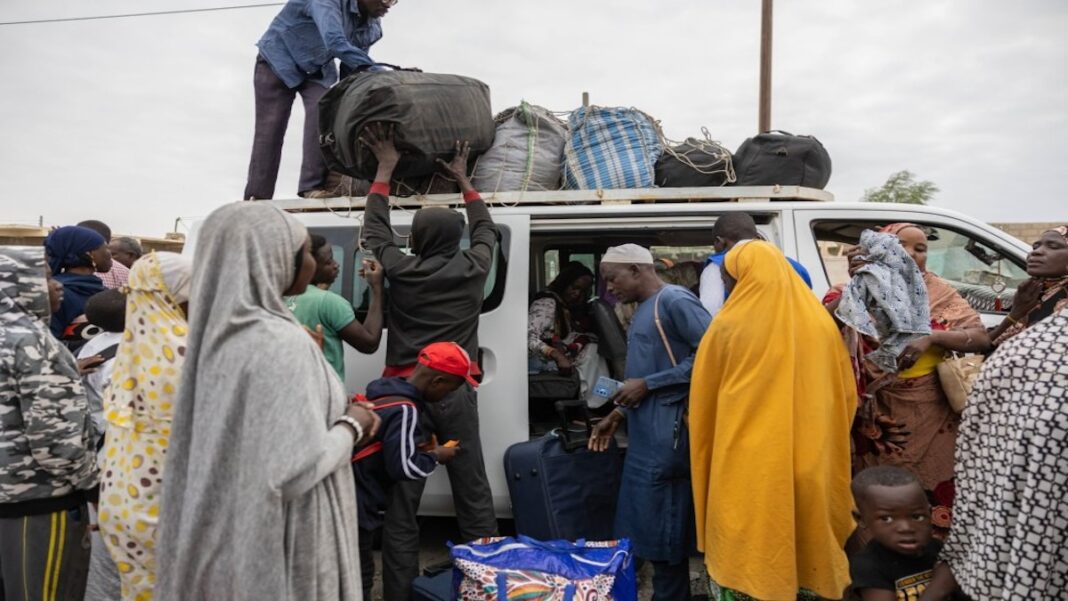
According to the United Nations High Commissioner for Refugees (UNHCR) in 2025, South Sudan faced a massive displacement rather than conventional ‘homelessness’ with over 1.9 million people were internally displaced due to local conflicts, flooding, and climate shock, while 322,000 fled their homes just in 2025 because of intensified fighting. However, those people who are usually referred to as just numbers (victims) have been keeping the most authentic expression of home that goes beyond the formal infrastructure and founded on communal spaces. For Joseph, as a displaced person since 2013, the definition transformed to include their shared experiences and suffering in a huge community that unconsciously abandoned them.
In a bigger image, this organic building of belonging exists in sharp tension with dominant societal and international discourse surrounding South Sudan. In the world of global humanitarianism, our experience is often flattened into categories such as internally displaced persons (IDPs), refugees, returnees. These labels are important for aid delivery, and at the same importance, they are linguistically violent in their own way. Wrapping the conversation with him, he said, “we have always been here, but unseen to many. I hope this new year will be fairer than the previous.” His words described the frames used by the discourses label people by what they lack–a permanent roof–rather than what they possess.
The critical systemic approach of cleaning or repatriating often treats human beings lifeless objects that need to be moved across a board. When local policies focus from a single dimension angle on the problem of squatters in urban centres, they ignore that those individuals are often seeking safety of the community. This discourse erases what could exist as a national home that accommodates all country’s tribes. Moreover, by removing words such as displacement and homelessness we can understand that the real crisis is not just a lack of housing rather than a lack of inclusive political and social spaces where every South Sudanese person feels they truly belong.
This is a call to reimagine and redefine home beyond a place where we sleep to a place where we are heard, valued, seen, and where are kin. For South Sudan, the journey home is still underway towards inclusive peace and considerations. This is a mission that if we succeed in it we can build spaces for the stories to be told, wounds to be healed, and finally a home that can hold us all.

Butros Nicola Bazia, born in Khartoum, Sudan in 2001, is a South Sudanese freelance writer, storyteller, and cultural commentator based in Juba, South Sudan. Nicola serves as columnist at 500 Words Magazine and contributed to multilingual regional and international platforms including The New Humanitarian, Mundo Negro, El Pais, Contemporary&, The Van-Magazine, and among others. His work explores the intersections of arts and socio-cultural dynamics, with a focus on South Sudanese narratives in the global conversations.