
In July 2025, a Kuwaiti couple was sentenced to death by hanging for the fatal beating of their domestic worker.
According to news sources, court documents state that the victim was held against her will inside the couple’s home, where she endured persistent beatings and was prevented from seeking treatment despite her visibly deteriorating health.
The domestic work industry is prominent in the Middle East and North Africa (MENA) region. According to IOM, there are approximately 6.6 million domestic workers over the age of 15 employed in the Arab countries, representing around 8.7% of the total number of domestic workers globally.
From Kuwait to Saudi Arabia to Libya to Lebanon, the MENA region has a long history of abuse and ill-treatment of domestic workers and other low income or labour workers that commonly come from countries in Asia and Africa such as the Philippines, Indonesia, India, Nepal, Bangladesh, Kenya, Ethiopia and more.
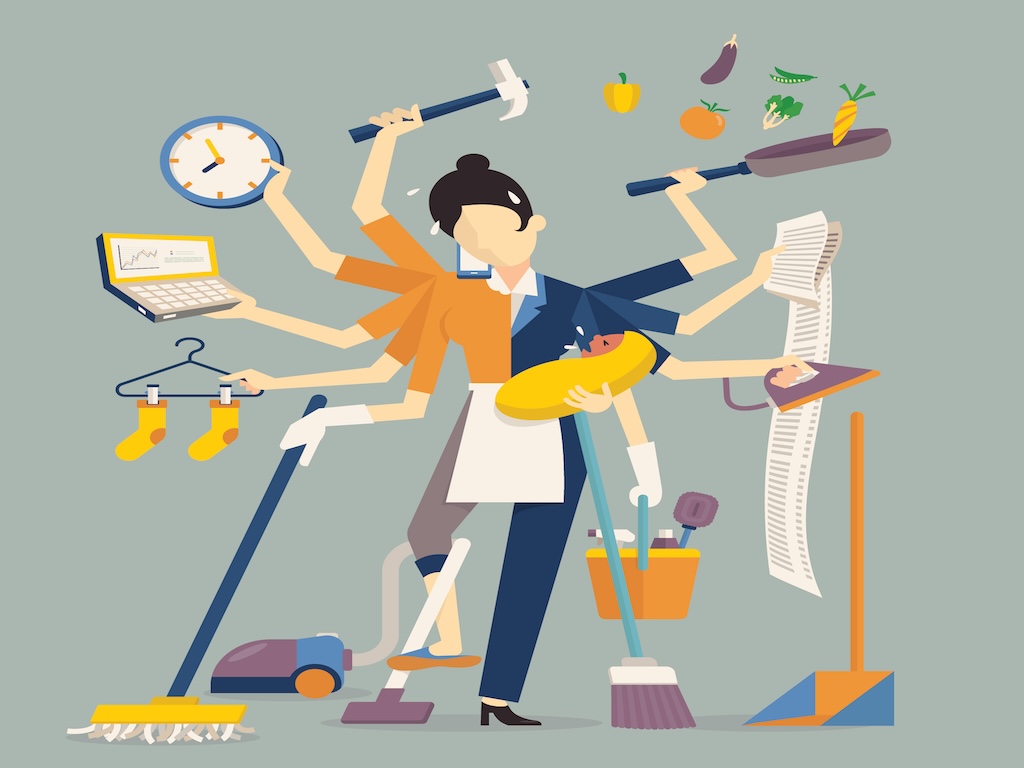
Households across the region highly depend on domestic workers for their daily needs. Commonly women, they are employed to perform daily household tasks or chores within a private residence. These roles include maids, drivers, cooks, and nannies. They are hired for a minimal wage – which vary drastically by country, region, and the worker’s specific duties.
The most common form of domestic work are maids or housemaids, who often move from one country to another to live in-house and carry out household tasks. These tasks include cleaning bedrooms and living areas, washing and ironing clothes, preparing meals, and washing dishes. In some countries, particularly in the GCC, residences such as apartments and villas are designed with dedicated rooms for domestic workers — often located on the ground floor, rooftop, or in the penthouse — commonly referred to as a maid’s room.
As in the GCC and other parts of the Arab world, domestic work is widespread, and maids play an essential role in Sudan. Domestic workers are commonly local, often coming from western Sudan. Foreign domestic workers are also prevalent, primarily from South Sudan, Ethiopia, and Eritrea, with a smaller number from the Philippines, who are usually the most highly paid. In many Sudanese households, which are often large and extended, it is common to employ multiple domestic workers, each assigned tasks according to their skills. For example, a worker may be hired solely to iron clothes; such a worker is commonly male and referred to as a “makwajy”, originating from the Arabic word makwa, meaning iron. Similarly, a gardener, often called “al janaynay”, comes from the Arabic word jenana, meaning garden. When multiple domestic workers are employed, women typically handle indoor tasks, while men are usually assigned outdoor chores.
Having lived in the GCC for over 30 years, it is clear that the treatment of domestic workers differs between the GCC and Sudan, in terms of their daily treatment. Nevertheless, domestic workers in both contexts face degradation, discrimination, abuse, and exploitation. In Sudan, domestic workers are generally treated more fairly, often provided with meals such as breakfast and lunch, ample leisure and rest time, days off, sick leave, and other basic provisions. However, local domestic workers may still experience discrimination based on their skin colour, tribe, or ethnic group.
Unfortunately, this discrimination arises because certain races, ethnicities, and nationalities are often associated with domestic and other low-income work. As a result, domestic work is frequently defined by specific groups, and, in turn, these groups are often stereotyped based on the work they perform.
From slavery to servantry
The domestic work industry, like forced labour, forced marriage, and human trafficking, is often referred to as modern-day slavery due to slavery-like practices in which people are treated as property.
In the Arab region, domestic workers are called khadam (plural), or khadima, khadimat (female), or khadim (singular male), which means “servant”. In Sudan, the same terms apply. However, due to recent backlash against the degrading connotations often associated with the word “slavery,” other terms are commonly employed instead of referring to domestic workers solely by that label. Sometimes, they are referred to by their skill or job roles, as explained in following paragraphs). Females are referred to as “al bit,” which is the Arabic word for “girl,” and men as “al walad,” which is the Arabic word for “boy.”
The historical roots of domestic work in Sudan and other parts of the world are linked to practices of slavery, contributing to the current context of exploitation. Slavery in the Arab world was recently abolished between 1929 to 1970. Slavery was a social phenomenon in most of the Muslim world for nearly 1,400 years, with large numbers of slaves employed in domestic service as well as commerce, allowing slavery primarily in the context of war captives or debt bondage.
Based on the Quran, Islam’s stance on slavery has always been a controversial and disputable subject, mainly questioning why Islam did not abolish slavery. Although slavery existed worldwide long before the Quran’s revelation, Islam did not initially outright abolish slavery but does provide regulations to restrict it, aiming to improve the treatment of slaves. What many fail to recognise or differentiate is that Islam’s concept of slavery is different from that of North America’s. As Imam Tom Facchine stated, it’s more like refugee resettlement with strict rules to prevent abuse. The Quran and Hadith (prophetic traditions) emphasis humane treatment of slaves, stressing fair treatment, feeding, and clothing slaves as one would for oneself. Manumission (freeing slaves) is repeatedly recommended as a virtuous act, especially “believing” slaves (Q 2.177). Another verse states that masters should allow slaves to purchase their own freedom (Q 24.33). For example, freeing a slave is considered a good deed, moral duty, and as a way to atone for sins and earn divine reward (Q 90:13).
Today, Islamic jurisprudence and modern interpretations overwhelmingly reject slavery, and largely emphasis the religion as supporting freedom, justice, equality, and human dignity. So, if we compare our treatment of domestic workers based on Islam’s concept of slavery, Islam framed slavery within ethical responsibilities, insisting that masters treat their slaves with the same care and dignity as themselves — a principle that gradually encouraged emancipation.
Prophet Muhammad (PBUH) emphasised that slaves should not be overworked, abused, or humiliated. In Sahih Muslim, one of the most important sources for Islamic religion after the Quran, he was quoted saying, “Your slaves are your brothers. Allah has put them under your authority. So whoever has a brother under his authority should feed him from what he eats and clothe him from what he wears, and should not burden him beyond his capacity.”
Slaves were to be fed the same food as the master, or at least of sufficient quality and quantity. Depriving a slave of proper nutrition was considered unjust and sinful.
Slaves were to be clothed as adequately and comfortably as the master is, with dignity and protection, avoiding neglect or humiliation, with an emphasis on equity and decency, not extravagance.
What’s behind the ill-treatment
According to Islamic teachings, treating slaves well was a moral obligation. So why do we forget that this principle extends to workers today — from domestic helpers, manual labourers and skilled tradespeople to white-collar employees performing knowledge-based, administrative, or managerial work?
In many cases, domestic and other low-income workers are treated with disparity, animosity, and disdain. At times, they are regarded as if carrying a contagious disease, with people avoiding what they have touched, eaten from, or used, refusing to share tableware, cutlery, or dinnerware. Yet, these workers clean our dirty cups, plates, and dishes day in and day out. Often, they are not even allowed to use the very bathrooms they maintain, and are instead assigned separate facilities. Their work, which includes cleaning our dirty bedsheets, bathrooms, toilets, and even personal undergarments, is often met with judgment, and they are perceived as dirty and unworthy despite their essential contributions.
We often treat in-house housemaids as strangers or outsiders, even when they have been part of our households for years. Yet, they know us intimately in ways others may not — our habits, hobbies, and daily routines. They understand the foods we prefer or dislike, how we like our tea or coffee, the way we want our beds made, how we like our rooms arranged, and even our favourite clothes. While this knowledge comes with the nature of domestic work, it deserves acknowledgement and appreciation.
We entrust maids and nannies with our children, watching them grow and often caring for them as parents when we are absent. Yet, we frequently know little or nothing about their own children and families — their names, ages, or well-being — and rarely enquire about them.
We invite domestic workers into our homes to help us, yet we rarely welcome them. For many, these homes become workplaces marked by coldness, hostility, and even violence and abuse, rather than the love, peace, hospitality, and warmth we claim to extend, even to outsiders or strangers. Every household has its own secrets and hidden truths, but none should ever be of injustice.
Protection laws
For many, we live life with laws, which are defined by either our religious or morals beliefs as well as political beliefs. Laws are necessary in society to establish order, ensure justice, and protect the rights and safety of individuals. They define acceptable behaviour, provide a framework for resolving conflicts, and protect people from harm by creating a system of shared rules and accountability.
In various countries across the world, there are laws in place to protect domestic and labour workers. However, some laws may be unknown or are rarely enforced, with a lack of prosecution, leaving workers exposed to various abuse and exploitation.
In Sudan, which has been a member state of the International Labour Organization (ILO) since 1956, there is a primary law, the 2009 Khartoum State Domestic Service Act (KSDSA), governing domestic work, which many, including both workers and employers are unaware of, and is rarely enforced. This act superseded the older 1955 Sudan Domestic Servants Act (SDSA). According to a Sudan University of Science and Technology (SUST) research paper, both the KSDSA and SDSA do not provide: respect and protection of fundamental principles and rights at work; freedom of association and the effective recognition of the right to collective bargaining; effective protection against all forms of abuse, harassment and violence (Article 5); and fair terms of employment and decent living conditions (Article 6).
So, what can be done when both society and the laws we create fail to protect those who are marginalised, vulnerable, and simply, powerless?
It is more than simply “being kind” or teaching kindness. It is about confronting, challenging and fighting discrimination and bigotry. It is about seeing beyond our differences of race, colour, nationality, education, occupation, or class – and instead recognising each other as human beings walking different paths shaped by things we can control and things we cannot. In life, we don’t choose the cards we are dealt. Life hands us different circumstances, often beyond our control. In most cases, poverty, unemployment, and low-wage work are not choices.
We should be aware and mindful of our own behaviours and of others, and question the biases and discrimination, conscious or unconscious, that shape them. Every one of us has implicit biases that lead to unconscious discrimination. These biases are deeply ingrained in our behaviours, attitudes and stereotypes, shaped by our upbringing, environment and sociocultural context.
According to Dr Jennifer Sarrett, a specialist in health equity and organisational culture (PhD, Interdisciplinary Studies), countering biases and stereotypes begins with thinking about ways our behaviours are driven by biases and come up with intentional plans to change. We should learn about people different from us and enter their spaces – unfamiliar spaces. Lastly, we should own our mistakes, and change our behaviours accordingly.

Ola Diab is the new founder and editor of 500 Words Magazine, and the deputy editor of Marhaba Information Guide, Qatar’s premier information guide. Based in Qatar, the Sudanese journalist graduated from Northwestern University in Qatar (NU-Q) in 2012 with a Bachelor of Science in Journalism and has since built a successful career in the print and digital media industry in Qatar. Find her on X (formerly Twitter) @therealoladiab or on LinkedIn.