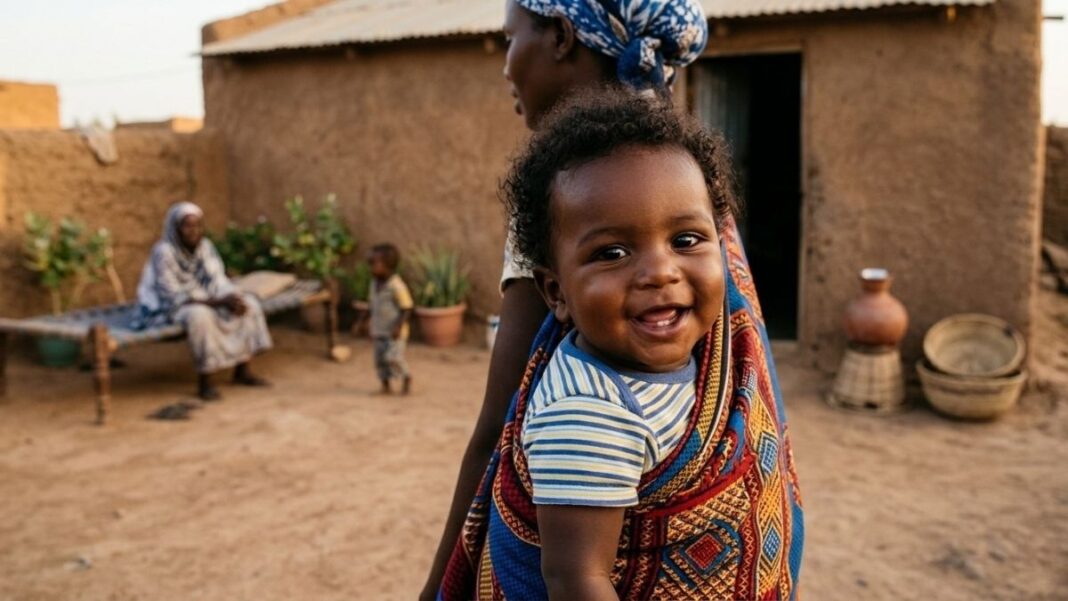
At least 5.6 million babies have been born in Sudan during the war, according to Al Arabiya Sudan. This equates to roughly three babies every minute, or around 180 births per hour.
However, data from World Data Ranking estimates a slightly higher figure of 192 births per hour, placing Sudan 16th globally for the highest number of births per hour.
Sudan’s population in early 2026 is estimated at approximately 51.7 to 52.3 million, based on UN projections. Despite a severe humanitarian crisis and more than 11 million people displaced, the country continues to experience high population growth. The population is notably young, with around 40% aged between 0 and 14.
Due to the war, Sudan’s healthcare system has largely collapsed, with only a limited number of hospitals and medical services still functioning. Access to healthcare remains severely restricted across much of the country. Children in Sudan are at ri
The war in Sudan began in 2023 between the Sudanese Armed Forces (SAF) and the paramilitary Rapid Support Forces (RSF). It is widely regarded as the world’s largest displacement crisis, with an estimated 12 to 14 million people forced from their homes, as well as one of the world’s worst humanitarian crises. The conflict has resulted in a devastating death toll, estimated at between 150,000 and over 400,000, including deaths caused by direct violence as well as starvation and disease.
As the conflict in Sudan enters its third year, children continue to pay the heaviest price. Between January and March 2026, at least 160 children were reportedly killed and 85 maimed across the country — a 50% increase compared to the same period in 2025. The highest casualties were recorded in Darfur and the Kordofan states, where ongoing violence has pushed communities to the brink.
More than 5 million children have been displaced — many of them multiple times — as frontlines shift and violence spreads. Since the onset of the war, the United Nations (UN) has verified over 5,700 grave violations against children across Sudan, affecting at least 5,100 children, including more than 4,300 who have been killed or maimed. The true toll is likely far higher, as insecurity and limited access continue to hinder monitoring and verification efforts.
According to an alert from the Integrated Food Security Phase Classification (IPC), thresholds for acute malnutrition have been surpassed in two areas of North Darfur—Um Baru and Kernoi, following the fall of the regional capital, El Fasher, in October 2025 and the resulting mass displacement. Assessments conducted in December found acute malnutrition rates among children at 52.9% in Um Baru — nearly double the famine threshold — and approximately 34% in Kernoi.
While the IPC noted that this does not yet constitute a formal famine classification, it warned that conditions are rapidly deteriorating and urgent action is needed.