


Time and time again through the pages of Sudan’s history, music has shaped major events and been the voice of the people of Sudan through resistance, revolution, war and political turmoil. Sudanese music has long been intertwined with the history of Sudan, with melodies and words igniting hope and building resilience within Sudanese people.
The relationship between music and politics is one that flourished as early as the rise of music in Sudan. The practice of using music as a tool for coded resistance began during the Anglo-Egyptian colonial era of Sudan. Musicians performed songs with patriotic themes, often channeling a strong love for Sudan and a desire for freedom from colonial rule. In the 1940s, Omdurman Radio was founded, and it quickly became the best platform for musicians to share their songs with the masses.
During the years leading up to independence, songs with hidden messages became the norm, and after independence the themes shifted to more hopeful lyrics, highlighting themes of dreams of a better, freer Sudan. Shortly after independence, a cycle of military coups began in Sudan. The cycle reflected military coups followed by revolutions and transitional governments, and this repeated until the coup of 1989 when former Sudanese President Omar Al Bashir gained control over Sudan, his rule lasting for almost 30 years.
During the heights of revolutions throughout Sudan’s history, especially during the October 1964 and April 1985 revolutions, musicians such as Mohammed Wardi, Mohammed Al Amin, and Abdelkarim Al Kabli sang revolutionary songs to motivate people and fuel their protests against military rule.
With the rise of Al Bashir and his Islamist rule in 1989, musicians were persecuted not only for political or revolutionary music, but any and all music that did not comply with the Islamic guidelines of Al Bashir’s regime and ideology. Despite heavy censorship and persecutions, many musicians continued to release music, often with themes of patriotism and resistance. Musicians who refused to be censored but were at risk of imprisonment were forced into exile, where they continued to make resistance music. The late youth favourite Mahmoud Abdelaziz, also known as Al Hoot or The Whale remained in Sudan where he continued singing songs about resilience and romance, suffering repeated persecution from time to time. Musical resistance was not a practice solely restricted to traditional musicians. Even rapper Ayman Mao was known for his anti-government tracks in the early 2000s and again amidst the December Revolution in 2018-19.
During the December Revolution, expression through poetry and music became common practice. This was reflected not only through music production, but also through song-like chants on the ground at protests and at the April 2019 sit-in in front of the military headquarters, with many chants sounding so much like song, that they would get stuck in our heads and we would find ourselves repeating them in our homes even thousands of miles away, just like hit songs. Musicians also made leaps of effort in producing songs that were sensitive to the cultural climate. After the sit-in was dispersed on 3 June 2019, musician Sammany Hajo, singer Ghaidaa and rapper Flippter performed on the popular music platform COLORSxSTUDIOS, where Hajo sang his hit song Matalib (Demands), which is based on one of the popular chants of the 2018-19 revolution, also known as December revolution, that roughly translates to “I have demands.”
After the December Revolution, there has been an evident decline in music with themes of revolution and resistance. There has been a slight surge after the outbreak of the war between the Sudanese Armed Forces (SAF) and the Rapid Support Forces (RSF) in April 2023. However, with the exception of the occasional traditional song saluting or supporting the military, the contemporary music scene, namely rappers and Afrobeats music artists, has barely acknowledged the ongoing humanitarian crisis in Sudan. One of the few rappers that has written a track about the war was Sudanese-American rapper Bas. He released his track “Khartoum” in 2023, delving into a personal side of his rapper image, rapping about home and his family members who were affected by the war.
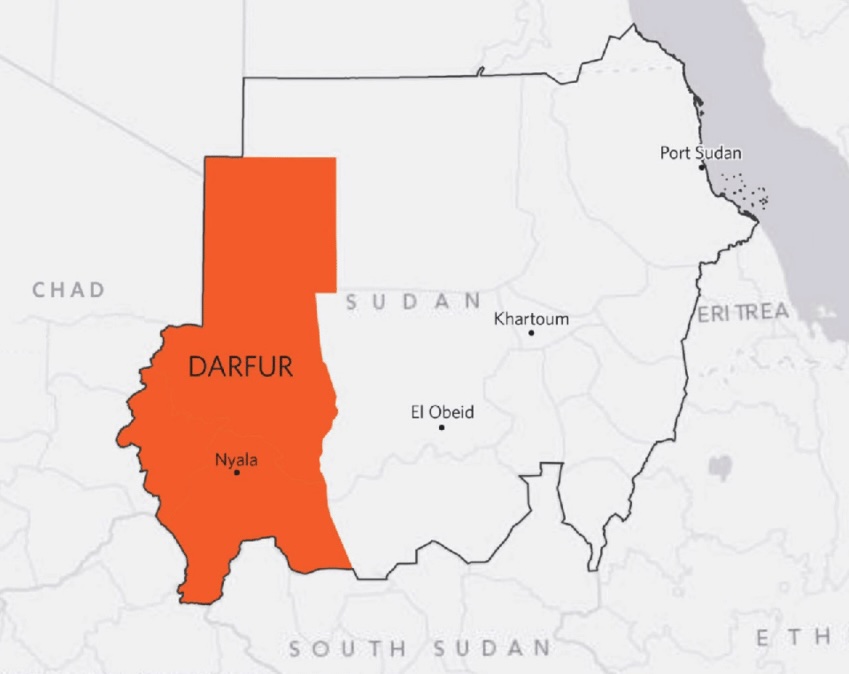
In light of current events in Al Fasher, the capital city of North Darfur, many musicians are lending their vocals to shed light on the siege of the city and the humanitarian crisis that has been ongoing since March 2024. With the RSF’s recent atrocious attacks on civilians in Al Fasher, including torturing and starving people to death, and the fall of Al Fasher to the control of the militia, various music artists from traditional singers to rappers are releasing songs with notes of hope and resilience to grab the world’s attention.
Traditional singer Yasmeen Bit Kosti sings words of hope in her latest track Kulana Al Fasher (We Are All Al Fasher), whereas Mohammed Husyn Meme, another traditional singer, takes the upbeat route in his song Al Fasher Juwa (Al Fasher Inside). On the contemporary side, reggae musician Mo Ali releases his track “Alfashir” in which he condemns the Janjaweed militia, the earlier name of the RSF, for their murderous crimes.
With the world’s focus on Sudan, it is a great responsibility for music artists to channel their talents into raising further awareness on the crisis unfolding in the city of Al Fasher, and the entire war in Sudan. Music in Sudan has always been closely linked with the country’s politics, revolutions and crises. The story of Sudan is best told through the tales of song, and in the darkest times, musicians have the power to spark hope and bring communities together through their words and melodies.

Samar Bengawi is a medical student by day, and a literature and music enthusiast by night. She was born and raised in the UAE and is now based in Georgia. She is never without a cup of coffee in hand, and is always “on the go,” chasing after one hobby or another. Passion in Sudanese politics runs in her blood and she considers herself a patriot who hopes to leave a memorable mark in the world.