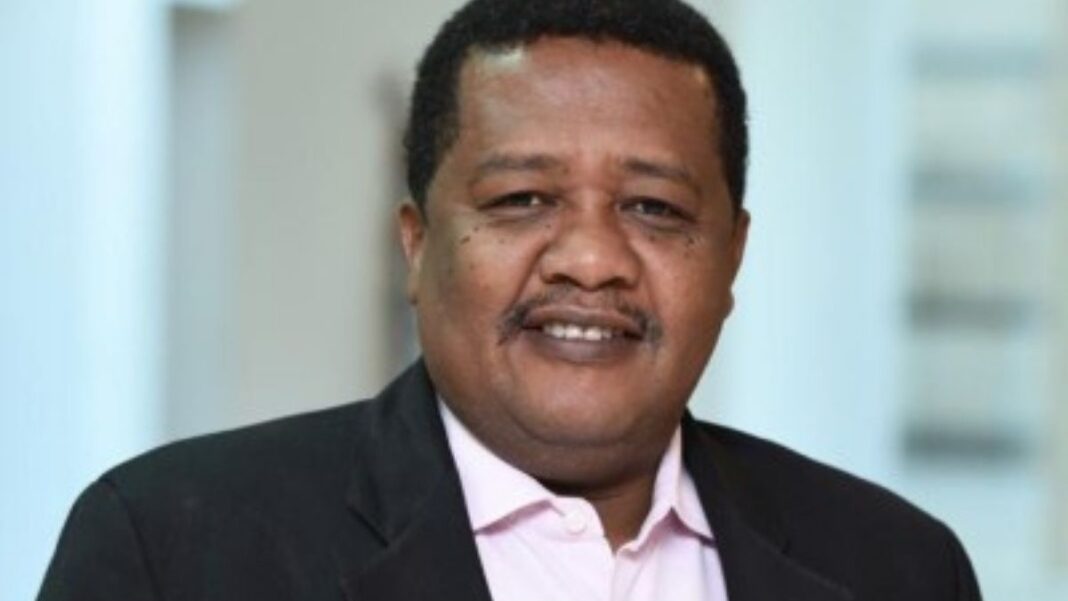



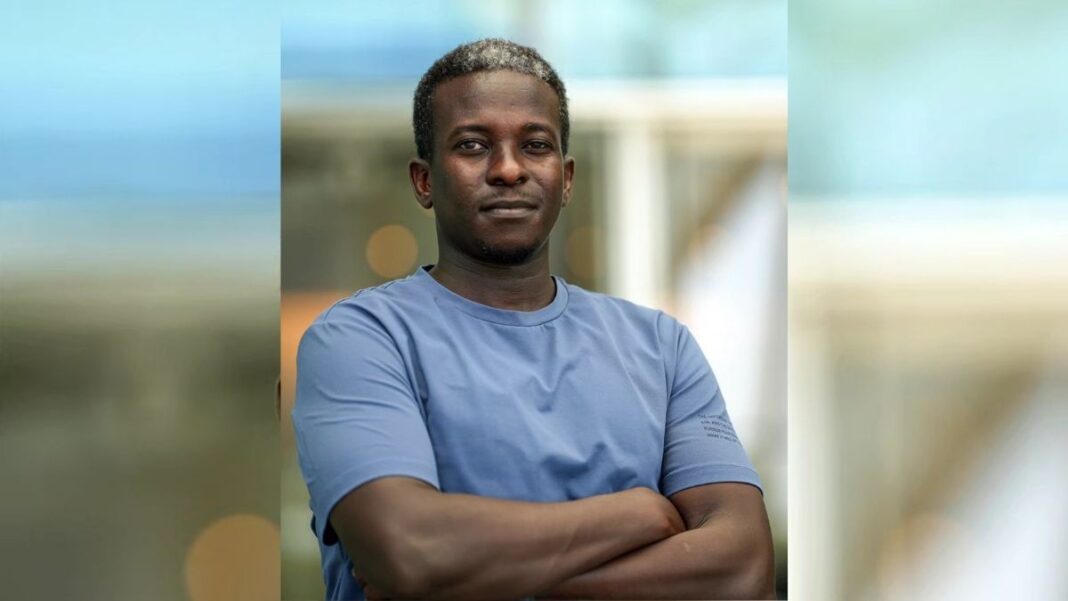
It seems hard to identify a name more influential to the contemporary Sudanese photography scene than Ala Kheir. Through peace, revolution, war and displacement, Kheir’s camera stood relentlessly, refusing to bow down to the circumstances. In 2009, he established the Sudanese Photographers Group in Khartoum, which trained photographers and provided networking opportunities. Through a career spanning two decades, Kheir’s work is considered a cornerstone in the archival of modern Sudanese events.
Born as Ala Eldin Abdalla Mohamed in Nyala, South Darfur in 1985, before moving to Khartoum five years later, Kheir studied mechanical engineering in Malaysia before starting working as a self-taught photographer. The 41-year-old is now a well-known professional photographer in Sudan and the region, and a travelling nomad, often moving between Uganda, Kenya, the Netherlands, the UAE and his home, Sudan – going wherever his lens takes him.
Kheir’s photographs have been presented in several exhibitions and institutions around the world such as African Art Fair Paris, Photography Legacy Project (PLP) Aspire Art Auction in Johannesburg, Jakarta Photo Festival, Fotografiemuseum Amsterdam (FOAM) and Museum of Modern Art (MoMA). Kheir’s photography actively engages with Sudan and captures the essence of the country, shedding light on the everyday life in his homeland and offering unique perspectives and stories. His work delves into themes like memory, identity, and social issues, showcasing the diverse society of Sudan.
As lover of various visual art forms, Kheir also dabbles in film as both share core rules like framing, lighting, focus, and composition to tell a powerful story. He recently worked with Sudanese filmmaker Ibrahim Omar on two of his films, one which is under production and the other is the award-winning Nothing Happens After Your Absence. It won the Prize of the Jury of the Ministry of Culture and Science of North Rhine-Westphalia at International Short Film Festival in Oberhausten, Germany 2024, and the the Golden Tanit (Short Film) Prize at the Carthage Film Festival 2024, and screened at various international films festivals such as the Cairo International Film Festival .
Kheir has served as the World Press Photo 2025 Chair Africa Jury and as a jury for the Contemporary African Photography (CAP) Prize since 2017. Among his several projects, Kheir is currently working on an untitled book, highlighting 15 years of photography in Khartoum with a focus on the displacement of Sudanese people.
In the fourth edition of the series “The Face Behind the Canvas”, The Sudanist sits down with photographer, videographer, archiver and cinematographer Ala Kheir to discuss his contribution to Sudanese photography and his current works, among other topics.
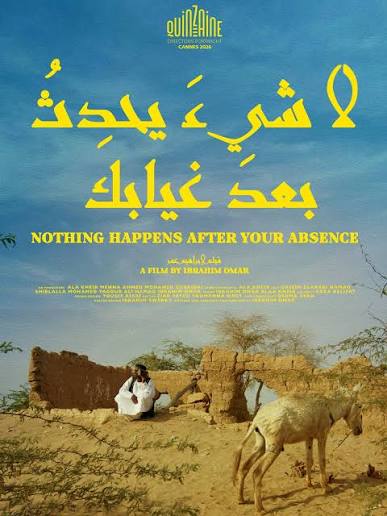
Firstly, I would like to begin by congratulating you on the success of Nothing Happens After Your Absence as it was chosen to appear on Cannes Directors’ Fortnight. Could you tell us more about the movie and what it entails?
The movie takes place in the small remote town of Marafeet not faraway from the Sudanese-Ethiopian borders. It centres around the director Ibrahim Omer himself, as a youth whose ancestry comes from Marafeet, but has spent most of his life in Cairo. He returns to Marafeet to establish a local movie club with movies different to what the people are used to. People in Marafeet, like any small town in Sudan, spend the evenings watching mostly Bollywood movies. Throughout its short running time, the film conveys Omar’s attempts as he faces authoritarian resistance and social disregard trying to form a new sense of film-watching in this small town. He screens internationally acclaimed movies like Abbas Kiarostami’s and others.
In an interview with Photography Legacy Project (PLP), you talked about how Sudan, the South and the West especially, suffered from ethnographic, orientalist photographs from foreign photographers. Do you feel there is a need to reverse the images these photographs built or do you think that the effort to do so inherently holds us back?
An African problem we have is that in the history of African photography, cameras were used to further colonial interests; colonialism is built upon the idea that African nations are primitive and need to be civilised, thus anthropologist photography was invented. This type of photography treats African subjects, not as people, but as specimens that need to be studied. As time went on, this type of photography became a mainstream style. You will find agencies that ask photographers to find “lost tribes” and such. I am not saying these things do not exist, but when you cross from the northern border of Sudan to find some secluded tribe in Nuba Mountains, for example, and use them as a generalisation of Sudanese people, this is considered a misrepresentation, not only of that tribe but of Sudanese people in general. I think they hide some of the truths to fit certain narratives about certain people.
Unfortunately, this anthropologist style is in high demand for a lot of agencies, so much that if you try to start learning photography from the internet as a starting African photographer, you will find there is a need for exotic photos of African people who inhabit distant areas. Photography is a language, and the vocabulary chosen must be accurate and precise.
The best way to counter these narratives is to produce your own product to fill the gaps and if your product is not of the desirable quality it would be to no avail. There needs to be an appropriate personal production of photographs by those from these areas, thus these harmful narratives would automatically subside.This is not only for foreign representation, but also so that we, as Sudanese people, start knowing each other more. This will combat the racist ideologies that have been on show lately, especially after the war. If we are all aware of each other’s stories and communities, there will be less opportunities for those who spew hate to find audiences.
As you mentioned, these “exotic” features are in high demand and have a mainstream audience. How do you balance between the need to produce a certain image that appeals to mainstream audiences and the need to stay authentic to the subjects of your photographs?
When you start your journey as a photographer, one of the obstacles you face is how to balance the need to commercialise your product so you can live and the need to photograph what you love. The most prominent example of this phenomenon are South African photographers, because photography there went through so many complex stages. They want to inspire change from within, so that even when asked to photograph anthropologist photographs, they try to dig deeper and to reflect accurate images of these communities, to portray them as genuine humans, with interests, anatomy and fears, not as subjects for spectacles.
You must separate the commercial work and your social duty as a photographer. Your duty is to produce content from your environment, as no one is going to know your surroundings better than you. These projects of yours can become mainstream themselves and overshadow other products so more people are interested in knowing you and your community in their authentic form. This is evident in the works of some Sudanese photographers like Muhammed Salah, Hashim Nasr and Salah Basheer. Basheer’s artwork was so impressive that he garnered the attention of Magnum Photos and was scouted over. These artists were able to garner mainstream attention and force their narratives as the main ones.
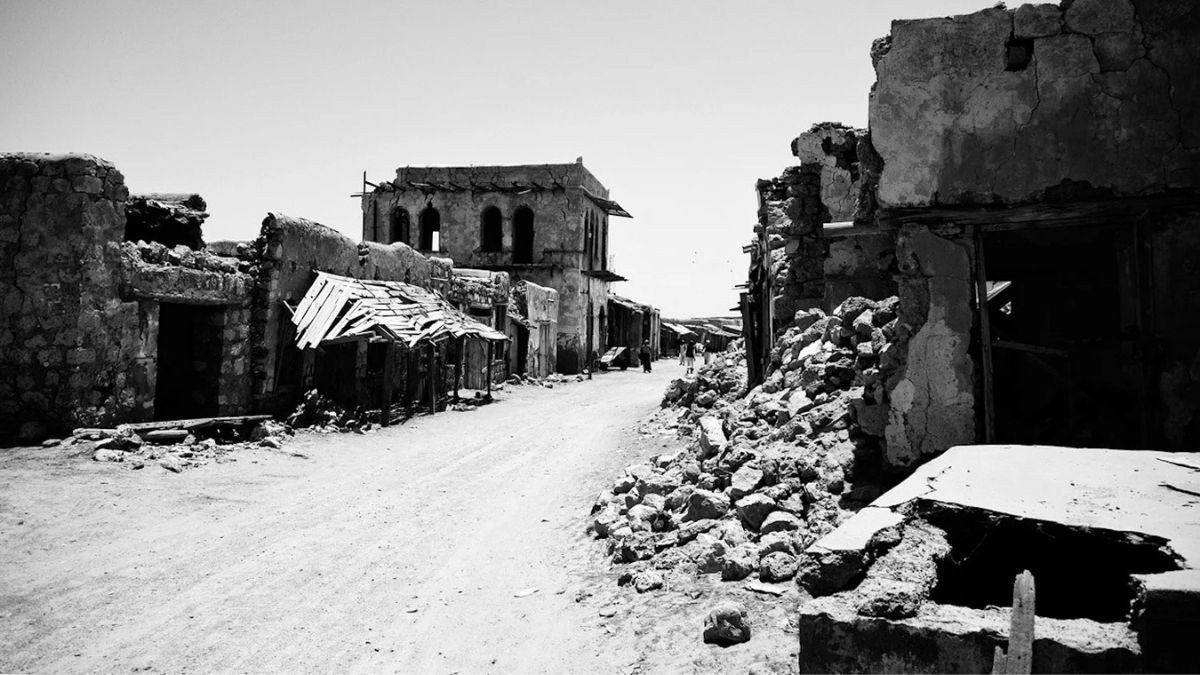
Your work has been a reference for a variety of Sudanese visual artists. How do you feel being one of the leaders of the resurgence of the Sudanese art scene in general and Sudanese photography in particular?
I am really jubilant that throughout the past years I was able to help several artists, whether it was directly through photography or by adding to the visual art coming out of Sudan. The main reason I embark on all of this is that I think had someone guided me throughout my early years as a photographer, my product would have been way different. I am not the best Sudanese photographer, nor am I among the top ten best Sudanese photographers, nevertheless, I am so in love with photography that I would love to see better Sudanese photographers out there. And I will continue this journey in improving Sudanese photography, because we need it. You talk about a country that had lacked a photography-teaching university since the 1970s, until Mashreq University started enrolling students into commercial photography courses. Internationally, however, photography is taught in four to five years as a bachelor’s degree.
I personally spent a lot of time trying to learn from the internet, and, unfortunately, wasted a lot of time on technical aspects that, despite being useful, were not worth the time. I want my students to focus on both the thematic aspect alongside the technical one, and to remember that we are in a very complicated continent so the themes must be well-representative of the subjects they embody. That is why I prefer long workshops so I am able to supervise the development of the projects from the drawing board until they are a feasible matter. A photographer must choose a subject from his environment that he is well-versed on.
Those who learn photography from the internet, find dissimilarities with the reality in which we live. The internet asks for a blue sky, green grass, brown dirt etc., often these demands are out of touch with our reality. So you find yourself searching for the “perfect” shot that mimics photos from Switzerland for example. But, we live in a country that is different to Switzerland, with a different climate and different stories. A great part of photography is capturing a moment and preserving it as it is, and that is the goal behind all types of photography.
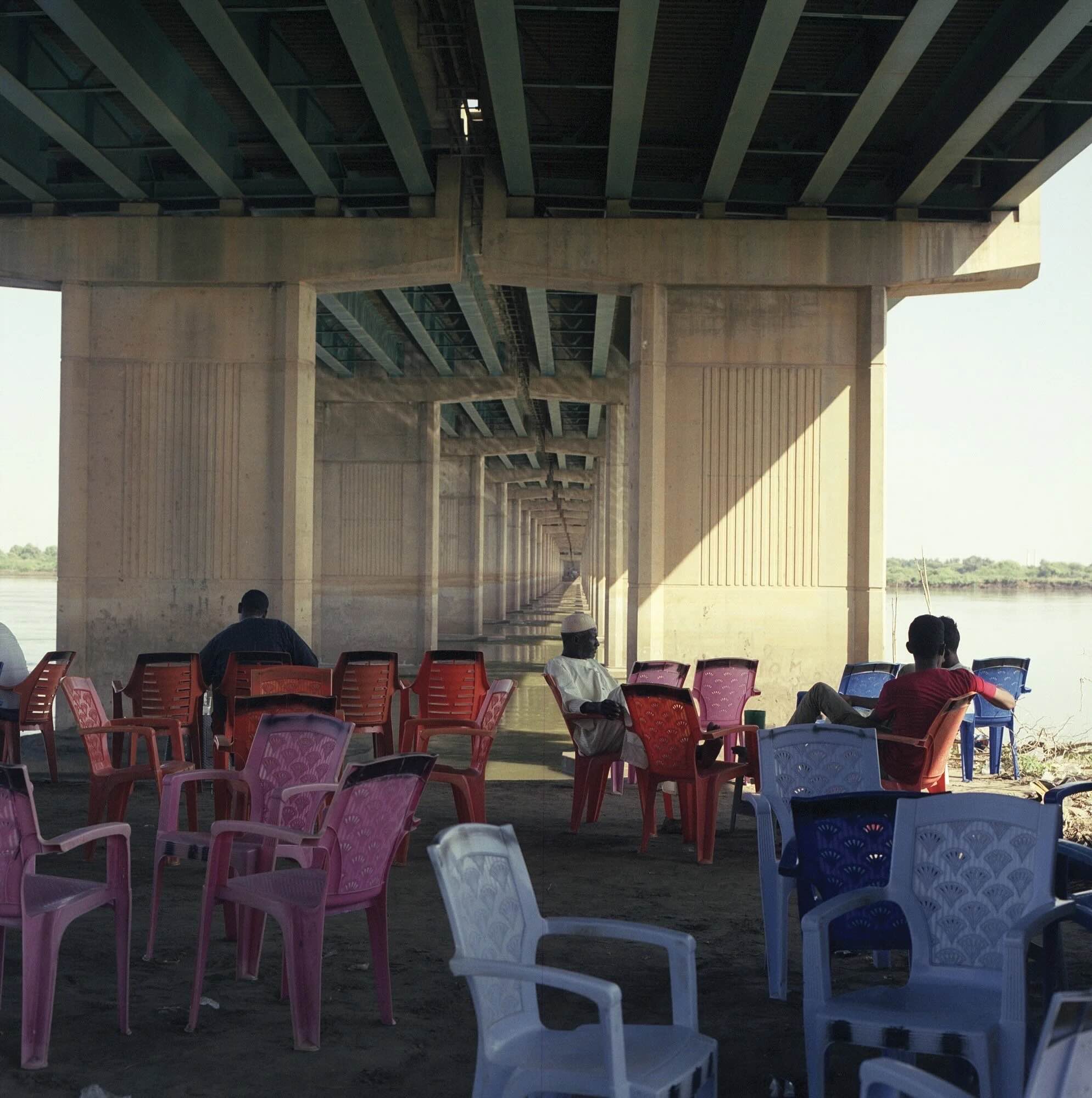
Your series “By the River” is a wonderful piece of documentation of the sociological activities of individuals from different socioeconomic backgrounds. How important is such work in preserving the narratives and human elements surrounding Khartoum?
The Nile is one of the motifs that inspired a lot of the Sudanese artists, whether writers, poets or visual artists.When the same subject is portrayed from different angles, this allows us to show the different elements and viewpoints surrounding said subject. By the River encapsulates the different communities that visit the Nile’s bank. Everyone in Khartoum visits the Nile and Shari’ Alnil in Khartoum is different from Shari’ Alnil in Omdurman is different from the one by the White Nile. It is the main public space in Khartoum. I consider the Nile a starting point to the documentation of life in Khartoum.
A city’s features rarely stay the same throughout the years. From this principle such projects gain their importance. They represent a steady force of documentation of the city’s features and soul. Had there been some projects to document life around the Nile from 30, 40 years ago, we would have gained valuable history regarding the city and the direction it was heading towards.
War also allowed us to appreciate such projects more. It showed us how precious such projects are. Documentation, no matter how little, is really important, because it prevents us from repeating the same mistakes from the past so we do not end up in a vicious circle, and here comes the value of photography as it is a really valuable tool for writing down history.
By the River documents the city from my perspective, the city, the places that I frequented as Ala Kheir.
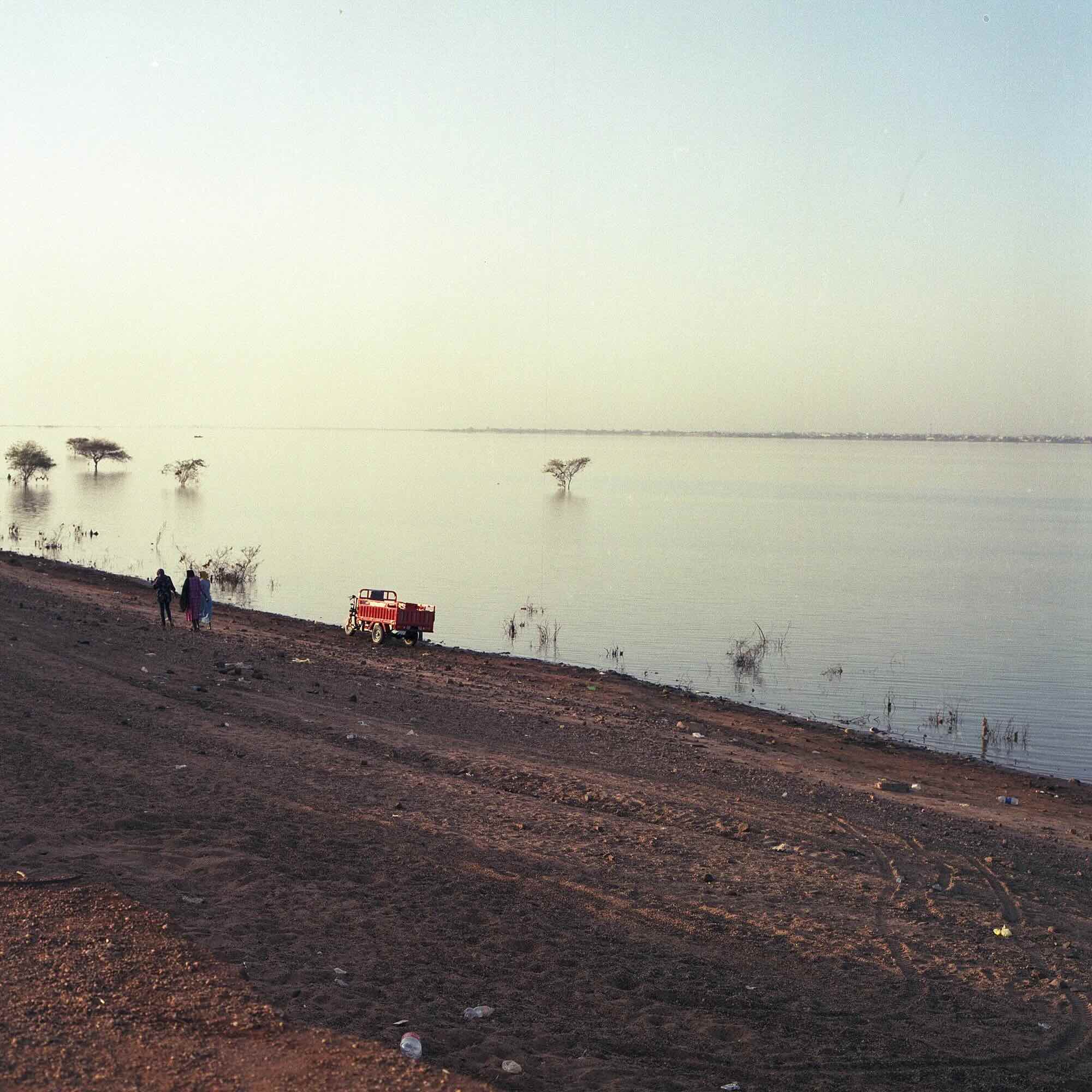
Archival is a major theme throughout your work. How important are independent attempts for archival in a country where governmental propaganda restricts such work?
The government, throughout its history, considered photography a threat. Back in 2009, the freedom to take photographs was more restricted and that continued until the 2019 Revolution. After the Revolution, it was easier to take photos, due to a lot of factors, including the spread of mobile cameras and so on. Now, after the war, everyone is afraid of the camera, even the citizens themselves.
In the past, the campaigns to train photographers also aimed to train the communities surrounding them and make them comfortable with the idea of photography. They aimed to change the idea that photographs were to be feared as the government wanted the people to think. Governments of the past were able to create a state of surveillance and a sense of caution towards photographs. With the Revolution, this was slowly starting to change, but the war reset all progress back to square one. To break free from these chains of fear, photographers must start with their own little communities in their houses and neighbourhoods. And at the end of the day, governmental officers, policemen, security officers are all members of these communities. This takes generations, though, and requires a rigorous effort.
You may access Khier’s photographs at his website photo projects – Ala Kheir’s Portfolio or on his Instagram at @ala.kheir.
As he ventures into this brave new world ahead of him, 2005-born Muathal Hisham tries to reflect on the experiences he encounters through poetry and prose. An aspiring bilingual essayist who aims to reinvent the way literature, art and music are interpreted, Muathal provides a thrilling dive into regional and international cultures, with the hope it might inspire positive change in his community. When he is not writing, Muathal is often busy video editing or studying for medical school at Ain Shams University. Find him @muathall on Instagram or visit his blog on Medium at @Muathal.