


In my last column, I explored how race was understood in pre-colonial north Sudan. The historical evidence showed that, while the nature of race in pre-Islamic north Sudanese kingdoms is unclear, by the 16th and 17th centuries, religious elites had begun categorising tribes along sudani (Black) and ‘arab (Arab) lines.
Tribes with Peninsular Arab ancestry were considered Arab, while tribes without Peninsular pedigrees were classified as Nuba and Zunji, subgroups of a broader term, sudani.
This approach may be familiar to modern Sudanese, who still use the term Arab to describe tribes with mixed Peninsular and African heritage, and the term Zunji for tribes in Darfur, Kordofan, and South Sudan that do not make these claims. Even so, in the past 200 years, Sudan has undergone changes that have impacted how Sudanese people interpret race.
In this second part of our study of race in Sudanese history, we will explore these shifts and how they resulted in modern Sudanese racial perspectives.
Sudanese Race in the Ottoman Empire
In 1812, the Ottoman governor of Egypt, Muhammad Ali, began planning his conquest of Sudan. Hoping to quell threats to his rule by amassing a slave army, Ali invaded the Funj Sultanate in 1820, bringing more Sudanese slaves to Egypt. Based on an 1848 Egyptian census, American scholar Terrence Walz argues that, during this time, the meaning of the word sudani changed. In contrast to the post-medieval Sudanese use for non-Arab tribes, the 1848 census used sudani to refer to both non-Arabs and Arabs originating from the Funj Sultanate.
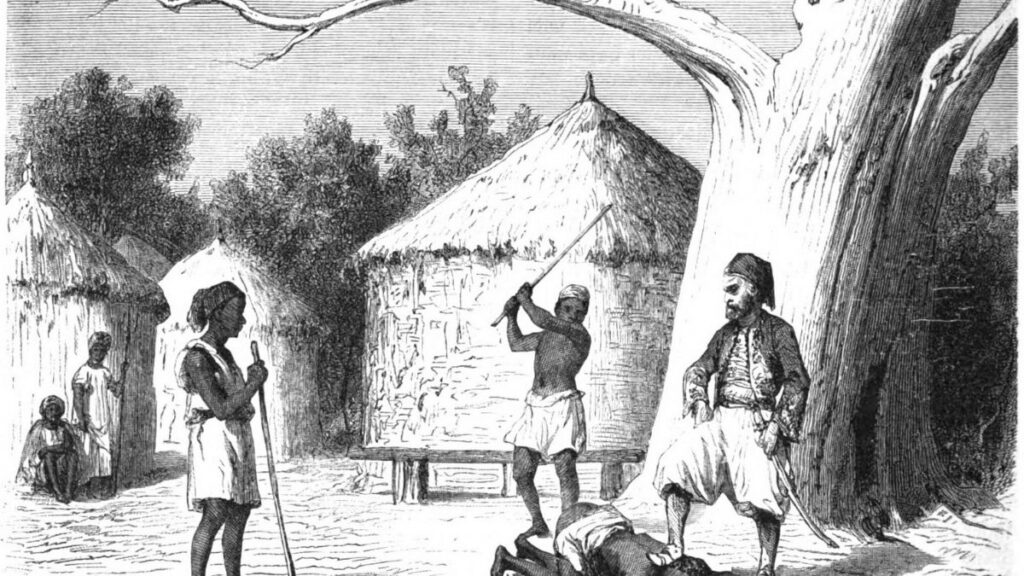
An 1866 illustration by French artist Édouard Charton titled “Slavery Scene: The Turkish Colonel,” depicting an Ottoman official stepping on a Sudanese person’s neck while another beats them. Source: Wikimedia Commons
In this era, French colonialist Frédéric Cailliaud reported that the people there grouped themselves into four “races:” yellows, reds, greens, and blues. Each was identified based on their physical features: “yellows,” for instance, were nomadic Arabs with “straight hair,” while the “copper-skinned” Funj were “blues,” and agrarian northern Sudanese were “half yellow” and “half green.”
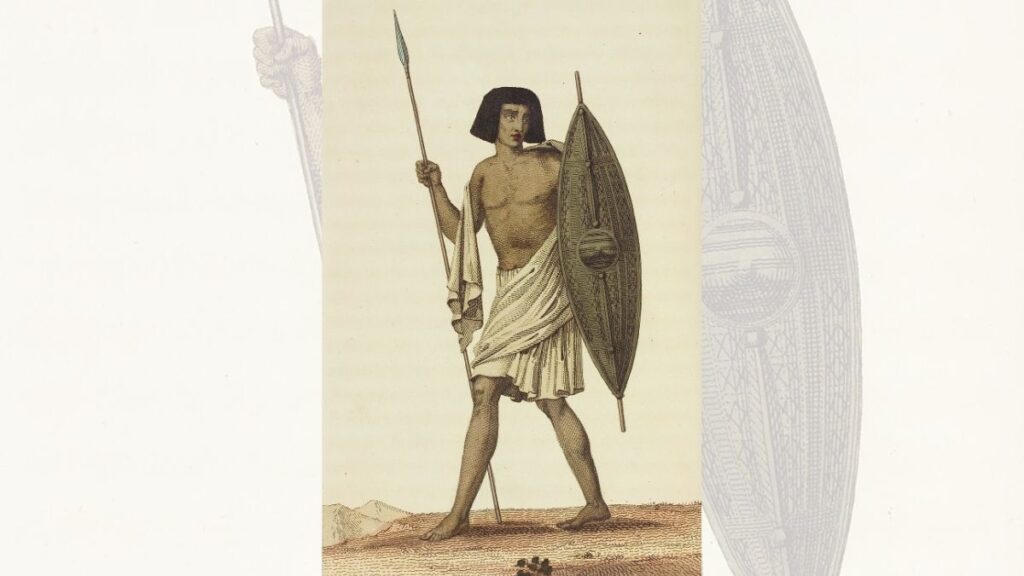
An illustration by Frédéric Cailliaud of a man of the Arab Shaigi tribe, from his 19th-century book Voyage à Méroé (Journey to Meroe), which documented his travels to Sudan as a part of Ottoman imperial efforts. Source: Wikimedia Commons
While the rigidity in Cailliaud’s description may have been overstated, the labels and narrative of racial mixture he mentions are echoed in later Sudanese records. In 1884, Sudanese religious scholar Sheikh Muhammad wad Doleyb Al Asghar described Sudanese Arabs as “fused with the Nuba and Zunj,” “adopt[ing] their characteristics.” In 1969, Sudanese scholar Ahmed Abd Al Rahim recorded an oral tradition by the Abdallabi tribe describing one of their historical leaders as “green.” These ideas proved influential later on, when a brief period of independence ushered in by the Sudanese Mahdist movement (1881-89) was followed by a new form of imperialism.
Sudanese Race in the British Empire
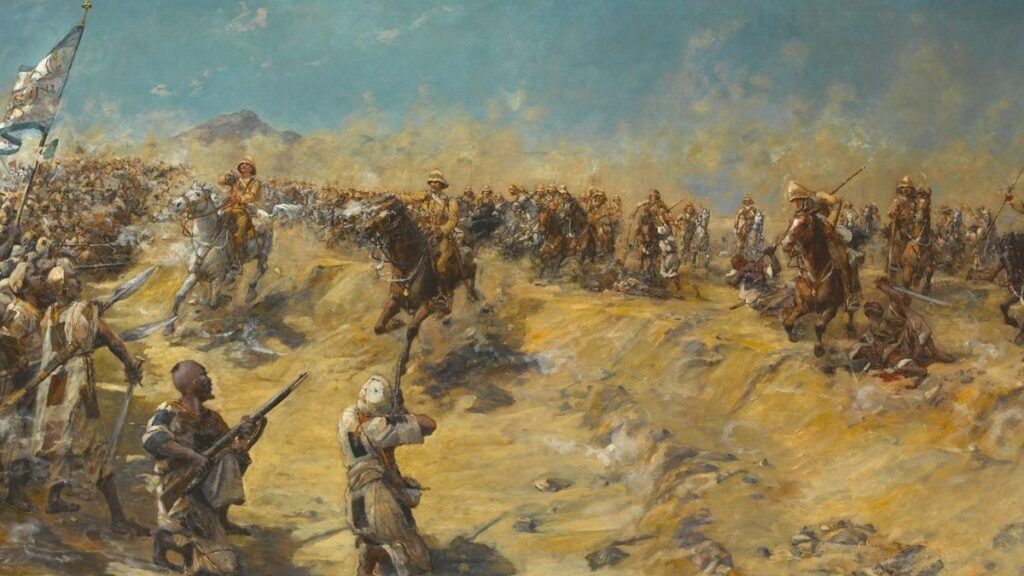
“The Charge of the 21st Lancers at Omdurman” by British painter Edward Matthew Hale, painted in 1899, depicting the Sudanese and British armies at the Battle of Omdurman. Source: Wikimedia Commons
In 1898, Sudan fell into British hands after an Anglo-Egyptian victory at the Battle of Omdurman. British journalist and future prime minister Winston Churchill documented the conquest in his book 1899 The River War, an early example of the colonial understanding of Sudanese race and history:
“The Soudanese are of many tribes, but two main races can be [d]istinguished: the aboriginal natives, and the Arab settlers. The indigenous inhabitants…were negroes as black as coal…Although the negroes are the more numerous, the Arabs exceed in power…when the [Arabs] went forth to conquer the world, one [a]rmy struck south…the situation in the Soudan for several centuries may be summed up as follows: The dominant race of Arab invaders was unceasingly spreading its blood, religion, customs and language among the black aboriginal population, and at the same time it harried and enslaved them.”
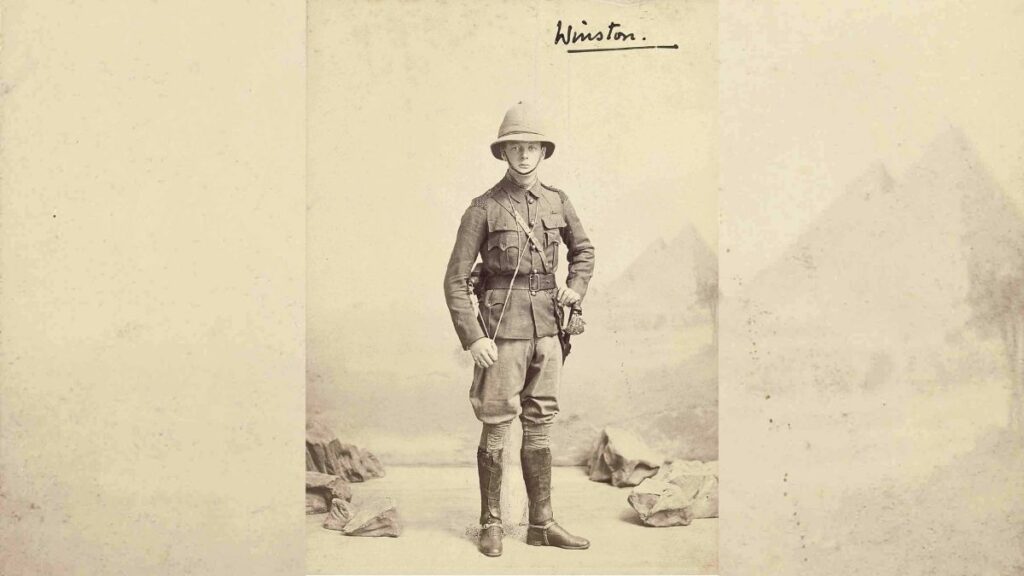
A studio photograph of Winston Churchill from 1898 with a pyramid backdrop, prior to his participation in the British invasion of Sudan. Source: Wikimedia Commons
Churchill’s comments partially echo Ottoman-era and post-medieval literature, using “Soudanese” as a geographic rather than a racial term, and framing the country in terms of migrant/local racial mixture. However, his comments also show the collapsing of older racial distinctions into a Negro/Arab binary. His interpretation of Sudanese Arab history as settler conquest is also absent from earlier works, and somewhat mirrors the British Empire’s self-image as a civilising imperial project.
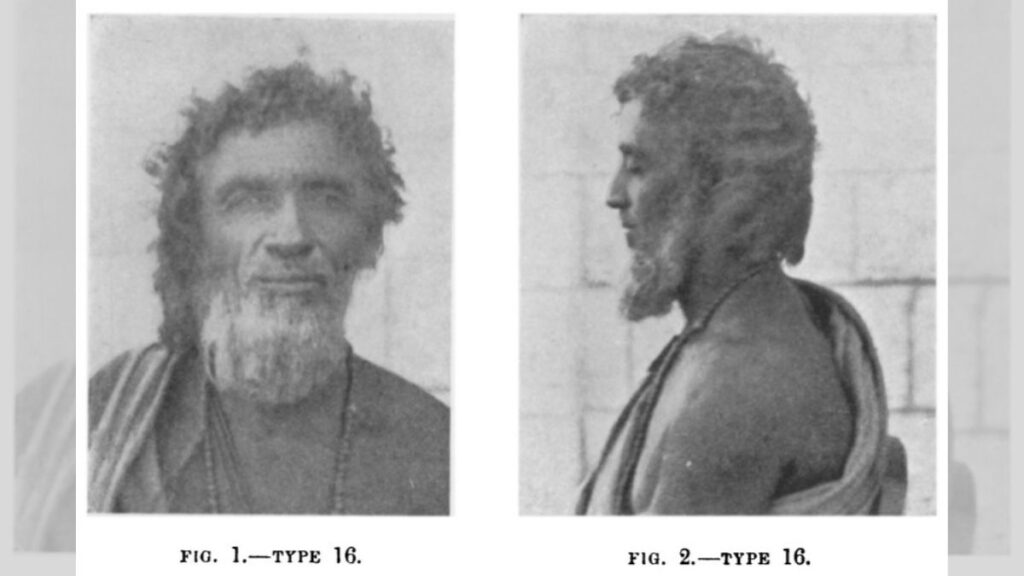
A 1913 photograph of a Beja man labeled “A Hadendoa man of the classic Hamitic type,” from a book by British ethnologist C G Seligman. Europeans used the term Hamitic for tribes such as the Beja and Nubians, who they believed to be hybrids of Negroids and racially superior peoples from Asia and Europe. Source: Wikimedia Commons
This framework was formalised further in the work of British administrator Harold MacMichael, who categorised Sudanese into Semites (Arabs), Negroids (believed to be pure Africans), and Hamites (perceived Semite/Negroid hybrids), distinctions developed by European anthropologists. This racial ideology guided colonial policy, most notably in the segregation of majority “Negroid” regions such as South Sudan and Darfur from the “Semitic/Hamitic” riverine and eastern areas.
Although this instance of “divide and conquer” strategy is sometimes cited as the start of the Sudanese Arab/Black divide, the British did not invent this notion. Rather, they re-interpreted already existing Sudanese racial ideas through their own lens and enforced them with their colonial government.
The “Traditional” Understanding of Race and Identity in Sudan
Sudanese racial paradigms following independence in 1956 draw from both the local, post-medieval world-view and the legacy of colonialism. These multifaceted influences understandably lead to a wide array of perspectives. One set can broadly be labelled as “traditional,” as it largely stems from the view of history outlined above. Although the term sudani no longer has racial connotations, adherents to this paradigm still discuss the country in terms of pure Africans (known as Zunuj/Negroids or Zurga/blues), and non-Zunji Arab, Nubian, and Beja tribes (whose skin colour is described varyingly as yellow, red, and green).
This outlook abounds in works of Sudanese historians such as Awn Al Sharif Gasim and Yusuf Fadl Hassan, who employ the colonial Semite/Hamite/Negroid labels (translated as Sami/Hami/Zunji) while using historical evidence to corroborate Sudanese Arab claims to migrant heritage.
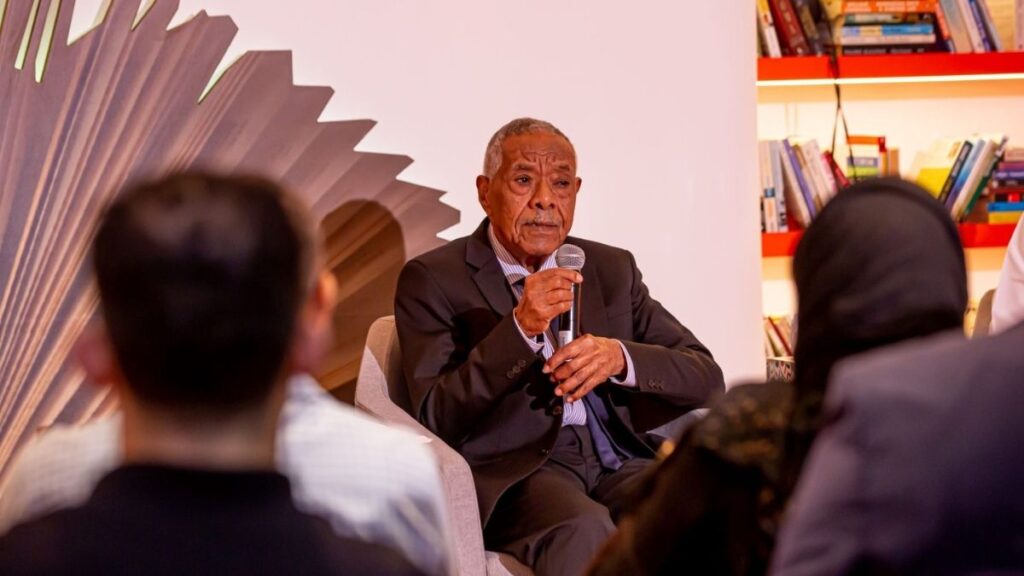
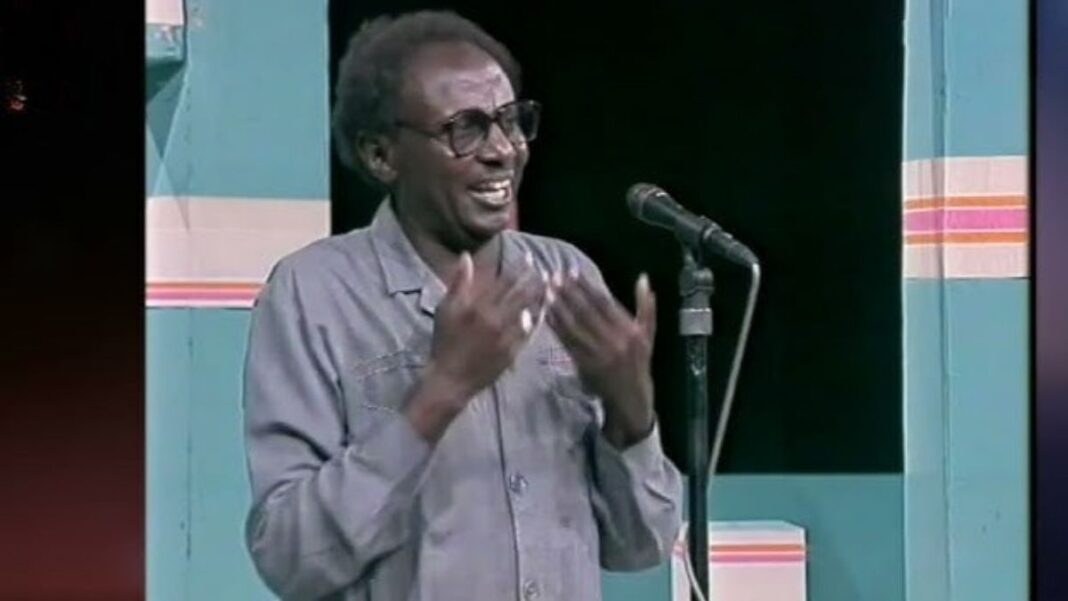
Yusuf Fadl Hassan speaking at the Al Sharjah International Book Fair in the UAE. Hassan’s 1967 book, The Arabs and the Sudan, continues to be one of the most influential works on Sudanese Arab history. Source: IBW Media
The term “traditional,” however, should not imply the absence of nuance. Scholars note the term Arab is sometimes used occupationally rather than ethnically, being applied to nomadic groups, including non-Arabs such as the Beja and Zaghawa. Sudanese historian Abdullahi Ibrahim points out that some Arabs affirm their tribe’s oral genealogy while rejecting written genealogies, such as those found in Gasim’s Encyclopedia of Tribes. Others approach these genealogies selectively: Hasan accepts, for instance, the Ja’ali tribe’s claim of Abbasid descent, while denying Mahas claims of Khazraj descent. There are others still who believe Sudanese Arabs to be descendants of Peninsular migrants, while rejecting the whole genealogical tradition as unreliable. Additionally, many of those referred to as Zunji/Zurga by Sudanese Arabs consider these terms offensive, and prefer to identify themselves by their ethnic group.
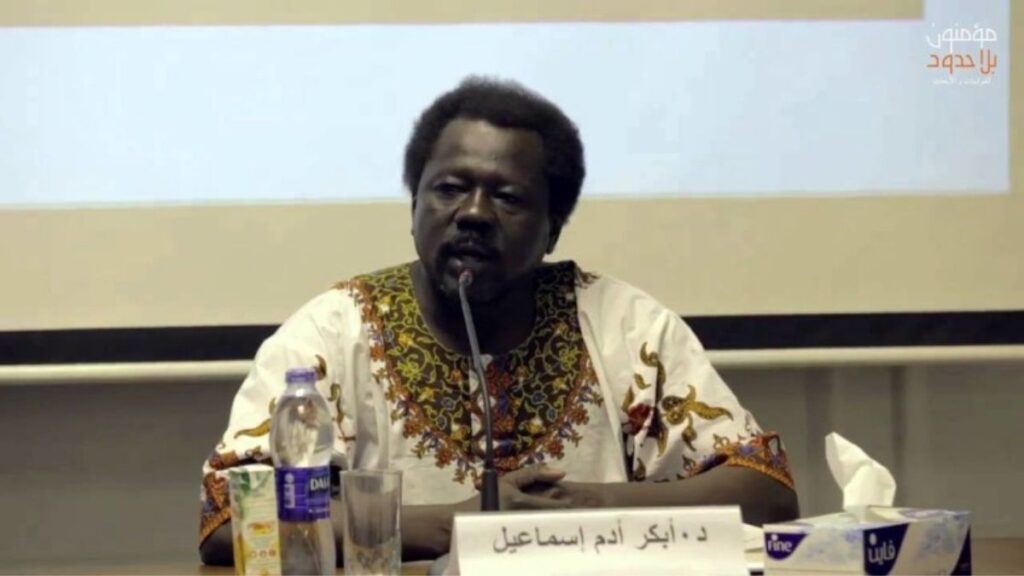
Abakr Adam Ismail speaking at a “Believers Without Borders” conference about his book “The Center-Periphery Dialectic,” an influential and controversial work arguing Sudan’s political, economic, and social systems favour an ethnic Arab center at the cost of an African periphery. Source: Altaghyeer
In any case, this view of Sudan as inhabited by ethnic Arabs and pure Black Africans has guided international coverage of Sudan’s wars. This can cause confusion among Western observers, who consider Sudanese Arabs to be Black. Within the traditional Sudanese paradigm, however, Blackness is specific to the typically darker-skinned non-Arab ethnic groups classified as Negroids/Zunuj by modern scholars, and Zunuj/Nuba by the post-medieval religious elite. Scholars from these communities, such as South Sudanese politician Francis Deng and Sudanese novelist Abbakar Adam Ismail, have long argued that this social divide has a distinct political impact on those traditionally viewed as Black, while favouring Arab tribes socially and economically.
The “Progressive” Understanding of Race and Identity in Sudan
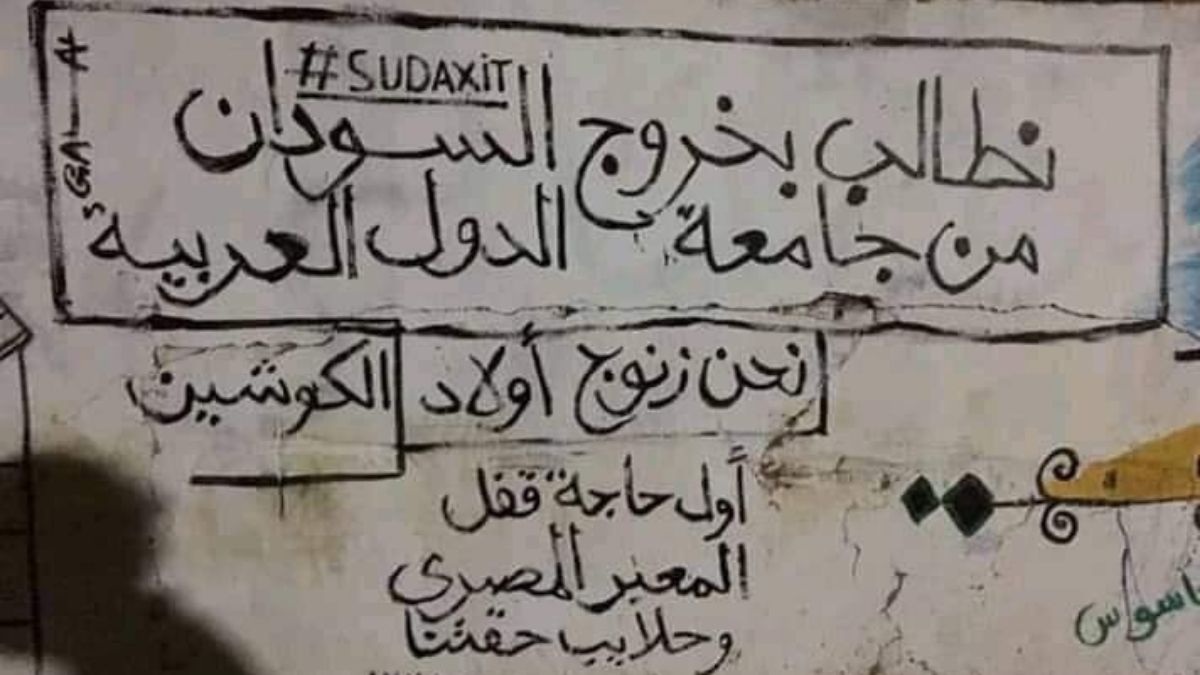
Countering this world-view is what may broadly be referred to as the “progressive” understanding, not because it is more enlightened, but because it rejects the traditional view. Sudanese content creator Muaz Osman serves as an example. For him, Sudanese Arabs are Black Africans just as much as so-called Zurga/Zunuj. He considers Arab migration too historically distant to be relevant, and argues Sudanese Arab experiences of cultural divide and anti-Blackness in the Arab countries affirm their ethnic and racial Africanness.
This perspective is also found among the Sudanese diaspora in the West. Indeed, when Sudanese-American Safia Elhillo received an award from the Arab American Museum, she stressed her identity as an “Arabophone Black person” rather than an Arab. These views are also shared by Western scholars, such as American historian Jay Spaulding, who rejects the traditional paradigm as a colonialist fiction, and describes Sudanese Arabs as Arabised Nubians. This term is common in Western scholarship, and adherents to the progressive paradigm often emphasise Sudanese Arabs’ cultural and historical links to Sudanese and Egyptian Nubians.
In this Instagram post are photos from Safia Elhillo’s acceptance speech at the Arab-American Museum Book Awards Ceremony in 2022. In the speech, Elhillo discusses the “trauma of Arabisation in Sudan,” and experiences of racial othering in Arabophone spaces, which factor into her refusal to identify with the term Arab.
As a result, some dismiss this outlook as Westernised, even though it is shared by some prominent Sudanese voices. Rather than totally disregard it as mere foreign influence, I’d posit it may stem from genuine frustration with local and global anti-Blackness, as well as a desire to unite the country under a common heritage.
Although well-intentioned, this approach risks centring Sudanese Arab cultural identity and social experiences, especially internationally, while neglecting the political and economic structures that sustain racial division within Sudan. Without materially addressing these issues, celebrating one’s Kushite as opposed to Arabian lineage does little to address divides between Sudanese ethnic groups.
Furthermore, despite the popularity of the Arab/African divide as a means of explaining Sudan’s recurring wars, the most recent Sudanese civil war presents a pressing reason to nuance this analysis. Even though Sudan’s so-called “pagan African” and “Arab Muslim” halves were separated, both devolved into intra-racial war. While there is value to the discussion of these paradigms due to their historical influence, the time has come for Sudanese and non-Sudanese alike to seek more robust explanations for Sudan’s crises beyond familiar, long-established tropes.
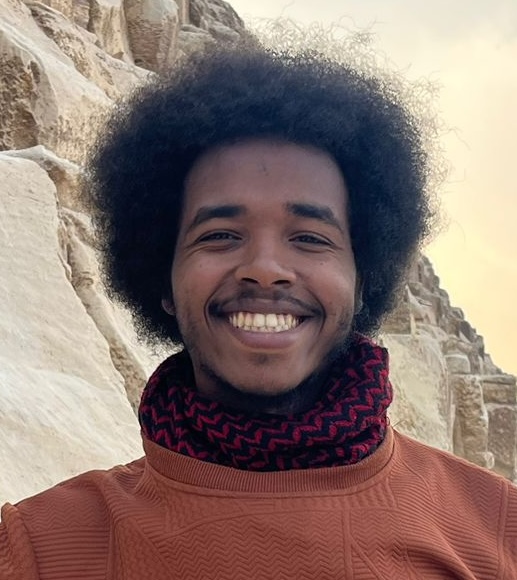
500WM Columnist Hatim Eujayl is a Sudanese-American writer involved in various projects to promote Sudanese culture. His most famous works include the Sounds of Sudan YouTube channel, the Geri Fai Omir Kickstarter, and the Sawarda Nubian font. More of his writing can be found on his Substack, ‘My Sudani-American LiFE,’ where he discusses Sudanese literature and cinema. He can be reached on Instagram @massintod or by email at [email protected].


.jpg)