

Nearly a century after the rise of Sudan’s music scene, the world is finally starting to listen. Sudanese music culture has been pulsing with tradition, and today, tradition is meeting modern hip hop and Afrobeats, the oud drowned out and the autotune front and centre.
While the world is finally paying attention to Sudan’s music scene, Sudanese musicians should not shy away from their traditional beats and rhythms in favour of international sounds. Instead, they should strike a balance – preserving their heritage while appealing to a broader audience.
A Brief History of the Sudanese Sound
The modern Sudanese sound as we know it originated in the late colonial period, primarily in the two decades leading up to Sudan’s independence from Anglo-Egyptian rule in 1956. The sound is characterised by the pentatonic scale, a five-note musical scale known for its pleasant flow of notes. While percussion instruments such as the Sudanese instrument dalouka dominate the composition of Sudanese music, exposure to Western, Arab and African cultures introduced instruments that are now staples in classic Sudanese music, such as the oud, accordion and violin.
Genre Fusion and Experimentation in the Past
Between the 1960s and 80s, Sudan’s music scene witnessed its golden era, where various musicians, both male and female, rose to fame, bringing forth new influences to the soundscape. Many musicians during this period ventured beyond the norm to experiment with the Sudanese sound, adding hints of Western, Arab and African cultures to their music.
Inspired by Egyptian music, iconic Sudanese singer and composer Othman Hussein introduced the concept of long instrumentals as song openers. Sharhabeel Ahmed is arguably the king of Sudanese jazz, a title earned for his ingenious blend of Western jazz and traditional Sudanese sounds. Even the late Mohammed Wardi, also known as the Voice of the People, delved into the art of experimentation by drawing from reggae influences, and 1970s icon Mustafa Sid Ahmed dabbled in the sounds of funk during his time.
Throughout Sudan’s music history, artists have continued to push boundaries of sonic innovation, but the Sudanese sound was always preserved through the countless worldly influences, and authenticity was untouched.
Sonic Experimentation in the Modern Music Scene
Most Sudanese music released during modern times still follows a similar style of production as music in the late 1990s and early 2000s, though more digitalised. Musicians such as Ahmed Fathallah and Hussein Al Sadig, and female music icons such as Nada Al Galaa, and Mayada Gamareldeen have not revolutionised the sound of traditional Sudanese music. Although there are musicians from Nancy Ajaj to Mazin Hamid to Ahmed Amin fusing traditional and contemporary Western influences, the only drastic measures of innovation were witnessed within the Sudanese hip hop scene.
With hip hop culture in Sudan being the forefront of the modern music scene in Sudan, most of today’s genre fusion intertwines with the production of rap music. Rapping in Sudanese dialect in itself is a way that blends tradition with modernity, but today, producer Mshakil Beats attempts to place Sudanese authenticity at the centre of his tracks, working with Sudanese rappers such as Awab The Rapper and Esaam Satti, who predominantly rap in Sudanese dialect, to produce songs that layer Sudanese tracks within the beats, with violins and oud playing classic pentatonic melodies.
Unpacking the Forces Behind Innovation
The classics of Sudanese music are still listened to and are still widely celebrated across Sudan, with folk going to concerts of legends who are still active in the music industry, such as legendary group Igd Al Jalad, so it is worth asking why innovation is so significant to musicians in modern times; why fix what is not broken?
Modern day Sudanese musicians are no longer satisfied with local fame, most of them have one thing in common: the desire for Sudanese music to go global. Becoming part of the global mainstream requires innovative strategies and reliance on the popular influences from around the globe: Western, African, and Arab.
While innovation and experimentation existed in the past, it was different from the genre fusion approaches we see now, which is simply the result of the constantly changing music trends over the years; the music that is currently internationally popularised is drastically different from what was mainstream several decades ago.
The pressure to conform to the norms of today’s music industry is moulding the way newer Sudanese musicians create music, making them strive to produce songs that will not only resonate with Sudanese folk, but different listeners from around the world. This created a divide in the type of music now released from musicians in Sudan’s soundscape. With some musicians pursuing innovative strategies, but leaving many behind, the Sudanese sound is no longer signature and unmistakable, rather more disoriented and indistinct.
Confronting the Identity Crisis
While innovation has proven successful for some, many musicians, whether traditional, or icons in the hip hop and afrobeat lane, find themselves stuck on either end of the spectrum. Songs released today either sound exactly similar to styles from the 1990s and early 2000s or stray so far down the lane of experimentation, authenticity begins to be questioned.
With a few exceptions, traditional musicians of Sudan, particularly those who rose to fame in the early 2000s, continue to follow the styles of the legends such as the late Mohammed Wardi, iconic performer the late Mohammed Al Amin, and many others who came before and after their time. Innovation has only been sparked in methods of composition and production, where most of the instruments have been digitalised and vocal engineering has been introduced. This unwavering determination to remain authentic can be a product of national pride, a way of saying “this is Sudanese music, take it or leave it.”
While traditional artists remain too traditional, a majority of Sudanese rappers only display cultural authenticity through their Sudanese dialect, if they rap in Arabic rather than English, but production styles continue to mimic those of American hip hop or Afrobeats, with almost no influence of the true Sudanese sound. This raises the question: how far is too far when plucking at the strings of creative experimentation?
Striking a Balance Between Tradition and Innovation
If Sudanese music should become an international and progressive sensation, it is important to strive for innovation, especially in the modern music scene. Sudan’s traditional music is viewed by its population as brilliant, but as music, like any other art form, is subjective, the world may not have the right ear for it.
This does not mean, however, that Sudanese musicians must leave their musical roots behind and follow the current trends in hip hop, Afrobeats and reggae. Sudanese musicians must find a place in the middle of the spectrum, preserving tradition while appealing to the masses. While some musicians such as Mazin Hamid, Nancy Ajaj, iconic band Aswat Al Madina (Sounds of The City) and producer Mshakil Beats have mastered the art of genre fusion, the general music scene still has a long way to go.
African musicians with their Afrobeats and Amapiano sounds, have gone global, reaching international radios, screens, stages and ears. Sudanese music too, with their rapidly growing rap music, is on its way to reaching the world, helping shift the world’s focus to Sudan’s music scene. However, efforts may be of no avail if the music being heard does not reflect the roots of Sudan. A bridge must be built between the traditional sound and modern influences to showcase the versatile nature of Sudanese music. It is every musician’s dream to be under an international spotlight, and this reach requires progressive approaches, but it is important not to leave culture behind as Sudanese musicians step into the paths of innovation. Autotune is a technology, but dalouka is a traditional movement. Heritage is a spark that will never fail to light, and it is up to musicians to keep the fire alive.
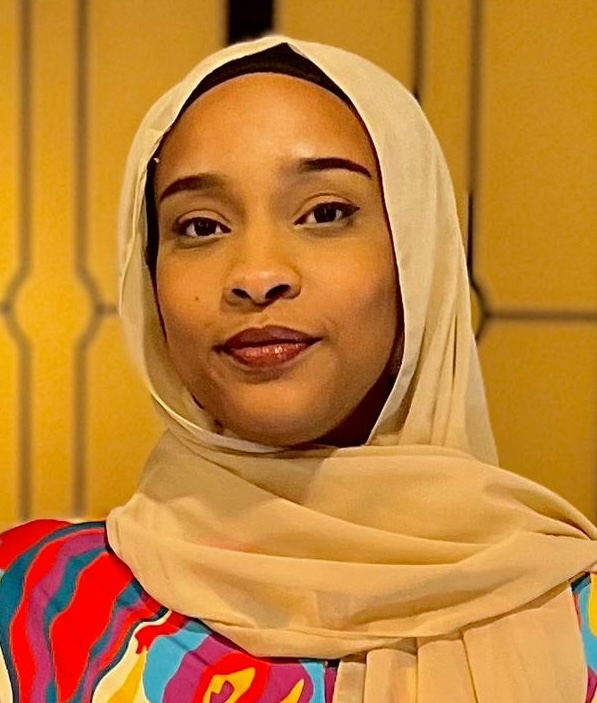
Samar Bengawi is a medical student by day, and a literature and music enthusiast by night. She was born and raised in the UAE and is now based in Georgia. She is never without a cup of coffee in hand, and is always “on the go,” chasing after one hobby or another. Passion in Sudanese politics runs in her blood and she considers herself a patriot who hopes to leave a memorable mark in the world.