


An Ebola outbreak in the Democratic Republic of Congo (DRC) has been declared a Public Health Emergency of International Concern by the World Health Organization (WHO) on 17 May 2026. However, officials say global risk remains low and the situation has not been classified as a pandemic.
WHO Director-General Tedros Adhanom Ghebreyesus said he was “deeply concerned about the scale and speed of the epidemic”.
As of 20 May, authorities reported around 600 suspected cases in the DRC, with at least 139 deaths linked to the virus. A further death was recorded in Kampala, Uganda, after the individual had travelled from the DRC.
However, modelling from the London-based MRC Centre for Global Infectious Disease Analysis, released on 18 May, suggests there may be significant under-detection, with more than 1,000 active cases potentially circulating.
The outbreak involves the rare Bundibugyo strain of Ebola, which currently has no specific treatment or approved vaccine. The WHO has warned that the virus may be spreading more rapidly than initially assessed.
In cooperation with the WHO, authorities in the DRC are opening three Ebola treatment centres in Ituri province, where the outbreak originated. The epicentre is believed to be Mongbwalu Health Zone, a high-traffic mining area, with cases later spreading to Rwampara and Bunia as patients sought medical care.
Ituri province borders South Sudan and Uganda, with Bunia located less than 500 km from the Ugandan border. A full epidemiological investigation and contact tracing exercise is ongoing.
The outbreak is unfolding in a region already affected by conflict. Violence in eastern DRC, particularly in North Kivu and South Kivu, is driven by resource competition, geopolitical tensions, and the presence of more than 120 armed groups. The crisis has created a severe humanitarian emergency, with more than 26.5 million people facing acute food insecurity.
Ebola
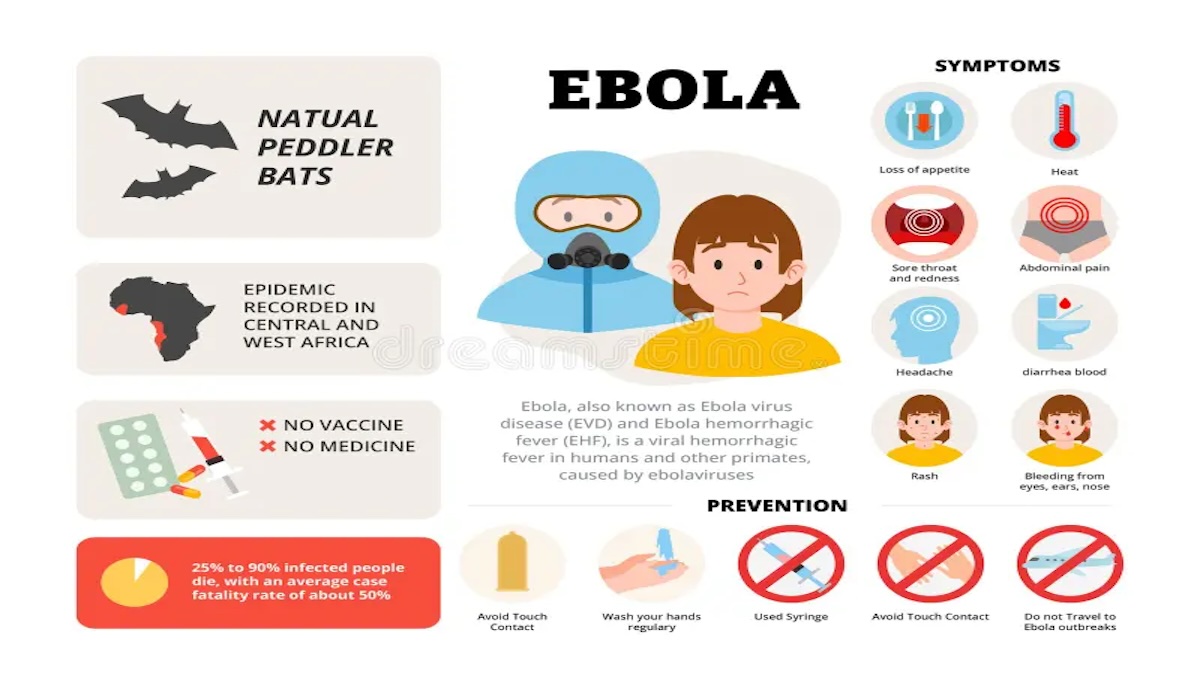
Ebola is a rare but highly fatal viral disease. It is typically transmitted to humans from infected animals, often fruit bats, and can spread through contact with infected bodily fluids.
Symptoms appear between two and 21 days after exposure, usually beginning with fever, headache, and fatigue, followed by vomiting, diarrhoea, and in severe cases, organ failure. Some patients develop internal and external bleeding.
The virus spreads through direct contact with bodily fluids such as blood or vomit, and fatality rates can range from 50% to 90% without treatment.
Ebola preparedness measures in South Sudan and Sudan
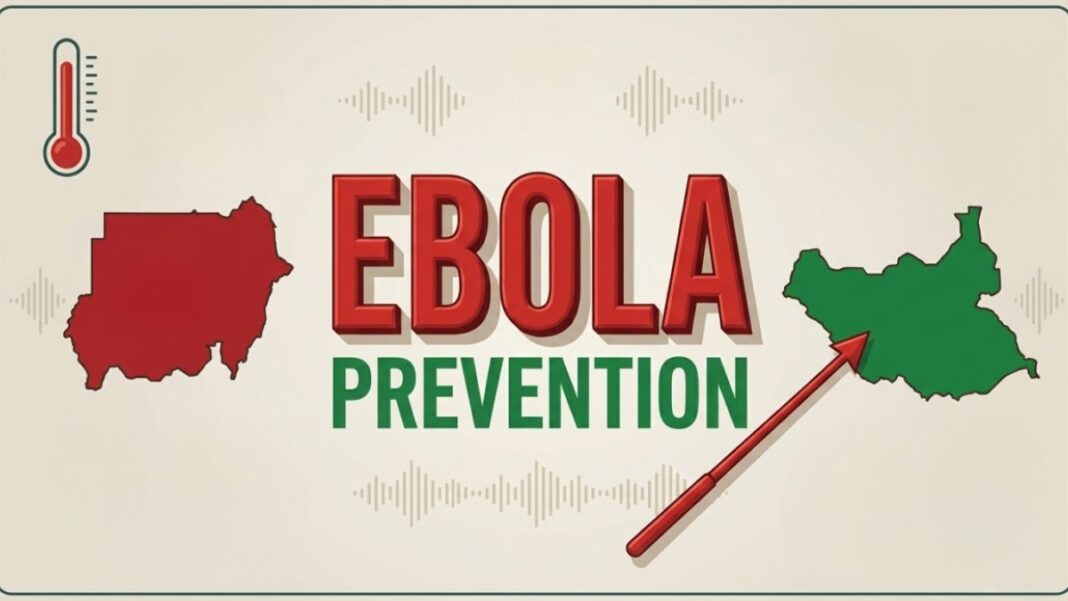
No Ebola cases have been confirmed in either South Sudan or Sudan. However, both countries remain at heightened risk due to their proximity to the DRC and Uganda.
South Sudan has activated nationwide Ebola preparedness and response measures amid fears of cross-border transmission. Rapid response teams and emergency operation centres, including the Public Health Emergency Operations Centre (PHEOC), have been activated to monitor potential cases.
Health authorities are working with the WHO and other partners to strengthen surveillance and preparedness, while screening measures have reportedly been intensified at border crossings and entry points.
Meanwhile, Sudanese health authorities have introduced stricter measures at borders and airports following the outbreak in neighbouring countries.
The Director of the National Quarantine Administration, Al Fatih Rabie Abdullah, recently chaired an emergency meeting involving quarantine officials, airport authorities, and representatives from seaports and land crossings.
Officials announced that travellers arriving from affected countries would be required to complete health declaration forms, while airlines would distribute additional screening forms before landing.
Authorities also confirmed that screening facilities in Port Sudan and Khartoum are prepared to receive suspected cases, with isolation centres currently being established in coordination with local health authorities.
Interesting fact: There is a strain of Ebola known as the Sudan virus (SUDV), officially called Sudan ebolavirus. It was first identified in 1976 during two simultaneous outbreaks of haemorrhagic fever, one of which occurred in Nzara and Maridi in present-day South Sudan. Although genetically similar to the Zaire strain of Ebola, which caused the major West African outbreaks, the Sudan virus is a distinct species within the Orthoebolavirus genus and causes Sudan virus disease (SVD), a severe and often fatal illness. The Sudan virus has been responsible for multiple outbreaks across sub-Saharan Africa, but there are currently no licensed vaccines or specific treatments for it. Vaccines developed for the Zaire strain do not provide protection against the Sudan virus.
Several countries have introduced or are considering travel restrictions on passengers arriving from the Democratic Republic of Congo (DRC), Uganda, and South Sudan amid ongoing Ebola outbreaks.
The United States has imposed a temporary entry ban on foreign nationals who have travelled in the DRC, Uganda, or South Sudan within the past three weeks.
Bahrain has also suspended entry for non-Bahraini travellers arriving from the three countries, effective Tuesday, 23 May 2026, following updated World Health Organization (WHO) guidance on the outbreaks. The restriction applies both to direct arrivals and to individuals who have been present in any of the affected countries within 30 days prior to entry.
Bahraini citizens returning from these countries will still be permitted entry but will be subject to approved health screening and monitoring procedures upon arrival.
Global concern is growing over outbreaks of Ebola and Hantavirus, although health authorities say neither currently poses a widespread global threat.
For more information on the current Ebola outbreak, visit who.int/emergencies/disease-outbreak-news/item/2026-DON602.