Culture is the soul of a nation. It serves as a voice for the people and what they represent. It is the beacon that is handed over from the ancestors down to the descendants. It forms the majority of one’s identity; being in sync with their beliefs, morals, behaviours and ethics.
The role our culture plays in the formation of our identity cannot be understated. One cannot live a meaningful life without a culture serving as a reference for their actions and behaviours. It is the connection that binds members of a community together and pushes them forward. It is our way of reclaiming our homeland, even when we are a thousand miles away, the vessel that carries the blood and sweat of the ancestors to the generation of today.
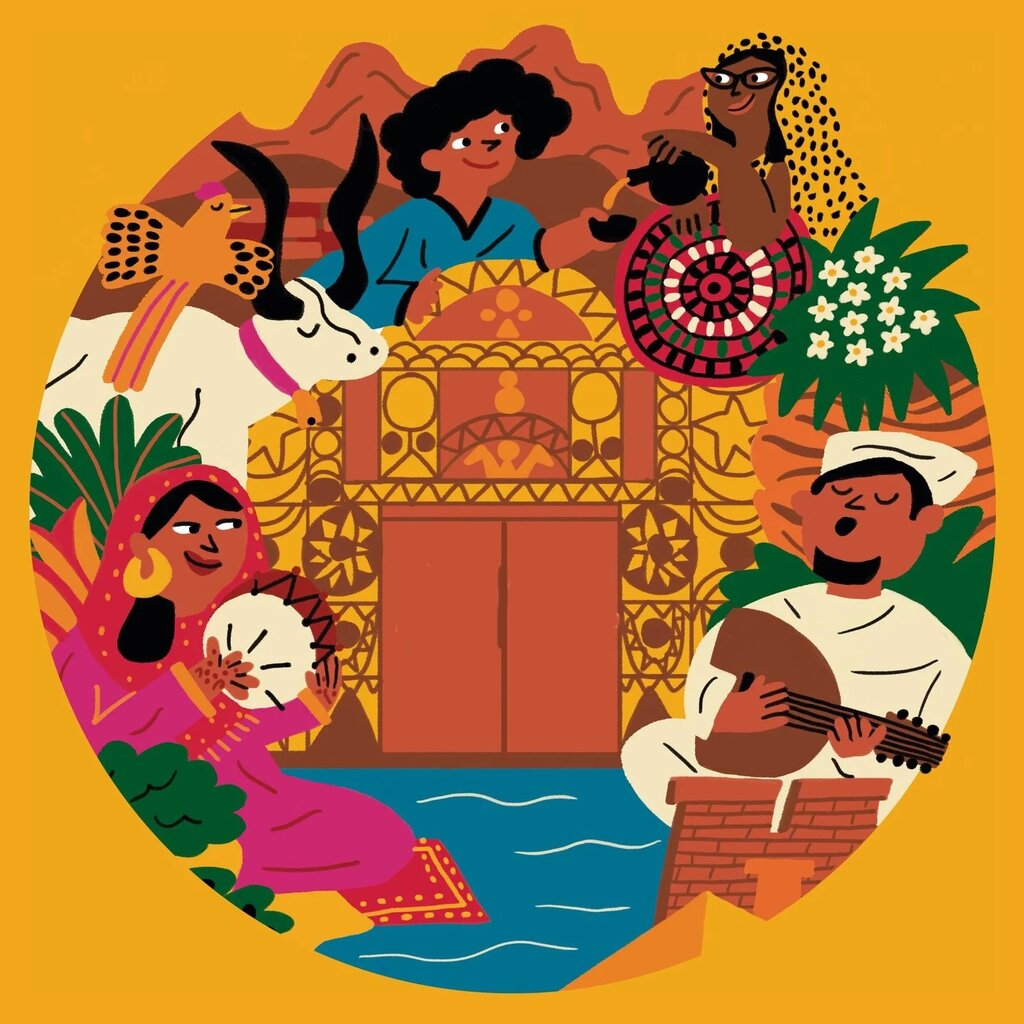
In a country of over 40 million people with various ethnicities and tribes, Sudanese culture is as diverse as a nation can be. From North to South, and from East to West, each tribe and people contribute with their different customs, costumes, food, music, and more, painting a beautiful mosaic which serves as a face, not only for Sudanese people, but also Sudan, the land, itself. To come to a specific definition of Sudanese culture would not only omit and exclude the many different people within Sudanese community but erase a cultural heritage that should be preserved. Nonetheless, we strive to be as inclusive as possible when describing Sudanese culture. It’s the language through which the land expresses its being, including the folkloric tales, songs, poems, dances, food and whatever object that may portray Sudan and its people.
How we delve into that culture is a process in itself; how we approach a culture to feel assimilated into it and accepted by its members. That process differs from one person to another. Introducing one to the cultural web of their people is done through multiple ways, whether that be through parents, role models, peers, media consumption or most importantly experiences. A core experience of many Sudanese people was during the 2019 revolution. The air shaken by the poems spilling from the throats of the protestors, the celebratory songs of our land orchestrated by those who swore that “this land and its culture is ours to protect.”
“Culture defines the life of an individual and their people. It is the customs, traditions and abilities one gains through being in a certain community. I might as well say culture is the life of an individual”
Mohamed Esam

Mohamed Esam
For many in Sudan, where culture and tradition dominates almost every aspect of life, culture is a reflection of life itself. “Culture defines the life of an individual and their people. It is the customs, traditions and abilities one gains through being in a certain community. I might as well say culture is the life of an individual,” said Mohamed Esam, a 20-year-old Sudanese electrical engineering student at University of Khartoum.
For many Sudanese living abroad, their upbringing shapes how they understand and connect with their culture. “My parents, cousins, grandparents, friends and school peers had the biggest impact on who I am and my cultural identity. Although I didn’t grow up in Sudan and only visited once, I was surrounded by so many of my cousins, aunts and uncles, so I always felt somewhat surrounded by the culture,” said Nour Badr, a 19-year-old student who was born and raised in Ontario, Canada. She recalls the difficulties she faced in reconnecting with her Sudanese side. “Being raised outside Sudan 100% weakened my connection with Sudan and contributed to the impostor syndrome I experience around my Sudanese community and peers here in Canada,” she said.
“Culture is what connects people, whether it be differing cultures that have similarities, or people of the same culture reminiscing over similar experiences; culture will always be a connection between humans”
Nour Badr
Badr, who is the Sudanese-Canadian Events Executive at the Sudanese Student Association at McMaster University in Hamilton, Ontario, believes that culture represents connection, connecting people to their country and creating a strong sense of identity and belonging, and connecting people from different backgrounds. “Culture is what connects people, whether it be differing cultures that have similarities, or people of the same culture reminiscing over similar experiences; culture will always be a connection between humans,” she said. “Since my parents were both mostly raised outside Sudan, although they tried with my grandparents, it didn’t feel like we really had a strong connection with Sudan, since we didn’t really have many canon Sudanese experiences.”
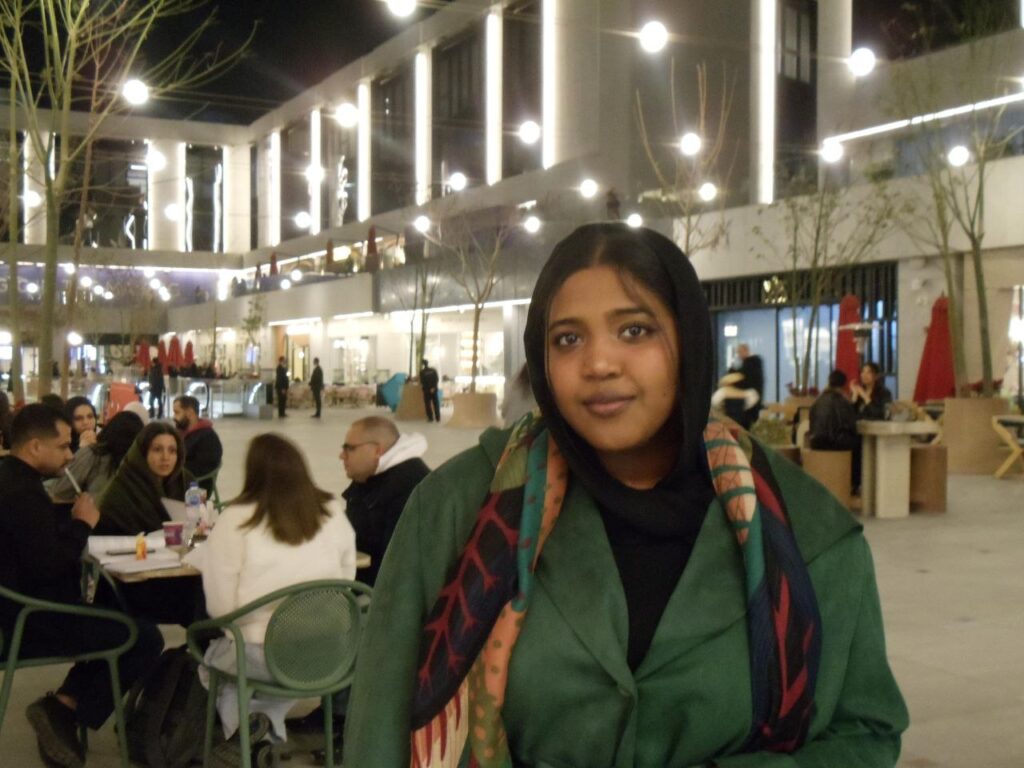
Maysam Mohamed Meltaj
For many who grew up outside Sudan, this notion was a recurring theme. Maysam Mohamed Meltaj believes that growing up outside Sudan weakened her connection to her culture. “Growing up outside of Sudan weakened my connection to its culture, it was extremely weak in my childhood, due to my limited exposure and knowledge,” she said. At the same time, she felt a growing fondness for her heritage. “But it also made me fonder and strengthened my attachment to it. As I grew older, and with my parents’ efforts in helping me develop my cultural identity by exposing me to Sudanese media (poetry, music, history, geography and so on), I grew to appreciate my culture and heritage more and more, thus strengthening my connection to it,” she said.
“As I grew older, and with my parents’ efforts in helping me develop my cultural identity by exposing me to Sudanese media (poetry, music, history, geography and so on), I grew to appreciate my culture and heritage more and more, thus strengthening my connection to it”
Maysam Mohamed Meltaj
A similar experience was shared by Mohamed Omer, a 20-year-old Sudanese medical student at Ain Shams University in Cairo, Egypt. “Initially, being raised outside Sudan really severed cultural connections with Sudan, especially as a kid, I wasn’t aware of the impact that identity and culture had over a person. I was aware that I was Sudanese as I was aware I wasn’t Saudi – not that I wanted to – but what exactly does being Sudanese mean? Did I know anything about Sudan? About Sudan’s history?” he questions. A changing point for Omer was entering middle school. “My naivety persisted until I got to middle school which coincided with me getting to know more about the political climate back home. I encountered through that journey through the complex world of Sudanese politics various social phenomena that included glimpses of Sudanese culture, since politics and politicians are merely a reflection of society and its members,” he said.
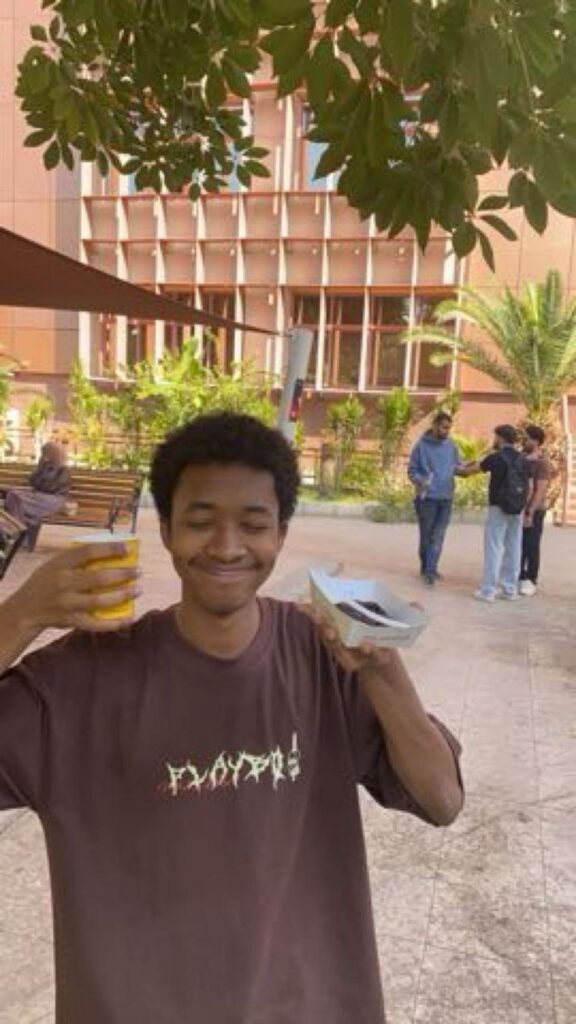
Mohamed Omer
Omer, who sees himself as a Third Culture Kid (TCK), describes the effect that conflation of cultures had on his identity. “It created a mixture of all the cultures that I have encountered creating what I would call a third culture kid. This made me more appreciative and understanding of differences,” he said, citing the desire that estrangement ignited in him. “Being born to immigrant parents who sacrificed everything they had to provide you with a better life was always a motivation to better yourself academically, culturally etc… It also pushed me to try and be the best representation possible of my country. All these factors ignited in me a thirst for knowledge about the culture and about Sudan itself, not only for my sake, or for the sake of compensating my parents’ sacrifices, or to be able to reflect Sudanese culture in a fitting way, but also because I wanted to help build my country,” he said. The internet has many ways of influencing people and their upbringing. For Omer, the internet exposed him to Afro-American hip hop. “As for the internet, it provided a connection between me and many other cultures, most importantly Afro-American and hip hop culture. All these circumstances together created a third culture kid in me,” he said.
“Being born to immigrant parents who sacrificed everything they had to provide you with a better life was always a motivation to better yourself academically, culturally etc… It also pushed me to try and be the best representation possible of my country. All these factors ignited in me a thirst for knowledge about the culture and about Sudan itself, not only for my sake, or for the sake of compensating my parents’ sacrifices, or to be able to reflect Sudanese culture in a fitting way, but also because I wanted to help build my country”
Mohamed Omer
Omer also speaks of the isolation one feels when brought up in such environments. “One negative aspect of that however is the feeling of isolation, you don’t belong to any culture. Nevertheless, as I grew up, I began to understand that identity is more nuanced than to be defined by geographical boundaries or to let it be decided by others. One is responsible for finding their own identity and mustn’t let others decide it for them,” he said.
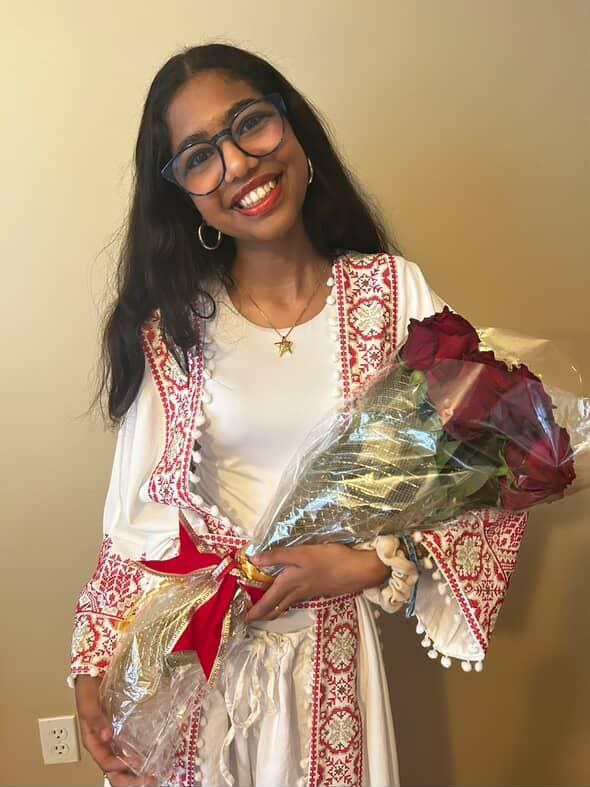
Nour Badr
Omer is not a solitary case. Thousands of children feel disconnected from their cultural heritage, with Badr being a prime example. “I feel slightly in limbo because I don’t fully understand Arab culture, or Sudanese culture. I believe this also made me feel embarrassed about interacting with Sudanese youth. I don’t know. I was afraid of being judged and deemed whitewashed,” she said. Meltaj also experienced that feeling of isolation. “I felt a sense of cultural separation as the culture of the environment surrounding me was completely different from my own. Sometimes I found myself unable to achieve a balance between the cultural values I grew up with (Sudan) and the cultural values I acquired (Saudi Arabia), which led to me feeling confused, lost, and not having a sense of belonging to either one,” she said.
“I feel slightly in limbo because I don’t fully understand Arab culture, or Sudanese culture. I believe this also made me feel embarrassed about interacting with Sudanese youth. I don’t know. I was afraid of being judged and deemed whitewashed”
Nour Badr

Mustafa Imad
As for those raised in Sudan, Sudanese culture was not only embraced in particular events, but it was a way of living, a code as explained by Mustafa Imad, the Cultural Secretary at the Sudanese Student Association for Tacity batch at the Faculty of Medicine at Alexandria University in Alexandria, Egypt. “Up until a certain age, I wasn’t aware of the influence that being raised in Sudan had on my cultural identity. It wasn’t until I travelled abroad – pre-war – that I witnessed Sudan and its cultural effect on me. I found myself a holder of its values and customs, even acting as if I was still there. Then I realised the phrase ‘You can take the boy out of Sudan, but you can’t take Sudan out of the boy,’” he said. For Imad, his connection with Sudan is not only on the physical realm but also spiritual. “I have a deep connection with Sudan, especially in a heart-felt and spiritual way,” he said.
“You can take the boy out of Sudan, but you can’t take Sudan out of the boy”
Mustafa Imad
For Esam, living in Sudan shaped a strong connection to his homeland. “Living in Sudan had the biggest influence on my cultural identity,” he said. “Sudan and its culture truly mean everything to me. Sudanese culture means a lot to me. It is the common factor between the different cultures of the different peoples inhabiting Sudan, thus I consider my cultural being as a subset of Sudanese culture itself.”
With the internet, Sudanese culture has been able to reach far beyond its traditional boundaries. Today, more people than ever are aware of Sudan and its social, cultural, and political landscape. A recent example is Nigerian-American musician Kolo Gana (@kolo.24), who creates rap songs by sampling music from around the world. He went viral on Instagram and TikTok for sampling the popular Sudanese song “The Migrating Bir” by the late and great Mohamme Wardi, although he mistakenly stated it was by legendary Sudanese jazz musician Sharhabil Ahmed. Both singers are celebrated as a cultural icons across Africa.
The role diaspora communities had cannot be undermined in such a journey. “Growing up, nobody really knew much about Sudan and being one of the very few Sudanese people in my school, it felt very isolating. I started to feel embarrassed by my culture because nobody knew or embraced it. Now with TikTok, the rise of social media, and tons of Sudanese creators coming forward, sharing their experiences and spreading the culture, I feel more confident in myself and even prouder to call myself Sudanese,” Badr said.
“Sudanese diaspora communities have spread to far-away poles of the globe. This provided centres for interacting with different cultures, spreading our culture and absorbing from others,” said Omer, further supporting the evidence of the spread of the culture.
“Sudanese diaspora communities have spread to far-away poles of the globe. This provided centres for interacting with different cultures, spreading our culture and absorbing from others”
Mohamed Omer
Some however find difficulty in assimilating with surrounding cultures. Such a condition may be attributed to the somewhat confined nature of Sudanese culture. “Being raised in Sudan and indulged in the somewhat self-absorbed Sudanese culture affected my interaction with external cultures. Nevertheless, I try my best to understand foreign communities and interact with them, though I always feel a sort of resistance and difficulty in doing so,” Omer said.
The future, however, looks bright for Sudanese culture. “Almost every big university in Canada has a Sudanese student association, which didn’t exist back then,” Badr said. “The youth are starting to connect, build community and raise awareness about Sudan and its beautiful culture. And with such a rich foundation at such an impressionable age, I see a beautiful Sudanese foundation forming for when we grow up and have kids of our own to teach the culture to.”
“The political and humanitarian conditions will play a huge role in shaping the cultural identity for upcoming generations. This new reality will greatly affect the new format of Sudanese culture, and I think it will be a positive effect”
Mohamed Esam
“The political and humanitarian conditions will play a huge role in shaping the cultural identity for upcoming generations. This new reality will greatly affect the new format of Sudanese culture, and I think it will be a positive effect,” said Esam.
Such a future will need a huge discussion between all factions of Sudanese society. Some feel the urgent need to push Sudanese culture forward via modernisation. “Holding on to the ancient cultural identity is a beautiful tribute unless it threatens the existence of the current generation. I mean if we allow ourselves to be governed by customs in all aspects of our life, we will have eradicated the existence of the contemporary generations,” said Esam. “It is necessary to be open to modernisation of the culture in a way that fits the needs of today, at the same time it is essential to preserve traditions that do not affect the quality of life negatively, in order to protect the identity of the Sudanese nation and its culture.”
“We need to protect our culture by preserving its roots that fit our values and religious principles, while also having the necessary flexibility in all that requires flexibility”
Mohamed Esam
Others fear that excess modernisation will lead to erasure of our roots. Imad being one of them proposes a more traditional view on the matter. “We need to protect our culture by preserving its roots that fit our values and religious principles, while also having the necessary flexibility in all that requires flexibility,” Esam said. He does not dismiss all remodelling of the culture though. “We must also modernise it while ensuring its renovation doesn’t lead to gentrification and replacement of the roots of the culture.”
What the future holds for Sudanese culture remains unknown. Though what is certain is that Sudanese culture will remain a common connection between all factions of Sudanese society no matter the ethnicity, religion, language or distance.
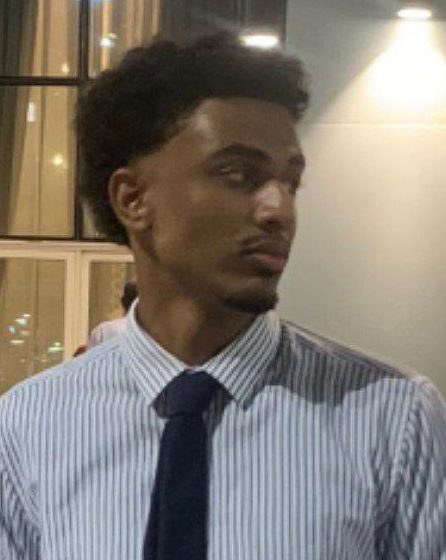
As he ventures into this brave new world ahead of him, 2005-born Muathal Hisham tries to reflect on the experiences he encounters through poetry and prose. An aspiring bilingual essayist who aims to reinvent the way literature, art and music are interpreted, Muathal provides a thrilling dive into regional and international cultures, with the hope it might inspire positive change in his community. When he is not writing, Muathal is often busy video editing or studying for medical school at Ain Shams University. Find him @muathall on Instagram or visit his blog on Medium at @Muathal.