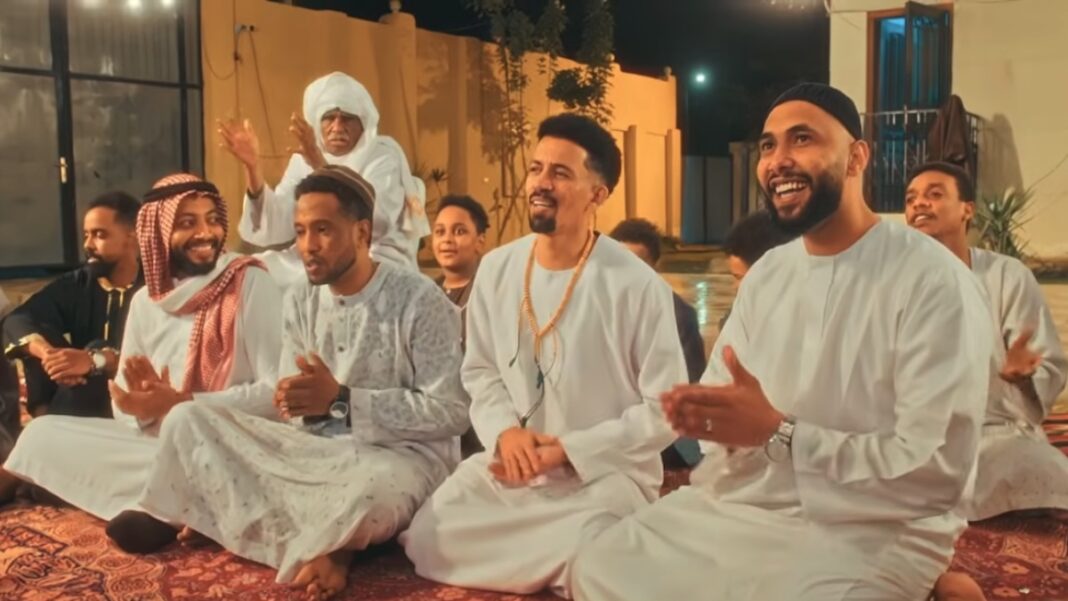
Ramadan in Sudan is not only described in richness of flavour and depth of community, but for many decades, it has been recognised through melodies we hear. Whether it’s songs floating over the Fatoor (Iftar) table with a television nearby, or el meseharaty chanting during the early hours of the morning to wake people up for Suhoor, Ramadan in Sudan has always been known for its distinct soundtracks.
Advertisement jingles have long been a part of Sudan’s music culture, and this has not changed in the month of Ramadan, with Sudanese telecommunication companies such as Sudani and Zain framing the narrative with their Ramadan hit jingles over the years.
One of the most recognisable tunes of Sudanese Ramadan is “Halla Helalak Ya Ramadan” (“Welcome, Oh Ramadan”) a Ramadan ad or commercial song produced by Zain Sudan, one of the big three telecommunications companies in Sudan. With the lyrics “Halla helalak ya Ramadan; Ramadan ahla fi Al Sudan” (“Welcome, oh Ramadan; Ramadan is more beautiful in Sudan”), the song has been an undefeated soundtrack of Ramadan in Sudan its debut in 2016. Until today – 10 years later – this song is the characterised as the sound of a Sudanese Ramadan, known and sung by Sudanese around the world.
A contender that comes as a close second to Zain Sudan’s “Halla Helalak Ya Ramadan is Ramadana Sudani“, an ad that was produced by the telecommunications company Sudani in 2015, which to this day marks one of the most nostalgic Ramadan commercial songs, revived on a yearly basis on social media videos and posts.
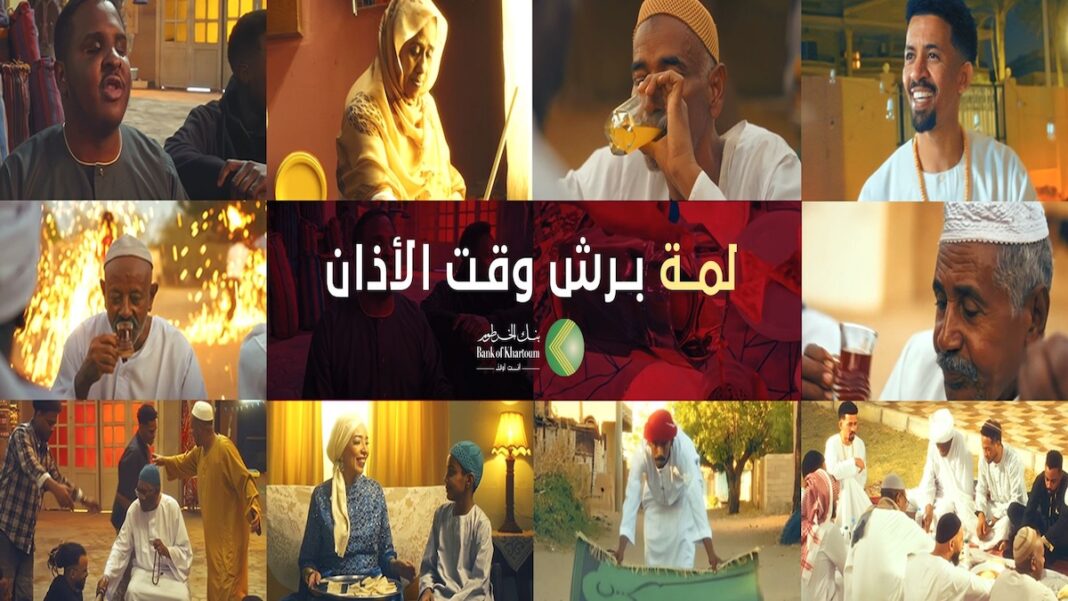
Sudani and Zain have both continued to produce Ramadan jingles over the years alongside other major institutions in Sudan such as Bank of Khartoum. While none have made quite the big splash in the music scene as the aforementioned two jingles, they still make up a big part of the Sudanese Ramadan experience every year. They have also inspired various other Sudanese brands to do the same. Last year, Cashi, an electronic payment application in Sudan, released the hit Ramadan commercial song Sidi Al Mustafa, featuring music duo rapper Essam Satti and singer Ali Naseraldin. This Ramadan, Honor Sudan – MST and Nile Poultry also joined the tradition. Sudanese singers also participate in the tradition of Ramadan jingles, releasing special songs for the holy month.
This Ramadan, Bank of Khartoum and Sudani unveiled commercial songs around the first day of Ramadan on 18 February 2026. Bank of Khartoum produced the star-studded “Lamat Baresh“, featuring and Sudani produced “Allah ‘Aleek“. Both songs reminisce about celebrating the holy month in Sudan, evoking nostalgia while also inspiring hope for a return home and reunion with family and loved ones.
Beyond Ramadan commercial songs, music shows are also popular during the holy month. Ramadan would not be complete without the annual broadcasting of Aghani Wa Aghani (Songs And Songs), a show that aired on a yearly basis after fatoor on Blue Nile Television, one of the leading television channels in the country. After the passing of the show’s long-standing host ِAl Sir Kaddour (1934-2022), the show stopped airing, but has returned to the scene this Ramadan stronger than before, hosted by Musab Al Sawi and featuring some of the most iconic singers including Huda Arabi, Shukrallah Izzeldin, and Ahmed Fathallah.
There is also Yallah Naghany (Let’s Sing), a music programme reminiscent of the beloved Aghani Wa Aghani, by Albalad TV. This Ramadan, a new season airs, bringing together some of Sudan’s most popular singers, including Kamal Tirbas, Mohammed Basir, Elaf Abdelaziz, Asim Al Bana, Jamal Farfour, and many more.
From Ramadan commercial songs to music shows, music is a large aspect of a Sudanese Ramadan. A culture that can be considered part of the soundtrack of Ramadan in Sudan is el meseheraty culture. Youth, often young men, around the neighbourhoods of Sudan would use barrels and buckets as percussion to wake their neighbours for Suhoor, the final late night meal before fasting begins. These young men would drum up a beat and chant “oh fasters, get up for Suhoor.”
Ramadan is a month for praying and religious duties, but the spirit of Ramadan in Sudan also includes elements of music, which is unsurprising for a culture that thrives on melodies and for a country whose history is written between the lines of sheet music. Ramadan in Sudan is not only community Iftars and nights filled with prayers, but also evenings amidst families, highlighted with familiar notes of music.
Samar Bengawi is a medical student by day, and a literature and music enthusiast by night. She was born and raised in the UAE and is now based in Georgia. She is never without a cup of coffee in hand, and is always “on the go,” chasing after one hobby or another. Passion in Sudanese politics runs in her blood and she considers herself a patriot who hopes to leave a memorable mark in the world.