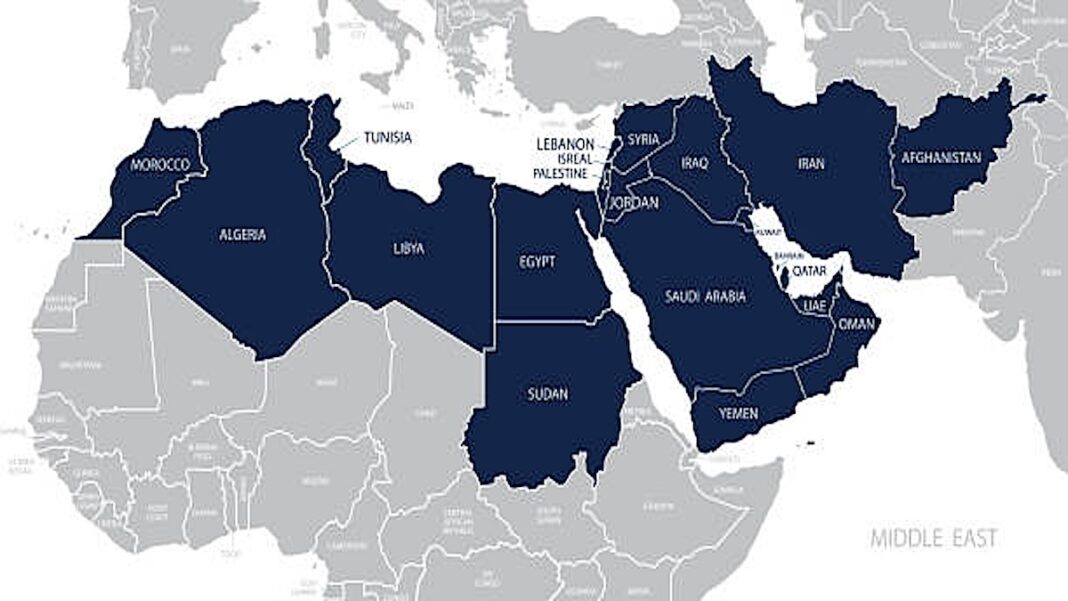
On 28 February, Israel and the U.S. launched airstrikes on Iran, killing Supreme Leader Ayatollah Ali Khamenei and other senior officials. Iran retaliated immediately, targeting US bases and embassies across the Middle East, including Bahrain, Kuwait, Oman, Qatar, Saudi Arabia, the UAE, Iraq, Jordan, and Türkiye, as well as Israel, and even a British base in Cyprus. The strikes extended to Gulf Arab military and civilian infrastructure, exceeding many expectations.
Arrests
On 6 March 2026, the Sudanese Armed Forces (SAF) arrested Sudanese Islamist leader Al Naji Abdullah and disavowed his armed Islamist group, Al Baraa Bin Malik Brigade, for pledging to fight on behalf of Iran’s clerical regime. Abdullah appeared in military uniform on 4 March publicly vowing to send fighters to Iran should the US or Israel launch a ground operation. “Our rifles and cannons are ready, and we possess advanced generations of drones,” he declared, adding, “By God, we will send all our battalions to Iran, and you will find us there.” Head of the Transitional Sovereignty Council and army chief Abdel Fattah Al Burhan said the Sudanese Armed Forces would not allow any party to speak in its name or exploit its identity to pursue political or ideological goals.
Sudan Is Not a Central Actor in the Middle East Crisis
Sudan, which is fighting a war of its own, is not considered a central actor in the current Middle East crises, but it plays a nuanced role depending on the situation. Its position is shaped by internal instability, regional alliances, and international diplomacy:
Neutral or cautious stance: Sudan has generally sought to maintain neutrality in conflicts like the Israel–Palestine tensions, often balancing relations with Gulf countries, Egypt, and other neighbours.
Regional alliances: Sudan has historically aligned itself with Arab League positions and has ties with countries such as Saudi Arabia, the UAE, and Egypt, which can influence its stance in broader Middle East crises.
Internal challenges limit influence: Ongoing internal political instability, including military coups and conflicts, has reduced Sudan’s capacity to play an active role in regional disputes.
Humanitarian focus: Sudan often engages diplomatically through humanitarian aid or hosting refugees from regional conflicts, rather than direct military or political involvement.
Sudan and Iran
Sudan and Iran have recently restored diplomatic relations after a long break. Sudan cut ties with Iran in 2016 amid regional tensions, especially with Saudi Arabia, but resumed relations in October 2023, reopening embassies and agreeing to expand cooperation in political, economic, and diplomatic areas.
Both countries have expressed a desire to strengthen cooperation and mutual respect, with visits by top diplomats and discussions on expanding ties across fields. Iran has publicly welcomed this renewed relationship and emphasised its importance.
Recent interactions show growing coordination, including statements by the Iranian ambassador in November 2025 about supporting Sudan’s sovereignty and working together politically and economically.
Sudan and the US
Relations between the the US and Sudan were strained for decades. The US accused Sudan of supporting terrorism and human rights abuses, including during the rule of former president Omar Al Bashir, and Sudan was placed on the US list of state sponsors of terrorism from 1993 until it was removed in 2020. During that period, the US imposed sanctions and reduced diplomatic ties.
After Sudan’s 2019 revolution, ties improved. Sudan and the US restored full diplomatic relations, upgraded to ambassador level, and cooperated on political and development issues. The US welcomed Sudan’s transitional government and moves toward reform and democracy.
The US has been one of Sudan’s largest international aid donors, providing humanitarian, economic, and development assistance to support stability, civilian protection, and longer‑term recovery efforts.
US support has sometimes been tied to Sudan’s commitment to civilian‑led governance and peace processes, and it has also been involved in diplomatic efforts to resolve the ongoing civil war.
The ongoing conflict and alleged human rights abuses, including sanctions over chemical weapons use, have strained ties and complicated cooperation. Overall, Sudan–US relations have shifted from deeply adversarial to cautious cooperation, especially around diplomacy, aid, and political reform, though ongoing conflict and human rights concerns continue to affect the relationship.
Sudan and Israel
Sudan officially normalised relations with Israel in October 2020, as part of the US-brokered Abraham Accords. This marked a major shift, as Sudan had long been a supporter of the Palestinian cause and did not have diplomatic ties with Israel. Sudan’s normalization with Israel was partially motivated by removal from the US terrorism list and access to international aid, investment, and debt relief.
Since normalisation, Sudan has established diplomatic channels and signed agreements on trade, investment, and security cooperation. However, these ties remain carefully managed due to domestic opposition and ongoing political instability. Many Sudanese, especially in civil society and opposition groups, remain critical of relations with Israel. Sudan also has to balance its ties with Gulf states, Egypt, and Palestine, which affects the pace and depth of engagement.
Sudan’s citizens are currently included on an expanded US travel ban list. Under a 2025 US travel‑restriction policy, Sudanese nationals face a full ban from entering the US, meaning they are prohibited from obtaining visas or entering the country based on their nationality. This ban took effect in mid‑2025 and is part of a broader policy that targets citizens from multiple countries for security and immigration‑related reasons. Because of this restriction, Sudanese people, including refugees and those seeking to travel for work, study, or family reunification, may face serious barriers to US entry. In addition, US consular services in Sudan remain limited, and applicants are subject to enhanced security screening focused on national security criteria.
Sudan now maintains formal diplomatic and limited economic ties with Israel, but the relationship is cautious, pragmatic, and influenced by internal politics and regional dynamics.
The Sudan War
Sudan plunged into a devastating war in April 2023 after a vicious struggle for power broke out between its army, the Sudanese armed forces (SAF), and a paramilitary group, the Rapid Support Forces (RSF). As a result, Sudan is facing the world’s largest internal displacement crisis, with at least 11.5 million people forcibly displaced by conflict since April 2023. Approximately 7.2 million people are internally displaced (IDPs), while over 4 million have fled to neighbouring countries like Egypt, Chad, and South Sudan.