



Young people under the age of 30 account for approximately 72% of South Sudan’s population, with many facing limited employment opportunities amid ongoing political and economic instability. According to the International Labour Organization (ILO), the country’s youth unemployment rate stands at an estimated 18.52%, while more than 90% of young people lack formal employment or experience severe underemployment.
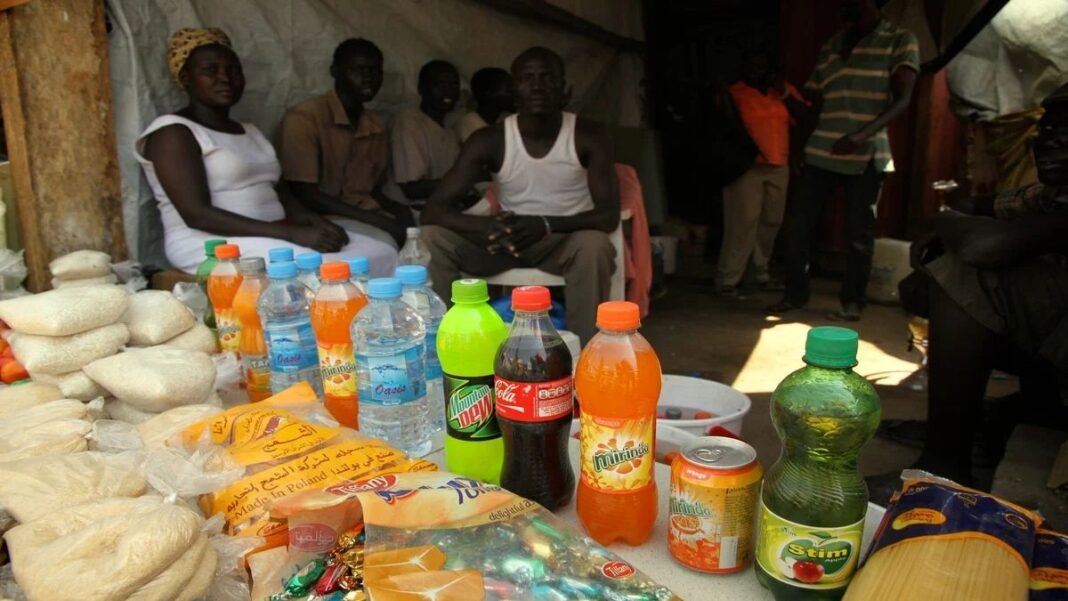
For many young people in South Sudan, the quest to find a way of earning a living does not start by applying for a formal job, but instead with a business idea, some practical skill, or a small sum of money to put into it. All over the country, young people are engaging in trading, food services, agriculture and vocational trades in order to get an income and establish a more secure future.
The experiences provide a more detailed insight into the part that entrepreneurship can play in a country where access to formal employment is still a problem. They also show how important finance, practical training and access to markets are in helping small businesses grow beyond just surviving.
Turning Limited Opportunities Into Business Ventures
The magnitude of the problem concerning youth employment in South Sudan has for a long time worried development organisations. When the United Nations Development Programme (UNDP) stated on 15 July 2021 that over 90% of the country’s young people had no form of employment, it offered historical background on the difficulties encountered by young jobseekers, not a current assessment of the situation.
To meet these challenges, various development programmes have tried to assist young people in gaining practical skills, in looking into business opportunities and in improving their chances of earning a living. An example of this was the launch of the Juba Integrated Business, Employment and Innovation Hub in July 2021. The aim of the initiative was to give young people access to business support, employment services and opportunities to develop ideas which could result in income-generating activities.
Such measures take into account the fact that entrepreneurship involves more than just the willingness to set up a business; young people also need relevant skills, some guidance, access to finance and customers who can support their enterprises.
From a Business Loan to a Growing Enterprise
The case of Deng Maker Mathon, a young entrepreneur in Rumbek Central County in Lakes State, shows how having access to finance and business training can enable a person to go from running no business to running an enterprise.
A human-interest article, Youth Enterprise Development and Capacity Building Project, published on 9 December 2025 by the UNDP, stated that Mathon took part in the first group of the Youth Enterprise Development and Capacity Building project. He was not involved in any business activities prior to entering the programme, and after having received training in business management, entrepreneurship, and Village Savings and Loan Associations, he was given a loan of 3 million South Sudanese pounds in 2023.
Mathon put the money into the trading of grains and groundnuts; by buying agricultural products during the harvest season, he was able to benefit from the more favourable prices.
The UNDP states that he built up stocks of groundnuts and sorghum from 8 December 2023 to 30 September 2024. By September 2024, he had paid back the loan, had rented an extra store and had employed six people.
What he has gone through shows the value there is in combining financial assistance with knowledge of business. The loan provided him with capital in which to invest, and the training enabled him to deal with the enterprise with a better understanding of business management.
The advantages went beyond Mathon personally. Since he had six people employed, this had created further income opportunities in the community. The fact that he had achieved this serves as an example of how a small business can slowly become a source of employment for others.
One should not conclude from his progress that every entrepreneur who obtains a loan will reach the same outcome. Growth in business is influenced by a number of factors, such as demand, operating costs, access to supplies, and the capacity to manage financial risks.
A Fruit and Juice Business Creating Opportunities in Juba
Another example comes from Juba, where Amaka Scovia, a young South Sudanese entrepreneur, developed her fruit and juice business into an enterprise that employs other young people.
In a report published on 5 June 2024, UNDP explained that Scovia started her business in a shop with space for 10 customers. Her early progress was hindered by limited capital, inflation, market challenges and the need to balance business responsibilities with household duties.
As a result of taking part in the Youth Enterprise Development and Capacity Building project, she obtained a loan of 4 million South Sudanese pounds which carried no interest. This financial assistance allowed her to increase the number of customer seats in her shop to 30.
Six people were then employed by her business, four of whom were young women and the other two were motorcycle delivery riders. This setup offered opportunities for the workers while at the same time allowing the business to serve a greater number of customers.
One employee, Arich Faisal, was able to contribute towards her family’s needs while saving for further education. Her experience demonstrates how employment created by a small business can benefit people beyond the business owner.
The example of Scovia also shows that enterprise development can bring about wider social benefits when businesses grow large enough to offer secure employment. A successful shop can support its employees, its delivery workers and its suppliers, thus establishing connections with other economic activities.
The situation also shows how important it is to have access to capital; it can be difficult to expand a business even if the entrepreneur has the necessary skills and determination, unless they receive financial support.
Vocational Skills Opening Alternative Routes to Work
It is not necessary for every young person to have a business loan or a well-developed business idea. For a great many, vocational training offers a starting point for acquiring practical skills which can then lead to employment or self-employment.
The vocational training programmes in South Sudan cover a range of trades including tailoring, catering, mechanics, carpentry, agriculture and various other technical services. Such skills offer alternatives for young people who encounter obstacles in securing formal employment or whose educational qualifications do not easily lead on to existing jobs.
The UNDP report, which was published on 27 September 2024, pointed out the activities of the Skills, Employment and Empowerment for the Development of Youth (SEED4Youth) programme, which has provided training to young people and women at vocational centres in Juba, Wau, Malakal and Rumbek.
The report stated that more than 4,000 young people had completed training since the programme began, with women accounting for more than 55% of graduates.
Another report from the UNDP, issued on 21 May 2026, gave an account of the success stories arising from the programme, explaining that vocational training, mentoring and financial assistance had enabled the beneficiaries to seek employment and set up their own businesses.
This shows why practical training can play an important role in youth employment schemes. Someone who has been trained in tailoring, mechanics or catering might then look for a job with an existing business or set up their own service in response to local demand.
Learning a trade is only one step towards earning a steady income. Trainees may also need tools, suitable premises, customers, business management skills and sufficient working capital to sustain their activities.
By linking young people with these resources, they can move from simply acquiring skills to putting those skills into practice in ways that generate income.
The Continuing Challenge of Finance and Market Access
Even though small businesses have a promising outlook, it can be difficult to start and keep one when access to both finance and customers is restricted.
A report issued on 3 July 2019 by the UNDP recorded the discussions held in Juba where entrepreneurs pointed out that limited access to finance was a major barrier to business development; the participants also stressed the importance of better links existing between small enterprises, large companies, financiers and potential business partners.
Although the report is historical, the issues it highlights remain useful in explaining why access to capital is an important factor in enterprise development.
Small businesses need funds to buy stock, obtain equipment, rent premises, and pay for their daily operating expenses. If the amount of capital is not enough, then entrepreneurs will find it difficult to take advantage of opportunities or meet rising customer demand.
Access to markets is equally important. A company may have a useful product or service and yet find it difficult if customers cannot afford it, the supplies are unreliable, or the transportation costs reduce the profit margins.
Entrepreneurs dealing in agricultural products may need storage facilities and reliable ways to transport their goods to buyers. Entrepreneurs running food businesses could require equipment, a steady supply of goods, and enough working capital to keep their services going.
The difficulties indicate that entrepreneurship programmes should not limit themselves to getting young people to set up businesses; they should also take into account the conditions needed if those businesses are to survive and grow.
Entrepreneurs can make more effective use of their skills and resources thanks to affordable finance, practical mentoring, business networks, and access to customers.
Small Enterprises and the Wider Employment Picture
The case of Mathon and Scovia shows the way in which small businesses can provide opportunities for people other than their owners, since, according to the UNDP records, each of their enterprises employed six people.
A business does not need to grow into a large company to contribute to livelihoods. A shop, workshop, food outlet or agricultural enterprise may start with a single owner and eventually require more workers as its operations expand.
Vocational training may assist in this process by enabling young people to gain the skills that are needed by local businesses or by getting them ready to set up their own businesses.
The broader potential of these initiatives is also reflected in UNDP’s September 2024 report on SEED4Youth. The report stated that the programme had supported 27,850 young people through its skills development activities and that enterprises led by graduates had created nearly 5,000 jobs for young people and women.
The figures are those reported in the programme rather than a measure of employment throughout the whole country; yet they do show how targeted training and enterprise support can contribute to income generation and job creation.
If these efforts are to make a lasting contribution, businesses have to be able to stay going after the initial assistance has stopped. Keeping access to customers, funds, equipment, and business advice can help to establish whether the business continues to operate and whether it can hire more workers.
Building Opportunities for the Future
Young entrepreneurs are unable by themselves to deal with the broader employment problems facing South Sudan; their progress is in part determined by the economic situation in which they operate, such as access to finance, the state of infrastructure, the availability of relevant skills and the existence of viable markets.
Yet the experiences documented by UNDP show that young people are finding practical ways to earn a living, support their families and provide employment for others. These experiences also demonstrate how business training and access to finance can help turn an idea into a functioning enterprise.
The next challenge is to make these opportunities available to a larger number of young people and to make certain that the support they receive results in long-term economic participation. Training should correspond to market demands, the financing provided must be suitable to the actual circumstances of small businesses, and aspiring entrepreneurs should have the chance to improve their skills and get access to customers.
For young people in South Sudan, entrepreneurship does not guarantee success, but it is one way of creating opportunities when conventional employment may be hard to obtain.
With practical support and an environment that enables small businesses to grow, young entrepreneurs can improve household livelihoods, contribute to local economic activity, and support the country’s broader efforts to expand employment opportunities.

Emmanuel Amana is a 40-year-old Nigerian writer with a Bachelor of Science degree in Business Administration. His interests include research and writing, with a focus on producing informative, engaging, and well-researched content. He is passionate about exploring stories, highlighting important issues, and presenting information in a clear and accessible manner. Through his writing, he aims to inform readers, share useful insights, and contribute to meaningful conversations about people, communities, and development.