


South Sudan has secured its first-ever United Nations Educational, Scientific and Cultural Organisation (UNESCO) World Heritage Site after the Boma–Badingilo Migratory Landscape (BBML) was officially inscribed on the World Heritage List on 26 July 2026 during the 46th session of the World Heritage Committee in Busan, South Korea.
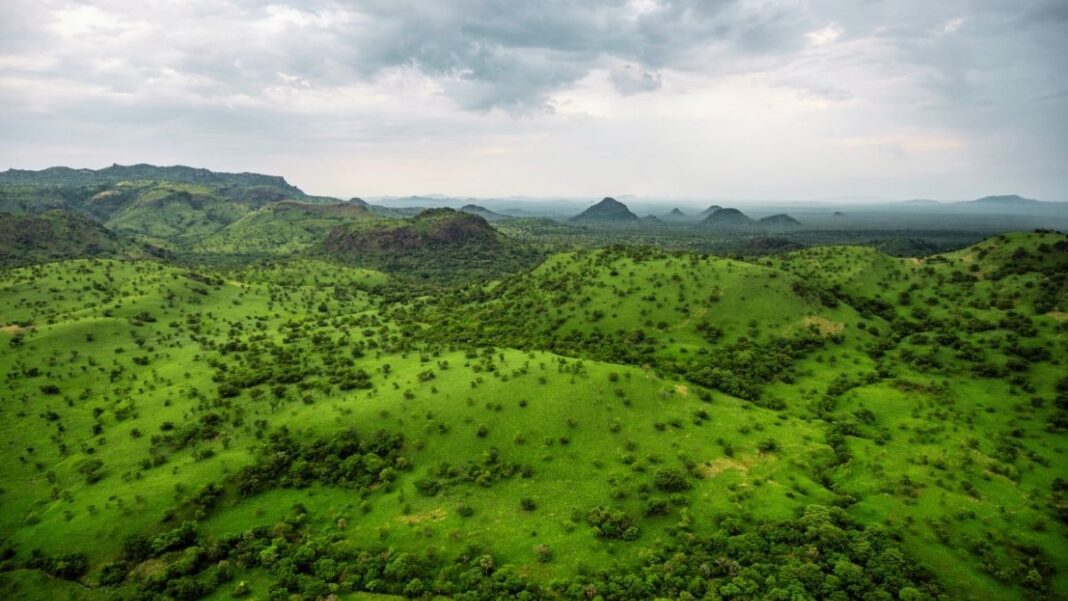
The 12-million-hectare landscape encompasses Boma and Badingilo National Parks and the vital wildlife corridors connecting them. It was fast-tracked through UNESCO’s emergency inscription procedure because of mounting environmental pressures and immediate conservation threats, including the impacts of conflict and climate change. As a result of the emergency inscription, the site was simultaneously placed on the List of World Heritage in Danger to help accelerate international technical assistance, mobilise emergency funding, and strengthen on-the-ground conservation efforts.
The designation recognises an ecosystem that supports the largest land mammal migration on Earth. Each year, an estimated six million antelope – primarily white-eared kob, tiang, Mongalla gazelle, and Bohor reedbuck – migrate across the vast savannas, floodplains, and wetlands between the White Nile and the Ethiopian border, leaving migration trails visible from the air.
Boma and Bandingilo are two separate national parks located along the passage of what is now recognised as one of Africa’s largest mammal migrations. The two parks are connected via the Jonglei corridor. Together, they play pivotal roles in preserving the wildlife supported by the wider ecoregion, which also reaches north into the Sudd, Africa’s largest wetland area, collectively covering an area of some 200,000 sq m.
South Sudanese officials and conservation partners, including African Parks, welcomed the inscription as a landmark achievement for both nation-building and environmental stewardship in the world’s youngest country. The listing is expected to strengthen protection of the landscape, which faces growing threats from commercial poaching, illegal wildlife trafficking, regional insecurity, and planned infrastructure projects that could disrupt ancient migration routes.
South Sudan joined UNESCO in 2011 and ratified the World Heritage Convention in 2016. The country also has two sites on UNESCO’s Tentative List: Deim Zubeir, a historic settlement associated with the transcontinental slave trade, and the Sudd Wetland, one of the world’s largest tropical wetlands, both submitted in 2017.
The inscription comes just weeks after South Sudan marked the 15th anniversary of its independence on 9 July. Since gaining independence from Sudan in 2011, the country has endured repeated civil conflicts and humanitarian crises that have displaced millions of people, making the recognition of its natural heritage a significant milestone amid ongoing challenges.