Have you ever experienced an injustice so profound that it forced you to re-evaluate your entire gender’s position in society? I recently had a conversation that did just that. I grew up thinking that women were meant to be treated softly, and sometimes I naively have that expectation of Sudanese men. There is a certain cruelty that comes with expectations and hopes being disregarded or destroyed by loved ones.
lying in a hospital bed suffering from an ear infection; I was quite dizzy and exhausted when my mother in the Gulf called me to tell me that she had recently broken her foot. I was overwhelmed by the sickness and by the image of my elderly mother fending for herself without me supporting her. In my daze, I tried to understand how to best support her. I reached out to our community, including my cousins, friends and neighbours, to let them know and see if they can support her.
One of the cousins I texted works at the same hospital my mother was admitted to, so I asked him, quite politely, to check in on her, only to be shell-shocked by his response. He sent me variant WhatsApp stickers all conveying the sentiment of “so what”. His response to his aunt breaking her foot was that he didn’t care, which in and of itself was shocking to me, but what he proceeded to do next was unfathomable. He unapologetically sent me a very graphic image of an amputated hand of one of his patients, saying, “It’s not that serious. You both need to leave me alone.”
Like many Sudanese women during and after the war, I have contributed immensely to my family, participated in evacuation efforts, and cared for numerous family members, with the utmost care for their feelings. Yet, I am still dumbfounded by the experience of the total disregard for my emotional well-being. Therefore, I tried to understand what could compel someone to behave so disrespectfully, the only answer I found was that there are no consequences to men’s bad social behaviour. Therefore, he and other men are not incentivised nor inhibited by social obligations to behave respectfully or with empathy.
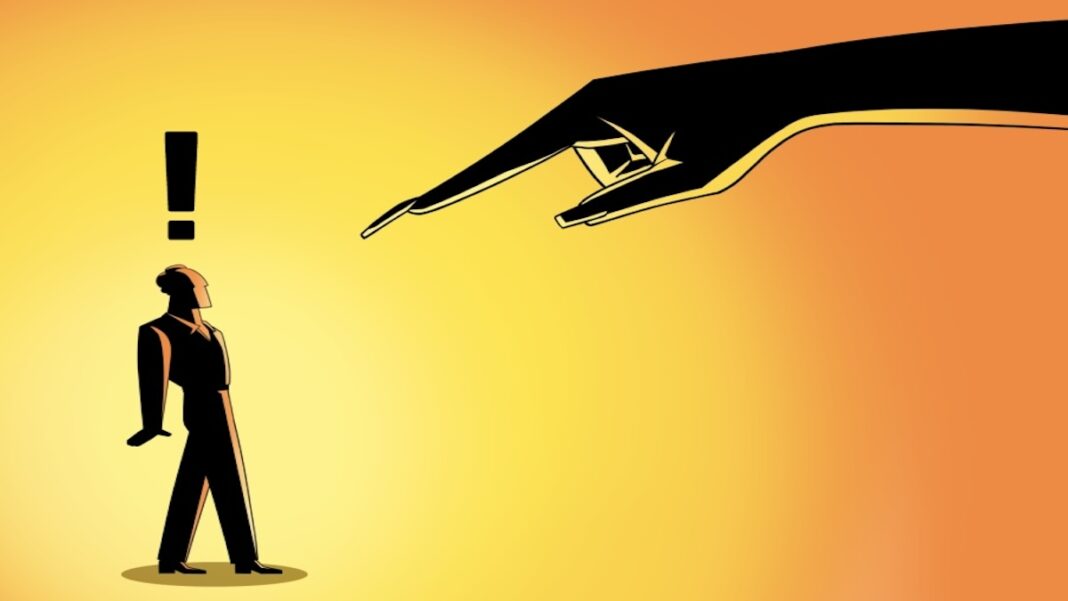
Since the war in Sudan began in 2023, social dynamics have shifted dramatically, especially in Khartoum. Many Sudanese women have told stories of gender-based violence (GBV). Whether it is on blog posts, magazine articles or Mama Koki’s TikTok videos, the reality is that there is an observable trend of negligence and violence that is negatively impacting Sudanese women at home, in displacement and the diaspora. War shifts perceptions of morality and duty. Sudanese women report that the war has normalised the exploitation of women in ways we have never witnessed before in Sudan. There is no mechanism for GBV to be addressed in Sudan because of the lack of a state, and therefore, these issues must be addressed socially. I argue it is time for us, as Sudanese women, to be each other’s keepers. We must stop protecting the men in our lives and compel them to face real social consequences for their harmful behaviours.
Sometimes my friends and I say that Sudanese men often perceive women as a blessing, while we experience them as a hindrance to our lives as they police it and, in many cases, dictate it. During the revolution, we saw progress. Women marched, demanded change, and gained widespread support for challenging anti-women legislation — most notably in the case of Noura Hussein, a minor who allegedly killed her rapist husband. Socially, it became more acceptable to embrace progressive, revolutionary thought. We saw this same openness in the popularity of anti-racist speech and anti-establishment sentiment:” كل البلد دارفور, لا تحالف لا شراكة لا مفاوضة”. “Kul al balad Darfur, la tahalaf la shirakah la mufawatha” (The entire country is Darfur — no coalition, no partnership, no negotiation.) We were building something new.
The position of women today is vastly different from what we hoped for. War dismantles resistance. We see this in the dissolution of community groups and resistance committees, the arrest of activists, and mass conscription along ethnic lines. Women, however, bear a double burden: they are not only impacted by threats to their physical safety but also by the intensification of gender-based violence. War also dismantles resistance by making it difficult for different groups to relate to and support each other. Within that, the observable negligence and detachment from responsibility of Sudanese men have exhibited throughout the past three years is a form of war breaking our communities.
Women’s bodies have long been a space for legislation, violence, and patriarchy. During the war, this dynamic became deadly as male complacency and lack of intervention turned our bodies into battlegrounds where survival itself became conditional. Consider this: men killing their own daughters to “protect” them from being raped by the paramilitary Rapid Support Forces (RSF). This act is a profound moral failure, placing the burden of rape and its consequences entirely on the girls. They die so their bodies cannot be violated — as if death is preferable to survival, as if their lives hold less value than their “honour.” Examples of this mindset can be seen in conversations and fatwas, a legal ruling on a point of Islamic law (sharia) given by a qualified Islamic scholar, that supported the alleged mass suicides of over 100 women in a village in Al Gezira to avoid the RSF’s violence. Another fatwa permitted suicide after sexual assault, contributing to further waves of tragedy in regions impacted by the RSF’s sexual violence. Sudanese men accept and perpetuate ideologies that cannot ever be morally aligned with the spirit of Islam, because acknowledging that misalignment would be burdensome. It is easier to reinterpret religion than to interrogate their own behaviours and the impacts they have on women.
Sudanese women have brilliantly organised and advocated for each other. During the revolution, feminist campaigns pushed for banning female genital mutilation (FGM) and criminalising child marriage. During the war, Sudanese women have run initiatives for gender-based violence support, anti-trafficking knowledge sharing, and financial solidarity. Nonetheless, women — especially women organisers — are punished severely and targeted to harm both them and their families. The most brutal and graphic imagery and stories from this war are of women.
Sudanese women are producing outstanding intellectual work on communal survival. We are supporting one another. But as a collective society, we are not making strides toward resolving the most pressing social issue to emerge from this war: the systemic harming of women. Our women are being enslaved — sexually enslaved — and we have no way of talking about it. Our silence protects perpetrators, not victims.
In many African countries, one way to fight GBV is through public declarations and open discussion. When a community signals it is no longer willing to accept or tolerate a behaviour, that behaviour loses its social purpose — the purpose of control — and is slowly abandoned. We have seen this work elsewhere. Why not in Sudan?
Before the war, a man with a bad reputation could be socially rejected, even shut out from marriage. The war has changed this balance: men no longer face these social limits, while the women in their lives are more disadvantaged than ever — more open to sexual and financial exploitation. This dynamic was shown during Ramadan this year in the hit Sudanese YouTube series Ghareeb, which depicts the injustices facing Sudanese refugees in Saudi Arabia — especially women — and how they are exploited by both foreign and Sudanese men.
I still believe in the Sudan that we dreamed of before our dreams were dismantled by the reality of war. I believe in a Sudan where we can communally achieve forms of social justice and self-governance, and I believe in consequences. Public shaming and shunning can diminish men’s social standing and push them toward better moral choices. Like the social campaigns Sudanese women have run before, it is time for us to speak loudly about how we are being exploited. We must name and shame the men in our lives — whether suitor, cousin, uncle, brother, or even father. If it means creating communal safety for other women.
Hala Mousa is a PhD candidate in Education: Curriculum Development and Pedagogy. She currently lectures in the Communications Department at University Canada West. Her research interests include Gender Studies, Postcolonial Studies, and the Political Economy of Communication. With a special interest in Sudan and War Economies. She is also a social advocate and a community organiser based in Canada. Her work aims to showcase the connections between economic systems and social injustice and to combat it through mutual aid, community care and the democratisation of education.


Beautiful article