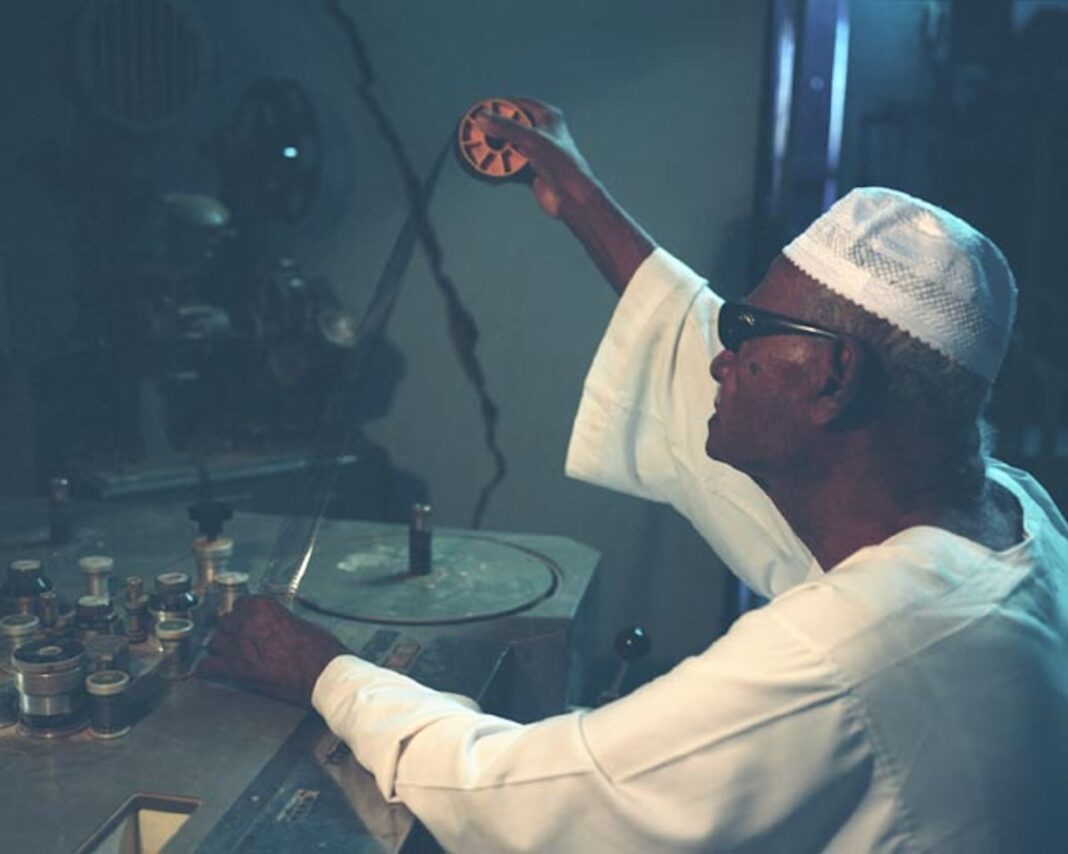
“What kind of times are these, when to talk about film, is almost a crime, because it implies silence about so many horrors?”
This question, posed by German playwright Bertolt Brecht, may resonate more today than it did when posed in the award-winning Sudanese documentary Talking About Trees in 2019. In the film, a group of Sudanese filmmakers compare their struggle to revive the country’s cinema to the frivolity of “talking about trees” amid ongoing turmoil.
In 2025, Sudan’s horrors have only multiplied due to ongoing war between the Sudanese Armed Forces (SAF) and the Rapid Support Forces (RSF) militia, resulting in one of the world’s largest humanitarian crises. Yet, film production has not slowed. Documentaries such as Torn Between Worlds (2024) ruminate on political trauma, while Sudanese-Russian filmmaker and researcher Suzannah Mirghani marks new milestones by becoming the first Sudanese woman to write and direct a narrative feature with Cotton Queen (2025).
This reality begs the question: what value does Sudanese cinema — ostensibly a form of entertainment — really hold in these tragic times?
An Industry of Struggle
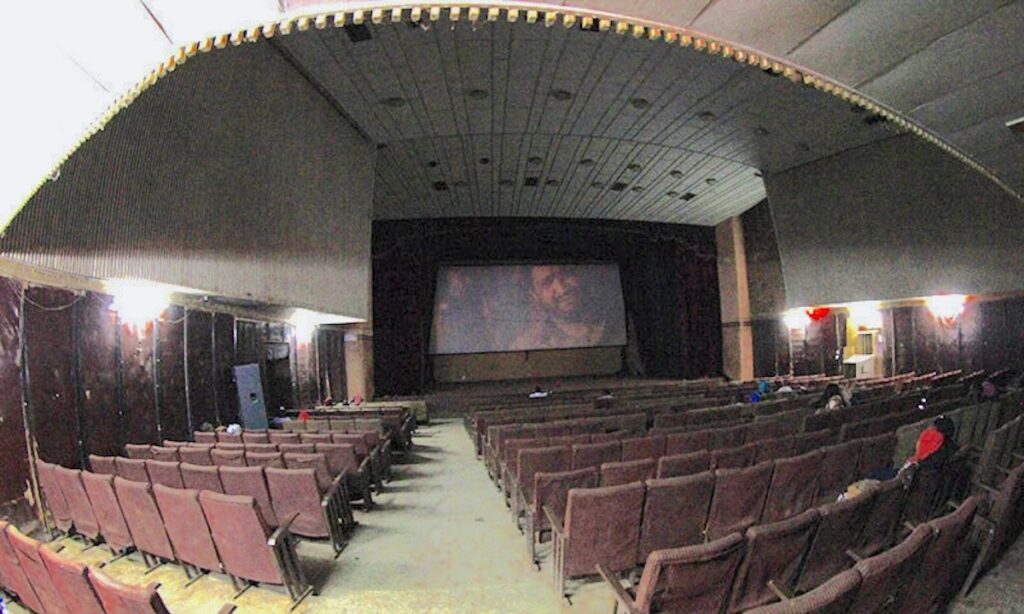
The theatre at the Palace of Youth and Cinema, which, in 2015, was one of three operating cinemas in all of Sudan.
Image source: Dawn
Like any other art form, Sudanese cinema is a microcosm for the country’s conditions. Nearly every Sudanese filmmaker struggles with political instability, little state support (if not outright opposition), and a lack of a domestic market. For example, Gadalla Gubara, one of Sudan’s first filmmakers, struggled with limited funds, government interference, and social norms throughout his 60-year career. Later directors, such as Taghreed Alsanhouri, recorded films in active warzones, while the cast and crew of the short film Bougainvillea (2024) were displaced to Egypt as a result of violent conflict.
This context plays a fundamental role in shaping Sudanese cinema. Firstly, it determines how Sudanese cinema is funded, as filmmakers must often depend on Arab or European non-governmental organisations to help finance production. This, in turn, influences the formats used in Sudanese cinema. Many Sudanese films are shorts, documentaries, or both, keeping production costs low and minimising dependence on creative specialists (such as actors and screenwriters). The economic setting also determines how Sudanese film is distributed: as there is no profitable local box office, the non-Sudanese corporations, which own the rights to Sudanese films, target the global festival audience instead. Unlike mass audiences, festival goers are more likely to expect socially-conscious and aesthetically experimental cinema.
The combined result of these factors is evident in the content of Sudanese films. In the last five years, major Sudanese film releases have included:
- Films about war, ie Torn Between Worlds (2024), Khartoum (2025)
- Films about women’s struggles, ie Cotton Queen (2025), Heroic Bodies (2022), For Them, Tuba (2022)
- Films about the 2019 Sudanese uprising, ie Bougainvillea (2024), Madaniya (2024), Revolution from Afar (2020), Khartoum (2025)
- Films about social divides during the rule of former Sudanese President Omar Al Bashir, ie Atbara ‘90 (2023), Goodbye Julia (2023)
Compare this to the film industries of Egypt, India, and Nigeria, whose highest-grossing films in the last five years have largely included crime dramas, family comedies, and period pieces. Sudanese cinema stands out for its comparatively overt politics, with recent filmmakers largely focusing on contemporary social and political issues, as opposed to the fantastical, escapist genres found in global commercial cinema.
In the absence of the commercial incentives that drive global filmmaking titans, Sudanese films exhibit a markedly different attitude towards cinema, where socially-conscious, realistic storytelling is prioritised.
Sudanese Filmmaking Philosophy
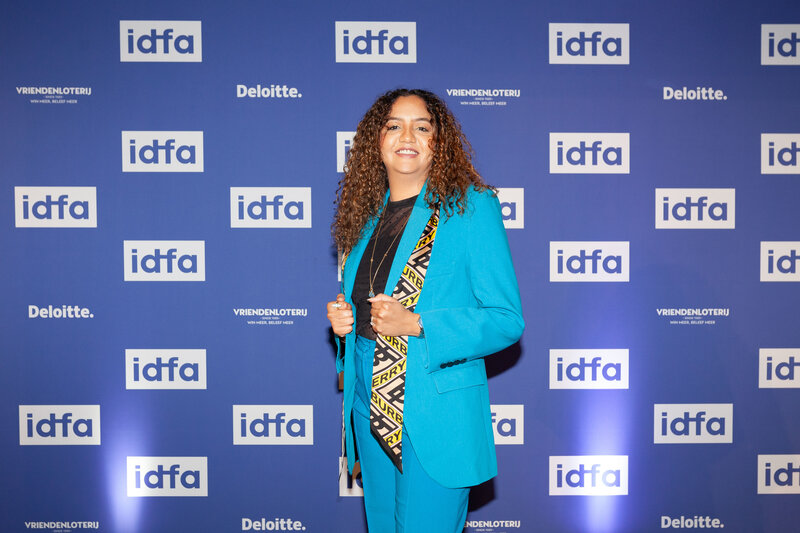
Sudanese director Sara Suliman, whose acclaimed documentary Heroic Bodies (2022) sought to inspire feminism in Sudan and combat Western myths about the passivity of Muslim women. Image source: Nina Schollaardt
This attitude, embodied in the subject matter approached by Sudanese cinema, is confirmed in various comments by multiple generations of Sudanese filmmakers. Amid a diversity of outlooks, one pattern is clear: of Sudanese directors and screenwriters who view cinema as a tool with great potential to impact popular perceptions of Sudan.
This philosophy is, on one hand, outward facing: many Sudanese filmmakers, such as Hajooj Kuka, see themselves as offering a narrative of Sudan that counters “that one narrative that’s normally given about Africa and war…destruction, sadness, and all that.” Others, such as the director of You Will Die at Twenty, Amjad Abu Alala, see themselves as telling the story “of the land of untold stories,” belying an image of Sudan as an underrepresented location — ultimately, a foreign image of Sudan. This outward concern proceeds from the extensive involvement of Western and Arab institutions in Sudanese cinema: thanks to the film festival circuit, Sudanese cinema inevitably appears before foreign audiences for whom portrayals of Sudan are rare.
At the same time, this Sudanese cinematic outlook is also inward facing. Aware of the country’s political turmoil, filmmakers often perceive themselves as potential agents of social change. Sara Suliman, director of the documentary Heroic Bodies (2022), framed her work as an attempt to make Sudanese youth and the global community aware of the Sudanese feminist struggle. When speaking of his 2023 film Goodbye Julia, director Mohamed Kordofani expressed hope that it would be “the start of a movement for reconciliation between all the Sudanese people.”
This shared desire to tell stories neglected by the world, but also inspire social and political movement at home, helps contextualise a widespread focus on realism and authenticity in Sudanese film. Directors such as Yasir Faiz and Suzannah Mirghani have appealed to authenticity to justify their film’s themes and production location. In turn, film archivists such as Sara Gubara, daughter of the late filmmaker Gadalla, and Benjamin Chowkon Ado of the National Film Archive see the preservation of Sudanese cinema as a means of documenting Sudanese history, implicitly assuming Sudanese cinema represents a realistic account of Sudanese life.
Films for Whom?
If you were to ask most Sudanese filmmakers what value Sudanese cinema holds in a time of crisis, they would likely answer that it can provide honest portrayals of Sudan, that promotes positive change in the country, while also countering foreign misconceptions.
That said, in order to enact broad change, one typically needs a broad audience. Yet, despite over 50 years of cinema, Sudanese film often flies under the radar for local and global audiences alike. In contrast to Sudanese music, which has enduring multigenerational popularity, or Sudanese radio and TV, still one of the primary media sources, even in many rural areas, cinema remains relatively obscure. This is despite Gubara’s impassioned insistence that cinema has the capacity to reach the masses in a way print, television, and radio cannot, as it doesn’t require formal education, nor the purchase of electronic appliances.
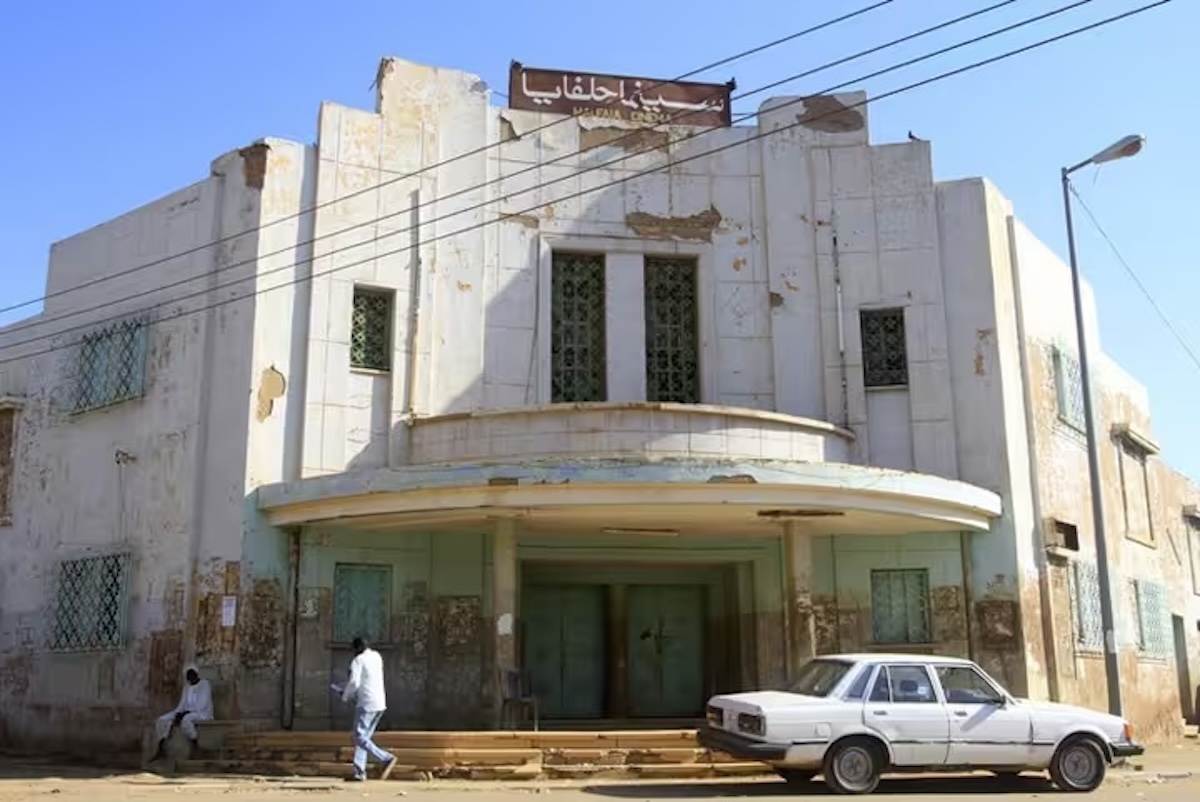
In the absence of a detailed survey of Sudanese audiences, a few speculations can be made as to the cause. Firstly, while cinema doesn’t require individual purchase of costly technology, it does require a business to invest in theatrical infrastructure and professional equipment (ie a projector) that may be even less accessible than a home appliance. Seeing as over 70% of the Sudanese populace lives in rural areas, the fact that Sudanese films are usually limited to screenings in public venues means they’re largely out of reach for the average Sudanese person. This may be why American and Egyptian cinema is much more widespread, as they are readily available on Sudanese television, reachable in places without theatres or reliable internet.
Of course, due to online piracy or rare streaming options, one could argue those with an interest in Sudanese cinema should be able to access it. Yet, the films that do get watched are often met with controversy or lukewarm responses, indicating aversion is not always about lack of access. Sudanese journalists such as Zeena Mubarak writing for African Arguments or Hafiz Kheyr of Atar Network have criticised Sudanese films for latent Orientalist attitudes, drawing on Palestinian-American scholar Edward Said’s theory of Western stereotypes of the Islamic world. Regardless of the validity of these criticisms, it’s certainly hard to say Sudanese films are having their directors’ intended effect on audiences. This may speak to a disconnect in background and ideology between filmmakers, who are often relatively liberal, affluent Sudanese growing up in urban communities (especially in the Arabian Gulf), circumstances not shared by many Sudanese at home and even in the diaspora. As a result, many Sudanese audiences may find the social and political narratives of Sudanese cinema alienating, making them less likely to support the industry overall.
The relatively low reach and not-infrequent controversy of Sudanese films is ultimately a reflection of the state of the country itself. The country’s economic and security conditions have fractured the Sudanese community, while also inhibiting urban development, a prerequisite for an accessible and profitable film industry. If Sudanese film has any function, it is to yield these kinds of insights: when analyzed, cinema unveils the many different ways the Sudanese reality determines how people think, live, and express themselves artistically.
For this reason, in contrast to how commercial films are typically assessed based on their entertainment value, the value of Sudanese films goes far beyond whether or not they are good. Each and every film is a unique expression of some aspect of Sudanese life and how it can be interpreted. With a larger audience, cinema has the potential to become a safe format to discuss the important topics at the forefront of Sudanese minds. That alone is enough, even if they never make the social change their filmmakers hope for.
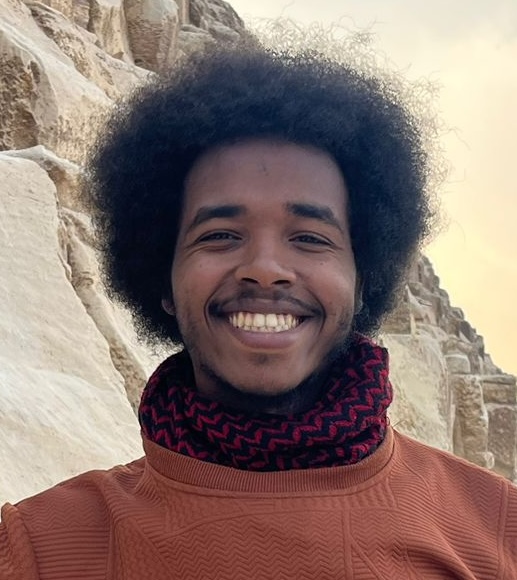
500WM Columnist Hatim Eujayl is a Sudanese-American writer involved in various projects to promote Sudanese culture. His most famous works include the Sounds of Sudan YouTube channel, the Geri Fai Omir Kickstarter, and the Sawarda Nubian font. More of his writing can be found on his Substack, ‘My Sudani-American LiFE,’ where he discusses Sudanese literature and cinema. He can be reached on Instagram @massintod or by email at [email protected].