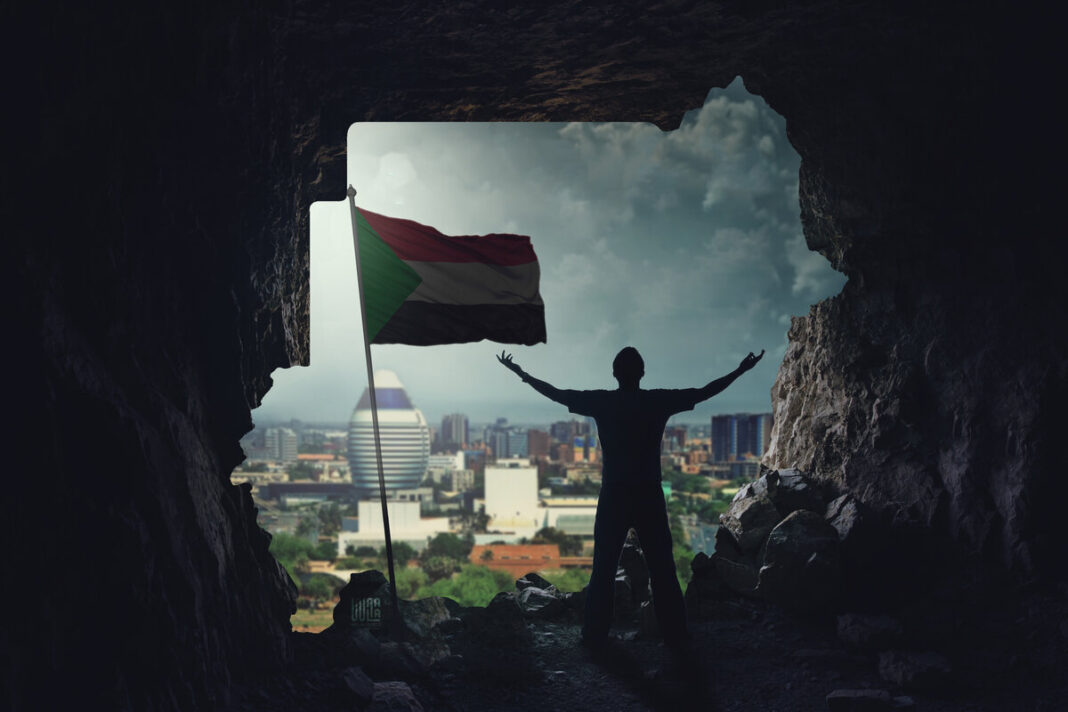
The ongoing war in Sudan between Sudan Armed Forces (SAF) and Rapid Support Forces (RSF), which erupted in April 2023, has resulted in the world’s worst displacement crisis in recent history. According to the UN, over 12.4 million people have been forced from their homes across Sudan, including over 3.3 million who have fled to neighbouring countries.
Over two years of civil war has fueled famine, disease outbreaks and the collapse of the health system. Yet, some are returning despite the war being ongoing driven by personal reasons or influenced by the general situation in the host countries. This trend is significantly encouraged due the SAF’s regaining control over major states such as Khartoum and Al Gezira that changes the war dynamics. According to the UN, over 1.3 million displaced people have returned to their homes in recent months, including one million internally displaced persons (IDPs), and at least 300,000 from neighbouring countries such as Egypt and South Sudan.
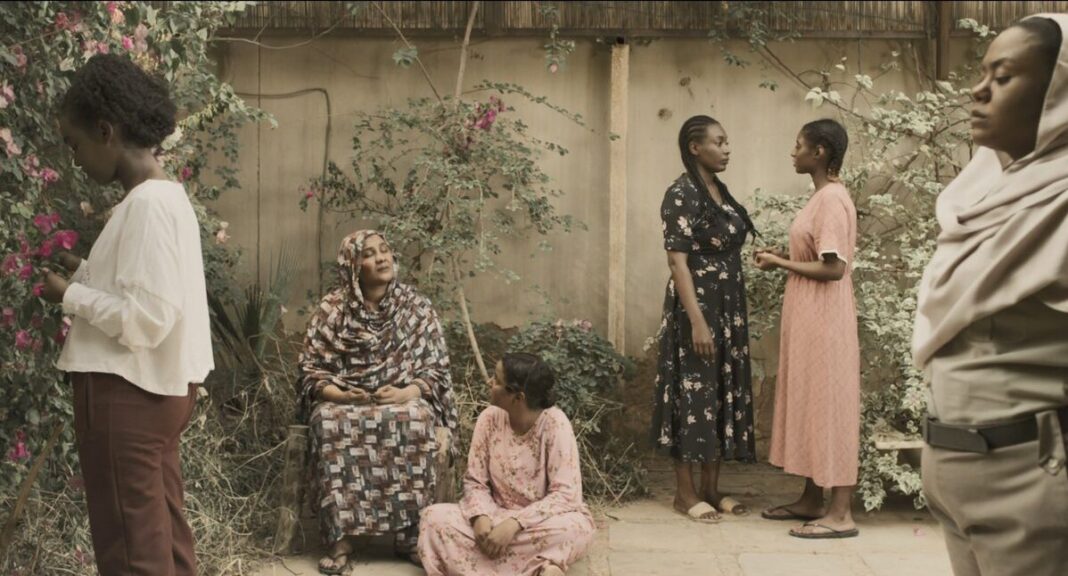
Erhaf Siddiq, a 21-year-old Sudanese woman returned to Sudan in February 2025 from Juba, South Sudan. She, along with her family, first arrived in Port Sudan, then headed to settle in their new home in Wad Al Naim, a village an hour away from Wad Madani, the capital city of Al Gezira State. An activist at heart, Siddiq felt the need to serve her community. “I am now volunteering to teach Arabic in secondary schools in Wad Madani due to the severe shortage of teachers,” she said.
Siddiq and her family fled to Juba in February 2024 as the conflict expanded from the centre of Khartoum to the suburban areas such as Haj Yousif in Sharg Al Neel or the East Nile district where she lived with her family. “My father was stuck in Wad Madani, and we were alone in Khartoum. At the time, the RSF was violating women sexually and forcing them into marriages,” she said.
Siddiq’s statement deeply reflected the multi-layered factors that go beyond killing by weapons to more extreme war crimes. On 13 March 2025, the most recent UN Security Council, Secretary-General of Médecins Sans Frontières (MSF), Christopher Lockyear said, “Women and girls are not merely unprotected; they are being brutally targeted,” he stated. In South Darfur alone, MSF treated 659 survivors of violence, with 86% reporting rape, between January 2024 and March 2025. Of these, 94% were women and girls, and nearly a third (31%) were under 18, including 7% under the age of 10. More than half were assaulted by armed forces.

Ammar Adel
On 19 February 2025, 25-year-old Ammar Adel, a resident of Omdurman, returned to Sudan from Egypt. Hopeful about their return home, he and his family arrived back in Omdurman, one of the three major cities in Khartoum State, alongside Khartoum and Khartoum North (Bahri), after enduring a week-long journey from Port Sudan. “Here, no matter how difficult the situation is, one feels comfortable being at home,” he said.
However, like for many returnees, finding work, or continuing a previous job that was interrupted due to the war, is essential. Adel has fortunate to find work with the military police, using the opportunity and responsibility to give back to his community. “I hope that the war will end, life will stabilise, and everyone can return as we did. We can rebuild the country to be better than before because this is a collective mission and responsibility,” he said.
Adel fled Sudan when food shortages gripped Omdurman. In addition, like Siddiq, he also shared the same concerns about the lack of safety and the rise in violence, particularly sexual violence. “People were murdered and markets were looted on a daily basis. We could not spend a week without hearing about a rape incident in the neighbourhood. As I’m responsible for a family of eight, our only option was to leave Sudan to a safer place,” he said.
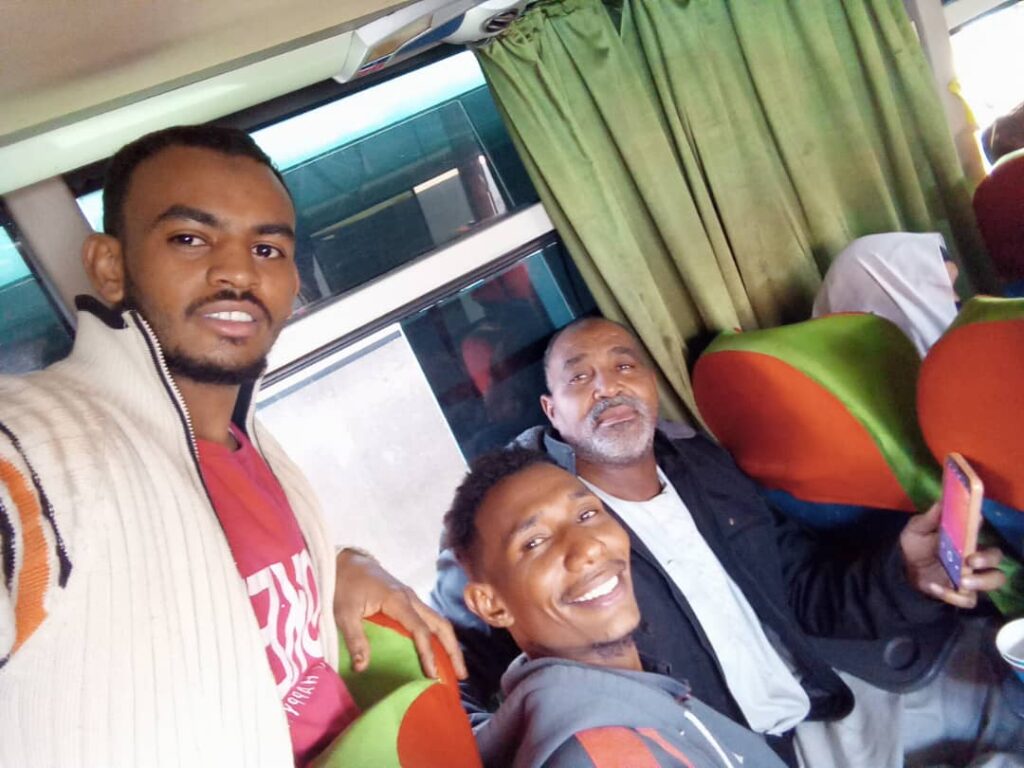
Ammar Adel and his family
on the bus to Omdurman
Different realities out of home
According to the Scalabrini Institute for Human Mobility in Africa (SIHMA), Sudanese refugees, asylum-seekers, and displaced people make up the largest group among registered refugees and asylum-seekers in Egypt, accounting for 71% of the total population, making Egypt the largest host of Sudanese refugees in the world. Consequently, this influx has impacted the social and economic fabric as the competition over resources and opportunities become harder. For many, such as Adel, covering daily expenses in Cairo required working two jobs. “Life was not easy. My total income was barely covering everything,” he said.
In Juba, Siddiq was socially adaptive and found space to practice social justice activism along with other displaced Sudanese, advocating for peace and the end of the war. However, her struggle was primarily against sickness. “The hardest thing I faced was the disease. In South Sudan, severe malaria was like the RSF for me. It was very difficult that we decided to go back because of it, at first, in addition to the high prices of medicines,” she said.
Adaptation is very difficult, especially for those who have been forced to leave their homes. For young people such as Siddiq who was driven by her inner political voice and activism, she found a balance between sickness and career building. “In South Sudan, I found fertile ground in which I could throw the seed of my dreams, be my personality, and present my opinion safely. I had previously decided not to return to Sudan soon, especially after I had recently taken the political movement, and my orientation would not please the governments there, so I would not be safe,” she said.
However, Adel was longing to return to live in Sudan. “I never thought I would stay in Egypt that long. We thought it would last for three to four months,” he said, deeply representing what the Sudanese nation thought and still holding hope for in the diaspora and at home. When will there be a clear ending for all this suffering?
The difficult passage: the journey back home
Even after the SAF’s liberation of what are now considered safe areas, challenges such as electricity cuts, water shortages, and lack of gas persist. At first, these concerns made Adel hesitant to return home, leading him to consider enduring the hardship of displacement in Egypt instead. “We heard much from people about life’s difficulties in Sudan, however, we were sure that whatever is waiting for us in Sudan we have to return, face it, so we can rebuild our lives better than before,” he asserted. Based on this strong belief, he and his family started their journey back home. Before crossing the border to Sudan at Abu Simbel on southern Egypt, they stopped at the makeshift unofficial camp where they endured poor shelter conditions, a lack of clean water, and humiliating treatment. “Abu Simbel Camp is where all travelling buses coming from Egypt pass by. We arrived at the camp on Wednesday evening of that week, and stayed there until Saturday morning. The treatment was bad. There was no respect. There was a scarcity of food and shelter,” he said.
Around the same time, in February 2025, the situation was unstable in South Sudan, fueled by political and diplomatic tensions between South Sudan and Sudan after the RSF’s massacre of members of the Kanabi people, who come from Darfur and South Sudan, in Wad Madani, and the subsequent public outcry of South Sudanese people against the discriminatory targeting of the Kanabi people. “The main reason that prompted the decision of return is the discord that occurred between the two countries and the problems and assassinations that continued for days in the capital city and some states,” said Siddiq. Consequently, this wave of revenge attacks led Juba and Port Sudan to coordinate for the safety of returning Sudanese nationals who are willing to go back home. Among them was the Siddiq family. “The situation was a mix of sadness and a falsification of many facts in which I was aware that the problems between the two countries at that time were nothing more than an intentional sedition for reasons and policies that they knew better. However, the way the State welcomed the returnees at the airport was unflattering about the extent of the problem, as if it was confirming certain things, and those words that did not please my ears: Thank God we saved you from them, by God willing they will not harm you anymore,” said Siddiq.
Rebuild with hope
Siddiq looks forward to where freedom, peace and justice are the principles upon which the foundation of Sudan is built on, where everyone can live in harmony despite their ethnic, religious and cultural differences, and where young people find a good space for the country’s renaissance. As a young woman who sees herself in the heart of that space. “I can contribute with awareness and community work, convey people’s voices, and call for peace and justice in all available means whether through the media, or even writing and documentation. believe in the impact that I can leave behind,” she said.
While there is no clear ending to the war, the SAF’s control over major states as mentioned earlier has significantly encouraged people to return, it is slow in growth, but discernible stabilising in these areas. Despite daily life remaining challenging due to the lack of basic necessities such as stable electricity and health services, efforts are underway to rebuild and repair Sudan’s damaged infrastructure. Moreover, significant steps are being taken to renew connectivity and normalcy. The reopening of Khartoum International Airport (KRT) in October 2025 promises to facilitate further returns, official visits, and the resumption of essential air services underscoring the collective mission to rebuild Sudan.
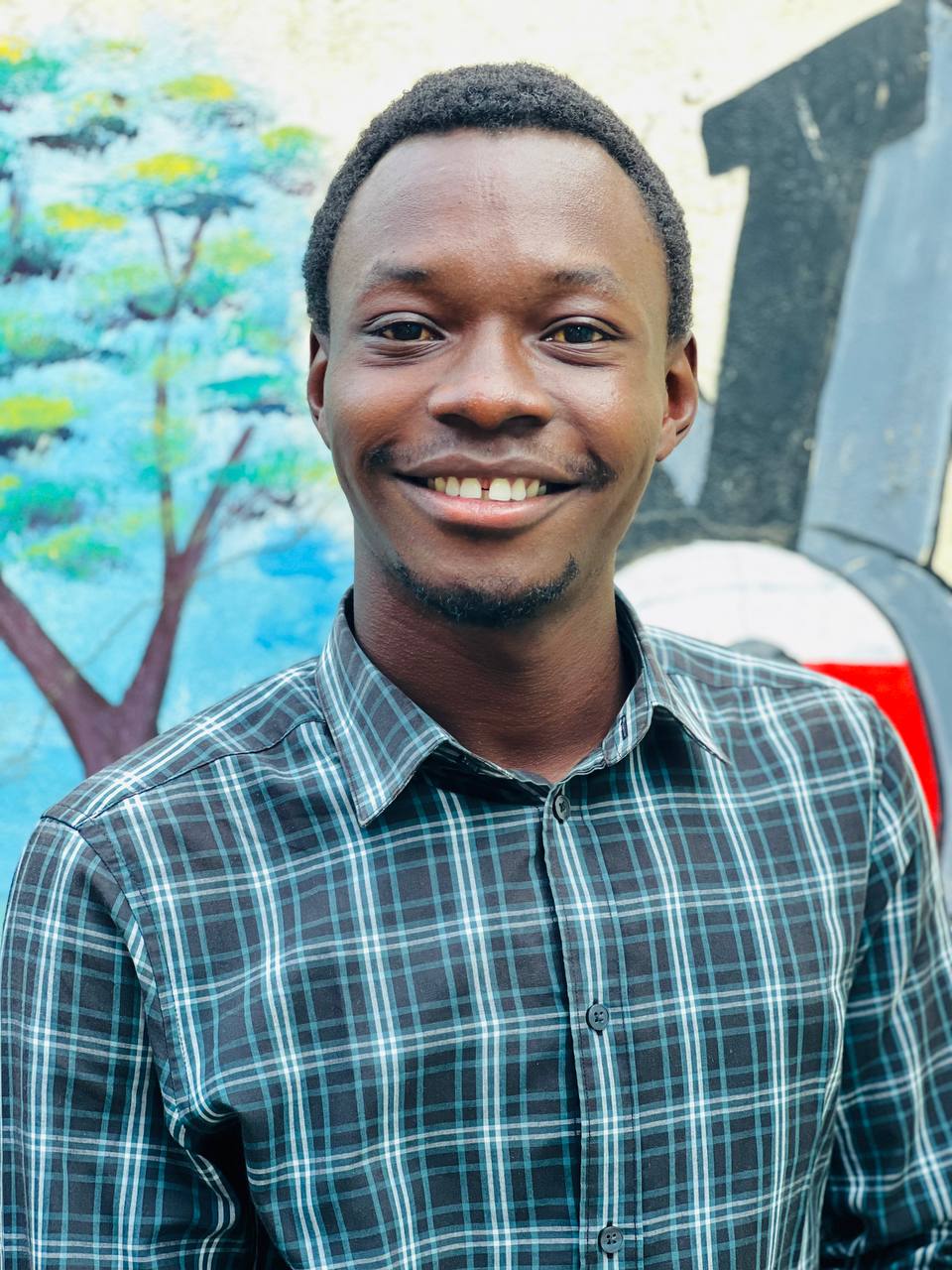
500WM Columnist Butros Nicola Bazia, born in Khartoum, Sudan in 2001, is a South Sudanese independent writer and storyteller currently based in Juba, South Sudan. He began his content creation journey with Young Black Voice Podcast in 2022 and transitioned to creative writing in 2023, driven by a deep interest in arts, culture, and society. His work reflects resilience and creativity, even amidst the challenges posed by ongoing conflict in the region. Nicola now runs his own blog, Autide Me, and has published works in Sudans Post and 500 Words Magazine, where he currently serves as a columnist.

Butros Nicola Bazia, born in Khartoum, Sudan in 2001, is a South Sudanese freelance writer, storyteller, and cultural commentator based in Juba, South Sudan. Nicola serves as columnist at 500 Words Magazine and contributed to multilingual regional and international platforms including The New Humanitarian, Mundo Negro, El Pais, Contemporary&, The Van-Magazine, and among others. His work explores the intersections of arts and socio-cultural dynamics, with a focus on South Sudanese narratives in the global conversations.