
In a society that confines Sudanese women to traditional gender stereotypes, artist and illustrator Shiroug Idris refuses to submit to such a narrative.

The 28-year-old practicing physician portrays the reality of millions of Sudanese women, telling stories of strength and resilience. Born in North Kordofan, before moving to Khartoum and now Wad Medani in Al Gezira State post-war, Idris was recently declared the winner of the Children’s Book Illustration Category for the 10th Mahmoud Kahil Award 2025 for her illustration of the graphic novel “Al-Gash Al-Mashi” (The Walking Haystack).
As part of the new Face Behind The Canvas series, 500WM sat down with the Sudanese artist and illustrator Shiroug Idris to uncover her inspirations, goals and experiences as a Sudanese artist.
As a recent graduate of the Faculty of Medicine from Ahfad University for Women (AUW), how do you manage to balance between such a demanding career and your passion as an artist?
I would say drawing is how I get rid of stress. The patient stories also serve as a source of inspiration for a lot of my art pieces.
What is your goal and what are you trying to achieve from your illustrations?
My art serves to reflect the reality of Sudanese people. There was no [other] goal when I started but to portray the realities and phenomena happening around me. I would also love to publish a graphic novel in the future.
How do you manage to incorporate Sudanese folklore, fantasy and magical realism into your style of drawings?
The main element is folkloric Sudanese tales. I would say, amid the ongoing conflict, there has been a sense of nostalgia from our grandmother’s tales, so I draw to illustrate them. All this combined with Sudanese heritage and my upbringing in Kordofan make up the pillars of my style.
In addition to Kordofan and Khartoum, which are both extensively represented in your artwork, are there other Sudanese cities or provinces that you illustrate?
There is Kassala, which was a whole new environment for me with its rich culture, languages and folklore, like the movie Tajouj, which was very captivating. There was a noticeable difference in the customs and surroundings between Kassala, and what I was used to in Khartoum and Kordofan.
In a world full of patriarchal themes, what does art provide for you as both a woman and an artist?
It’s a form of expression and resistance against the world’s unjust treatment. I think art is powerful. It empowers women and it changes the way people see things. That’s why I try to portray women in a positive light away from the male gaze.
Anger, grief, sin, revolution, exile and exodus – you manage to reflect a palette of conditions and experiences that have faced Sudanese women. How do you aim to represent them in your work?
I aim to challenge the stereotypical beliefs surrounding Sudanese women; not to paint them in a positive nor negative way, but to do so in a real manner that doesn’t centre around the traditional male-based perspective.
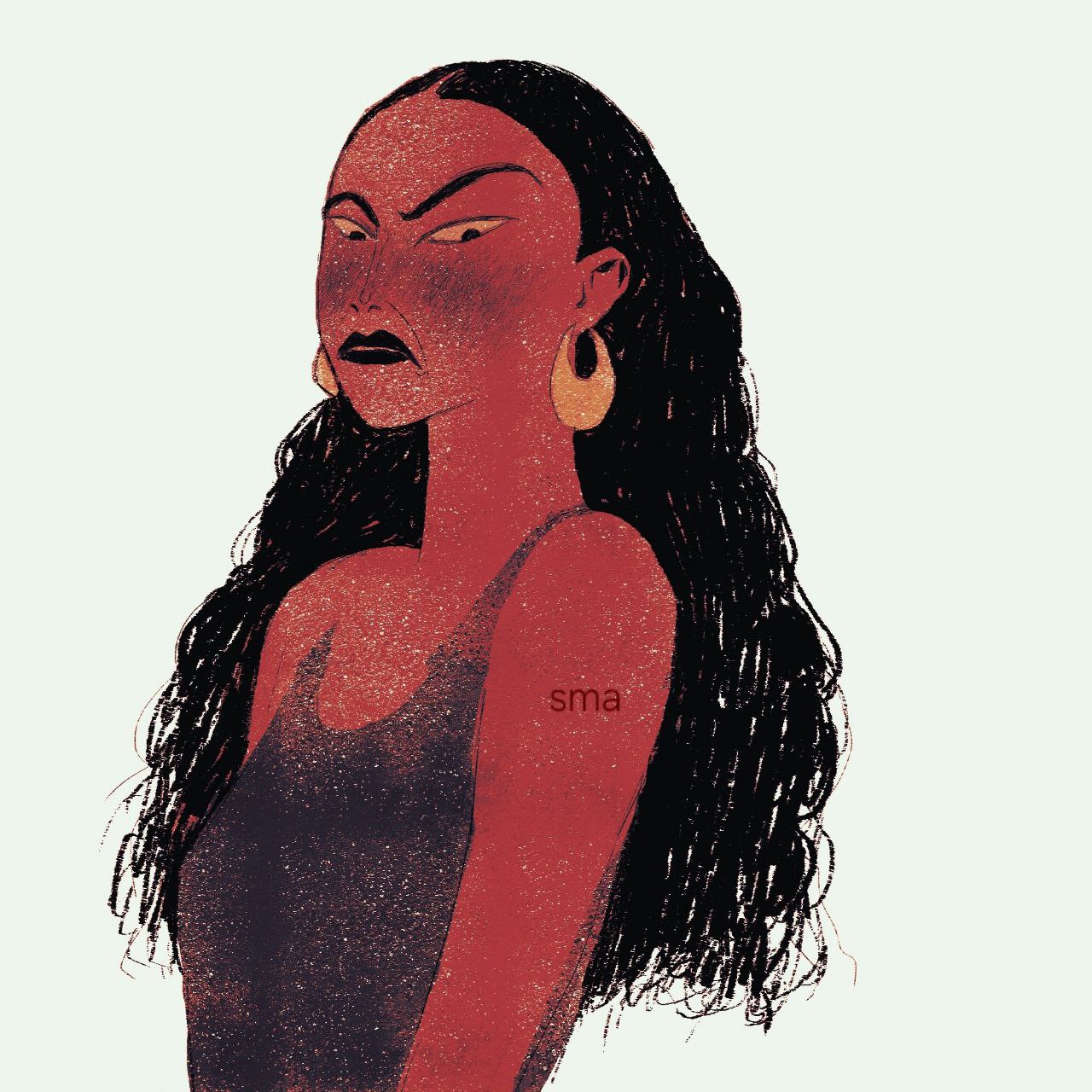
Your original character, displayed in paintings such as Evil Bride, seems quite angry. Why is she portrayed this way?
This is the protagonist of my to-be graphic novel. I try to portray her as a strong, angry woman. Why angry, you ask? There is a lot to be angry about as a woman, especially in Sudan. She is furious with her circumstances and how she is treated by society, so she becomes quite vengeful.
I was inspired by the character Karaba from the movie Kirikou and the Sorceress. I actually think we need more female villains in general, female antagonists with complex backgrounds and motives other than the traditional goals of beauty.
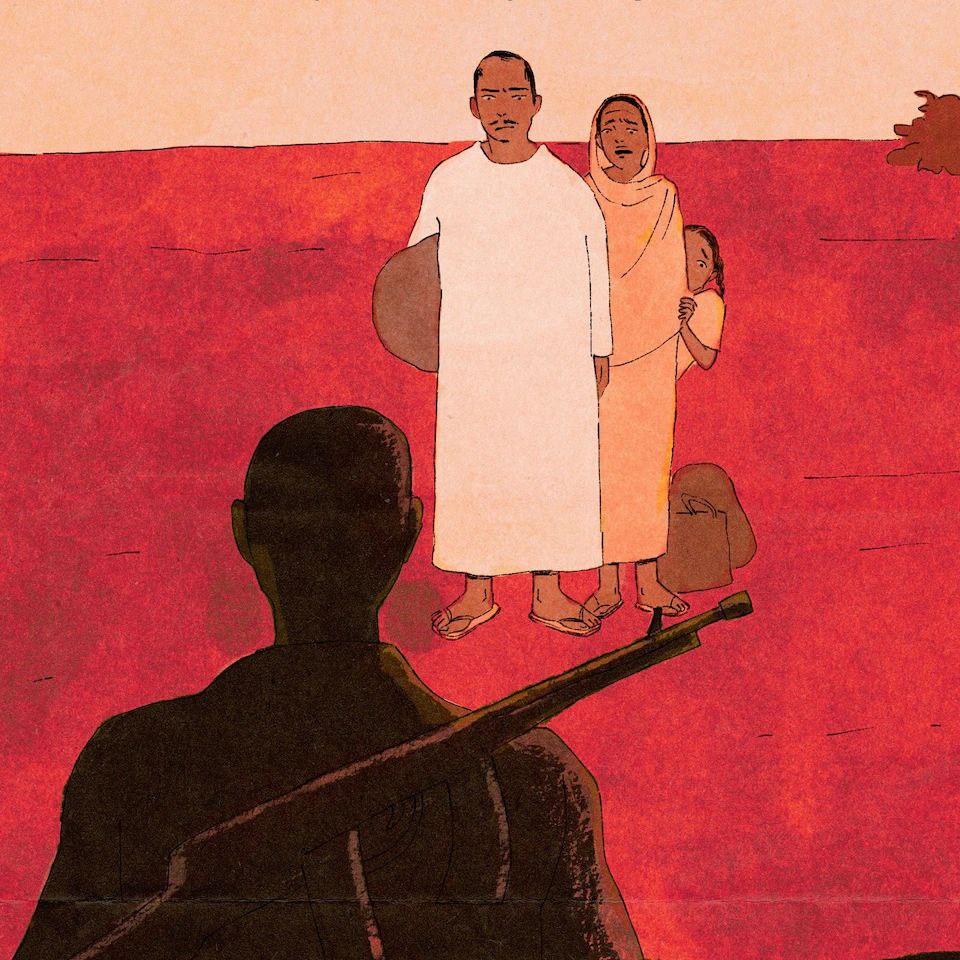
You have drawn several comics depicting the state of Sudanese people during the ongoing war. How did the war affect you and your artistic process?
This comic is actually based on real life events. Sometimes, I felt there was no hope for Sudan. I felt exhausted and drained that I couldn’t draw. Despite that, all I wanted was to amplify our voices and ensure they don’t go unheard.
Idris is currently working on several projects including one documenting women stories and a children’s book.
Find Idris on Instagram and X (formerly Twitter) @shiroug_art and on Behance at behance.net/shirougart.
Related posts

As he ventures into this brave new world ahead of him, 2005-born Muathal Hisham tries to reflect on the experiences he encounters through poetry and prose. An aspiring bilingual essayist who aims to reinvent the way literature, art and music are interpreted, Muathal provides a thrilling dive into regional and international cultures, with the hope it might inspire positive change in his community. When he is not writing, Muathal is often busy video editing or studying for medical school at Ain Shams University. Find him @muathall on Instagram or visit his blog on Medium at @Muathal.