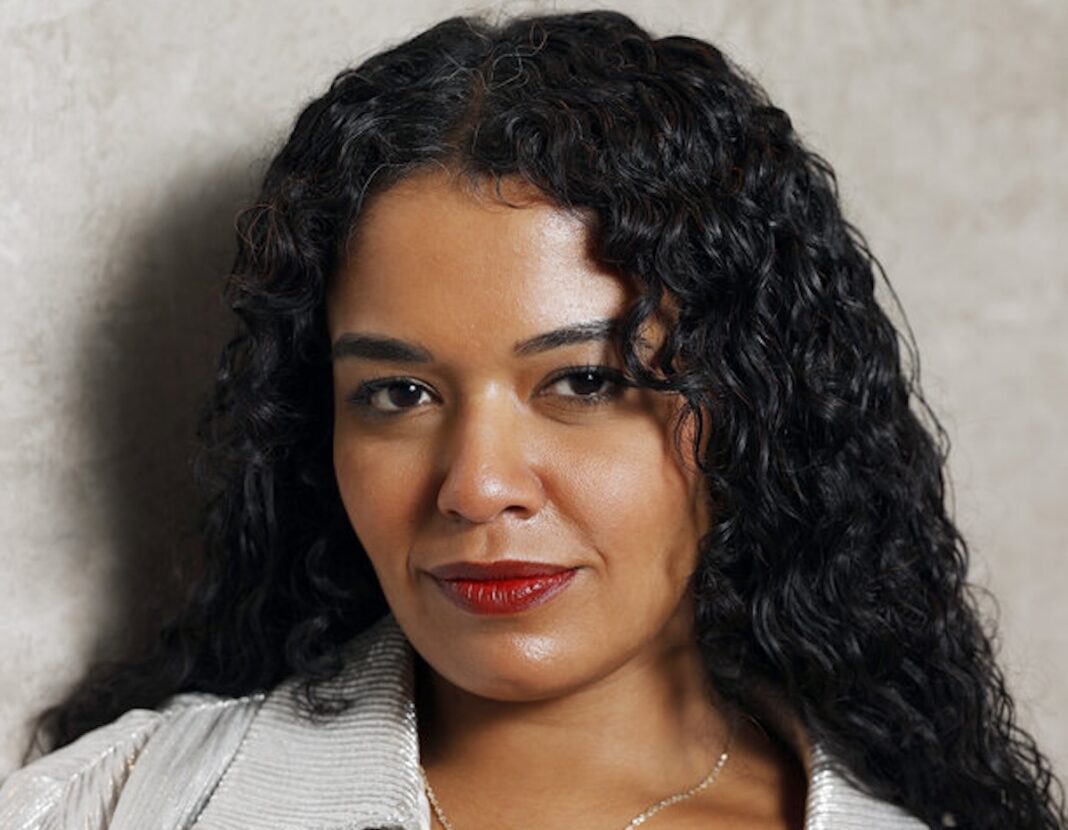
Sudan marked two major wins at the Doha Film Festival (DFF) 2025. Cotton Queen, directed by Sudanese-Russian filmmaker Suzannah Mirghani, won the Audience Award, while Sudanese filmmaker Eiman Mirghani received the Best Director award for her short documentary VILLA 187.
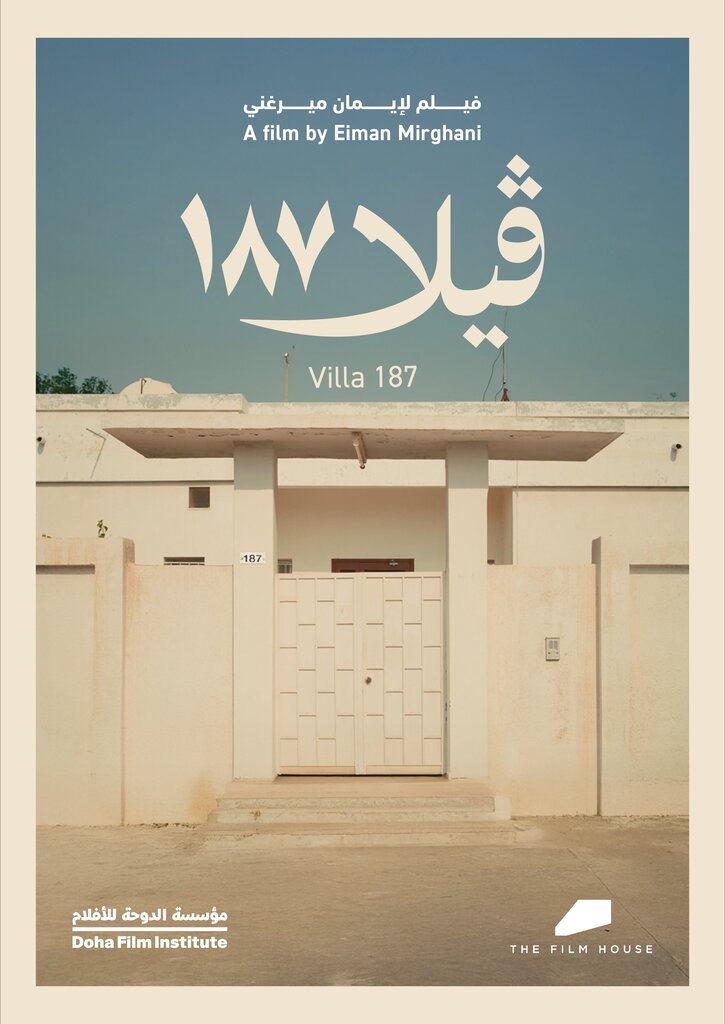
Mirghani and her family have called Qatar home for over 30 years. In 2020, her father broke the news that their visa had been cancelled, and for the first time ever, they were unsure of their future. Shortly after, Mirghani begins creating VILLA 187, documenting the process of packing up the house her family has called home for over three decades, reminiscing about the past and pondering the future in a home that was never really theirs.
As a resident of Qatar for over 30 years, watching VILLA 187 deeply resonated with me — all the more so because I personally know Mirghani and her entire family. We grew up together: the same school, the same residential compound. They lived in Villa 187; we were in Villa 22. The film speaks powerfully to many of Qatar’s longtime expatriate residents.
Although only eight minutes long, VILLA 187 felt like a lifetime, because for Mirghani and her family, it was. As the film so intimately and carefully documents, the villa was never just a house; it was a home. It witnessed births, birthdays, graduations — growth, memory, and life itself. Watching it almost brought me to tears, as it touched one of my family’s deepest fears: the loss of home. One home was already lost when Sudan descended into war in 2023. Qatar remains our second home, and the thought of unexpectedly losing that too would be catastrophic. By the time the film ended, it was clear why Mirghani was awarded Best Director at DFF 2025. VILLA 187 is not just a short film; it is a deeply felt portrayal of migration or ghurba, expatriatism, family, belonging, loss, time, and above all, home, and its fragile sense of stability.
VILLA 187 is not Mirghani’s first successful film. After graduating with a Bachelor’s of Art (BA) in Film and Media Studies at the University of Nottingham Malaysia, she has worked on numerous short and feature films, music videos and advertisements in the Middle East and North African (MENA) region as director, assistant director and producer. She is known for Is that all there is? (2018), The Bleaching Syndrome (2018) and Al-Sit (2020). Her second short film The Bleaching Syndrome is a short, personal documentary made under the mentorship of world renowned documentarian Rithy Panh. In 2021, Mirghani was one of the producers of the short, Sudanese film Al-Sit, which has grown to receive accolades in numerous international film festivals and has become qualified for the Academy Awards.
Mirghani is one of the fortunate few whose talent, education, and profession all align in filmmaking. In addition to her independent filmmaking projects, she works as a Senior Digital Media Specialist at Qatar Museums (QM), the country’s leading governmental institution for art, culture, and heritage, responsible for managing a network of world-class museums, archaeological sites, festivals, and public art initiatives.
In conversation with The Sudanist, the 33-year-old Eiman Mirghani reflects on her latest successful film and her young yet richly evolving filmmaking journey.
What inspired the making of VILLA 187, and what impact — feelings, thoughts or event actions — do you hope it will have on audiences?
The making of VILLA 187 began when my father notified my sisters and I of us having to leave the house that we had called home for over 30 years, after he was made redundant in his work. We had no idea what we were gonna do or where we would go when this news broke. We had about six weeks to pack our things and leave, which was a difficult and emotional process for our family that grew up there. I felt conflicted and anxious about the changes coming ahead — so I decided to document that process as a way to cope, as well as to honour the memories made in the house.
Your story feels expansive and worthy of a longer format. Why did you choose to tell it as a short film rather than a feature-length film?
Since my family was only given a few weeks to move out and the change came up rather unexpectedly and quick, I had only managed to document a limited amount of the house by filming it. This is why I chose the short film format.
What was challenging about making a film that was very personal?
Being honest and vulnerable while making a film is always a challenge, but showing this personal side is what I think makes the film so relatable to audiences.
How did you feel watching the film, and how did your family feel and react?
I felt a sense of relief watching the film. Even though the process of it was emotional and took quite some time for me to face. I now feel that I have been able to honour the memories of the home I grew up in by making this film for me and my family – and this gave me a sense of great relief and gratitude.
What are some of the most memorable comments you’ve received about your film?
I’m extremely happy about the feedback I have received on the film so far, since its premier at the Doha Film Festival (DFF). Quite a large number of people from various different countries felt very related to the film and the themes it shows. The sense of losing or leaving your childhood home is something many of us have experienced. I have even had some audience members come to me in tears after they watched the film from how much it touched them! It is truly an honour for me to bring an audience together in this way and I hope to see this more as the film journeys into the international film festival circuit.
The film is told with your dad’s narration breaking the news to you that he will retire and leave Qatar after nearly 30 years. We hear only his voice, but don’t see him or your family besides through family home videos, and we see you, but don’t hear you. Why did you choose to make the film the way you did — only your dad’s voice and only your face?
I decided to use my father’s voice note because it is the most authentic way to showcase what I had personally gone through during this experience. I wanted the audience to almost have a literal point of view (POV) in regards to how my family and myself discovered this news and how we proceeded afterwards.
Where is our family now and how are they doing it, and most importantly, how are they adjusting to completely new life?
I was able to continue living in Qatar through my work but my parents have moved on and are now retired in Cairo, Egypt, where my mother’s family is based and where several of our relatives have relocated to following the war that broke out in Sudan in 2023. Although it was a big adjustment at first, I am happy that my parents are in Cairo now — they are comfortable, healthy, and surrounded by family and loved ones, and that is all I want for them. My sisters have migrated to Canada where they have been based for sometime because of their studies. They are also happy and safe — which makes me feel grateful and relieved.

And also, how are you adjusting to life in Qatar alone for the first time after living in the country with your family nearly your entire life?
It was quite hard at first, but thankfully I am able to get by because of my amazing friends and community in Qatar. It is still a bit of an adjustment and I often miss my family terribly. But I am content and grateful to still be here and still be able to have my community, make movies, and move on (hopefully to greater things)!
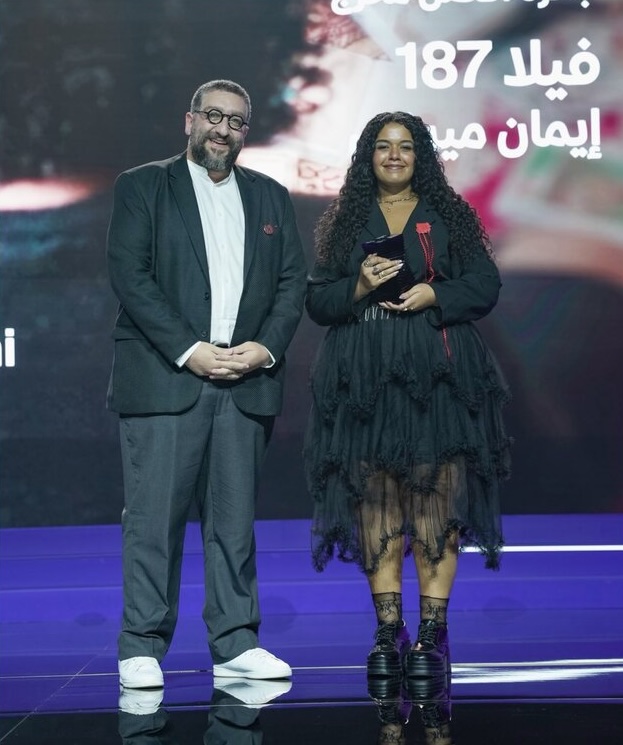
You recently won your first award as a filmmaker – Best Director at DFF 2025. What was that moment like for you, and what did the recognition mean for your journey as a filmmaker?
Winning the Best Director award at DFF was a totally rewarding experience – one that I was not expecting at all! There were so many amazing films in my programme, “Made in Qatar”, at DFF. Hearing my name being called during the award ceremony was a surreal surprise! But I felt extremely proud to have reached that point and to represent Sudanese filmmakers at DFF.
Tell us about your filmmaking career and journey. What inspired you to become a filmmaker?
The cinema has always been a place of wonder and excitement for me for as long as I can remember. My obsessions started to really take over when I was 13 years old and began to watch different films almost everyday. I was so amazed at how directors or scriptwriters can come up with such complex and compelling stories, it almost felt like magic to me! Growing up in Qatar, I saw the inauguration of the Doha Film Institute and followed them immediately as a volunteer in the Doha Tribeca Film Festival (DTFF) in 2010 when I was a high school senior. After my university studies, I came back to Doha Film Institute (DFI) in Qatar and began to participate in various workshops and internships. They have really nurtured me over the years through mentorship and experience and since then I have worked on several short films as Director and Producer. VILLA 187 is my third short film as director.
From your young yet rich filmmaking journey, which projects have been the most meaningful or enjoyable for you, and what made them stand out?
The projects I have worked on that have a special place in my heart are the ones in which I got to collaborate with my friends and fellow filmmakers. Over the years, it has been a pleasure to work with them and to watch them grow with their own films and achievements. These talented creatives include Suzi Mirghani, Maysaa Al Mumin, Mostafa Sheshtawy, Hadeer Omar, among many more. I was lucky to have worked with them on many projects – short films such as ‘Al-Sit’, ‘Bint Werdan’, etc.
What’s next for you as a filmmaker?
I’m excited to hopefully present VILLA 187 to different audiences around the world through the international film festival circuit. I am also jumping back into narrative films after focusing on documentaries for a few years and writing my next fiction film project, which I am super excited about.
As you look into the future, where do you hope your filmmaking career is heading, both creatively and professionally?
I am very excited to go back to fiction film and to hopefully develop a feature length film. I hope to continue telling stories that are bold and often not spoken about. Cinema is a great tool to connect communities together and to have difficult, but necessary conversations. I hope I can create films that can achieve that.
For more information on Eiman Mirghani or to follow her journey, visit her Vimeo page vimeo.com/eimanmirghanifilm, or her Instagram page @omgitseiman.

Ola Diab is the new founder and editor of 500 Words Magazine, and the deputy editor of Marhaba Information Guide, Qatar’s premier information guide. Based in Qatar, the Sudanese journalist graduated from Northwestern University in Qatar (NU-Q) in 2012 with a Bachelor of Science in Journalism and has since built a successful career in the print and digital media industry in Qatar. Find her on X (formerly Twitter) @therealoladiab or on LinkedIn.