Ola Diab is the new founder and editor of 500 Words Magazine, and the deputy editor of Marhaba Information Guide, Qatar’s premier information guide. Based in Qatar, the Sudanese journalist graduated from Northwestern University in Qatar (NU-Q) in 2012 with a Bachelor of Science in Journalism and has since built a successful career in the print and digital media industry in Qatar. Find her on X (formerly Twitter) @therealoladiab or on LinkedIn.
Ola Diab is the new founder and editor of 500 Words Magazine, and the deputy editor of Marhaba Information Guide, Qatar’s premier information guide. Based in Qatar, the Sudanese journalist graduated from Northwestern University in Qatar (NU-Q) in 2012 with a Bachelor of Science in Journalism and has since built a successful career in the print and digital media industry in Qatar. Find her on X (formerly Twitter) @therealoladiab or on LinkedIn.
Ola Diab is the new founder and editor of 500 Words Magazine, and the deputy editor of Marhaba Information Guide, Qatar’s premier information guide. Based in Qatar, the Sudanese journalist graduated from Northwestern University in Qatar (NU-Q) in 2012 with a Bachelor of Science in Journalism and has since built a successful career in the print and digital media industry in Qatar. Find her on X (formerly Twitter) @therealoladiab or on LinkedIn.
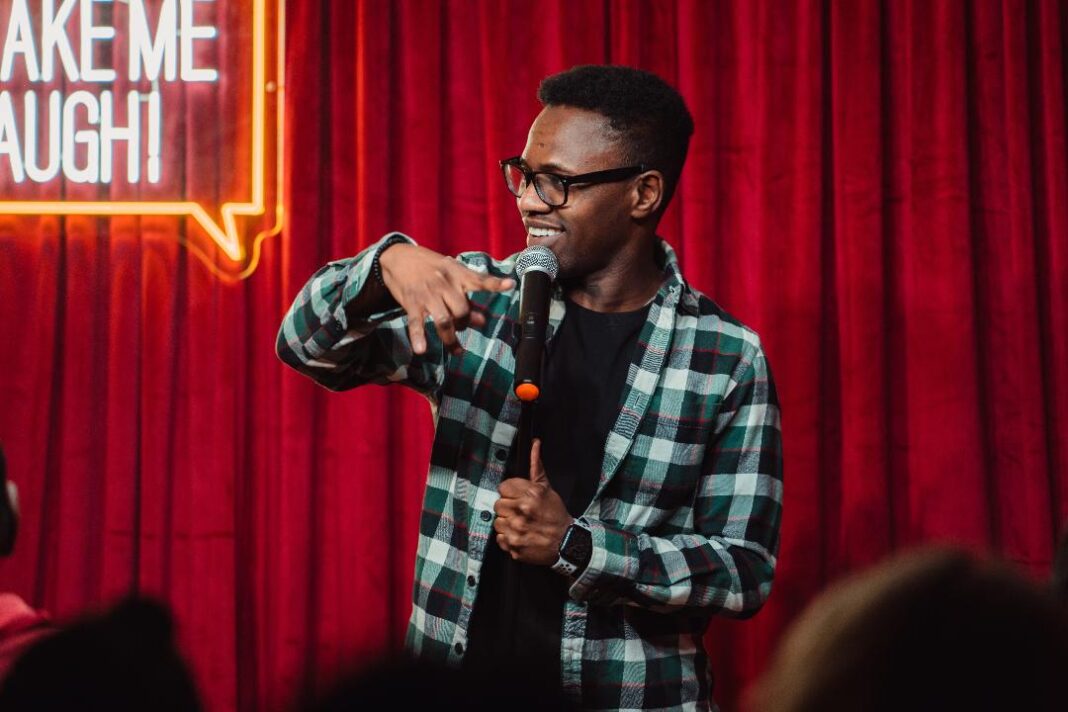
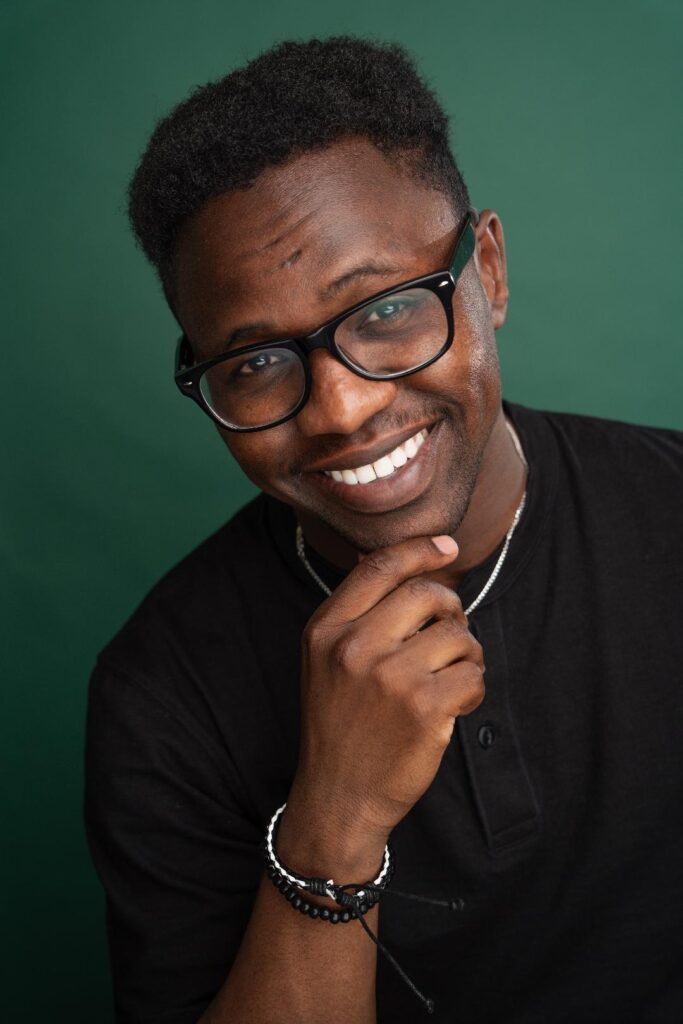
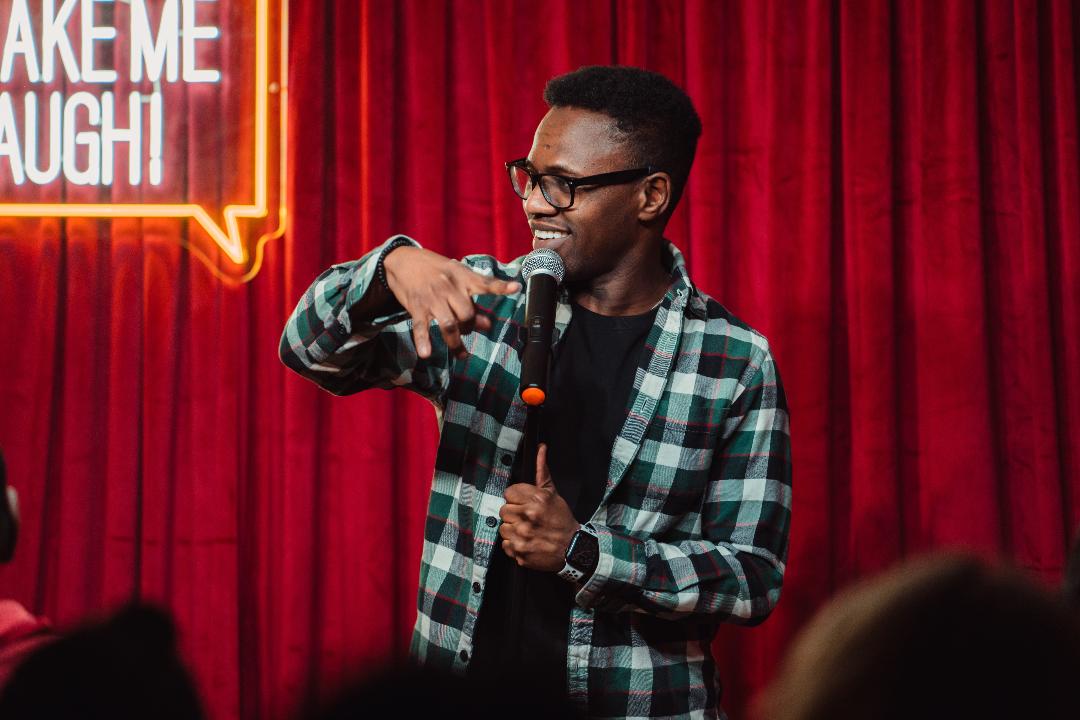
Recently, while researching 500WM’s “Sudan’s Rising Stand-up Comedians,” I came across 30-year-old Sudanese-American stand-up comedian Samir Abdul. A survivor of the Darfur genocide, he has transformed his harrowing story of survival into comedy that brings laughter instead of tears.
Originally from Darfur, Sudan, Samir Abdelkarim, who performs under the stage name Samir Abdul, is a survivor of the Darfur genocide. In his stand-up comedy, he weaves personal stories of resilience with sharp, witty observations about American life, using humor to bridge cultural divides, challenge perceptions, spark conversation, and find laughter where cultures meet.
Abdul has performed at top US venues, including the Laugh Factory, Zanies, Don’t Tell Comedy, and The Den Theatre, sharing the stage with talents such as AGT’s Learnmore Jonasi and WGN’s Pat Tomasulo. His hit show Up’N Coming at The Second City has attracted more than 1,000 audience members, establishing it as one of Chicago’s most exciting showcases for emerging comedic talent.
He is also a writer and researcher based in Chicago, Illinois, and an artist-in-residence at Northwestern University (NU), a leading private research institution in Evanston known for its world-class schools of medicine, journalism, communication, music, and more.
Recently, alongside making people laugh, Abdul has been using his platform to raise awareness and speak out about the ongoing war in Sudan, particularly the suffering of his community in Darfur.
500WM interviews Samir Abdul about his stand-up journey, the pain of the Darfur conflict, and the ongoing war in Sudan.
Let’s begin talking about your background from growing up in Darfur to fleeing war to finding a new home in the US?
I was born in Darfur, Sudan, during the height of the 2002–2004 genocide. Some of my earliest memories were the lack of water and waking up to gunfire. I used to walk to school and on the way home I’d knock on every door just asking for water. And in the evenings, I played soccer with my friends. When everyone around you is going through the same thing, it becomes normal we’d be playing, hear a gunshot, look around and yell, “Pass me the ball!” finish the game, and then run home.
As a child, you don’t really understand the severity of the situation. Every night my family, my mom, auntie, uncle, and grandma — would stay up until 3 a.m. listening to gunfire to see if it was getting closer to the village. Meanwhile, I slept like a baby. I was out there snoring through conflict like it was white noise.
My grandma was the center of our village. She ran a small grocery shop that everyone came to. Then one night, the fighting finally reached us. The entire village evacuated into the woods. My mom carried my youngest sibling while I ran beside her. When I looked at the adults and saw fear in their eyes, that’s when I realized something was truly wrong. That village is completely wiped out today.
From there we went to Al Fasher for a few months, then eventually Khartoum, then Egypt for two years, and finally we made it to the United States in 2006. We ended up in Iowa which is a plot twist no one saw coming. One day you’re escaping a genocide, and the next day you’re in the middle of a cornfield. And I went from a place with no water to a place where I’m hiding in the basement from tornadoes like, “God, pick a struggle!”
But the US became home. It was the first place where I felt stability, safety, and the freedom to imagine a future.
Those experiences — losing everything, rebuilding, and navigating two cultures became the roots of the voice I have today.
What’s your educational and professional background?
I studied at Augustana College and later worked as a research assistant at the University of Iowa Hospitals and Clinics in the Neurology Department, contributing to peer-reviewed publications.
I also worked little as teacher assistant (TA) at Loyola University Chicago, supporting diverse learners and adapting teaching methods. Outside academia, I worked every type of job: cashier, personal driver, office clerk — all the immigrant starter-pack jobs.
Today, I’m an Artist-in-Residence at Northwestern University, collaborating on projects at the intersection of comedy, storytelling, and technology, while also producing and performing stand-up comedy across Chicago.
What inspired you to become a stand-up comedian?
I saw Jon Stewart and Trevor Noah on The Daily Show and watched how they could take something serious, put it in a comedic tone, and suddenly people would listen, understand, and laugh. I thought that was incredibly powerful. Later on, I got into Dave Chappelle and, rest in peace, the late Patrice O’Neal. These are some of the people who inspired me and showed me what comedy could really be.
How do you find material for your skits or performances?
Most of my material comes from real life — growing up in a war zone, immigrating to America, being a short Black guy in the Midwest, navigating identity, family, and culture. Comedy for me is storytelling with punchlines, so the foundation always starts with lived experience.
But a huge part of my writing also comes from the current news cycle and what’s happening in the world. I’m constantly reacting to events — whether it’s something serious happening in Sudan or something ridiculous trending online. The way people talk about politics, war, or social issues often sparks ideas for jokes or observations. Sometimes the news is so wild it feels like it’s trying to give me material.
So it’s a mix of my personal life, the world around me, and the chaos of whatever’s happening in the headlines. All of it becomes part of the work.
You’re also a writer and researcher. How do those skills help you with the material for your comedy skits?
Research gives me depth, writing gives me structure, and comedy gives me freedom.
When I’m tackling something serious like the Sudan conflict, identity politics, or global injustice my research background helps me understand the facts, context, and history. Then my writing helps shape it into a narrative people can follow. And finally, comedy lets me deliver the truth in a way people can actually hear.
It’s like sneaking vegetables into a kid’s meal except the vegetables are geopolitics.
Your comedy skits are often about surviving war and genocide, calling it the g-word. How do you tackle such a serious and difficult topic to make people laugh, and why do you do so?
I never treat genocide lightly — I treat my survival lightly.
The humor isn’t about the violence; it’s about the absurdity of living through something no child should ever experience, and still finding a way to exist, to adapt, to smile.
Comedy lets me tell the truth without retraumatising myself or my audience. It gives permission for people to lean in instead of turn away.
And I do it because silence kills.
If we don’t tell our stories, the world forgets — and Sudan has been forgotten too many times.
Seeing the ongoing war in Sudan from Khartoum to Al Fasher, how do you reflect on it especially after experiencing war in Sudan firsthand?
It’s heartbreaking and infuriating.
I survived this once as a child, and now I’m watching an entire generation go through the same violence — this time broadcasted on social media for the world to scroll past.
Seeing El Fasher, a place I’ve visited recently, become a symbol of devastation is something I still struggle to process.
It feels like history is repeating itself louder, but the global response is quieter.
But I also see resilience. Sudanese people are some of the strongest in the world. Even in the worst moments, there’s a stubborn hope that refuses to die.
What are your thoughts on the growing scene of Sudanese stand-up comedy, and do you think a similar scene can be established in Sudan itself?
I’m proud of the rise of Sudanese comedians. Comedy gives us a space to reclaim our narrative, to challenge stereotypes, to laugh in the face of pain.
There is absolutely potential for a comedy scene in Sudan — Sudanese people are naturally funny — but it requires stability, safety, and freedom of expression. Comedy can’t grow in a place where people are afraid to speak.
When Sudan becomes safe again, I believe the arts — comedy included — will flourish.
Any additional comments?
Sudan deserves attention, empathy, and action not just headlines.
Sudan deserves attention, empathy, and action not just headlines.
If my story or my comedy helps spark a conversation or inspires someone to look deeper, then I’ve done my job.
Ola Diab is the new founder and editor of 500 Words Magazine, and the deputy editor of Marhaba Information Guide, Qatar’s premier information guide. Based in Qatar, the Sudanese journalist graduated from Northwestern University in Qatar (NU-Q) in 2012 with a Bachelor of Science in Journalism and has since built a successful career in the print and digital media industry in Qatar. Find her on X (formerly Twitter) @therealoladiab or on LinkedIn.
Ola Diab is the new founder and editor of 500 Words Magazine, and the deputy editor of Marhaba Information Guide, Qatar’s premier information guide. Based in Qatar, the Sudanese journalist graduated from Northwestern University in Qatar (NU-Q) in 2012 with a Bachelor of Science in Journalism and has since built a successful career in the print and digital media industry in Qatar. Find her on X (formerly Twitter) @therealoladiab or on LinkedIn.