


A Sudanese-Polish archaeological expedition working at Old Dongola in Sudan has uncovered further sections of the monumental building known as the Great Church of Jesus, the largest and wealthiest church in medieval Nubia.
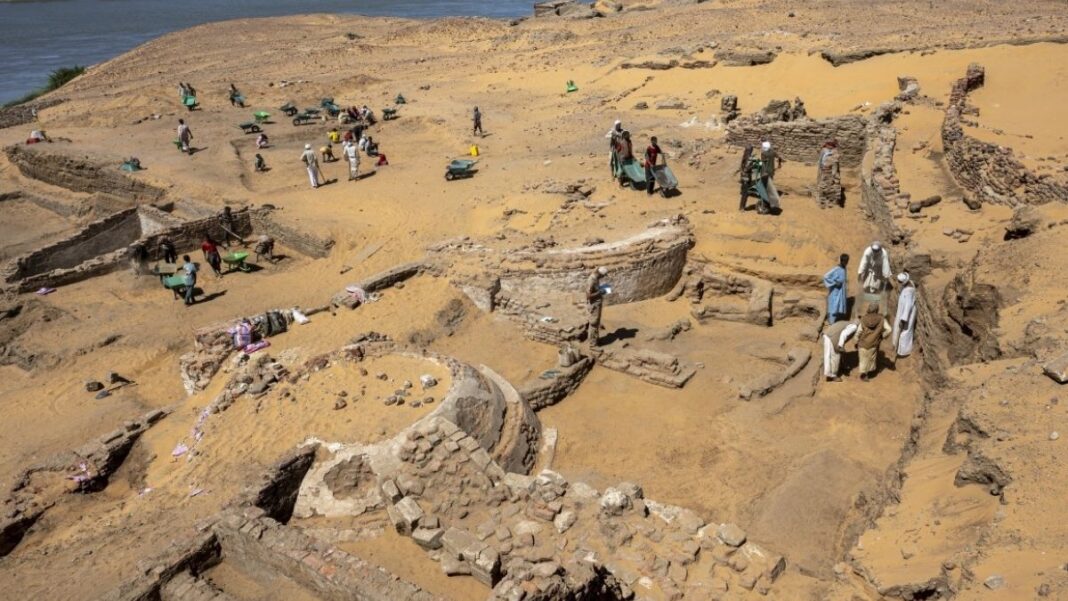
During the latest fieldwork, archaeologists uncovered an impressive staircase leading into the church, buttresses reinforcing the apse, and the remains of another church built on the upper floor of an adjoining structure. They also reached the cathedral’s original floor level for the first time. These discoveries provide new insights into the architecture and scale of one of the most important religious buildings in medieval Africa.
The discovery was annouced by the Polish Centre of Mediterranean Archaeology, University of Warsaw on 4 November 2026.
#PCMAintheField⛪ #Medieval Nubia’s largest cathedral? At #OldDongola, 🇸🇩–🇵🇱 expedition headed by @arturobluski uncovered a monumental staircase (walls up to 11 m high) & an upper-storey church with painted plaster & Greek inscriptions containing texts of biblical hymns. 1/2 https://t.co/wtkLb7pssD
— Polish Centre of Mediterranean Archaeology UW (@PCMA_UW) November 6, 2026
Research at Old Dongola, the former capital of the Christian Kingdom of Makuria, is being conducted by an expedition from the Polish Centre of Mediterranean Archaeology at the University of Warsaw (PCMA UW), in collaboration with Sudan’s National Corporation for Antiquities and Museums (NCAM). The expedition is led by Professor Artur Obłuski, Director of PCMA UW. The team first identified the monumental structure as the Great Church of Jesus in 2021, but excavations only began after funding was secured from Poland’s National Science Centre.
“In the history of architecture, certain buildings emerge that, to use a modern term, become trendsetters. Hagia Sophia in Constantinople, modern-day Istanbul, is certainly one such example. The Great Church of Jesus appears to be a natural candidate for such a role in Nubia, and perhaps even in this part of Africa,” said Professor Obłuski.
Buildings of this kind set trends both in spatial planning and in construction techniques. Until now, another church located outside the city walls of Dongola had been regarded as the city’s cathedral. “We will probably have to revise our understanding of the role of that building and ask what its actual function was, if it was not a cathedral,” said Professor Obłuski.
So far, only a small part of the Great Church of Jesus has been excavated.
“The staircase is the only area where we have managed to reach the floor of the building. Paradoxically, and fortunately for world cultural heritage, as well as the heritage of Africa and Sudan, the greatest challenge in excavating the church is its remarkable state of preservation,” said Professor Obłuski.
Some of the walls around the staircase survive to a height of about 11 m. This means that we have to excavate to extraordinary depths, which requires resources and methods different from those normally used in archaeological fieldwork.
“Next season, we hope to finally resolve the question of the church’s overall size. At present, we know that it was 47 m wide and approximately 57 m long, while we cautiously estimate its height at around 21 m. This was a building larger than the famous White House in Washington, DC — and we are planning to excavate it!” said Professor Obłuski. It is also an important project for NCAM as such a structure, when excavated, can become a major tourist attraction in the region.
Another surprise was the discovery of another church in a building adjoining the cathedral. The church occupied the upper floor of a structure added to the Great Church of Jesus. Its walls survive only to a height of about one meter, but archaeologists found traces of painted decoration still on the walls and a lot of fragments laying in the debris.
“We know that the paintings must have been magnificent — we now have six large shelving units filled with fragments of painted plaster. Unfortunately, very little survives on the walls themselves, unlike in a comparable church associated with King David, we discovered in 2023. That church, dating to the 13th century AD, was also added to the Great Church of Jesus, but on its northern side,” Professor Obłuski said.
The fill of the smaller church yielded small fragments of plaster bearing Greek inscriptions. As Dr Agata Deptuła of PCMA UW, the expedition’s epigraphist, explains, these are fragments of biblical canticles, or odes — liturgical songs of prayer appended to the Psalter.
“One of the texts can be identified as a fragment of the Prayer of Hannah, the mother of the prophet Samuel, known from the Old Testament. The surviving fragments were written in Greek in a careful book hand, with very small letters only about half a centimeter high,” said Dr Deptuła.
She adds that texts from the Psalms have previously been the most commonly attested biblical texts at Old Dongola, whereas fragments of biblical odes are a new discovery at the site.
The excavation season was preceded by conservation and protective works carried out at the site in cooperation with the Faculty of Civil Engineering of the Warsaw University of Technology.
“In the autumn of 2024, Old Dongola was affected by the most severe flooding since 1988, which also damaged some of the protective roofs covering archaeological remains,” said Professor Obłuski.
During the expedition’s fieldwork, a photovoltaic installation was completed with funding from the Polish Aid programme of the Ministry of Foreign Affairs of Poland. The system is intended to support the functioning of the archaeological site by supplying power to the motors of large pumps that draw water from The Nile for the homes of around 10,000 people and for the irrigation of their fields.
“We also installed systems for eight water-pressure booster stations, enabling water to reach homes located on higher ground. As a result of the ongoing conflict in Sudan, their residents had been left without access to water,” said Professor Obłuski.
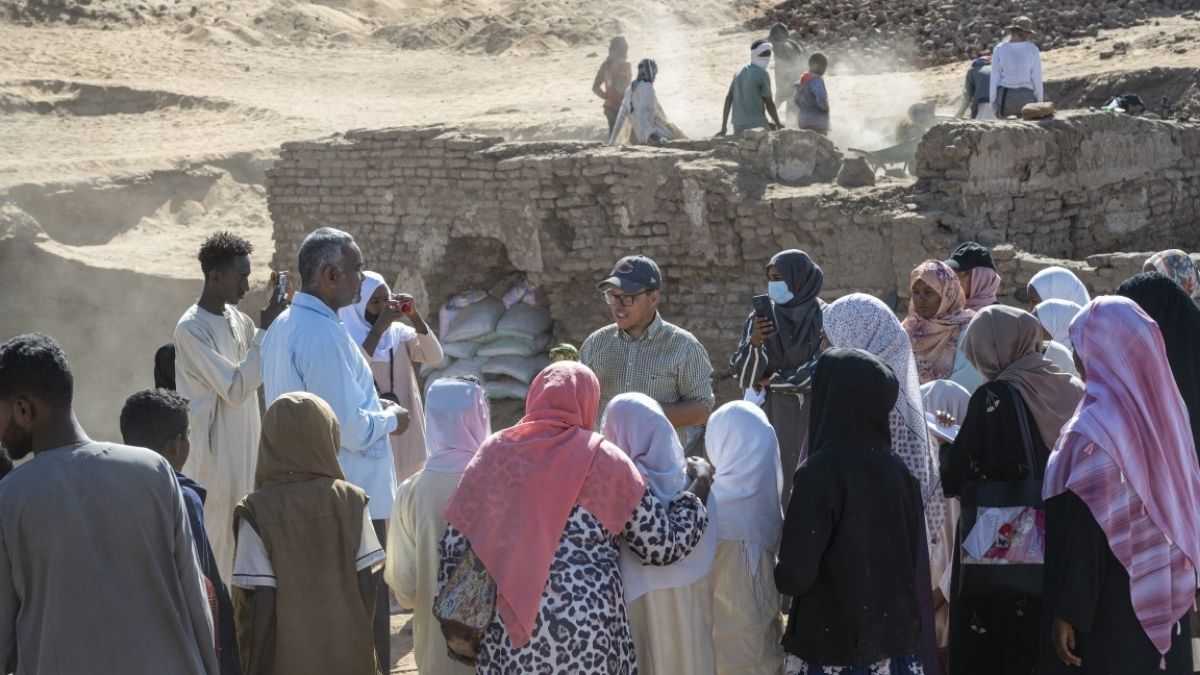
Polish research at Old Dongola is conducted in cooperation with NCAM and the local community. Alongside archaeological research, the team also carries out educational activities for people living in the region. These have included train-the-trainer workshops aimed at raising awareness of the significance of Dongola’s cultural heritage and the need to protect it. At the initiative of the local community, an association has also been established to support NCAM and the archaeologists in caring for the site.
“Cooperation with communities living around Old Dongola is a priority of our project,” said Professor Obłuski. “During the recent season, members of the archaeological team also had the opportunity to celebrate the Holy Month of Ramadan, including sharing a traditional iftar — the evening meal that breaks the daily fast — with members of the local community.”
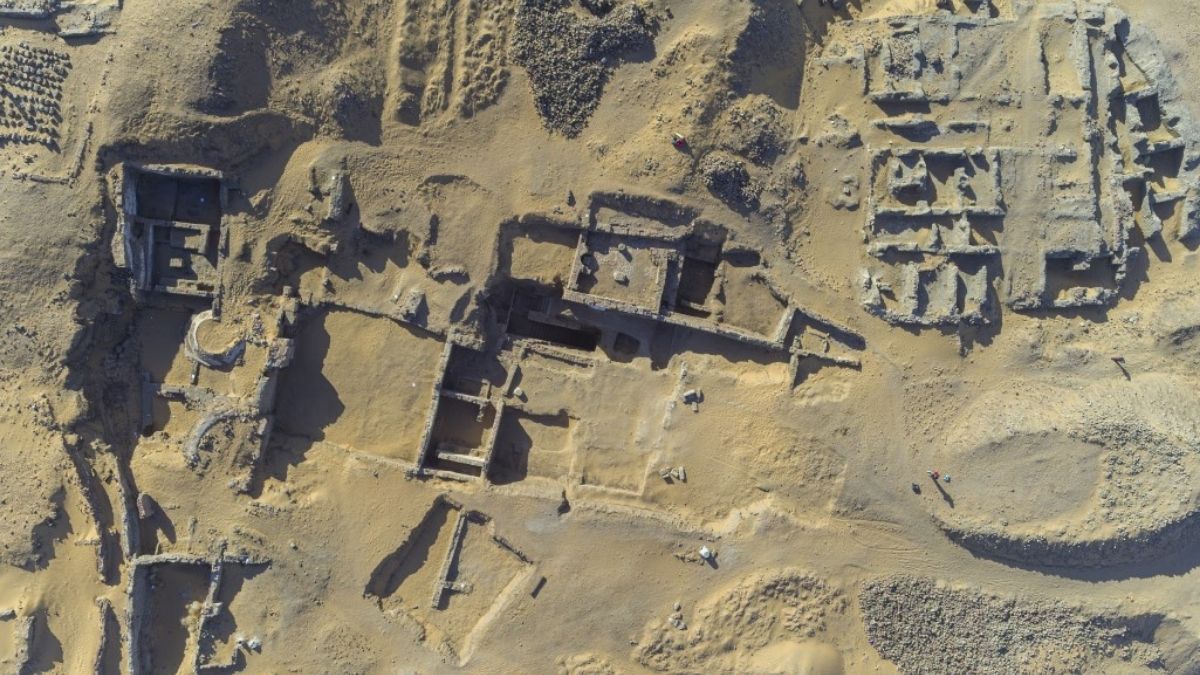
Old Dongola is one of the most important archaeological sites in north-eastern Africa. Research conducted there by Polish archaeologists continues to provide new insights into the history and culture of Makuria and the role played by the region within Christian Africa.
Research at Old Dongola is carried out as part of the project, “Afropolis Tungul: Urban Biography of a Cosmopolitan African Capital”, directed by Professor Obłuski and funded by the European Research Council (ERC) under Horizon Europe.
Its aim is to reconstruct the “urban biography” of Tungul (Old Dongola), the former capital of the Kingdom of Makuria, by investigating its urban development, environment, economy and social life between the 4th and 15th centuries.
The research is also connected with the project “Kyriakós Oíkos? Diachronic Conceptualisation of the Space and Function of Medieval Nubian Churches”, carried out under the SONATA BIS 11 programme of the National Science Centre, Poland.
Source: Polish Centre of Mediterranean Archaeology, University of Warsaw