


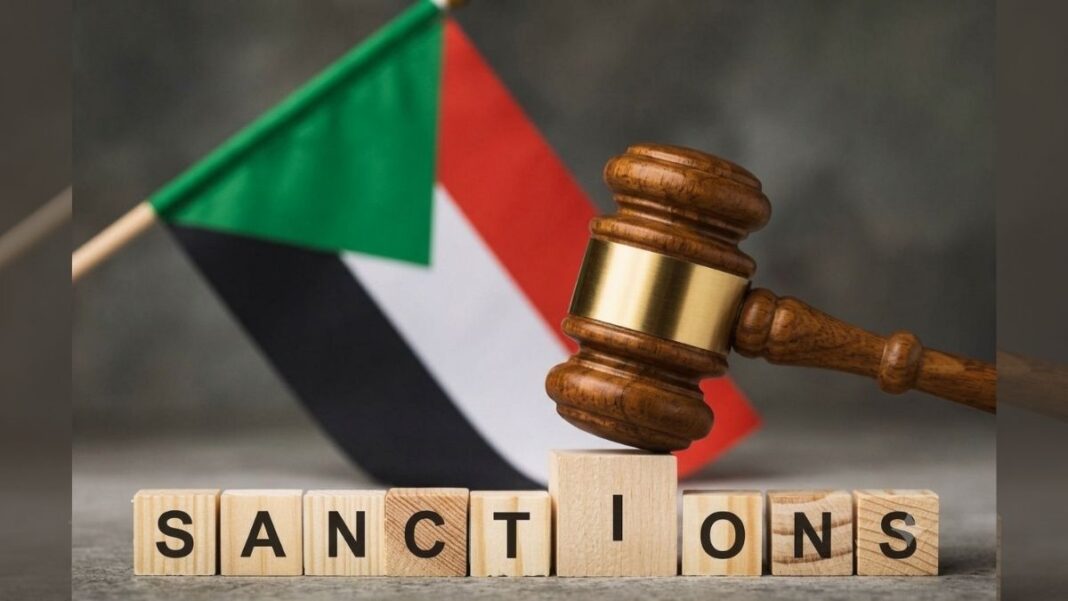
The US implemented additional sanctions on Sudan, effective 20 July 2026, restricting Sudan’s access to US financing and exports while barring Sudanese state-owned airlines from using US airspace.
What are the sanctions?
The measures require the US to oppose loans, financial assistance, or technical support for Sudan from international financial institutions. They also restrict most US exports of goods and technologies to Sudan, with exemptions for humanitarian items such as food and urgent aid.
Items that could have potential security or military applications will be subject to a strict “presumption of denial” review policy. The measures also suspend permissions for state-owned Sudanese airlines to operate flights to and from the US, targeting official institutions rather than private carriers.
Why were the sanctions imposed?
In June 2026, the US State Department determined that the Sudanese government had used chemical weapons in 2024, in violation of the Chemical Weapons Convention, which Sudan ratified in 1999. The finding, originally issued in April 2025, triggered an initial round of sanctions under US law and gave Khartoum three months to meet conditions that could have prevented further penalties. After determining that Sudan had not met those requirements, the US moved forward with additional sanctions.
The New York Times, citing four anonymous senior US officials, reported that the chemical agent used was chlorine and that its use was approved by army chief Abdel Fattah Al Burhan. France 24 also reported that the Sudanese Armed Forces dropped two chlorine gas barrels near the Al Jaili oil refinery, north of Khartoum, in September 2024. Using open-source information, social media footage, and expert analysis, the report stated that the area was under the control of the rival Rapid Support Forces (RSF) at the time.
The US government said Sudan had failed to take the required steps under the Chemical and Biological Weapons Control and Warfare Elimination Act within the designated three-month period. It stated that an internal investigation established by Khartoum did not replace an independent inspection by the Organisation for the Prohibition of Chemical Weapons (OPCW).
Sudan’s response
The Sudanese government rejected the allegations, describing them as “unilateral and illegal” and “baseless”. It has repeatedly denied using chemical weapons, stating that Washington ignored a proposal to send American experts to verify the allegations.
The Ministry of Foreign Affairs expressed surprise at what it described as the US rejection of more than a year of bilateral discussions on the issue, saying Washington had provided no physical or technical evidence.
The sanctions have sparked widespread debate in economic and banking circles amid fears of severe repercussions for a nation already grappling with war and currency collapse. The Sudanese economy faces deep structural imbalances exacerbated by ongoing conflict, characterised by an unprecedented plunge in the local currency, skyrocketing inflation, and devastated infrastructure.
The ongoing war in Sudan
Fighting between the RSF and the SAF began on 15 April 2023, triggering one of the world’s largest humanitarian and displacement crises. An estimated 12 to 14 million people have been displaced, and over 150,000 have been killed. Both sides have been accused of serious violations of international humanitarian law, some of which may amount to war crimes, including sexual violence against women and girls.
Although SAF has recaptured some major cities and states such as Khartoum and Al Gezira, allowing over 3 million displaced Sudanese to return to their homes, the Darfur and Kordofan regions are still in danger. The wider Kordofan region remains the epicentre, with intensified fighting around Dilling, Kadugli, and Babanusa as factions contest strategic areas. Recent drone strikes on bridges and transport corridors across Darfur and Kordofan have disrupted humanitarian routes, leaving entire communities isolated. The security situation also remains highly volatile in White Nile and Blue Nile states, with continued clashes in the Kurmuk, Geissan, and Bau localities.
Sources: Sudan Tribune, RFI