


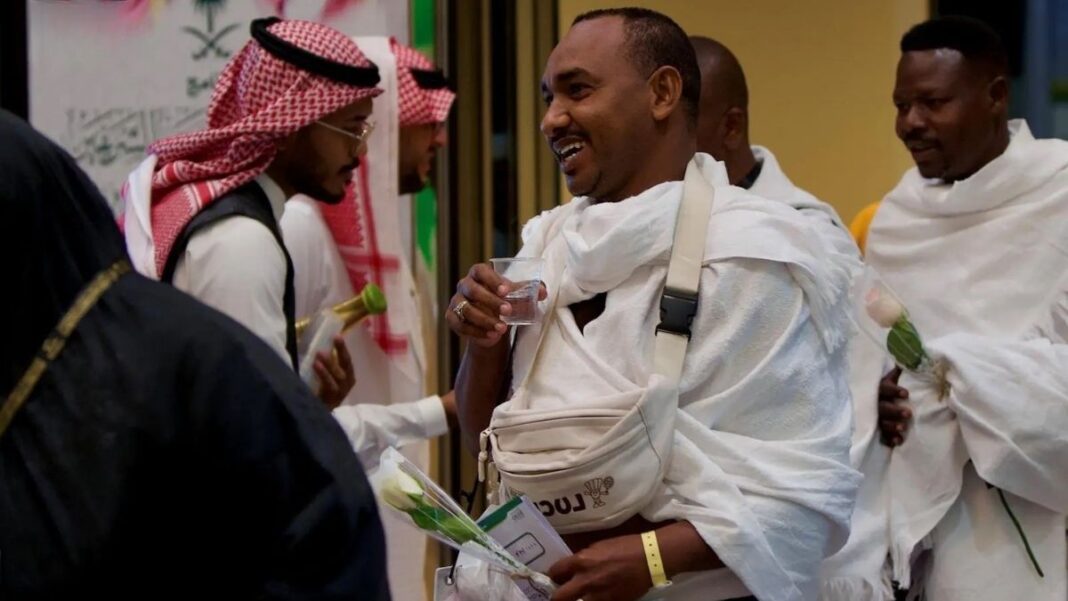
The massive annual Hajj gathering is officially underway, with over 1.6 million pilgrims having already arrived in Saudi Arabia for the 2026 (1447 AH) season. Among this vast sea of believers are around 15,000 pilgrims who travelled directly from Sudan, joined by countless other Sudanese nationals journeying from diaspora communities across the globe.
For many, undertaking the pilgrimage this year is marked by exceptional circumstances that transcend the usual hardships of travel. The ongoing war, which erupted in 2023 between the Sudanese Armed Forces (SAF) and the paramilitary Rapid Support Forces (RSF), has fundamentally transformed the logistics of faith. In addition to enduring vast physical distances, many travelers must brave highly dangerous roads, navigate volatile checkpoints, and manage severely depleted resources just to reach a point of exit.
Financially, the burden has reached a breaking point. Travel and accommodation costs have doubled to roughly SDG19 million (approximately $31,600) per person. To overcome this staggering barrier, entire communities are banding together, pooling collective savings specifically so displaced individuals among them can fulfil their religious duties.
While a significant portion of Sudanese pilgrims continue to travel by sea via the Jeddah Islamic Port, this season also bore witness to an aviation milestone. After a grueling nine-year suspension, Sudan’s national carrier, Sudan Airways (SudanAir), officially resumed its historic Hajj transport role. The inaugural flight successfully transported 100 pilgrims from Port Sudan International Airport to Prince Mohammed bin Abdulaziz Airport in Madinah, offering a glimmer of structural revival for the country’s civil infrastructure.
As one of the five pillars of Islam, the Hajj pilgrimage is an absolute mandate for all Muslims who are physically and financially capable. The core rituals are historically timed between the 8th and 13th days of Dhu Al Hijjah, the final and sacred month of the Islamic lunar calendar during which warfare is traditionally prohibited. The critical Day of Arafah, considered the spiritual pinnacle of the entire journey, takes place on the 9th day of the month.
Though the foundational rites span five to six days, the physical and temporal commitment is vast. Pilgrims walk anywhere from 5 km to 15 km per day through the holy sites (Mashair) surrounding Mecca, including Al Masjid Al Haram (the Grand Mosque), Mina, Mount Arafat, and Muzdalifah. The exhaustive rituals require deep devotion:
- Tawaf & Sa’i: Circling the Kaaba seven times counter-clockwise and walking between the historic hills of Safa and Marwah.
- Reflective Standing: Gathering on the scorching plains of Arafat for unified prayer and reflection, punctuated by drinking from the ancient Zamzam Well.
- Rejecting Evil: Residing in tents at Mina and participating in the symbolic Jamarat ritual (the Stoning of the Devil).
While the demanding cycle of rituals concludes in under a week, the journey for many is an extended endeavour, with many Sudanese utilising the travel window to remain in the Kingdom for 30 to 40 days to pray for peace in their homeland. Through these grueling acts of worship, Sudanese pilgrims are not only renewing their personal faith but showcasing a profound, unbreakable sense of purpose in the face of national tragedy.