


From Sufism and profanity in You Will Die at Twenty, to Goodbye Julia’s exploration of racial tensions between Sudanese Arabs and South Sudanese, or The Roundup’s portrayal of Nuba ingesting pork, it’s difficult to find a Sudanese film that doesn’t have at least one person protesting its inaccuracy. Those who write about Sudanese films generally tend to develop these criticisms by understanding them as Orientalist stereotypes hearkening to racist Western attitudes, or defend them as raw portrayals of oft-ignored taboos.
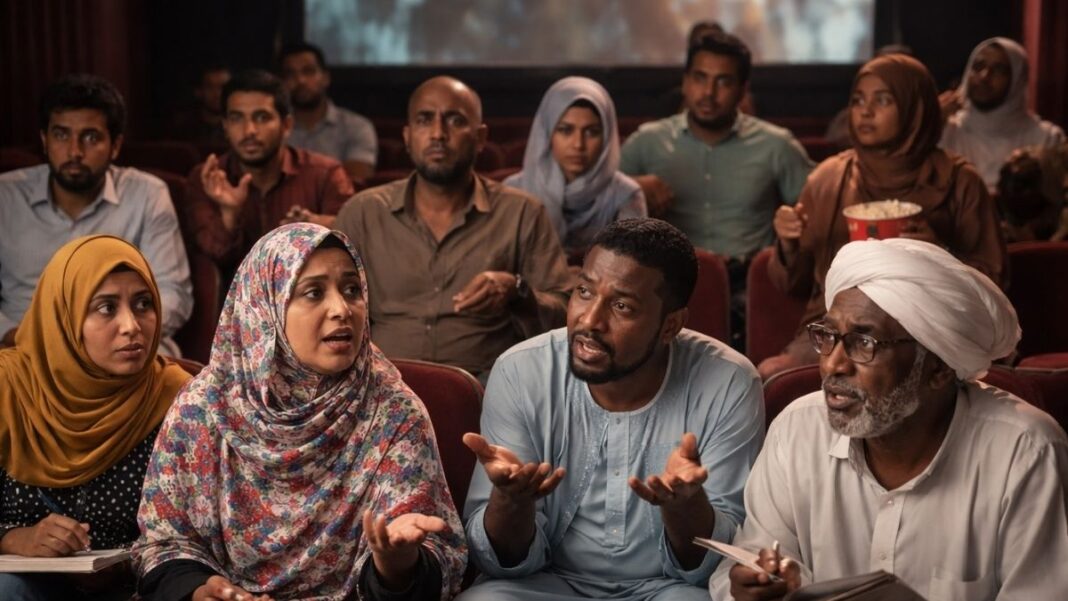
In the interest of avoiding a retread of familiar ground, I would like to call attention to something that was said by a middle-aged man from my local Sudanese community here in America during a film screening of the 2022 short documentary Brick of Life, which explored the struggle of brick making women in the Abu Shouk camp for internally-displaced persons in Darfur:
“Lots of people get their information from movies. My fear is that someone who is not Sudanese will see this film, and have a negative image of Sudan.”
I find this anxiety rather fascinating. In my time with white Americans, Asian Americans, and Latino Americans, and discussing their cinema with them, I rarely encounter this phenomenon of watching through foreign eyes — judging a film based on the image it projects of the nation to outsiders. Yet, among Sudanese, it seems rather ubiquitous, which warrants the question: where does this lens come from? Is the fear it evokes justified, and how much should it drive our response to Sudanese films?
The Unique Goal (and Dilemma) of Sudanese Cinema
As discussed at greater length in my previous “Beyond Good” column, the Sudanese film industry is not like other film industries. The country’s poverty, along with political developments in the 1980s have prevented the establishment of a profitable domestic box office. An American filmmaker can hope to procure millions of dollars in funding from an American studio, and make it back in ticket sales to an American audience. A Sudanese filmmaker cannot, so they often have to rely on funding from organisations in the Arab world or Europe to get a film made. These organisations are not equipped nor necessarily interested in mass theatre releases, and target films to festival audiences instead — that is to say, audiences that are by and large outside of Sudan.
It is not as though Sudanese people never see Sudanese films. Aside from those in the Arab and Western diaspora, the past decade has also seen an increase in the availability of Sudanese film on streaming platforms such as Netflix and Vimeo, or the circulation of Sudanese films via online piracy. Inevitably, however, the concentration of Sudanese films in the foreign festival circuit means that a huge portion of viewers are not Sudanese.
With that in mind, it’s not difficult to see how the question of international reputation becomes relevant. In contrast to Egypt, Japan, or Mexico, Sudan has a very low media profile, and non-Sudanese audiences likely never encounter a depiction of Sudan outside of the occasional news story. A film festival may represent their only encounter with long format art about Sudan, made bya Sudanese person. So, why not ask: how does this film make a non-Sudanese person see Sudan?
The Role of Film in Shaping National Understanding
While it may seem easy to dismiss these concerns by saying, “it’s just a movie,” academics have long been convinced that film can indeed influence how people view a country, especially one they haven’t been to.
The International Journalism of Tourism Research has published a number of studies tracing films’ impact on promoting tourism, even when the film in question is not aiming to do so. In a 2023 paper, Cameroonian researcher Dr Floribert Patrick C. Endong highlighted a study by American political scientist Michelle C Pautz which showed that after viewing Hollywood films portraying the American government positively, a minority of viewers had a significantly less negative impression of the US government. At the other end of the spectrum, Slovenian researcher Inga Pruseviciute conducted a study in 2014 that demonstrated how films portraying China negatively, both by Chinese and non-Chinese filmmakers, led non-Asian viewers to see China as dangerous, autocratic, and ultimately inhospitable to foreign travel.
This impact of film on national reputation is something of a truism: a TED talk by Nigerian author Chimamanda Ngozie Adichie, “The Danger of a Single Story,” in which she discusses how media led her American colleagues to hold negative stereotypes about Africa, has over 15 million views and is influential in popular discussions on media portrayals of Africa.
At the same time, most of these studies are not exactly scientific, as Endong points out: they tend to rely on anecdotal experiences, small sample sizes, or speculation. Sometimes, the impact of film is exaggerated, and discounts other factors, such as personal encounters, economic and political change, and other forms of media on perceptions of other countries. Yet, the notion that film may have some impact on how a country is seen cannot be dismissed outright. Therefore, the anxiety felt by many Sudanese around cinematic portrayals cannot be disregarded, either.
A Case Against Insecurity
Even setting aside concerns around national reputation, Sudanese film should be accurate, and there is a fair argument to be made that some films present shallow misunderstandings of certain aspects of Sudanese culture.
At the same time, not all criticisms of inaccuracy are warranted. Often, they reflect the critic’s personal experiences and political beliefs more than local reality. Ultimately, no film will satisfy every political disposition, or reflect every person’s experience. The question then becomes whether Sudanese film should:
- Uphold the country’s dominant ideologies and counter negative stereotypes with positive portrayals, or
- Challenge the beliefs most Sudanese hold by presenting difficult parts of the Sudanese reality in an uncomfortable way
Even if Sudanese films follow option A, the example of Japan shows that a country may still be stereotyped, even if its media is an integral part of global media consumption. A foreigner’s understanding is inevitably limited, and it is not always the case that positive media portrayals translate to an accurate image of a country and its people.
While there is still room for Sudanese cinema to grow, I argue B — the current approach most Sudanese films take — is more artistically valuable. The best Sudanese stories, such as those found in the work of Tayeb Salih or in the local folktale tradition, do not offer flattering portrayals of Sudan. Instead, they depict societies teeming with tension, disagreement, and violent conflict. This picture is not only more realistic, but also creates a safe platform to discuss the darkest aspects of Sudanese life. By fixating on non-Sudanese perspectives — perspectives we have limited power to change — we lose sight of the potential Sudanese art has to make us change ours. Sudanese cinema should be commended for encouraging discussion and reflection over celebration and mindless entertainment. The latter does have its role, and greater diversity in Sudanese cinema would certainly be welcome. However, considering the state of the country and the size of the industry, the fact that filmmakers prefer to challenge rather than coddle viewers should be seen as a feature, not a bug. In turn, we as viewers should be open to seeing experiences and perspectives that surprise, confuse, even anger us. We should be secure enough in our identity to ignore foreign misconceptions, especially when a film has the potential to do real good for our community.
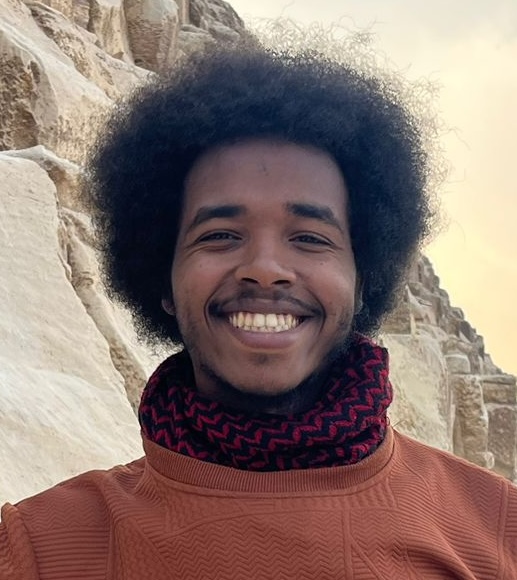
500WM Columnist Hatim Eujayl is a Sudanese-American writer involved in various projects to promote Sudanese culture. His most famous works include the Sounds of Sudan YouTube channel, the Geri Fai Omir Kickstarter, and the Sawarda Nubian font. More of his writing can be found on his Substack, ‘My Sudani-American LiFE,’ where he discusses Sudanese literature and cinema. He can be reached on Instagram @massintod or by email at [email protected].