
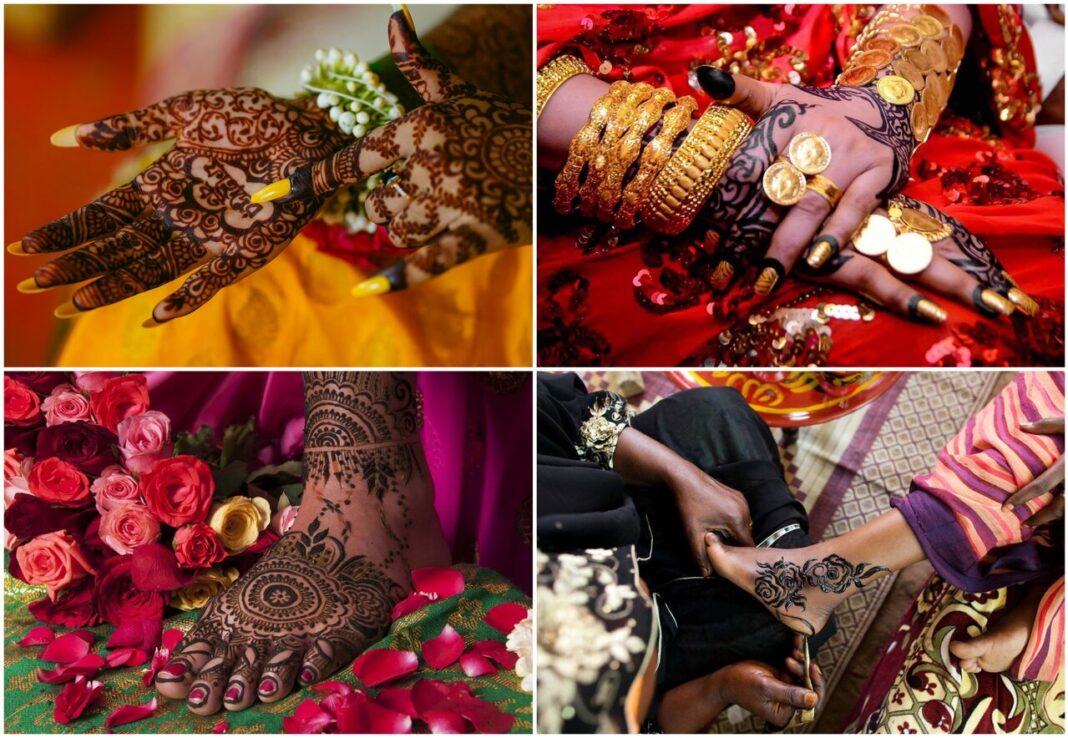
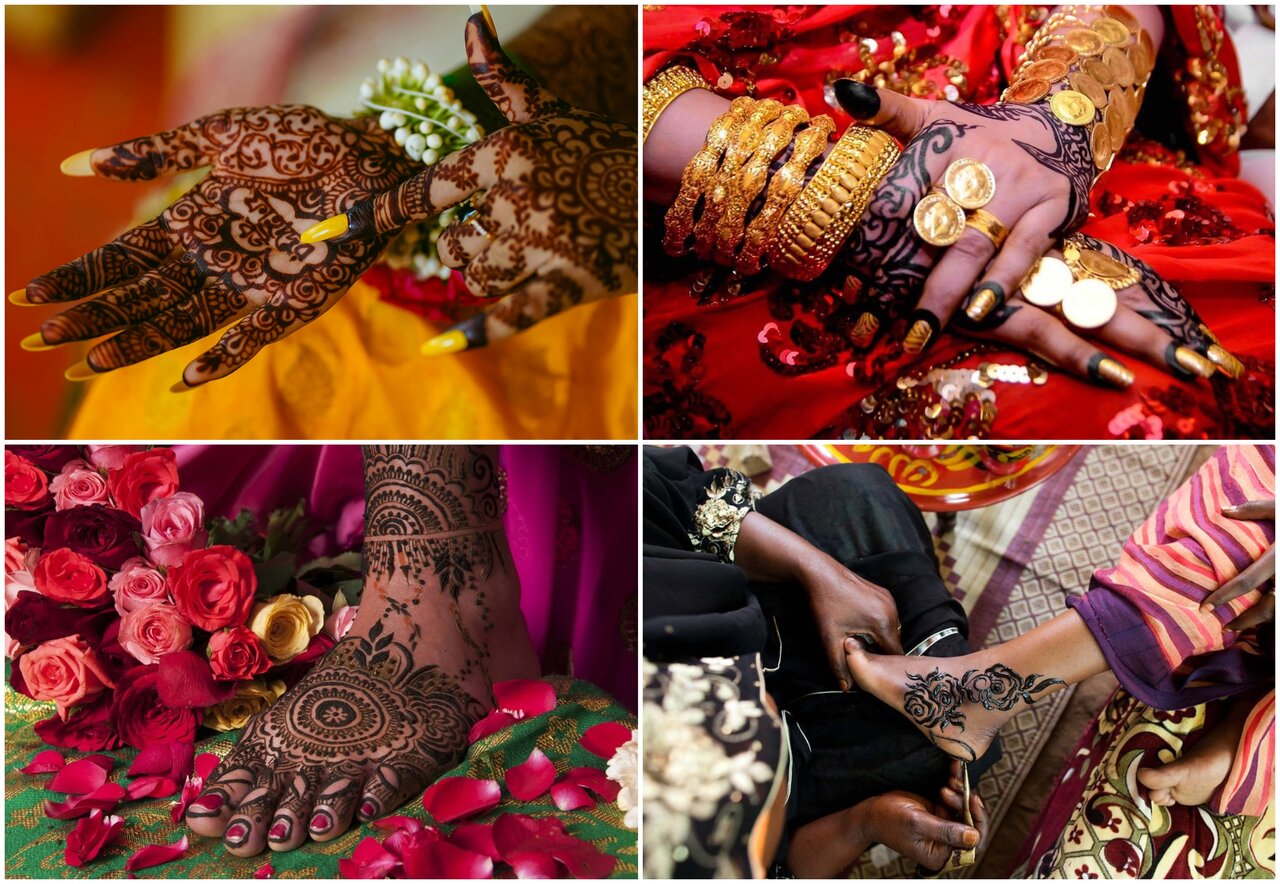
From Sudan to the Gulf and India, henna is a timeless tradition that has endured for centuries, symbolising celebration, beauty, and identity.
Henna, also known as mehndi in Asia, is a natural dye with deep cultural roots and centuries of tradition. Derived from the leaves of the henna plant, Lawsonia inermis, henna is dried and grounded to form a greenish powder. The powder is mixed with water, and sometimes a touch of oil, to create a thick, earthy paste. Once applied to the skin or hair, it leaves behind a reddish-brown stain.
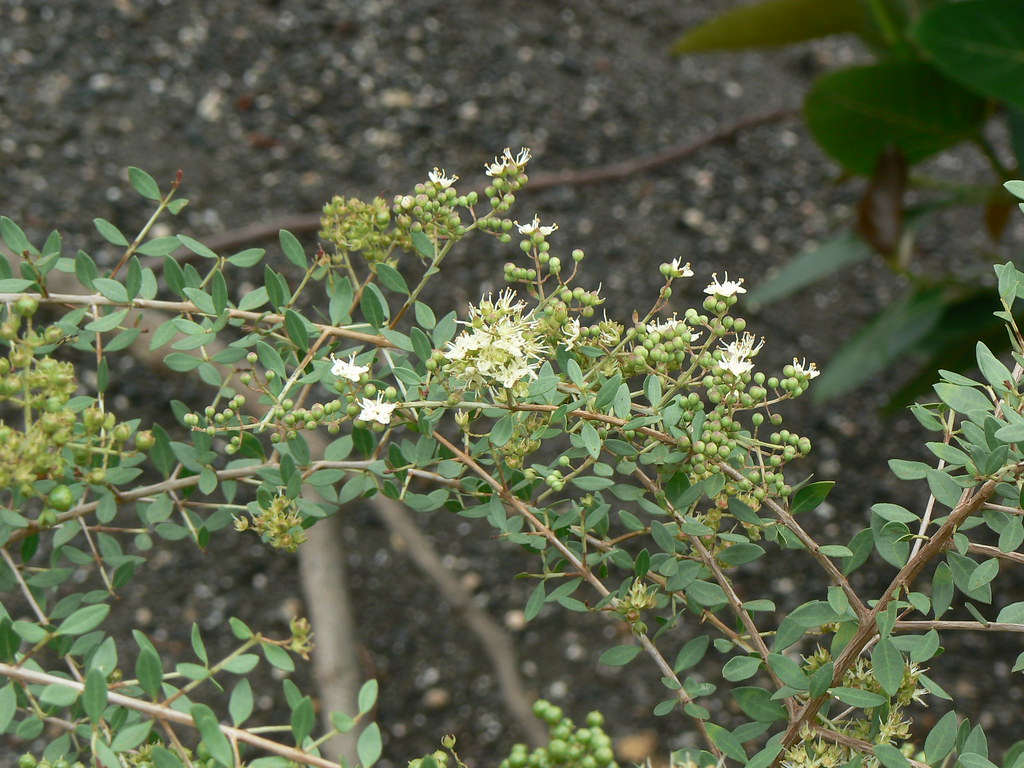
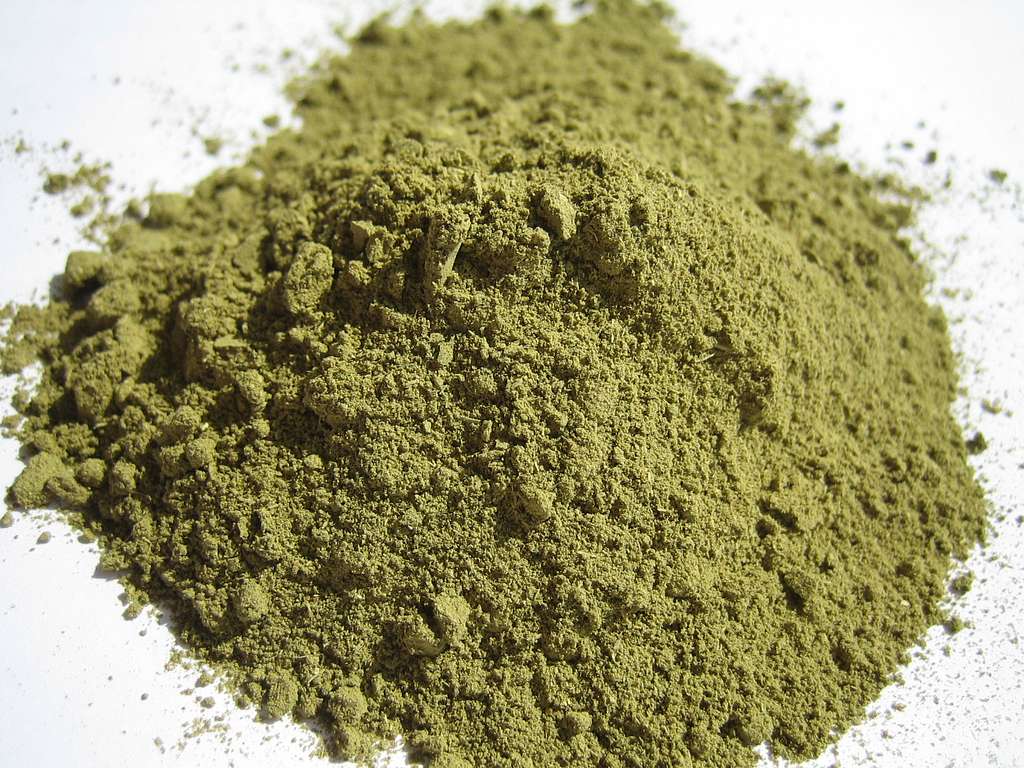
Traditionally and around the world, henna is applied on the hands and feets. Recently, it has become a trend to apply henna anywhere in the body, like a tattoo. Henna is also widely used as a natural hair dye, offering a warm, reddish tint and a connection to ancient beauty rituals passed down through generations.
The history of henna stretches back over 5,000 years. Its origin is debated: in Egypt, mummies have been discovered with henna-stained nails, suggesting its use in purification and burial rites. There also have been henna discoveries in ancient Nubia in Egypt and Sudan where henna has long served as body art and held ceremonial significance.
In the Middle East and North Africa (MENA) region, henna is deeply intertwined with ceremonial life. It is most often applied during weddings, religious holidays such as Eid, and rites of passage such as childbirth or coming-of-age ceremonies.
Henna is primarily applied to the hands and feet, symbolising joy, blessings, and protection. In some traditions, it is believed to ward off evil spirits or bad luck. In Morocco, for instance, henna ceremonies are elaborate and spiritual, often involving prayers and special songs. Henna designs in the MENA region vary from one country or region to another. For example, Khaleeji styles differ from those in the Levant, Sudan, and other African countries. However, they are typically bold, geometric, and minimalist in nature.
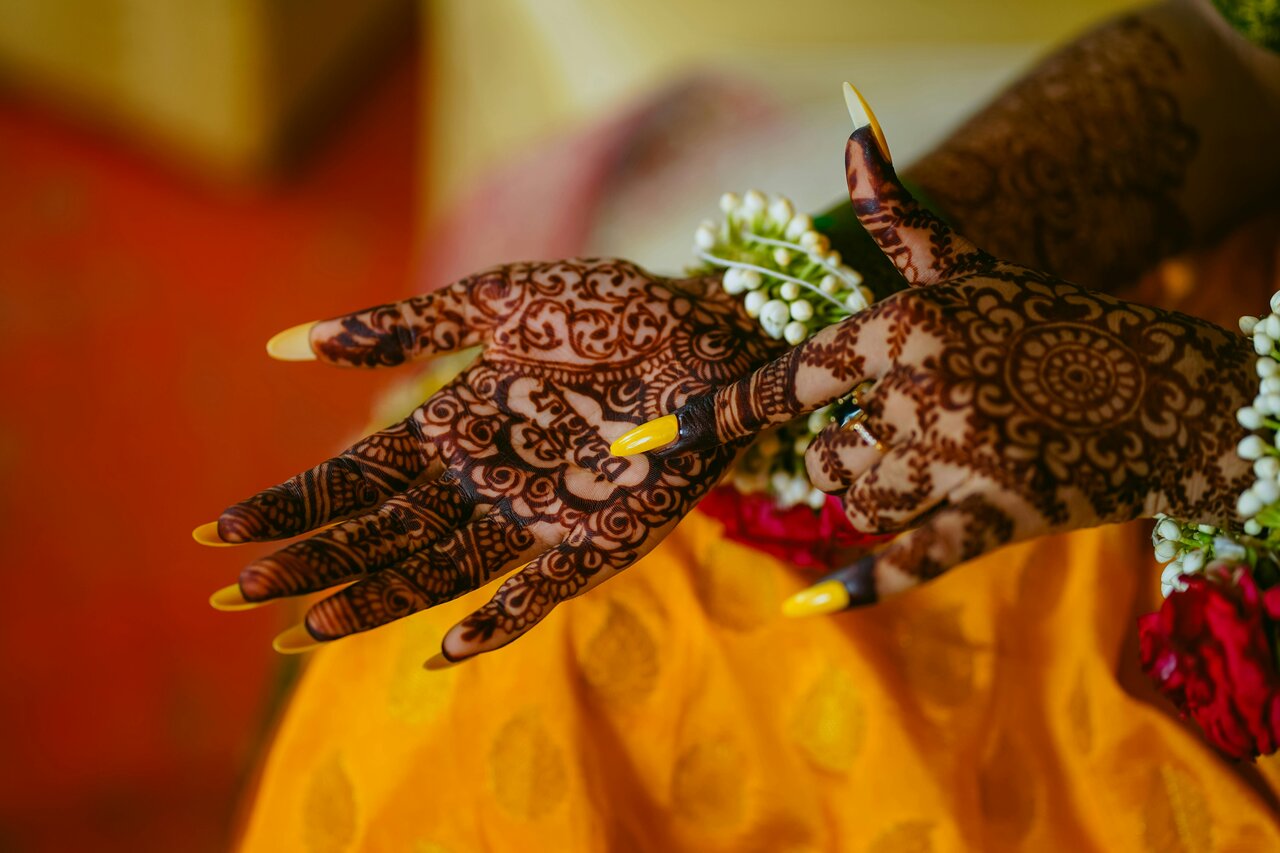

These designs contrast with the finer, more intricate styles found in South Asia where henna is commonly referred to as mehndi, and plays a central role in major life events and cultural celebrations, particularly weddings. As in the MENA region, mehndi is applied during special occasions such as weddings and religious holidays. For example, Mehndi Night, similar to Henna Night in the MENA region, is one of the most celebrated pre-wedding events, especially in India and Pakistan. During this festive gathering, the bride’s hands and feet are adorned with intricate henna designs. It is traditional to hide the groom’s name or initials within the designs as a playful custom. Mehndi Night is also a pre-wedding celebration for the groom; however, mehndi is not applied on the groom. In South Asia, it is a common grooming practice for men to apply mehndi on their hair, including facial hair. Mehndi designs are known for their delicate, lace-like patterns. Bridal henna can extend up to the elbows and calves.
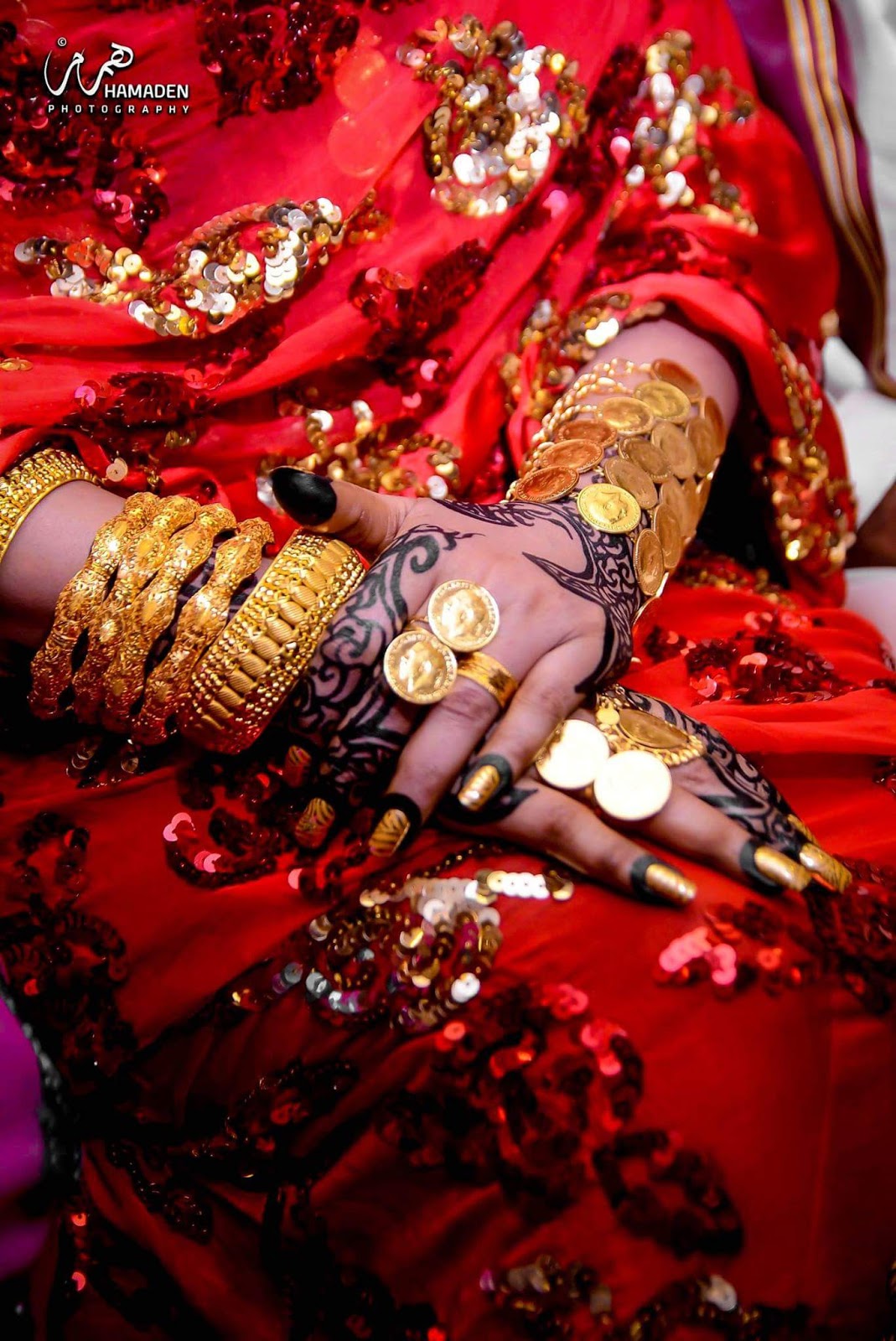
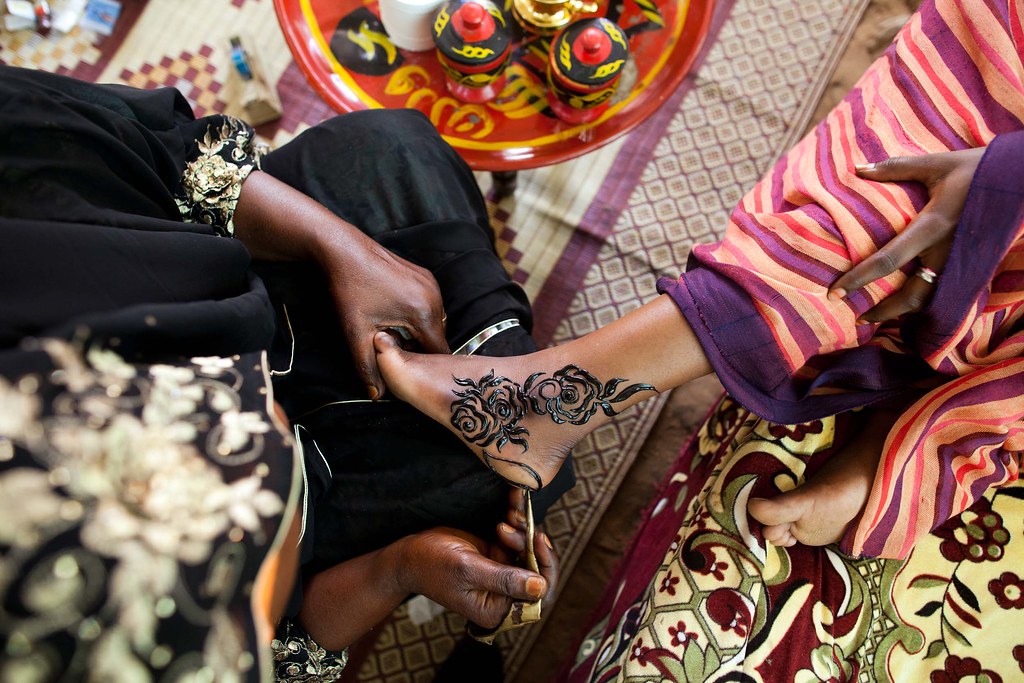
In many African countries, particularly in the Horn of Africa and along the Nile, henna holds both cultural and cosmetic significance, with local traditions shaping its use. In Sudan, henna plays a significant role in a woman’s beauty practices, symbolising beauty and femininity as well as marital status. Commonly in the form of black henna, it is used for weddings, religious holidays, and personal beautification. It is applied on the hands and arms, as well as the feet and legs. However, there is a cultural distinction – applying henna to the feet is typically reserved for married women, symbolising marital status. Men also participate during weddings, often applying patternless stamp-like natural henna to their hands and feet, while male relatives, friends and loved ones of the groom apply it only to their hands. Sudanese designs can vary, but they often commonly big, striking a balance between boldness and elegance.
Today, the commercial black henna has also entered the scene. It originates from Sudan, but can also be found in Somalia, Ethiopia, Eritrea and other African countries. Made from para-phenylenediamine (PPD), it offers a jet-black finish, but lacks the natural, plant-based purity of traditional henna. Despite its appeal, black henna can pose serious health risks. The chemical PPD can cause allergic reactions, skin burns, blisters, and long-term sensitivity. Health authorities in various countries have warned against its use, especially on sensitive skin. However, its popularity continues to grow. It is common for henna artists to ask customers if they’re allergic before applying it. For first time customers, it is best to ask for a test, where they apply a dot of black henna to your skin and wait for it to dry to see if your skin reacts.
Whether you call it henna or mehndi, henna is more than just an adornment. It is a story of culture and celebration told in patterns and symbols. It is, at its heart, a celebration of femininity, community, and the rituals that bring us together. Across continents, cultures, and centuries, this timeless art form continues to connect people through shared traditions, ceremonies, and a universal appreciation of beauty.
Lamia Abdallah is a medical school graduate figuring out life, one article at a time, one diagnosis later. Lover of books, storytelling, and being a voice for the voiceless.