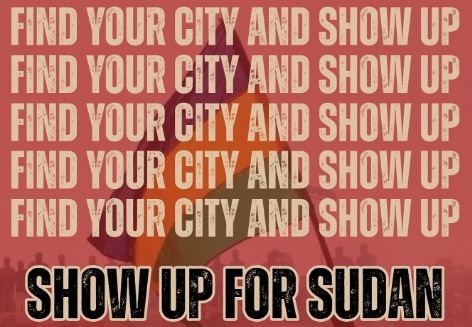
It was an enlightening evening of Sudanese art, film, storytelling and resilience — an evening dedicated entirely to Sudan. And, as always, almost no one outside the Sudanese community showed up.
Through a curated lineup of short films, including Kamala Ibrahim Ishag: States of Oneness by Suzannah Mirghani, El Maradh Ma Bektil / When It’s Time by Awad Hashim Karrar, and the Al Jazeera Witness documentary Fleeing Sudan: Crossing the Channel to the UK by Camille Toulmé and Julien Goudichaud, Sudan Through Art – Filmmaking, Resistance & Identity highlighted how Sudanese artists, filmmakers, and journalists are using creative expression to confront conflict, advocate for justice، and preserve cultural identity. Hosted by Video Consortium Doha Hub, in collaboration with TrueNorth Qatar and VCUarts Qatar, the event also featured a panel discussion moderated by Sudanese filmmaker Eiman Mirghani and included fellow Sudanese filmmakers Suzannah Mirghani and Awad Hashim Karrar, and graffiti artist and VCU alumni (and my sister) Assil Diab.
The audience was relatively small but overwhelmingly Sudanese, as is often the case. A few non-Sudanese were there, mostly from the organising team or the university’s staff, faculty, and students. And this is something we’ve seen time and again: it’s only us who show up for our own — our films, our concerts, our artists, our protests. We show up for every Sudanese event, from screenings and exhibitions to protests, and we show up for others, too. As Sudanese, we’ve always been multicultural, accepting, and inclusive, standing with causes beyond our own. But others rarely show up for us.
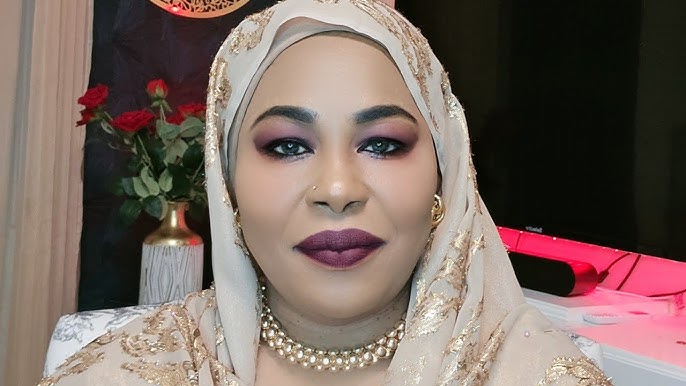
Recently, Sudanese-American creator Daad Khogali, known on social media as The Muslim Mama, broke down in tears as she spoke about the lack of participation at Sudanese demonstrations, protesting against the war in Sudan. She was referring specifically to a demonstration held in the US on 31 October 2025, organised to raise awareness about the genocide the UAE-backed Rapid Support Forces (RSF) is committing in Al Fasher, North Darfur.
“It’s so painful for Black folks to see this same narrative repeating itself over and over again — that no matter how much we scream, no matter how much we shout, no matter how much beg for donations, only a select few ever show up for us,” Khogali said.
As a people from a country that has endured decades of civil conflict, resulting in mass killings, displacement, genocide, and other humanitarian crises, we are all too familiar with the world’s silence in the face of our suffering. Yet this deafening silence is not unique to Sudan. Many people from countries in Africa, Asia, the Middle East, and other regions can echo this sentiment. Across these regions, communities have historically been ignored, marginalised, and even discriminated against.
Many news and media platforms have labeled the war in Sudan as “the forgotten war.” However, for many Sudanese, it is more accurately an ignored war. Whether you call it forgotten or ignored, there are countless conflicts and crises around the world that receive little attention from Congo, Yemen, Ethiopia, and Syria to Haiti, Bangladesh, and Myanmar, where the Rohingya continue to suffer.
So, what makes people forget or ignore a crisis? There are many factors — historical, political, religious, economic, and social. Marginalisation, discrimination and even prejudice can also be factors. But beyond that, one of the main reasons is simple: people cannot relate. When we don’t feel connected to a community, we struggle to understand their pain, and their suffering feels unfamiliar. Sadly, some of humankind’s worst flaws such as fear, hate, and ignorance often stem from this lack of awareness or unfamiliarity.
People struggle or fail to relate when they’ve never met someone from a place or experienced its culture. Interaction is essential to bridge these gaps. Media and television play a key role in creating that familiarity. That’s why nations like the US, the UK, and Canada, through their films, music, and popular culture, are well-known, relatable, and even admired worldwide. Similarly, Japan and Korea have become familiar to global audiences through K-pop and other cultural exports. As a result, crises in these countries resonate far beyond their borders.
Sometimes, people are simply uninformed or misinformed. Recently, I shared a horrifying image on Facebook showing a mother hanging lifeless from a tree with her two young children in Al Fasher. An acquaintance in the US commented, “Why is this happening? What’s the motivation? This is so, so sad… Lord have mercy.” When I explained that it was part of an ethnic cleansing campaign by the RSF, in which over 2,000 people were killed in just three days — and that the toll is much higher since the war between the RSF and Sudanese Armed Forces (SAF) began on 15 April 2023. She responded, “That is so sad… nobody is talking about this… Who are they ethnic cleansing?”
She later messaged me privately to learn more about the ongoing war in Sudan, and eventually shared news articles on her own page to raise awareness. Even in today’s Information Age, with the Internet and social media, many people remain uninformed or misinformed. Often, once they are properly informed, empathy often follows, and that’s when action comes into play, whether through protests (online or in person) or donations.
For many Sudanese, both inside and outside Sudan, raising awareness about the ongoing war is crucial. For those in the diaspora, it may be one of the few ways they can help, alongside donating or fundraising. The hope is that greater awareness will drive action, sparking public outcry, influencing decision-makers, generating donations, and ultimately helping bring an end to a conflict that has displaced 12–14 million people and killed over 150,000.
Beyond awareness, the hope is that the growing global attention on Sudan, coupled with the rise of Sudanese films, will help people relate more to Sudan, its people, and its way of life. By sharing Sudanese stories through film, art, and media, we give the world a chance to see Sudan not just as a place of conflict, but as a country with people with identity, personality, culture, talent and resilience. The more people relate to Sudan and its people, the stronger the global response can be, turning understanding into empathy, and empathy into meaningful action.

Ola Diab is the new founder and editor of 500 Words Magazine, and the deputy editor of Marhaba Information Guide, Qatar’s premier information guide. Based in Qatar, the Sudanese journalist graduated from Northwestern University in Qatar (NU-Q) in 2012 with a Bachelor of Science in Journalism and has since built a successful career in the print and digital media industry in Qatar. Find her on X (formerly Twitter) @therealoladiab or on LinkedIn.