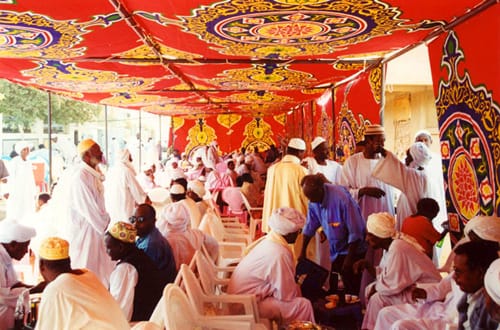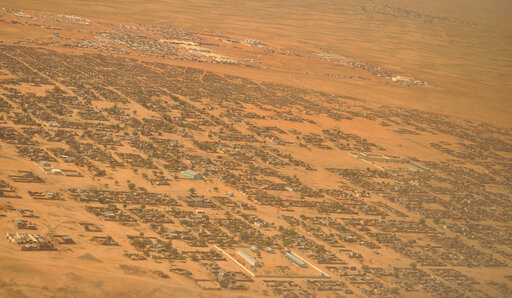

Arrabwa’s first mosque. Source: Hatim Eujayl
In the 19th-century, during the final years of the Ottoman Empire’s occupation of Sudan (1820-1885), the Sudanese Sufi Sheikh Yusif Al Hindi chose a plateau in the southern Al Gezira region as a new home for his disciples. As members of the Sawarid tribe, they’d been migrating southward from the Mahas tribe’s area for centuries, in search of farmland, trade, and faith, following in the footsteps of northern shuyukh (elders; plural of sheikh) such as Al Hindi, spreading the message of Islam and educating people in scripture.
Their travels brought them to a village called At Tura’ (the canals), now abandoned. Constant flooding, due to low elevation, made continuous settlement difficult. But, in line with their Mahasi heritage, the Sawarid depended on river-irrigated agriculture. So, Al Hindi brought them to a high place along the Blue Nile, safe from floods, to establish a new village that he named Arrabwa, meaning “the plateau.”
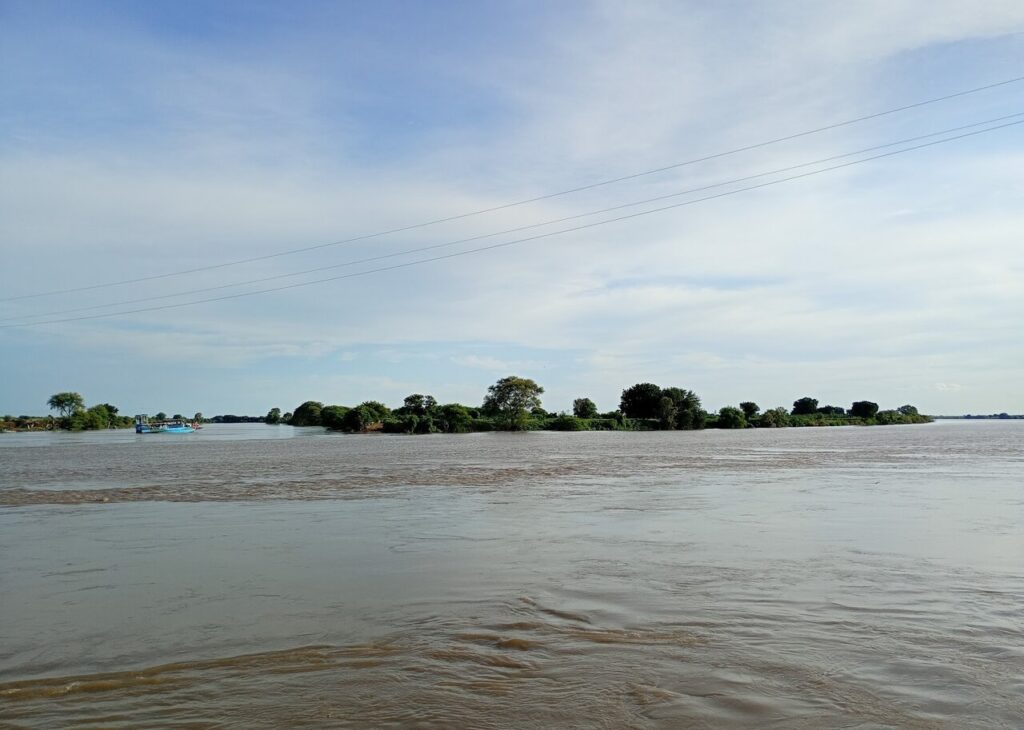
The confluence of the Blue Nile and Dinder River as seen from Arrabwa. Source: Hatim Eujayl
For the next 200 years, Arrabwa grew from a small collection of families, to a village of thousands. Huts and mud homes evolved into networks of red brick and cement architecture as the farmers who formed the community’s economic core had their wealth bolstered by new generations of educated professionals, working in urban Sudan or abroad. This is the community that gave birth to my parents, and, by extension, me. For me, Sudan is Arrabwa, and this year, after five years of absence, I was blessed with the opportunity to see my ancestral homeland once again.
In spite of warnings from our entire family, my father had determined to return to his hometown, primarily to work on an agricultural reform project with other Sudanese experts from Al Gezira. He graciously invited me to come along, which we both thought was a great opportunity to see my extended family, people we love dearly, who had experienced loss after loss in the five years I’d been gone.
Usually, we would land in Khartoum, see my uncles and aunts in Khartoum and Omdurman for a week, before staying in Arrabwa a few more. This time, circumstances meant we’d need to land in Port Sudan along the country’s east coast, nearly 1,000 km away from Arrabwa.
We traveled home by bus. One one hand, it was a gorgeous tour through parts of the Sudanese landscape I’d never seen before. The rainy season meant the country was at its most green and lush. It was also a wonderful opportunity to speak with my father and trade opinions on Sudanese intercity bus television. On the other hand, it was, to put it diplomatically, not a particularly comfortable journey, being nearly two days of travel on bumpy roads, interruptions for sweltering checkpoints and outdoor sleep in nighttime storms of mosquitoes.
Still, it was no doubt worth it, and, most importantly, it ended with me and my father safely coming home.
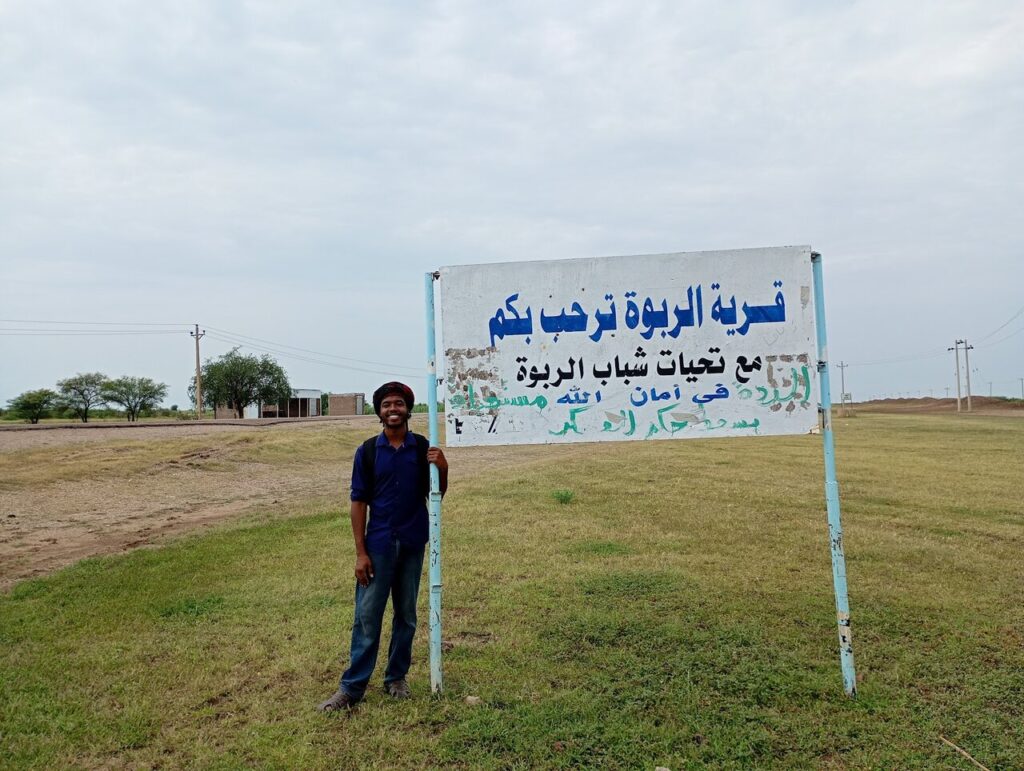
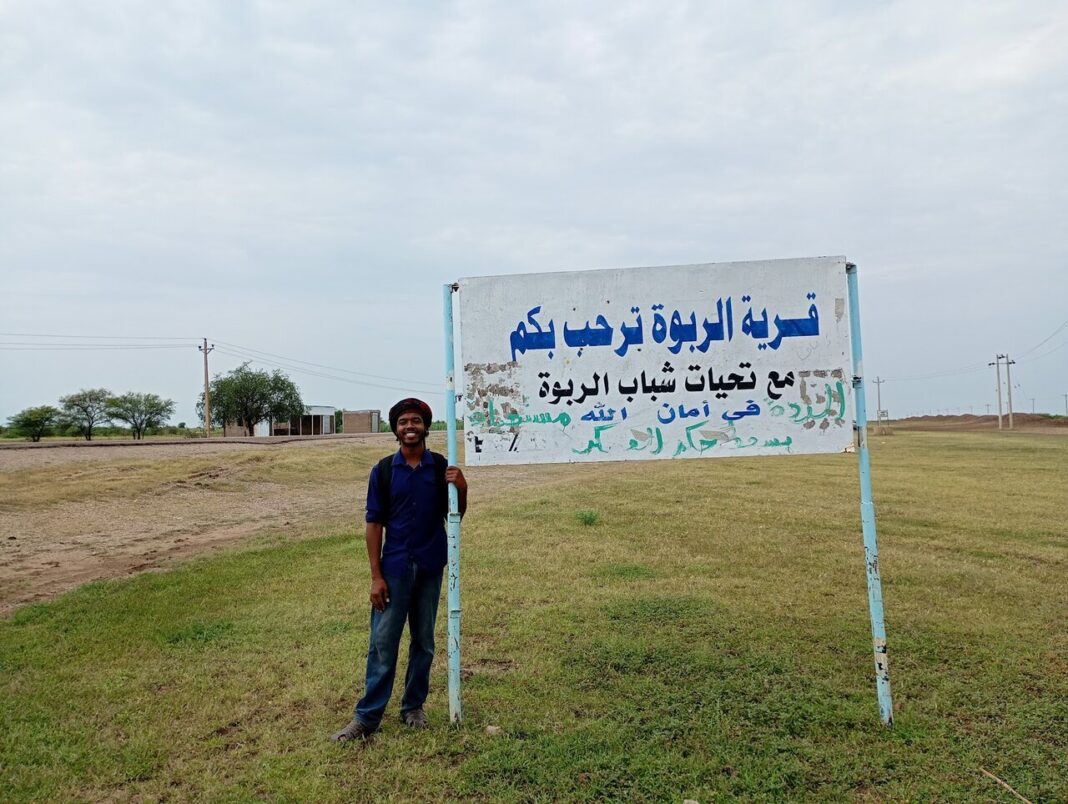
Myself with Arrabwa’s welcome sign, which reads: “The village of Arrabwa welcomes you, with greetings from Arrabwa’s youth, under God’s protection.” The graffiti reads: “there’s no going back; down with military rule!” Source: Hatim Eujayl
Arrabwa has never been free of challenges: drought, sickness and poverty resulting from government policy are the reason its aforementioned diaspora exists. However, on 15 April 2023, the third Sudanese Civil War began between the Sudanese Armed Forces (SAF) and the Rapid Support Forces militia (RSF; also known as Janjaweed), brought devastation that the people of Arrabwa had never seen before: the trauma of occupation by an ethnonationalist militia.
This is the story of one village’s struggle with war and recovery.
Beginning of the Occupation
Due to early state investment in agriculture and education, Wad Medani, the capital city of Al Gezira State, has long been one of Sudan’s economic centres. Eight months following the civil war’s start in April, thousands had flocked to the city from Khartoum, Darfur, and Kordofan as a place of refuge from RSF violence.
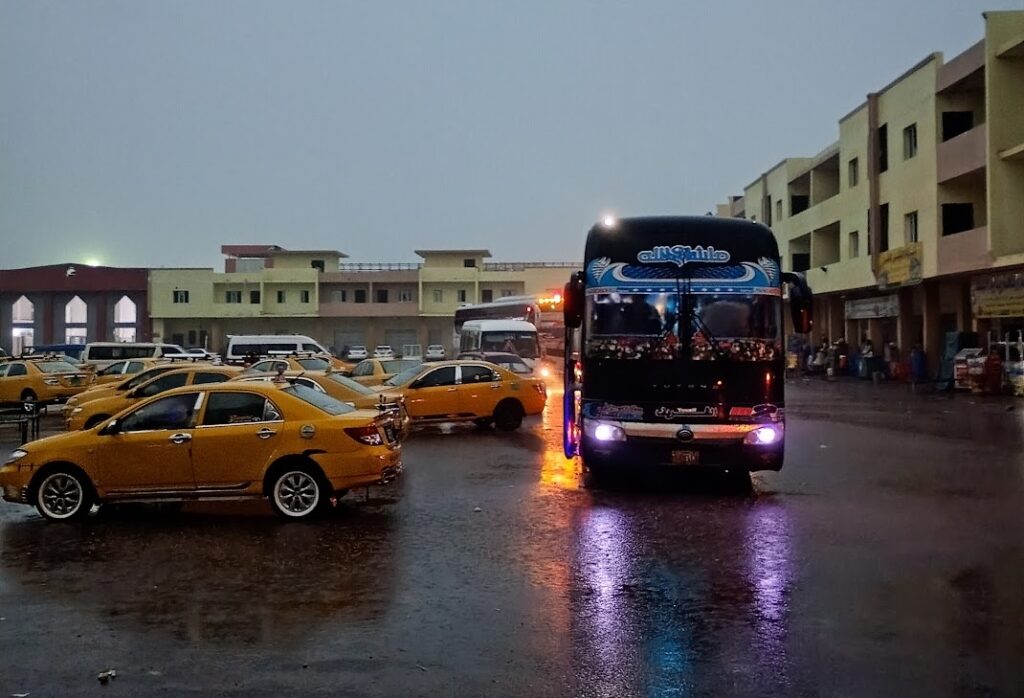
The bus stop at post-war Wad Medani central market. Source: Hatim Eujayl
Then, mid-December 2023 came. The RSF invasion on the 15th turned into occupation by the 19th. People in Al Gezira fled either southwards to Sinnar State, or east towards Al Gedarif. Sitting at the crossroads of these two states, only an hour away from the state’s capital, Arrabwa felt the impact of this siege immediately.
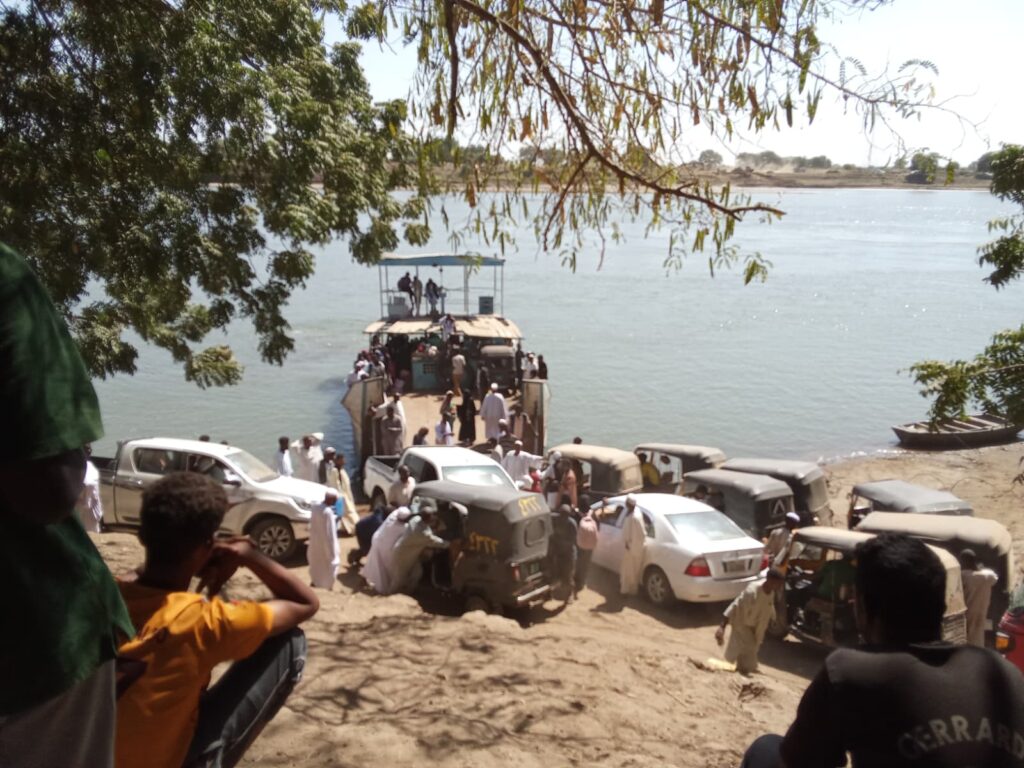
The Arrabwa ferryboat immediately after the Battle of Wad Medani in 2023, transporting cars across the Blue Nile. Source: Imad Eujayl
Arrabwa’s banton (ferryboat), busied with transporting people and goods across the Blue Nile since the early 1980s, now swelled with thousands of internally displaced people from rural and urban Al Gezira. Hundreds of cars, vans, and rickshaws made their escape via Arrabwa. 103 small boats were deployed to transport men, women, children, the physically and mentally ill, the pregnant, the injured, and even soldiers to safety. One boatworker described Arrabwa as a port and gateway for the people of Al Gezira, playing a crucial role exporting essential goods and helping people escape as the RSF waged massacres throughout the region.
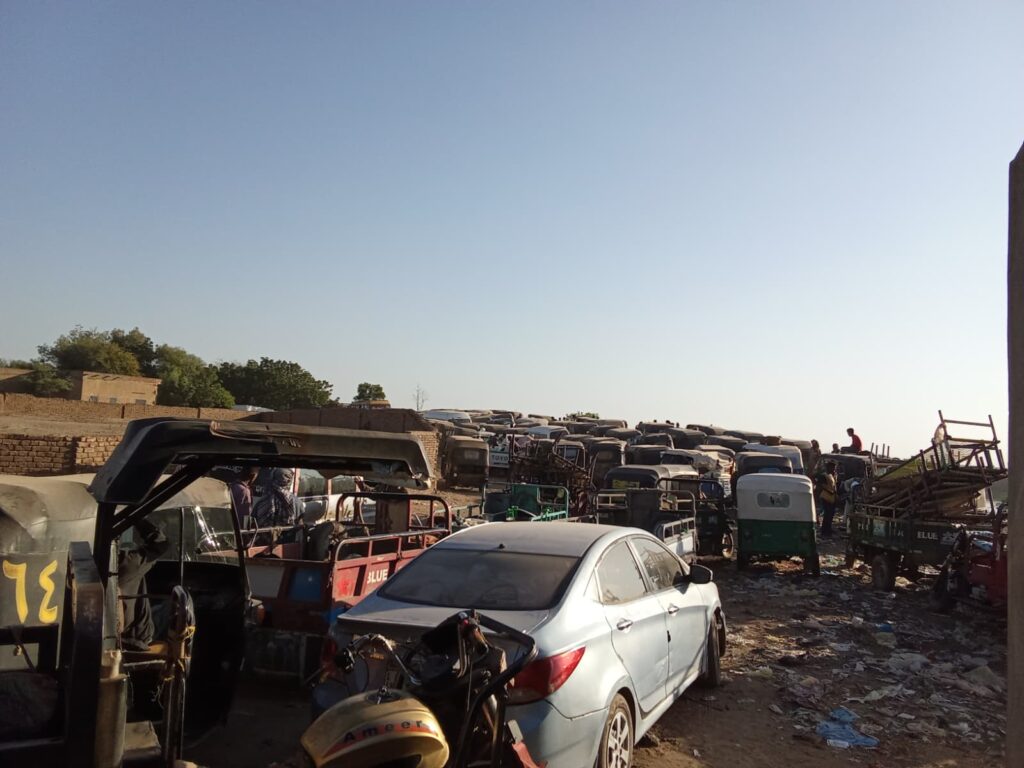
Rickshaws and cars from all over Al Gezira state, escaping RSF violence through Arrabwa. Source: Imad Eujayl
Janjaweed Occupation and Local Resistance
Boat workers waived fares, and villagers did their best to feed the refugees. Regardless, resources were not enough, despite efforts to bring food and medicine to and through the village. The RSF soon reached Arrabwa — approximately 30-40 militiamen, armed with AK-47s, driving motorcycles and armed pickups. Foreign mercenaries permeated the lower ranks, speaking with Mauritanian, Libyan, and Chadian dialects of Arabic.
One militiaman fired his rifle in the air, and declared triumphantly, “we’ve killed God.” Another claimed to be the God Himself.
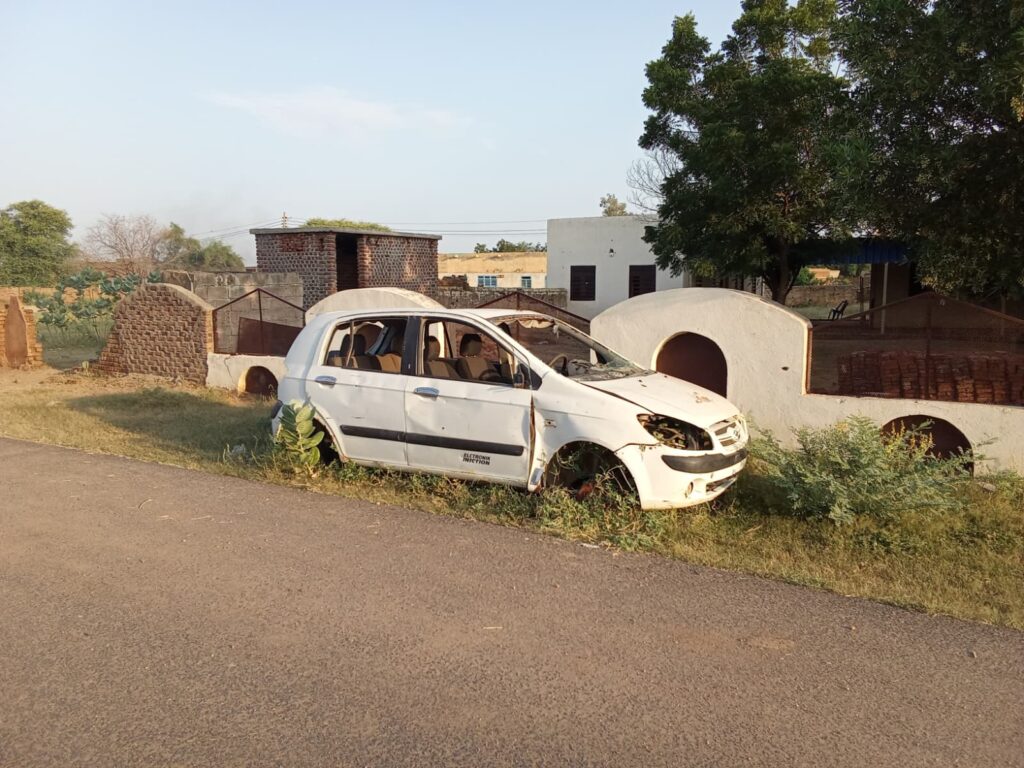
A car stolen, then destroyed, by the RSF. Source: Imad Eujayl
Arrabwa’s self-styled deities then took to looting its homes. Cars were stolen for a brief joyride before being crashed into a wall fence and stripped for parts. The Janjaweed feasted on the village’s livestock, sparing no cow, goat, or chicken. True to their name, “demons on horseback,” they terrorised villagers, beating them with whips and sticks. One elderly man spoke back to a militiaman and was struck in the head with the butt of a rifle, falling dead.
The RSF then took control of the banton, imposing a 90% tax on the workers’ wages and inspecting all future ferry passengers. By the 25th of December, the ferry was officially shut down, leaving boat workers to depend on rowboats.
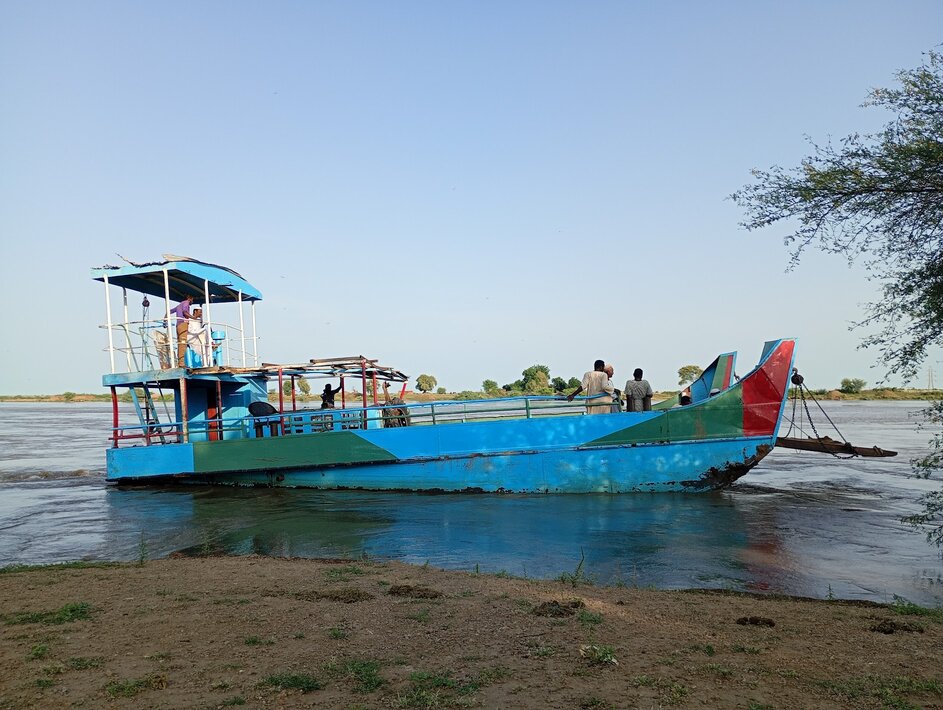
The Arrabwa ferryboat in 2025. Source: Hatim Eujayl
Arrabwa’s people largely fled to east Sudan, Sinnar, Egypt, Saudi Arabia, and Ethiopia. Around 750 stayed behind, primarily senior citizens and people caring for them. A brief SAF-RSF gunfight took no lives, but left bullet holes that can be seen today. One villager recalls begging the SAF not to hit the village with a drone strike, a request they granted, sparing Arrabwa casualties.
With the army withdrawn, the village endured isolation, hunger, and fear at the RSF’s hands for the next 15 months, stretching from the end of December 2024 until March 2025. Mass exodus of residents shook the social fabric. In desperation, some people stole from their own neighbours. Two even joined the RSF.
End of the Occupation
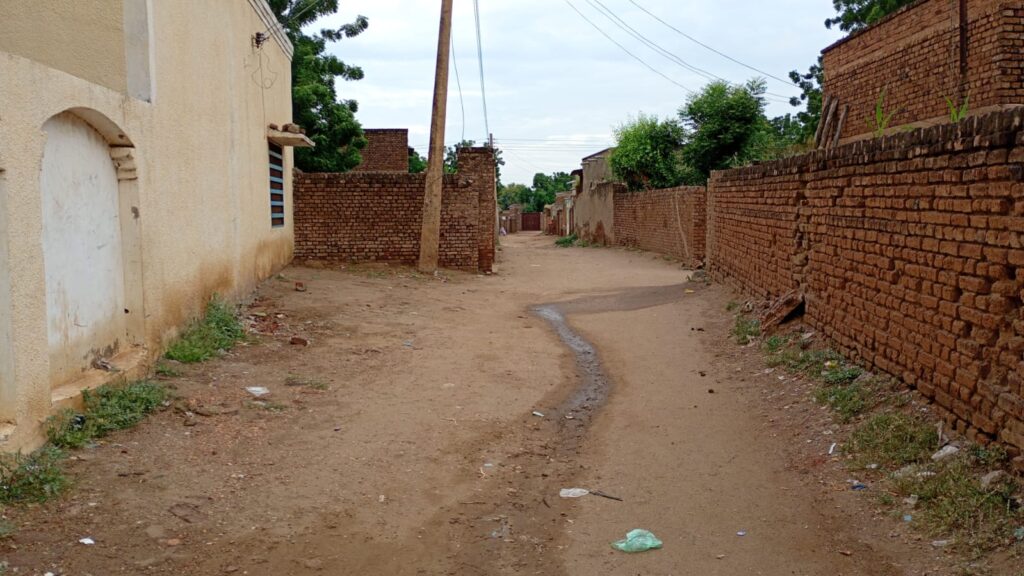
Arrabwa’s main road in 2025. Source: Hatim Eujayl
On the international stage, the RSF attempts to present itself as a liberation movement fighting an autocratic military “state of ‘56.” The residents of Arrabwa, in line with victims of RSF violence in west and central Sudan, give a very different picture. As the people of Arrabwa describe it, the militiamen were thugs: drinking, smoking, cursing, bullying, stealing, and killing. In a sense, they reflect the complete opposite of Arrabwa’s self-image: a self-made, peaceful, and morally upright community.
In addition to brutality and thievery, there was another attribute a villager applied to the RSF: cowardice. Once the SAF retook control of Wad Medani in January, most of the RSF fled. By March, the SAF had officially arrived, and Arrabwa was officially free. Villagers cried, danced, and cheered upon the army’s arrival.
Since then, people have been slowly trickling back into the village.
“Free” Arrabwa

The banks of the Blue Nile in Arrabwa. Source: Hatim Eujayl
Arrabwa did not face the level of violence seen elsewhere in the country. Unlike the villages of Wad Al Noura and Al Sariha in Al Gezira, where the RSF massacres claimed hundreds of lives, or the region of Darfur, where Janjaweed violence has claimed lives by the thousands for decades, Arrabwa was able to survive occupation with only three deaths.
Within the framework of Islamic theology, this is undoubtedly a blessing. Some may even call the village “lucky.” However, while death may represent the most traumatic impact war inflicts upon civilians, it is not the only way people suffer as a result of war.
When I was in Sudan in 2020, people in Arrabwa ate three meals: today, they eat two, with a fraction of the food. Maybe two-thirds of villagers were bedridden with malaria, dengue fever, or other illnesses. Blackouts were always frequent, but now, power can go out three days at a time. Many lost their jobs during the war and depend on family outside the village to provide for them. The damage done to people’s homes is still visible. An atmosphere of grief permeates the village, the result of trauma from occupation and displacement, the decline in living standards, and the death of over 60 villagers in the last two years due to various maladies.
Today, the people of Arrabwa face a more daunting set of challenges than ever before, with less resources than they had just a few years ago. The problems they face reflect the struggles faced nationally, as RSF defeats encourage return, and herald the beginning of reconstruction.
In articles of this sort, there is a tendency to emphasise the optimism of victims of political trauma. It is certainly true that there are people in the country, including Arrabwa, who have hope and are working towards a better future.
However, it seems inappropriate to cast this as a feel-good narrative about the indomitable human spirit, considering the country’s desperate conditions. Arrabwa, like the rest of Sudan, is attempting to recover from the trauma, violence, and robbery of their economic resources without state or international support. The diaspora will no doubt do its best to help however possible. However, can they realistically be expected to guarantee the sustained effort locals need to reach even a pre-war standard of living? The oft-praised resilience of the Sudanese people undoubtedly exists in Arrabwa, but is it enough to ensure long-term alleviation of the root causes of poverty and war?
As Sudanese outside the country, we have a duty to our families and our homeland, and should provide the financial support we can. At the same time, this cannot replace organised political action to mobilise the international community and change local systems to serve our people, who may emotionally and materially struggle with the impact of this war for the rest of their lives.
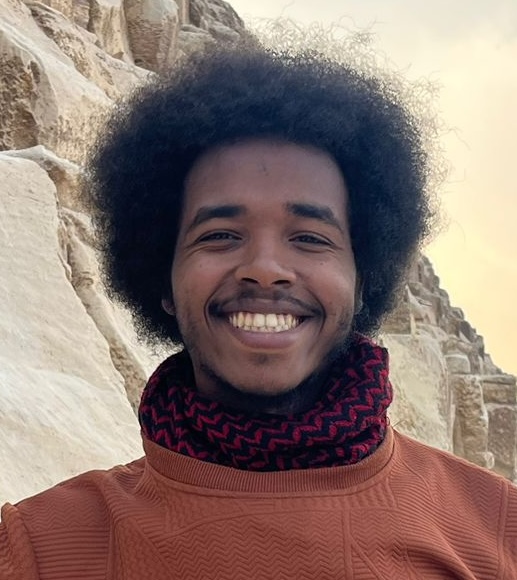
500WM Columnist Hatim Eujayl is a Sudanese-American writer involved in various projects to promote Sudanese culture. His most famous works include the Sounds of Sudan YouTube channel, the Geri Fai Omir Kickstarter, and the Sawarda Nubian font. More of his writing can be found on his Substack, ‘My Sudani-American LiFE,’ where he discusses Sudanese literature and cinema. He can be reached on Instagram @massintod or by email at [email protected].
500WM Columnist Hatim Eujayl is a Sudanese-American writer involved in various projects to promote Sudanese culture. His most famous works include the Sounds of Sudan YouTube channel, the Geri Fai Omir Kickstarter, and the Sawarda Nubian font. More of his writing can be found on his Substack, ‘My Sudani-American LiFE,’ where he discusses Sudanese literature and cinema. He can be reached on Instagram @massintod or by email at [email protected].