
In today’s world, we are witnessing constant suffering as we scroll our social media and consume the news from around the world. For some, the suffering hits closer to home, as family and friends share first-hand accounts of pain, loss, and displacement caused by conflict and violence.
As of 2025, approximately 305 million people worldwide require urgent humanitarian assistance and protection, according to the United Nations’ (UN) Global Humanitarian Overview (GHO). At least 20 countries are among the world’s worst humanitarian crises and emergencies. In addition to where the world’s attention is on right now – Israel’s genocide of Palestinians in Gaza – topping the list are Sudan, Syria, Ukraine, the Democratic Republic of the Congo (DRC), Afghanistan, Yemen, Ethiopia, South Sudan, Chad, and Haiti.
“Gaza has become a death trap disguised as aid. Sudan’s warlords cut off relief while the world just watches. Haiti’s gangs run the show, and the international community shrugs. In the DRC, millions flee while donors quietly cut and run. Myanmar’s junta starves its own people, and no one stops them. Yemen bleeds out slowly, forgotten,” said the Humanitarian Director at Caritas Internationalis, Christian Modino Hok.
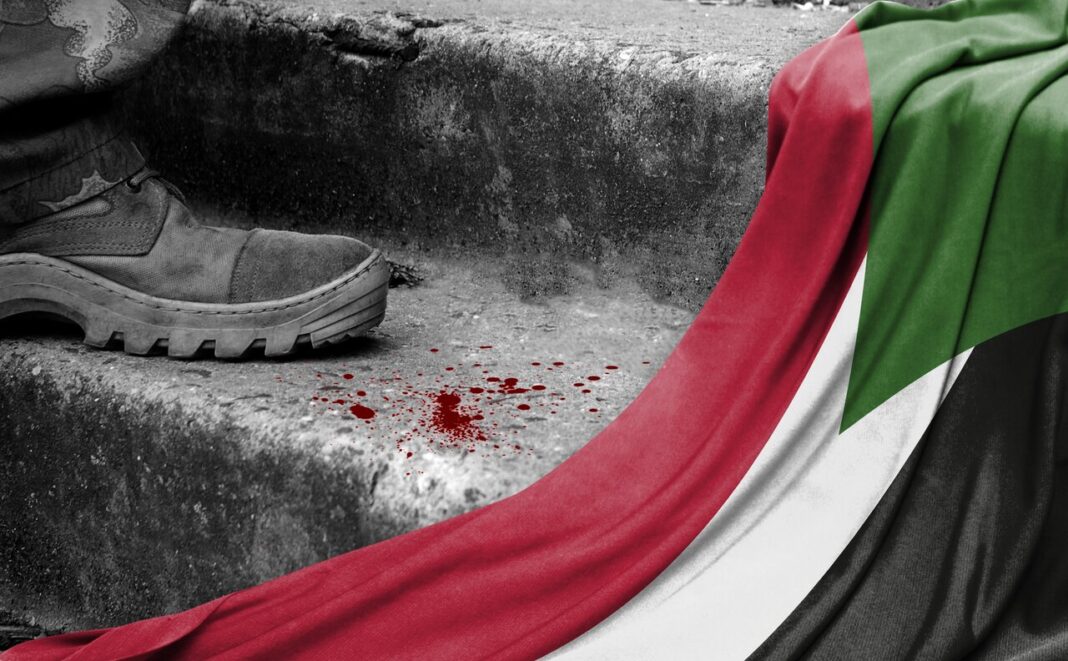
The war in Sudan, which began on 15 April 2023 between the Sudanese Armed Forces (SAF) and the paramilitary Rapid Support Forces (RSF), has displaced over 12 million people, and killed over 150,000. Nearly 4 million fled to neighbouring countries such as Egypt, South Sudan, Chad, the Central African Republic (CAR), while many others have sought refuge further away in countries including Saudi Arabia, Oman, Qatar, the UAE, Canada, the US, the UK, and others with established Sudanese communities with family, relatives, or acquaintances, or independently.
We are all too familiar with the horrific suffering of Palestine, a long-standing humanitarian crisis that began as early as 1948 to which many Muslims and Arabs feel a deep connection due to their religious and cultural ties. Yet in Sudan, a less-documented crisis, similarly horrific crimes against humanity are occurring such as genocide, deliberate starvation, targeted killings of women and children, and rape and other forms of sexual violence. In addition, Famine was officially declared on 1 August 2024, by the Integrated Food Security Phase Classification (IPC) Famine Review Committee.
A family of six died after eating the only thing available, animal fodder. At least seven Sudanese were found dead deep in the Libyan desert, Al Kufra, after their vehicle broke down and left them stranded for 11 days, having run out of food and water. A woman fleeing Sudan through illegal border crossings tragically lost her baby when the child flew from her arms due to the high speed of the vehicle, and the driver refused to stop to help, even if the child had survived the fall. A mother witnessed her young son torn apart by a bomb, leaving her older son severely injured and without limbs; he later died weeks afterward in the hospital.
Rape, including gang rape, is frequently used as a weapon of war, a tactic that has become widespread in Sudan, with the RSF targeting women and children. Although unverified, it is believed that over 120 Sudanese women chose to commit mass suicide by drowning in a river to escape the threat of rape by the RSF. A father committed suicide after he was forced to watch the rape his daughters by RSF soldiers. According to Sudan’s Unit to Combat Violence Against Women, more than 1,300 cases of rape have been reported since April 2023 up to May 2025. More than 200 children, some as young as one, have raped in Sudan, according to a report by Amnesty International.
For those who flee conflict and violence, in addition to the heavy feelings of loss and trauma, they also feel grateful to have survived even with the loss of everything they had – home, livelihood, etc. However, with that feeling of gratefulness and relief also comes survivor’s guilt, because they have survived while others did not.
For those fleeing conflict and violence, the trauma of loss is immense, yet they feel a profound sense of gratitude for having survived even after losing everything, from their homes to their livelihoods. However, along with relief, comes survivor’s guilt. They lived while others did not. But what about those who witness the suffering of their family, friends, and fellow countrymen and women from afar?
The worldwide Sudanese diaspora has always maintained a strong connection to its homeland and its people, many of whom still call it home with their families still residing in Sudan. Many Sudanese households are supported by family members in the diaspora, which has long been essential, but this reliance has increased due to the war disrupting livelihoods across the country. Beyond financial support, the Sudanese diaspora has consistently been active and outspoken about the plight of their homeland, organising and participating in protests, and fundraising efforts to aid those in need.
Their activism is largely driven by feelings of patriotism, responsibility and empathy. Shaped by both geographical separation and constant exposure to ongoing suffering through the media, they experience a form of survivor’s guilt known as diaspora survivor’s guilt, which is specific to people in the diaspora seeing their compatriots in crisis. It is the notion of not suffering in the same way as loved ones back home and, at times, being unable to help them – sharing the same identity but not the same geographical location. Diaspora survivor’s guilt is closely linked to what is known as exile guilt, the feeling of guilt for being safe while others in one’s homeland remain at risk. This sentiment is shared by many, whether Sudanese, Palestinian, Muslim, or simply human, as they witness the suffering of others, especially children. For those living safely and comfortably, with secure homes and easy access to water and food, watching others lose everything or struggle to survive often brings feelings of guilt and shame. Related concepts include transnational survivor’s guilt, which highlights the cross-border experience of witnessing suffering from afar, and remote survivor’s guilt, which emphasises physical distance yet emotional involvement. These terms, unlike diaspora survivor’s guilt, can apply to anyone, regardless of a personal connection to a specific place.
When we listen to the stories and experiences of family, friends, or other survivors who have directly endured traumatic events, we too become indirectly exposed to their trauma. This can lead to what is known as vicarious trauma, an emotional residue that arises from empathetic engagement with survivors as they recount their pain. In such moments, we bear witness to their fear, suffering, and terror. A related form is secondary trauma, or secondary traumatic stress (STS), which is the psychological response to indirectly witnessing or hearing about another person’s traumatic experiences. These effects can be felt by anyone, whether close to the survivor, such as family and friends, or professionals in healthcare, law enforcement, and humanitarian work. Today, this trauma is also intensified by the constant influx of images and videos shared across social media platforms, messaging apps, and online channels.
With every drink, bite, or laugh, we are weighed down by guilt. As we embrace our loved ones, especially children, and see them eat, sleep, and live in comfort, we are reminded of those who cannot. Celebrating milestones such as birthdays, graduations, marriages, or the birth of a child can bring a heavy sense of shame. We even begin to question whether sharing food, travels, or joyful moments on social media is insensitive or necessary at all. Yet over time, as crises and conflicts drag on, these feelings of guilt and shame begin to fade. We grow accustomed to the suffering, to the images we see and the news we hear. Numbness, or even indifference, becomes a common response to the endless flow of human pain.
As you scroll through your feed or hear stories first-hand, do not look away from someone’s suffering, but also remember to pause, step back, and breathe when needed. At the same time, we must not forget to truly feel and absorb the news we consume and the stories we hear. Because we are separated by geography and often experience events only through social media, much of our time and energy is channeled into online activism. While valuable, it is not enough. Real action is needed, whether by learning more about a crisis, educating ourselves and others, raising awareness, or, when possible, offering tangible support through donations or volunteering.
Most importantly, we must remember: it is not about us. It is about those who experience trauma first-hand. While we deal with our own secondary trauma from what we see and hear, our focus should remain on addressing the needs of those directly suffering in the present.

Ola Diab is the new founder and editor of 500 Words Magazine, and the deputy editor of Marhaba Information Guide, Qatar’s premier information guide. Based in Qatar, the Sudanese journalist graduated from Northwestern University in Qatar (NU-Q) in 2012 with a Bachelor of Science in Journalism and has since built a successful career in the print and digital media industry in Qatar. Find her on X (formerly Twitter) @therealoladiab or on LinkedIn.