
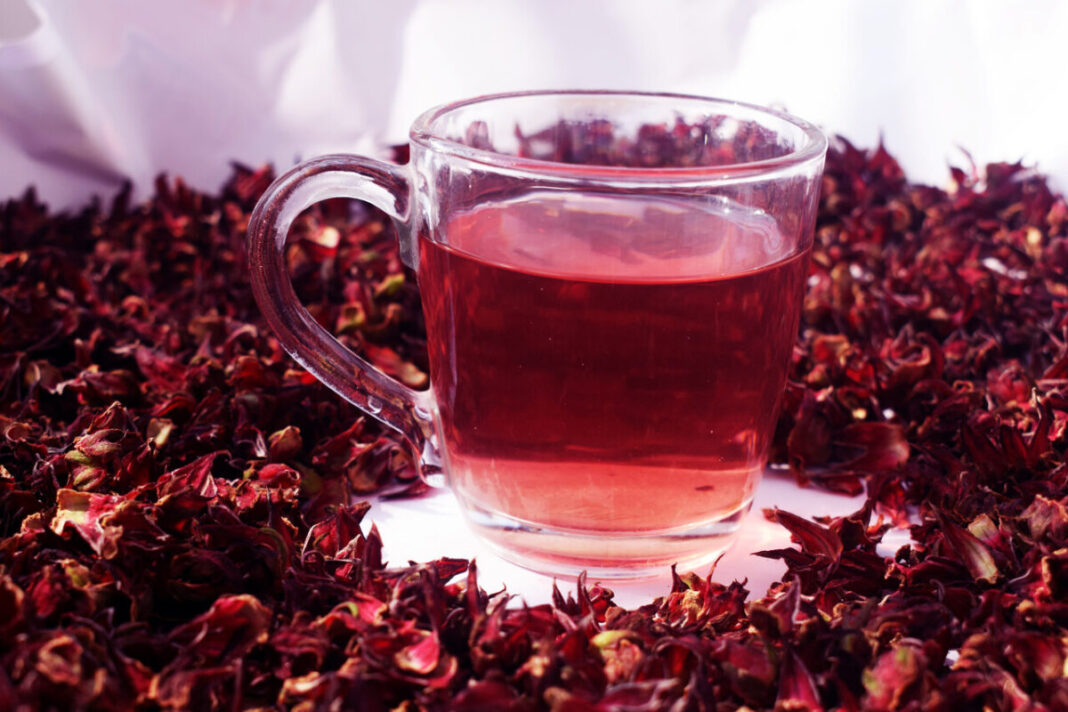

A folklore tale as old as time tells us about a young bride whose tears fell into a dry land during wartime in Kordofan. Where her tears dropped, the national flower of Sudan grew and was then harvested, becoming a staple drink in Sudan, shared in Ramadan, family and social gatherings, and every other occasion in between. Hibiscus has become a symbol of hope, love, and community in Sudan.
Hibiscus is considered the unofficial national flower of Sudan. Known for its deep red colour and zesty taste, roselle (Hibiscus sabdariffa) has been grown and consumed all across Sudan in many ways. The most common being a delicious cold juice enjoyed on hot days.
The world knows hibiscus, or karkade, as a superfood used in supplements, a relaxing tea rich in vitamins, and a natural source of red dye.
But in Sudan, this crimson flower is an heirloom that is deeply woven into Sudanese culture, holding great economic and social significance.
Karkade: The Red Gold of Western Sudan
Cultivating hibiscus has a track record in western Sudan since before 4,000 BC and later spread to other parts of Sudan. The properties of hibiscus made it favoured by farmers, as it’s known for being a hardy and tolerant plant that demands very little to thrive: a little sun, a little water, and a patient hand to collect its fresh calyces once the blooms fall away.
In times when climate change imposed hardships, other crops like wheat may falter and fail to thrive, but not hibiscus. This powerful red flower matches the resilience of the people growing it and thrives as a quiet symbol of endurance.
Women, Labour and Red Hands
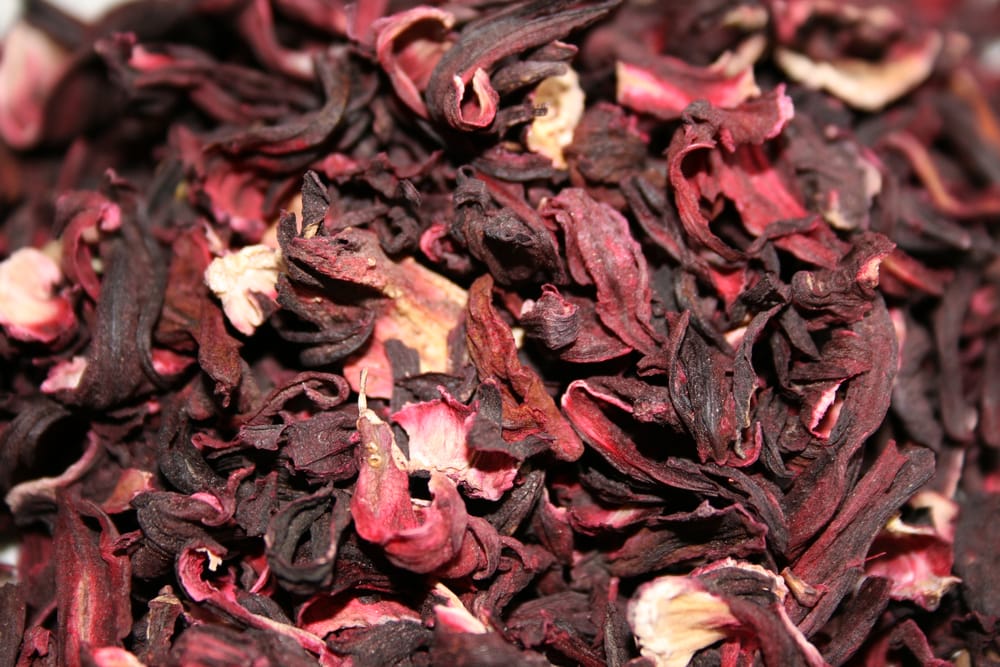
In rural parts of Darfur and Kordofan, the harvest of hibiscus is traditionally led by women. They head out to the fields at dawn and start carefully picking the deep red calyces with expert, delicate movements, as every flower must be meticulously trimmed and collected separately. They head back to their homes and sit together in circles, and proceed by opening the flowers and removing the seedpods. That’s when the flower’s red pigment rubs off on their hands and stains them temporarily, like a crimson badge honouring their efforts and hard work.
Despite their significant impact, the hard labour and precision of these red hands are rarely spoken of, even though they are the backbone of Sudan’s hibiscus production. In this way, karkade becomes more than a drink or a cash flow crop; it becomes a symbol of the unseen labour of these women.
A Crimson Gift From Sudan to the World
Order a Hibiskusblüten in Germany, an Agua De Jamaica in Mexico, or an herbal tea in Belgium, odds are you are tasting Sudan without even knowing, as it’s been amongst the top countries producing hibiscus in bulk and exporting it to be consumed all around the world. Sudan is a major, historically significant producer of high-quality hibiscus. Some sources claim Sudan is “the largest exporter in the world,” sometimes stating that it accounts for “almost half” of global hibiscus exports. According to the most recent UNDP report from 2008, Sudan produces more than 18,000 tons of hibiscus in a good year, and at least half of that or more is typically exported — roughly 9,000 to 12,000 tons exported.
Worldwide, Hibiscus is incorporated into the production of many foods and beverages such as jams, jellies, and syrups for its unique red colour and acidic taste. It is also used in many wellness blends and supplements for its natural properties, as it’s rich in vitamin C and antioxidants, particularly Anthocyanins, which are powerful, potent antioxidants that minimize oxidative stress and inflammation.
Hibiscus is also well-known for supporting heart health and regulating blood pressure. Multiple randomised controlled trials demonstrate that daily consumption of hibiscus tea (typically 2-3 cups) significantly reduces systolic blood pressure.
Long before Research acknowledged Hibiscus, Sudanese medical folk used it in the treatment of respiratory tract infections, malaria, fever and hypertension.
For the Sudanese living abroad, the taste of their own hibiscus is unmistakable. Friends and family back home send many bags of hibiscus that overflow diaspora’s kitchens from London, England to Doha, Qatar, filling the air with a sharp scent they know and love.
The world may sip Sudan’s karkade, unknowing of its story, but for the Sudanese people, this flower is a memory that forever carries the taste of heritage and belonging.

Sara Hassan is a doctor by training, a storyteller by instinct, and a chatty bookworm by nature. Whether she’s dissecting complex ideas or telling stories that matter, she brings warmth, wit, and a sharp eye for the human experience. With a love for writing and a knack for starting deep conversations in unexpected places, Sara writes to connect, question, and spark something real.
Related posts

Sara Hassan is a doctor by training, a storyteller by instinct, and a chatty bookworm by nature. Whether she’s dissecting complex ideas or telling stories that matter, she brings warmth, wit, and a sharp eye for the human experience. With a love for writing and a knack for starting deep conversations in unexpected places, Sara writes to connect, question, and spark something real.