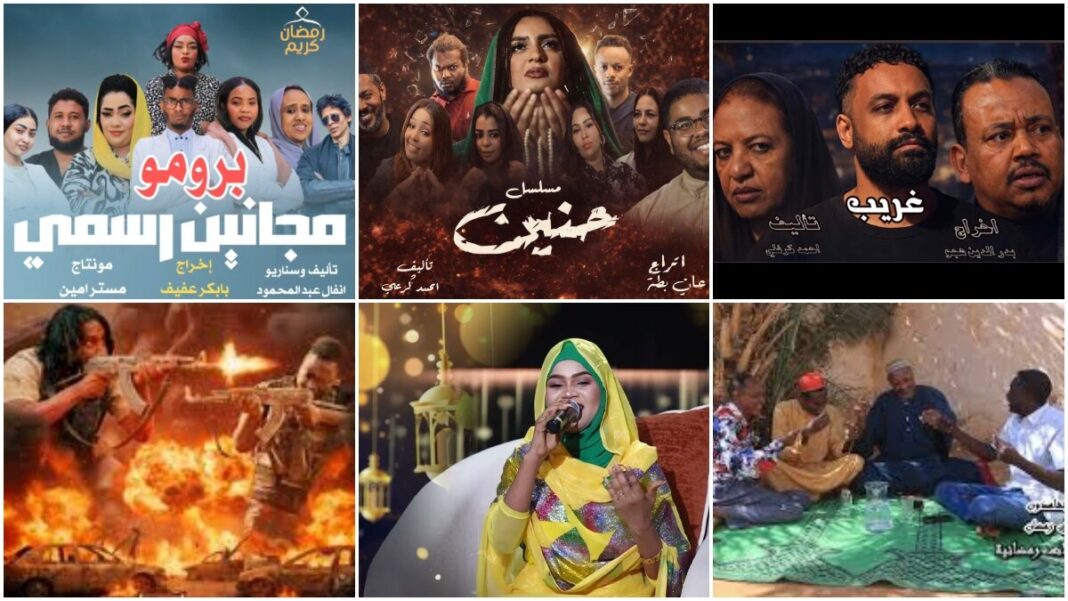
In recent years, Sudan has seen a rise in Sudanese produced drama series during the holy month of Ramadan. There is now an influx of Sudanese drama series and shows available on YouTube.
The current wave of Sudanese Ramadan drama series is led by actor and singer Ahmed Aljiger and actor and comedian Zool Sagel. This year, Aljiger released two series, Ghareeb and Haneen, while Zool Sagel released Khat Ahmar.
The trend of Sudanese Ramadan drama series on YouTube began with Asham, a romance drama produced by the Sudanese diaspora in Saudi Arabia. First released in 2017 on YouTube, Asham is widely considered the first Sudanese Ramadan series to premiere on the platform. Due to its success, it was later broadcast on Sudania 24 (S24), a national television channel owned and operated by the Sudan National Broadcasting Corporation (SNBC).
However, Ramadan drama series have long been popular across the wider region, and Sudan entered this space relatively late. Financial and logistical constraints, along with strict censorship and conservative broadcasting policies on Sudanese television channels, pushed many producers and directors to turn to YouTube, the world’s most accessible video-sharing platform.
A Trend of Ramadan Series
For decades, the holy month of Ramadan has been a peak season for Arabic television drama, particularly on networks such as MBC Group, the largest media company in the Middle East and North Africa (MENA) region, and its streaming platform Shahid. While digital media consumption is rapidly increasing, television, especially drama series, continues to hold strong cultural influence during this period.
Ramadan series typically air in the evening, beginning around iftar, the meal at which Muslims break their fast, and continuing afterward, when families gather and spend time together. This concentrated viewership makes Ramadan the most competitive and commercially valuable season for television production.
In fact, Ramadan Arabic series constitute a major economic driver due to seasonal advertising. In 2026 alone, total advertising expenditure is expected to exceed USD2 billion, up from approximately USD1.8 billion in 2025. Egypt leads the region in viewership and advertising revenue, while Saudi Arabia and the UAE drive significant growth within the Gulf Cooperation Council (GCC).
In contrast, revenue figures for Sudanese Ramadan drama series distributed on YouTube are unknown. However, these productions also generate income through embedded advertising and platform monetisation, reflecting a shift toward digital revenue models..
Sudanese drama series have long existed; however, in recent years, they have gained significantly more viewership due to shifts in storytelling and casting, despite their relatively low budgets and modest production quality. Previously confined to television, Sudanese drama tended to be light-hearted, traditional, and conservative in tone. In contrast, contemporary Sudanese series are often darker and more controversial, addressing serious and previously taboo aspects of Sudanese social life.
Sudanese audiences, both within Sudan and across the diaspora, have long sought drama series that authentically represent their identities, experiences, and everyday realities. This demand is heightened by the history of negative portrayals of Sudanese people in broader Arabic television.
Although Sudanese drama productions have existed for decades, they have gained significantly more viewership in recent years due to shifts in storytelling and casting that better reflect contemporary Sudanese life. Despite their popularity, many of these series remain low-budget independent projects, often marked by limited production resources, modest directing, and uneven acting quality. Nevertheless, representation outweighs production value for many viewers who are eager to see their own stories on screen.
This urgency for self-representation is further intensified by the long-standing pattern of racist and offensive depictions of Sudanese individuals in some Arabic comedy series. In Egyptian, Kuwaiti, and Saudi productions, including several broadcast on MBC Group, Sudanese characters have at times been portrayed in blackface, with exaggerated features and mocked dialects. These portrayals, often framed as humour, constitute explicit acts of racial stereotyping.
Sudanese audiences have repeatedly expressed public outrage and condemned both the actors and the programs involved. However, formal apologies are rare, and such representations continue to reappear, reinforcing harmful stereotypes.
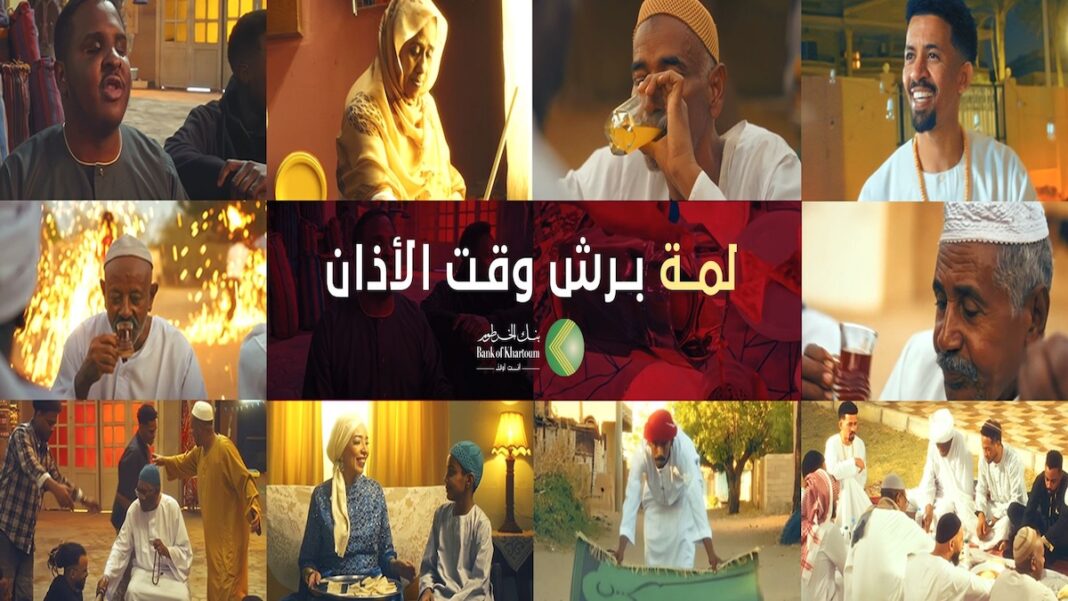
Arabic Ramadan programming ranges widely in genre, from Islamic and educational content to purely entertainment-driven productions, including drama series, celebrity prank shows, and cooking programs. Sudanese Ramadan series have similarly adopted concepts from popular Arabic television formats.
One of the most prominent figures in Ramadan entertainment is Egyptian actor and comedian Ramez Galal, known for his annual high-budget prank shows. His programs are broadcast on MBC Group and have become a seasonal staple. Recent titles include Ramez Level El Wahsh (2026) and Ramez Elon Masr (2025), alongside earlier productions such as Ramez Wakel El Gaw (2015), Ramez Qalb Al Assad (2011), and Ramez Plays with Fire (2016).
Galal’s prank-show format was itself influenced by American actor and producer Ashton Kutcher, who hosted the popular MTV series Punk’d. This cross-cultural media influence demonstrates how entertainment formats circulate globally before being localized within regional contexts.
In Sudan, Galal’s model has influenced figures such as Musab Omer Somy, widely known as Zool Sagel. Now a prominent actor and comedian, he is responsible for several recent Ramadan productions, including Khat Ahmar. His career began on YouTube, where he performed pranks on members of the public before transitioning to celebrity pranks that later aired as Ramadan programming.
There Is Ridicule, but There Is Also Potential
Personally, I believe Ramadan series should not even be a trend or a central topic of conversation. In many ways, we are misdirecting the purpose of Ramadan, romanticising it as a month of entertainment, television, and spectacle. Yet Ramadan is meant to be the month of fasting, the month of the Qur’an, the month of ʿibadah (worship), and the month of charity and spiritual reflection.
Knowing that Ramadan television generates between USD1 and 2 billion annually is difficult to reconcile with the spiritual essence of the month. It raises uncomfortable questions about our priorities as an ummah, the global Muslim community. At a time when millions face hunger, displacement, and war in places such as Palestine, Sudan, Yemen, and Syria, the scale of profit generated by entertainment during a sacred month can feel deeply troubling.
Having said that, although these series continue to grow in popularity and viewership each Ramadan, most remain independent, low-budget productions with limited technical resources. As a result, issues in production, directing, and even acting are often noticeable, insitigating commentary, cristicism and ridicule. Clips frequently go viral on social media, where viewers comment and even mock certain scenes, performances, or dialogue — sometimes, admittedly, with justification. However, criticism, often expressed as ridicule or mockery, should be constructive rather than purely destructive or dismissive. Viewers must recognise the challenges many creatives face, especially those displaced or affected by the ongoing conflict in Sudan. Having said that, even when harsh, constructive or thoughtful criticism can help push creators to refine their craft and improve their work.
Yet despite these shortcomings, we continue to watch. We watch because these stories are about us — our lives, our communities, and our realities. While some narratives may be exaggerated or dramatised, that is the nature of entertainment. Films, movies, series and their stories do not need to serve as perfect or literal reflections of society. That said, some viewers object to portrayals of Sudanese men and women as drug users, alcoholics, criminals, or excessively violent. Others feel uncomfortable with themes such as premarital or extramarital relationships, rape, or prostitution — topics that appear in Aljiger’s productions. We also continue watching because, regardless of the low-production quality, the series are simply entertaining. As the saying goes, “it’s so bad it’s good,” which is a phrase used to describe entertainment that is so poorly made, acted, or written that it becomes ironically enjoyable. This phenomenon is of absurd, unintentional comedy rather than high-quality production. Lastly, we watch because some genuine talent is emerging. Hidden skills and creativity are beginning to shine through these productions.
Some recent series commendably portray life in war-affected Sudan, including Zool Sagel’s Khat Ahmar, as well as AlzargaTV’s Hekayat Al Mantiqa X and Al Majhool. Compared to previous years, this Ramadan has shown noticeable improvement: more ambitious efforts, stronger and more diverse storylines, and a growing sense of artistic direction. These developments suggest that the Sudanese television and web-series scene is gradually expanding and maturing. With time, increased funding, and further skill development, the industry has the potential to significantly improve in both quality and impact.

Ola Diab is the new founder and editor of 500 Words Magazine, and the deputy editor of Marhaba Information Guide, Qatar’s premier information guide. Based in Qatar, the Sudanese journalist graduated from Northwestern University in Qatar (NU-Q) in 2012 with a Bachelor of Science in Journalism and has since built a successful career in the print and digital media industry in Qatar. Find her on X (formerly Twitter) @therealoladiab or on LinkedIn.