

South Sudanese woman cooking in Kiryandongo Refugee Settlement
© Hana Abobakr
A young South Sudanese woman, in her home dress, with scattered dishes and a wandering look though she is focused on her pot, holding it tightly, making sure it doesn’t slip.
From the picture, you can tell that she is making Akilo, also known as Akop, a traditional South Sudanese dish that is made from millet or sorghum flour, and popular among the Nilotic tribes. During its preparation, women move the pot up and down in a rhythmic motion to ensure it forms evenly sized pieces, then steam it into a couscous-like texture. It is often accompanied by meat, sauces, or milk.
Kenya-based Sudanese photographer and art director, Hana Abobakr, took this picture during her visit to Kiryandongo Refugee Settlement in Uganda in July 2025, where Sudanese and South Sudanese refugees live and interact in the same space.
South Sudanese refugees arrived at Kiryandongo when the Ugandan government opened the settlement for them in the 1990s during the civil war in Sudan. In 2013, the numbers increased after the eruption of the South Sudanese civil war. Although the settlement is home to over 100,000 refugees from other countries, such as Congo, Rwanda, Burundi, and Kenya, the ongoing war in Sudan has made Sudanese refugees the second-largest community after the South Sudanese. These two communities, which share a history of conflict and deep wounds, now find themselves outside their homelands, seeking refuge and peace.
During her visit, Abobakr took a variety of pictures showing how the two communities are trying to co-exist in peace and harmony. The woman in this picture represents how life goes on in the settlement in that simple space, surrounded by trees and nets, repeating the daily routines of housework, making sure her siblings or children have something to eat for the day.
South Sudanese women are among the most affected by the instability in their country. They are often responsible for their families and children in the settlement. Even today, many continue to arrive from different states due to the hardship of life and ongoing conflict.
Women in the settlement carry out many activities to meet their families’ basic needs. They farm, sell goods, and do small-scale trading to earn money to feed their children. They are also involved in other activities in vocational training programmes such as tailoring, soap-making, and business skills, which are offered by NGOs and refugee-led organisations such as the South Sudanese Women Building Association (SSWBA). These initiatives support women in broadening their income sources and moving towards greater independence. Despite these efforts, most women still face serious barriers and are at high risk of violence and physical or emotional threats.
The Kiryandongo Refugee Settlement is located in Bweyale, within Uganda’s Kiryandongo district, about 224 km (approximately 139 m) north of Kampala. It lies along the main Kampala-Gulu highway and covers roughly 70 sq km. The area is considered as a remote area though security is provided. The high population in the settlement has led to many social and inter-community conflicts, where women remain the most vulnerable group.
To see more of Hana Abobakr’s work, find her on Instagram @i_hana9 and X @hanaabubaker9.
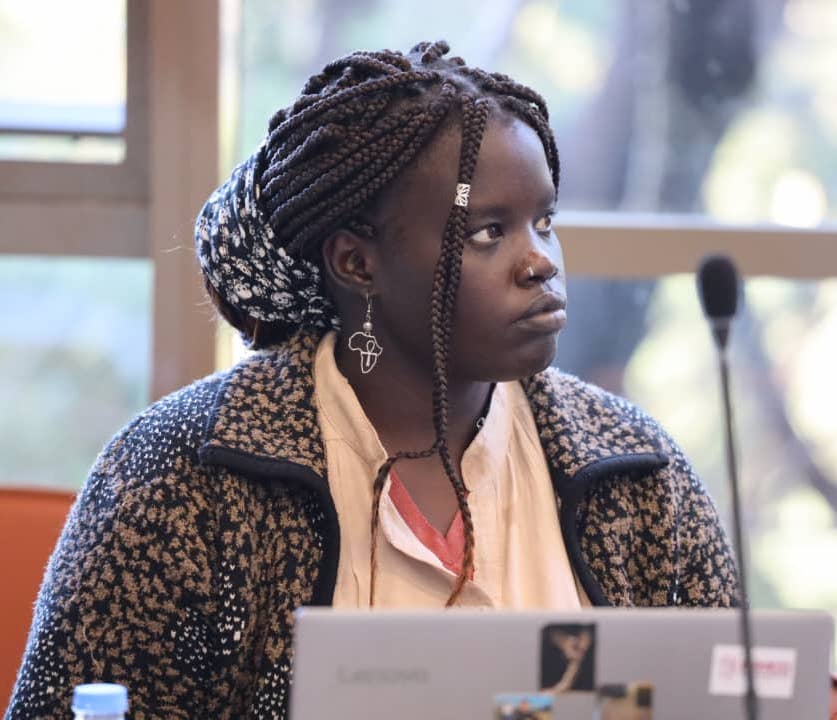
500WM Columnist Dominica Amet Joseph Marco is a 26-year-old South Sudanese writer, freelance journalist and feminist/social activist who graduated from the faculty of law from the University of Bahri in 2018. She is one of many who had to flee war in Sudan to finally come and live in her homeland South Sudan. She has written and published articles, stories and poems since 2017. She has worked with and published articles in Aka’bar Alwatan Newspaper in Sudan, Almugif Newspaper in South Sudan, and several other Arabic websites.