

From the bustling streets of Cairo, to the high rise buildings in Dubai, to the clinics or medical centres in Manchester, the Sudanese diaspora continues to expand across the globe, leaving prints of the country’s culture and heritage in almost every continent.
Migration has been woven into Sudanese history for many decades, with Sudan being both a destination and source of migrants. Being located along the coastline of the Red Sea and of close proximity to the Middle East and Africa (MENA) region has made Sudan a major geographic, political, and economic hub.
Some of the first migration waves from Sudan date back to the post-independence period. Until the early 1970s, younger generations were temporarily migrating outside Sudan to countries such as Egypt, India, and England in pursuit of higher education. At that time, prestigious Sudanese universities such as the University of Khartoum and Omdurman Islamic University were thriving, but the options, particularly for medical and engineering fields, were limited.
In the 1970s and 1980s, many Sudanese professionals across different fields were recruited to Gulf countries, with most of them securing positions in the public sector to provide their highly requested expertise in governmental, educational, and health fields.
The April Revolution in 1985, and the events following it brought about the rise of the former Sudanese President Omar Al Bashir’s regime which led to a progressive economic decline, oppression, and severe persecution of political opponents, all of which contributed to a growth in migration figures, with an annual migration rate reaching at least 200,000. Fresh graduates began moving to Gulf and European countries to secure better job opportunities, which then led to more Sudanese people starting families outside of Sudan, contributing to the expanding population of second and third generation Sudanese.
In April 2023, the breakout of the war between the Sudanese Armed Forces (SAF) and the Rapid Support Forces (RSF) resulted in the world’s biggest humanitarian crisis, displacing over 12 million people both internally and externally, including 1.5 million seeking asylum in Egypt, 1.1 million in South Sudan, over 800,000 in Chad, 74,000 in Ethiopia, and more than 35,000 in the Central African Republic (CAR).
Further scattered by rising political turmoil, Sudanese people now make up large diasporic hubs across the world. Total global estimates of Sudan’s global diaspora population are conflicting; however, it may stand at over 8 million, reflecting both recent refugee movements and long-standing migratory trends. The Sudanese diaspora is largest in Egypt, followed by sizable communities in the Gulf region, North America, Europe, and Australia. In Egypt, there are around 1.2 million recent refugees, potentially rising to 4 million when including earlier migrants. The Gulf countries, especially Saudi Arabia, the UAE, Qatar, Kuwait, and Oman, hold the largest Sudanese expatriate populations, totalling well over 4 million, with Saudi Arabia alone estimated at around 3 million. The breakdown in North America and Europe, includes 70,000 in the US, 17,500 in Canada, and 10,000 to 25,000 in the UK. In Australia, it stands at 16,600–17,000.
High school graduates and transfer students have been moving to countries such as Egypt, Cyprus, Malaysia and Georgia to seek opportunities in higher education, whereas many workers and families have relocated to Gulf countries, European countries, and North America.

The Sudanese population abroad is diverse in origin. Citizens or dual passport holders are commonly seen in the UK, US and Canada, whereas Sudanese residing in the Gulf Cooperation Council (GCC) are typically resident permit (RP) or iqama holders. As a result of the recent war, Sudanese displaced to neighbouring countries are referred to as immigrants, displaced people or even refugees, with the highest populations seen in Egypt, South Sudan and Chad.
As a result of a long history of political unrest and forced displacement, cultural identity is threatened, but many efforts by the diaspora are directed towards ensuring the preservation of Sudanese culture and traditions, and ensuring they remain afire. Diasporic communities across the globe play a significant role in establishing a Sudanese presence – from their household traditions and cultural events to their activism in the thick of political turmoil.
The maintenance of cultural ties begins from within households, where many families living abroad make it a priority to engage in Sudanese practices. For Sudanese living in the diaspora around the world, their Sudanese identity and culture are not left behind, and surface in social occasions and holidays. Culture is highlighted in small day-to-day practices such as morning tea and traditional meals as well as major occasions such as Ramadan, and Eid, which are celebrated with a Sudanese flavour with rich family gatherings.

Sudanese cuisine and food culture are central to the people’s identity and heritage. Alongside traditionally homemade meals, there has been a recent rise in Sudanese restaurants and cafés in countries with large Sudanese communities, including Egypt, Saudi Arabia, the UAE, Qatar, the US, and Australia. See 500WM’s feature, Sudanese-Restaurants Globalising the Sudanese Cuisine. In addition, many essential Sudanese food products and beverages have found their way outside of Sudan to cater to the needs of Sudanese communities around the world.
Wedding occasions are celebrated Sudanese-style, with traditional wedding ceremonies such as henna parties and jirtig, at the forefront. Many Sudanese weddings, especially multicultural weddings, that have taken place abroad can be found on YouTube and on social media platforms. In the diaspora, joyous occasions and holidays bring Sudanese people together, but their true sense of community is fostered in hardships, such as funerals. Sudanese men, whether family or not, would make their presence known during burials, and the women would typically visit the home of the deceased to express their condolences to surviving family members.
Community spirit extends beyond the households, where Sudanese folk in different countries have established cultural centres. In Gulf countries, such as the UAE, Qatar, and Saudi Arabia, it is common to find Sudanese community or cultural clubs or centres in major cities, hosting large-scale events from Eid gatherings to Independence Day celebrations. In the UK and the US, Sudanese community centres have also been established to provide a range of services for immigrants and refugees.
Celebration of heritage is a prominent feature of Sudanese diaspora life, and events such as cultural festivals have become an exceedingly common practice, particularly in the years after the December Revolution in 2018. The practice is predominantly more common in universities, where Sudanese students participate in cultural days to display their heritage alongside other nationalities.

Showcasing Sudanese heritage has become an increasingly common practice in countries with large Sudanese communities, with the rise of cultural events and festivals. Famous Sudanese artists, such as rapper Hleem Taj Alsir and traditional singer Insaf Medani, contributed to the celebration of Sudanese music in Saudi Arabia’s vibrant Passport to the World event in May 2025. The UAE also hosted the Gate of Sudan cultural festival at Expo City Dubai (1 October 2021 to 31 March 2022), featuring prominent singer Dr Omer Elamin and music icon Nancy Ajaj.
The large diaspora across the US have launched numerous initiatives to celebrate Sudanese presence, including the Sudanese American Soccer Federation (SASF), which operates as an amateur soccer league for children and young adults, and Sudan Culture Fest, an annual event held in northern California. While the Sudanese population is significantly active in the US, it is unclear how the future looks for them, primarily as a result of the recent travel ban for Sudan enforced by the Trump Administration in June 2025. In addition, Sudanese individuals have made their mark in American politics. In 2018, Mohamed Seifeldein, a young Sudanese-American, won a seat on the city council in Alexandria, a suburb of Washington, DC, securing over 34,000 votes and qualifying for council membership.
The Sudanese community in Europe has been showcasing Sudanese excellence in numerous ways, mostly in the UK with Sudanese-British billionaire, businessman and founder of Mo Ibrahim Foundation, Mo Ibrahim; Sudanese-British journalist Zeinab Badawi; the late, Sudanese distinguished physician Dr Abdel Halim Mohamed; and the award-winning Sudanese-Scottish author Leila Aboulela in Scotland. In Paris, France, there are Sudanese talents such as stand up comedian Mustafa Jorry and musician Sulaf Elyas in France.


One of the most prominent diasporic associations is the globally functioning Sudan Diaspora Network (SDN), a nonpartisan organisation originally founded to support the #SudanUprising social media campaign in 2019, but now aims to unify Sudanese communities overseas to contribute to the future development and rebuilding of Sudan through various international programmes and activities.
The interconnectedness of Sudanese people abroad was repeatedly displayed during every major political event since the December Revolution in 2018. Sudanese diaspora across North America and Europe, especially the UK, showed solidarity by organising protests across major cities such as Washington DC, Chicago, London and Manchester. The resilience and hope of Sudanese expatriates, and their unwavering political activism further sheds light on the unstable political climate in Sudan.

Sudanese populations outside of Sudan have been profoundly successful over the recent years in showcasing their identity and patriotism in countless ways, writing a new chapter in Sudan’s story, one that is marked by unity, strength, and hope for a better Sudan.
While there are countless proactive measures taken by Sudanese diaspora communities worldwide to preserve cultural identity and authentic heritage, challenges such as xenophobia and a pressure to conform to social norms may pose a significant threat, hindering those efforts and leading to the possible erosion of Sudanese customs and traditions among future generations.
In the face of these barriers, the resilience of Sudanese diaspora communities remains evident. The unwavering celebrations of heritage and persistent excellence of Sudanese professionals will continue to inspire and empower younger generations, ensuring a culturally rich legacy thrives for decades to come.
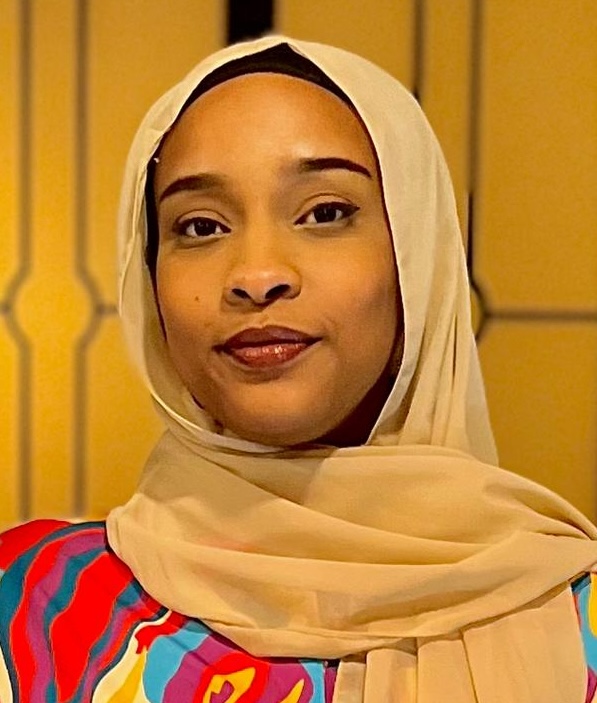
Samar Bengawi is a medical student by day, and a literature and music enthusiast by night. She was born and raised in the UAE and is now based in Georgia. She is never without a cup of coffee in hand, and is always “on the go,” chasing after one hobby or another. Passion in Sudanese politics runs in her blood and she considers herself a patriot who hopes to leave a memorable mark in the world.
Samar Bengawi is a medical student by day, and a literature and music enthusiast by night. She was born and raised in the UAE and is now based in Georgia. She is never without a cup of coffee in hand, and is always “on the go,” chasing after one hobby or another. Passion in Sudanese politics runs in her blood and she considers herself a patriot who hopes to leave a memorable mark in the world.