

Education in Sudan has always been more than just a curriculum; it is a reflection of our collective resilience. From the shade of the Sudanese khalwa to the digital classrooms of a displaced generation, the way we learn and teach has shifted dramatically alongside our history.
As we navigate an era of unprecedented transition, the role of the educationalist is no longer just to deliver information, but to anchor our students in a world that feels increasingly fluid. The profound and volatile period Sudan is currently experiencing, specifically the shift from a traditional society and a functioning state, into a state of sustained conflict and mass displacement demands more from the basic classroom teacher.
Historically, our educational system has been the backbone of Sudanese society, evolving through various reforms and cultural shifts. However, today’s updates are often written in the language of crisis and adaptation. Understanding this journey is essential for anyone who cares about the future of our nation.
The Fractured Present: Learning Under Fire
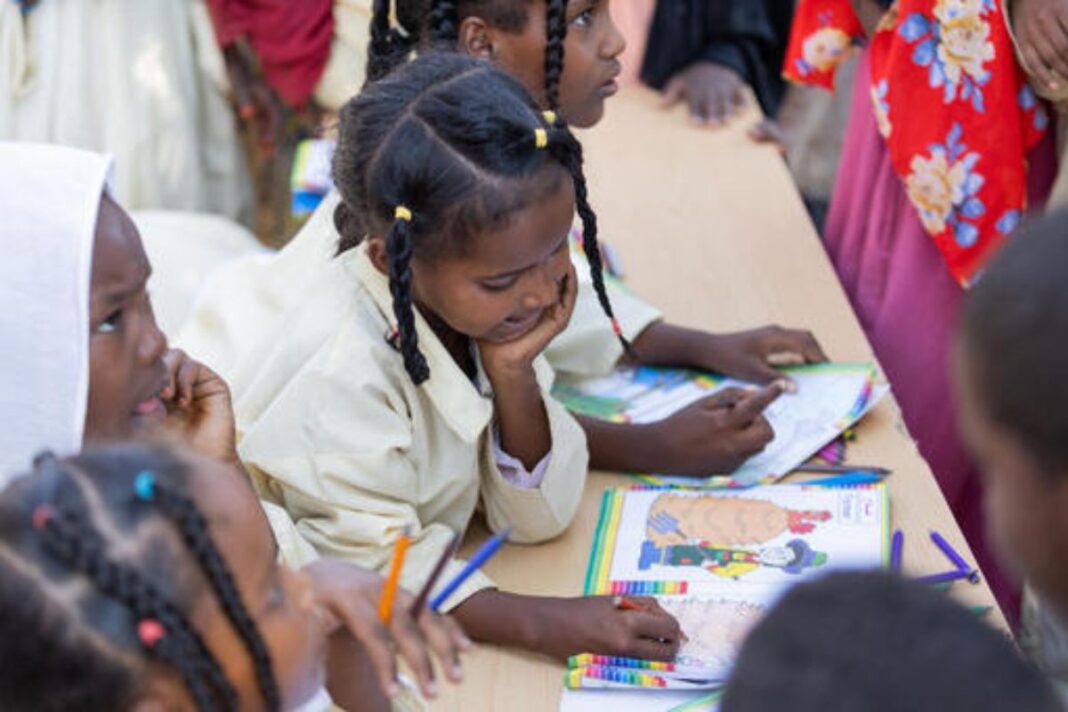
The ongoing war has not merely disrupted the academic calendar; it has dismantled the physical and psychological infrastructure of learning institutions. With schools repurposed as shelters for the internally displaced and universities scarred by looting and shelling, the “classroom” has become a concept rather than a place. For millions of Sudanese children, the school bell has been replaced by the silence of displacement or the roar of instability.
This crisis has birthed a staggering digital divide. While the resilient Sudanese diaspora and those in safer pockets have pivoted to e-learning, the vast majority of Sudan’s youth remain disconnected. Education is now a privilege dictated by geographic safety and internet bandwidth a reality that threatens to create a “lost generation.” We must confront the hard truth: when a child’s education is paused for years, the socio-economic repercussions echo for decades.
Redefining the Role: Beyond the Blackboard
In this modern Sudanese context, the educationalist must evolve. We are no longer mere conduits of mathematics or literature; we are trauma-informed mentors. The curriculum of tomorrow cannot ignore the reality of today. Psychosocial Support (PSS) must be integrated into the heart of our teaching frameworks. A student cannot solve x when they are preoccupied with the safety of their family.
Redefining education also means embracing a decentralised, community-led model. If the central system is paralysed, the “neighbourhood school” reminiscent of the traditional khalwa, but modernised with 21st-century skills — becomes the frontline of defense against ignorance. A return to communal responsibility is reappearing, where local volunteers and displaced teachers form micro-hubs of learning.
This is the “anchor” in the storm: the realisation that education can live in a tent, a community centre, or under a tree, provided there is a dedicated guide.
To bridge the gap, “low-tech” solutions must be adopted. High-definition solutions such as video calls are a luxury many cannot afford. Instead, practical and accessible methods offer greater reach. These include SMS-based learning that delivers short lessons and assignments via basic mobile phones; radio-broadcast lessons that allow children in remote or displaced communities to follow structured curricula; printed self-study packs distributed through local volunteers; and downloadable offline modules that can be shared via memory cards or Bluetooth without requiring constant internet access. Community learning circles — held in tents, mosques, or shared neighbourhood spaces — further ensure continuity by pairing these materials with guided instruction. Sudan’s future depends on our ability to democratise learning through solutions that prioritise access over sophistication.
The Architecture of Hope
The transition we are experiencing is painful, yet it offers a rare, albeit forced, opportunity to strip away the bureaucratic inefficiencies of the past. We are being asked to build a system that is as resilient as the people it serves.
Education is the only tool capable of breaking the cycle of conflict. By anchoring our students in critical thinking, peace-building, and practical skills, we ensure that when the dust finally settles, the youth of Sudan are not just survivors, but the architects of a new, stable nation.
In 2026, as a result of the ongoing war between the Sudanese Armed Forces (SAF) and the Rapid Support Forces (RSF) in April 2023, Sudan remains to be the world’s largest education crisis, in addition to being the world’s largest displacement crisis and worst humanitarian crisis. With over 13 Sudanese children out of school and nearly 90% of schools closed in conflict-heavy areas, online and digital education have evolved from “alternative options” into essential lifelines for survival and continuity.
The storm is fierce, but our anchor is deep. We aren’t just teaching for today; we are building the Sudan of tomorrow. In every lesson, a seed of peace is planted. In every student, a nation is reborn.

Nasreen Mukhtar is a writer and educator who believes that words are never just ’empty’ — they are the most powerful tools for transformation we possess. With 23 years of experience in educational leadership and a deep specialisation in ESL (English as a second language), she blends technical structure with a passionate commitment to the ‘soul’ of every message. Her mission is to bridge the gap between clarity and emotion, using her passion for storytelling to spark meaningful change and foster authentic self-expression. She doesn’t just write to inform; she writes to reach others on a deeper level.