
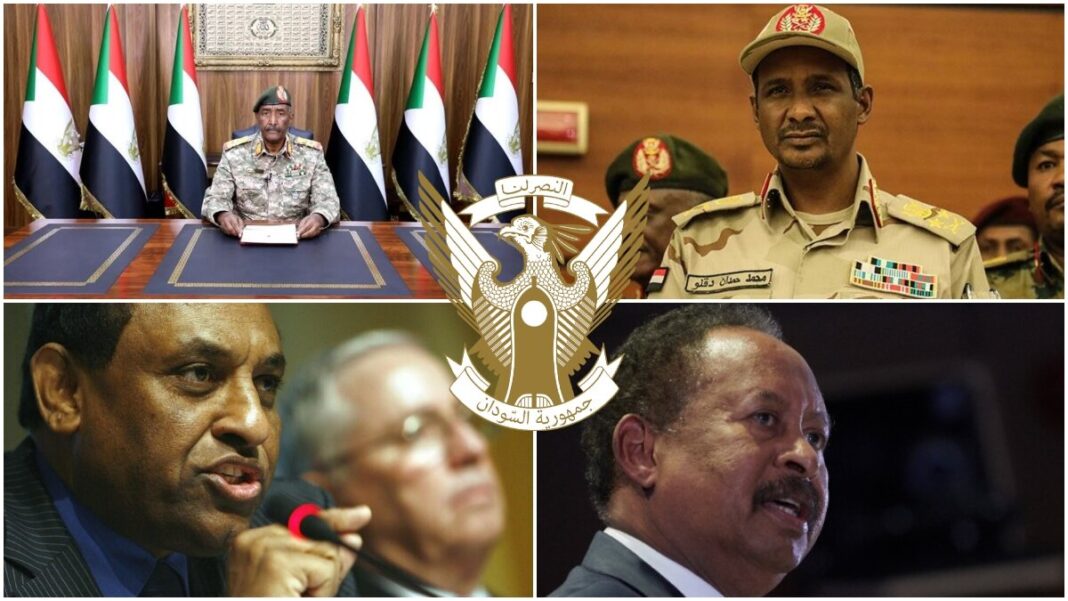
Sudan’s current government structure is deeply unstable and fragmented, shaped by a series of upheavals — from revolution to military coup to a devastating war.
The country is now facing the world’s largest displacement crisis and one of its gravest humanitarian emergencies. Political authority in Sudan is now divided as a result of the ongoing war between rival armed forces led by competing generals. As such, Sudan’s government structure cannot be understood in isolation from the events that produced it; any explanation must account for the revolutionary moment, the collapse of civilian transition, and the descent into armed conflict.
Understanding Recent Events
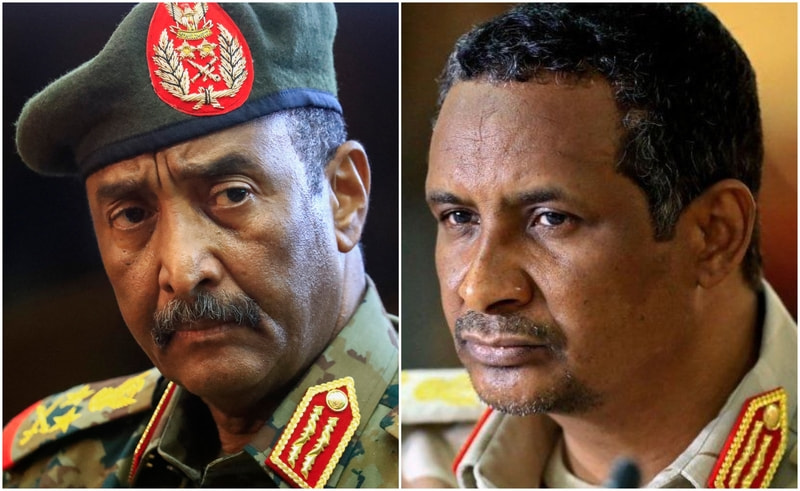
The current war, which began in 2023, is being fought between the Sudanese Armed Forces (SAF) and the paramilitary Rapid Support Forces (RSF), two rival armed groups led by competing generals vying for power. Abdel Fattah Abdelrahman Al Burhan, widely recognised as Sudan’s de facto ruler, heads the military government and leads the SAF. His rival, Mohamed Hamdan Dagalo Musa (Hemedti) commands the RSF, a militia with roots in the Darfur region and historical ties to the Janjaweed, a group long associated with serious human rights abuses, including ethnic cleansing.
In 2019, a popular revolution led to the downfall of longtime Sudanese president Omar Al Bashir and his regime, the National Congress Party (NCP), which had ruled the country for nearly three decades. On 11 April 2019, Al Bashir was removed from power in a military coup. Shortly thereafter, Abdel Fattah Al Burhan assumed the role of de facto head of state, with Mohamed Hamdan Dagalo (Hemedti) as his deputy, and the two formed the Transitional Military Council (TMC).
However, mass protests continued, with Sudanese citizens demanding a fully civilian government after decades of military rule. This pressure led to an agreement between the TMC and the Forces of Freedom and Change (FFC) — the leading civilian coalition behind the revolution — to establish an interim civilian-led transition. As part of this agreement, a joint 11-member military–civilian body, the Transitional Sovereign Council (TSC), was formed to govern the country for a transitional period of three years and three months. Leadership of the council was to rotate, with the military chairing the council for the first 21 months, followed by civilian leadership for the remaining 18 months. The transition was intended to culminate in democratic elections scheduled for 2022.
However, as many had feared, the TMC failed to uphold its end of the agreement. In October 2021, Burhan led a military coup that dissolved the civilian–military transitional government, arrested Prime Minister Abdalla Hamdok and other officials of the civilian government, and declared a state of emergency. Burhan claimed the takeover was intended to “rectify” the country’s path, but it drew widespread international condemnation, led to the suspension of key international aid, and sparked mass protests across Sudan.
In the aftermath of the coup, Burhan and Hemedti shifted from allies to arch-enemies. Deepening power struggles, particularly disputes over authority, control of the state, and the planned integration of the RSF into the national army, were among the key factors that drove the former allies into open conflict, ultimately leading to the current war.
Sudan’s Current Government Structure
Political authority is divided. The SAF-aligned transitional government controls parts of the country (including Khartoum). The internationally recognised transitional government is led by a sovereignty council and prime minister and operates from Khartoum. While a parallel RSF-aligned government claims authority in RSF-held areas in the west, mainly the Darfur region. A formal national legislature remains unrealised amid ongoing conflict.
Official and Internationally Recognised Government
Sudan’s internationally recognised government is nominally a transitional administration led by a Prime Minister, currently Kamil Idris, appointed by the Transitional Sovereignty Council (TSC). The TSC and Burhan’s cabinet jointly act as the interim legislative authority. The government recently returned to Khartoum from Port Sudan in January 2026, aiming to restore public services and state institutions after nearly three years of war.
The Transitional Sovereignty Council (TSC)
The TSC is the highest governing authority in the country, and the internationally recognised collective head of state of Sudan. It was orginially formed on 21 August 2019 by the August 2019 Draft Constitutional Declaration, and restructured after Burhan’s 2021 coup. The council’s formation came after the revolution and the fall of former Sudanese President Omar Al Bashir, and represents a power-sharing agreement between civilian and military forces in Sudan. t is dominated by military leadership under Burhan. Key members of the TSC:
- Head and Chairman: General Abdel Fattah Al Burhan
Deputy Chairman: Malik Agar Eyre - Military members (SAF): Lieutenant General Shams Al Din Kabbashi, Lieutenant General Yasser Al Atta, and Lieutenant General Ibrahim Jabir.
- Other members and representatives include Raja Nicola (Coptic Christian representative), and Salaheldin Adam Tor (Juba Peace Agreement party).Other members from the Juba Peace Agreement include El Hadi Idris Yahya and El Tahrir Abubakr Hajar.
The Unrecognised RSF-led Parallel Government
The RSF, led by Hemedti, has declared a parallel government in territory it controls, notably parts of Darfur. The Sudan Founding Alliance, also known as the Government of Peace and Unity or the Sudan Founding Alliance (TASIS), was initiated following a meeting held by the RSF in Nairobi, Kenya, on 18 February 2025, with the founding charter signed on 23 February 2025. It has its own Presidential Council and executive structure aimed at challenging Burhan’s administration. It was created as a coalition of anti-governmental political factions and paramilitary forces to establish a “Government of Peace and Unity” to rule areas controlled by the RSF. On 1 July 2025, the alliance officially announced its leadership body, appointing Hemedti as president. The alliance announced its parallel government structure on 16 July 2025, with its headquarters in Nyala, South Darfur.
Main Political Coalitions and Power Blocs
Forces of Freedom and Change (FFC)
Once the core civilian force after 2019, the Forces of Freedom and Change (FFC), as a unified force no longer exists. It has fragmeneted and now split into two factions still matter:
FFC–Central Council: Previously dominant, now weakened and internally divided.
FFC–Democratic Bloc: Includes parties more aligned with the SAF or pragmatic engagement with military power.
Somoud (Civil Democratic Alliance for Revolutionary Forces)
Somoud, also known as the Civil Democratic Alliance for Revolutionary Forces, is a broad civilian political coalition or alliance in Sudan that brings together political parties, trade unions, professional associations, resistance committees, and civil society organisations united around ending the war and promoting a democratic, civilian-led future for Sudan. It was formed in 2025 after splits within earlier civilian anti-war alliances, and is led by Hamdok. Its founding principle is that there is no military solution to Sudan’s crisis — only a political path rooted in civilian participation, accountability, inclusion, and grassroots legitimacy. The group rejects alignment with armed factions and instead advocates for peaceful, diplomatic, and political engagement to end the conflict and build a democratic, just state. Somoud also works on humanitarian aid, strengthening the rule of law, empowering women and youth, and promoting social cohesion. In the current conflict landscape, Somoud positions itself as a neutral civilian alternative to both warring military factions, SAF and RSF, and has engaged with international actors to support ceasefire and democratic transition efforts.
Taqaddum
A civilian political coordination bloc led by former prime minister Abdalla Hamdok. Focuses on ending the war through negotiations and restoring a civilian democratic transition. Often overlaps in membership and goals with Somoud, but is more of a political umbrella and diplomatic platform than a mass coalition.
Who’s Who and What’s What
Abdel Fattah Abdelrahman Al Burhan
Born in 1960, Lieutenant General Abdel Fattah Abdelrahman Al Burhan is currently serving as de facto head of Sudan, and the former chairman of Transitional Military Council (TMC). He assumed power as the head of the TMC after former Chairman Ahmed Awad Ibn Auf resigned and transferred control. He was formerly the General Inspector of the Sudanese Armed Forces (SAF). He now leads the SAF in the war against the Rapid Support Forces (RSF), led by Mohamed Hamdan Dagalo Musa (Hemedti).
Sudanese Armed Forces (SAF)
Led by Lieutenant General Abdel Fattah Abdelrahman al-Burhan, the Sudanese Armed Forces (SAF) comprise between 100,000 and 200,000 active personnel and include the army, navy, air force, and other defense units. They are currently engaged in the ongoing war against the Rapid Support Forces (RSF).
Mohamed Hamdan Dagalo Musa (Hemedti)
Born in 1975, General Mohamed Hamdan Dagalo Musa, better known as Hemedti, is the head of the Rapid Support Forces (RSF), which fully incorporated the Janjaweed militias. He previously served as the deputy head of the Transitional Military Council (TMC) and now leads the newly established, unofficial, and internationally unrecognised Sudan Founding Alliance, also referred to as the Government of Peace and Unity (TASIS), which operates in RSF-controlled areas in western Sudan. Hemedti comes from humble origins. His family belongs to the Mahariya section of the camel-herding, Arabic-speaking Rizeigat community that spans Chad and Darfur. He later joined the Janjaweed and quickly rose through the ranks to become a commander, eventually emerging as the dominant figure he is today.
Rapid Support Forces (RSF)
Led by General Mohamed Hamdan Dagalo (Hemedti), the RSF are a paramilitary force with 100,000 to 150,000 personnel primarily composed of former Janjaweed militias. The Janjaweed originated in western Sudan and eastern Chad and have long operated across Sudan’s peripheries. They are responsible for atrocities and massacres in Darfur, the Nuba Mountains, South Sudan, and, more recently, Khartoum. Prior to the war, the RSF were formally administered by the National Intelligence and Security Service (NISS) and operated under the command of the Sudanese Armed Forces (SAF) during military campaigns. Over time, however, the RSF evolved into a powerful, autonomous force. Today, they operate independently and are direct rivals of the SAF, fighting against them in the ongoing war. Throughout the conflict, the RSF have committed widespread and heinous crimes, including mass looting, the killing of civilians, mass rape, ethnic cleansing, and other grave human rights violations.
Kamil Idri
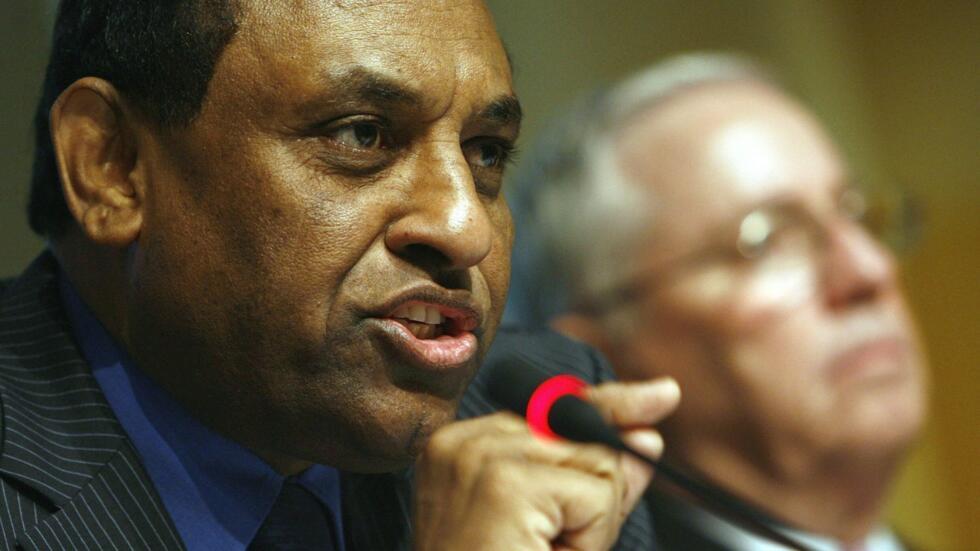
Born in 1954, Kamil Idris was appointed prime minister in May 2025 as part of changes to his sovereign council in the midst of Sudan’s ongoing war. He is career diplomat and a former United Nations (UN) official. He previously ran as an independent candidate in Sudan’s presidential election in 2010 against Al Bashir.
National Congress Party (NCP)
The NCP has governed Sudan since it was founded out of the National Islamic Front (NIF) in the mid 1990s. Former Sudanese President Omar Al Bashir led the NCP until his fall in April 2019 in 2019 coup d’état as part of the Sudanese revolution. The NCP was then officially dissolved, but it is still informally influential. It is often accused of operating behind the scenes, particularly within the SAF-controlled institutions.
Omar Al Bashir
Born in 1944, Omar Hassan Ahmad Al Bashir served as the seventh president of Sudan for 30 years from 1989 to 2019 and is founder of the National Congress Party (NCP). He came to power in 1989 when he led a military coup that ousted former prime minister Sadig Al Mahdi. In 2009, the International Criminal Court (ICC) issued an arrest warrant for Al Bashir for crimes against humanity, war crimes and genocide in Darfur. When protests began in December 2018, Al Bashir faced large-scale protests, which demanded his removal from power. On 11 April 2019, Al Bashir was ousted in a military coup d’état, which brought the Transitional Military Council (TMC) to power. According to TMC, Al Bashir is currently in Kobar prison in Khartoum.
Abdalla Hamdok
Born in 1956, Abdalla Hamdok Al Kinani is a Sudanese public administrator who served as the 15th Prime Minister of Sudan from 2019 to October 2021, and again from November 2021 to 2 January 2022. Prior to his appointment, Hamdok served in numerous national and international administrative positions. He is still influential, and runs Taqaddum, a civilian political coordination bloc led by former prime minister Abdalla Hamdok. It focuses on ending the war through negotiations and restoring a civilian democratic transition. It often overlaps in membership and goals with Somoud, but is more of a political umbrella and diplomatic platform than a mass coalition.
This article has been produced with AI assistance.
Related posts: