
The conflict that erupted in Sudan in April 2023 is more than a struggle for power; it is an economic catastrophe unfolding in real time.
What began as a political power struggle between the Sudanese Armed Forces (SAF), led by General Abdul Fattah Al Burhan, and the paramilitary Rapid Support Forces (RSF), led by Mohamed Hamdan Dagalo, also known as Hemedti, has turned into one of the most severe socio-economic crises. As the headlines focus on the fighting, a deeper, devastating story is playing out in the lives of millions, as not only the buildings are being destroyed, but society and the fragile economy keeping the country together are now being shattered.
The Displacement Crisis
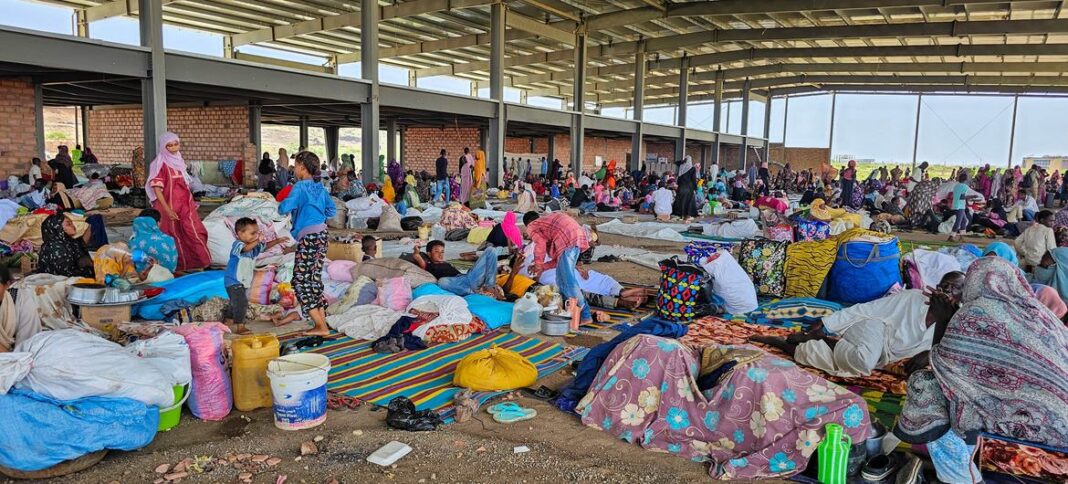
The most immediate and heartbreaking impact is the displacement crisis. Sudan now holds the grim titles of the world’s worst humanitarian crisis and the world’s largest displacement crisis, with 12 to 14 million people forced from their homes due to conflict, many fleeing to safer parts of the country or across borders. This mass movement places an unbearable strain on already fragile host communities and neighboring nations, turning a national disaster into a regional humanitarian crisis itself.
The Economy in Free Fall
The economic shock is staggering. Even pre-conflict, the country struggled with inflation, unemployment, and declining production. According to World Bank and Consortium of International Agricultural Research Centers (CGIAR) projections, the economic value measured in GDP has shrunk by 42% from 2022 levels by the end of 2025, resulting in the loss of almost half of the nation’s production capacity. Direct losses in productive sectors have exceeded $90 billion.
Khartoum, the war’s epicentre, served as Sudan’s economic and financial hub. Its destruction has weakened important industrial and services sectors. With more than 60% of factories shut down, manufacturing, oil refining, transport and trade have all suffered massive losses, leading to the disappearance of millions of jobs. CGIAR reported that the widespread unemployment is pushing around 7.5 million more people into poverty, adding to the tens of millions of people who were already struggling, increasing the poverty rate to well over two-thirds of the population and around 23 million citizens being below the poverty line.
A Blow to Livelihoods
For the majority of Sudanese, life revolves around agriculture, the backbone of rural livelihoods. The conflict has hit this sector hard, disrupting farming activities, blocking access to markets, and driving up the costs of farming. Crop production is significantly down, threatening future harvests and worsening a serious food insecurity crisis that now affects over half the population. For many, starvation poses a threat that is as dangerous as violence.
Unemployment has skyrocketed. Unemployment was already high pre-conflict, but by 2024, World Bank estimates suggested it had surged to around 47% of the labour force, driven by widespread business closures and economic collapse, and International Monetary Fund (IMF) studies reported the unemployment rates rose into 60.6% by October 2025. This sustained loss of jobs is not just a statistic, it means households cannot buy food, afford healthcare, or plan for the future. The collapse of formal employment has forced many into informal work or total dependency on humanitarian aid.
The Social Breakdown
Beyond the economic metrics, the social costs are incalculable. Access to basic services has been destroyed by the ongoing war in Sudan. The healthcare system is on the edge of collapse, with most hospitals in conflict areas nonfunctional. Furthermore, the World Health Organization (WHO) has warned about escalating outbreaks such as cholera, malaria, and dengue fever that have already taken the lives of thousands and are now a major risk.
The economic collapse has torn through Sudanese society, dismantling its most essential institutions. Most schools, universities and other educational institutions have closed and later looted and destroyed by the war. Many schools in safe zones are refuge for the displaced. According to UNICEF, over 10 million children are now out of school. Some educational institutions have relocated to safer states. Some such as the University of Khartoum (UofK) have also recently semi-reopened in Khartoum and other states are slowly returning to normal life. Hospitals struggle to function without electricity or basic medical supplies. At the same time, doctors, teachers, and engineers, the backbone of Sudan’s educated class, have fled the country, leaving behind a dangerous and lasting gap in human capital.
A Path Forward
Sudan’s recovery will take more than peace agreements. It will require rebuilding schools and hospitals, restoring agriculture, stabilising the currency, and investing in people. International aid alone cannot solve these challenges; long-term economic planning and accountability must follow. The resilience of the Sudanese people remains the nation’s strongest resource.
Sudan’s war is an economic disaster and a profound social tragedy. The longer the fighting continues, the more deep-rooted the poverty becomes, the higher the cost of recovery rises, and the further the country falls behind on the development goals that could have secured a more stable future for its people.
For the people of Sudan, the fight for survival continues long after the guns fall silent.

Raghad GA Adam is a senior high school student, artist, debater. She spends her days sketching, writing, and reading everything she can get her hands on. An active participant in Model United Nations (MUN) conferences, as she loves debating big ideas as much as she loves turning her thoughts into art.