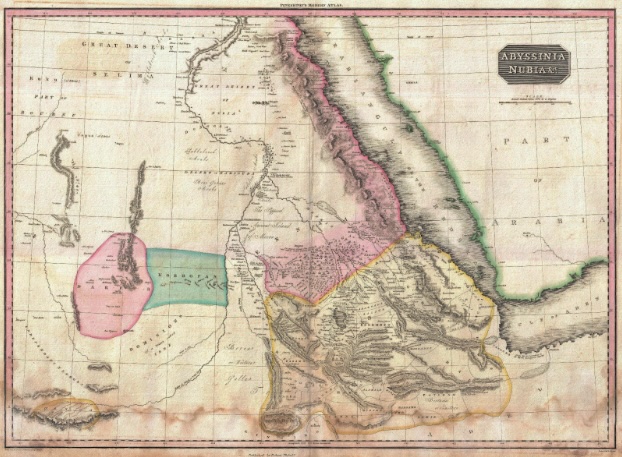
The 1818 Pinkerton map of Abyssinia and Nubia, depicting the areas of modern Sudan, highlighting the borders of Darfur, Kordofan, and Sennar. Source: Wikimedia Commons
When compared to most of its fellow African and Arab nations, Sudan’s name appears odd.
Countries like Nigeria or Chad are named for geographical landmarks. Countries such as Tunisia are named for their capital city, while others, such as Syria, are named for ancient kingdoms.
Yet, rather than Nilia, Khartoum, or Nubia, both colonisers and the post-independence generation that supplanted them chose “Land of the Blacks” — as-Sudan. Why? What could have been chosen instead, keeping in mind Sudan’s pre-colonial history of state building?
Sudan in Antiquity

The stela of Kushite prince Akinidad, which uses the term “qes” (Kwəsha/Qosh/Kush/Kosh) to refer to their kingdom, although it is not visible in this particular photo. Source: Khan Academy
To explore this question, it’s necessary to look at the first recorded states in what we now call Sudan. This inevitably draws our focus to the Kingdom of Kush, established in 2500 BCE in Nubia, the land along the cataracts of the Nile. Kush was not the only organised society in the region, however, as most of these other proto-Sudanese societies did not use writing, it is more difficult to recover their names for their land.
The Kushites, on the other hand, were in extensive contact with ancient Egypt and Rome, putting them on the radar of foreign geographers, thus allowing insight into the terms used for their land. Principal among them was the Egyptian term Kuʿush, used to refer to the land of Nubia since at least the 20th-century BCE, which was borrowed into various languages, such as Ancient Greek and Biblical Hebrew. This term was most likely rooted in the term Kwəsha (possibly pronounced Qosh, Kush, or Kosh), used in native Kushite writing to refer to their kingdom. Historians have also widely identified the Egyptian terms Ta Seti (“land of the bow”) and Ta Nehesy (“land of the bronze-skinned”) with Nubia and its inhabitants.

In addition to terms derived from Kwəsha, Graeco-Roman authors used another term for Kushite territory — Aethiopia, a Greek term usually translated as “burnt faces.” This term continued to be used as late as the 15th-century to connote not only the peoples of Sudan, but people all over Africa and even India.
Medieval Sudan
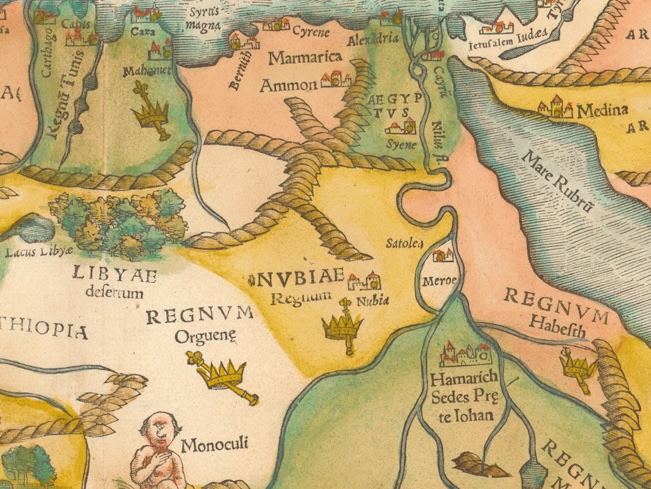
A 16th-century map of Africa by German cartographer Sebastian Münster, depicting “NVBIÆ Regnum” (Kingdom of Nubia), in the approximate location of modern northern Sudan. Source: Princeton University
After the fall of Kush in the 4th-century, Kwəsha-based terms for the region fell by the wayside. By the 5th-century, King Silko conquered northern Nubia, declaring himself “King of the Noubades and all Aethiopians,” establishing the kingdom of Nobadia, which would form the basis for future terms to refer to Sudan’s far north, such as Latin Nubia and Arabic Nuba.
While the term Noubades was used in Greek, when writing in Old Nubian, locals used the term Migitin Gul (Migi Land) instead, suggesting Migi was their indigenous self-description. Medieval Arab geographer Al Aswani singles out Nobadians as one people speaking one language, suggesting the terms Noubade/Migi had an ethnolinguistic dimension.
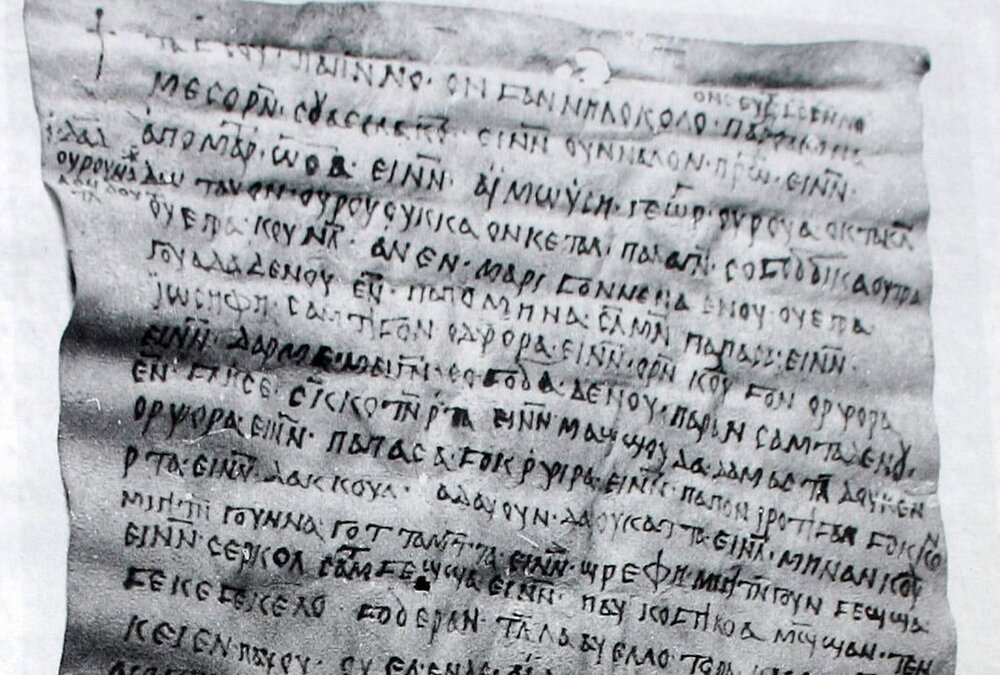
A Nobadian royal decree in the Old Nubian language, ancestral to the Nobiin language spoken by the Halfawi, Sikkot, and Mahas tribes, using the toponyms “Migi” and “Migitin Gul” in the 8th and 12th lines. Source: Vincent van Gerven Oei
The use of ethnolinguistic labels to designate a kingdom was likely paralleled south of Nobadia, both in the Old Dongola-centred kingdom of Makuria (inhabited by the Makurati) and Soba-centred kingdom of Arwa (inhabited by the Arwadi). These names were adapted into Greek as Makurae and Arwodia, and Arabic as Maqurra and ʿAlwa. Often, foreign authors would lump these two kingdoms with their northern neighbour under the broad category of Nubian, a practice that continues to this day.
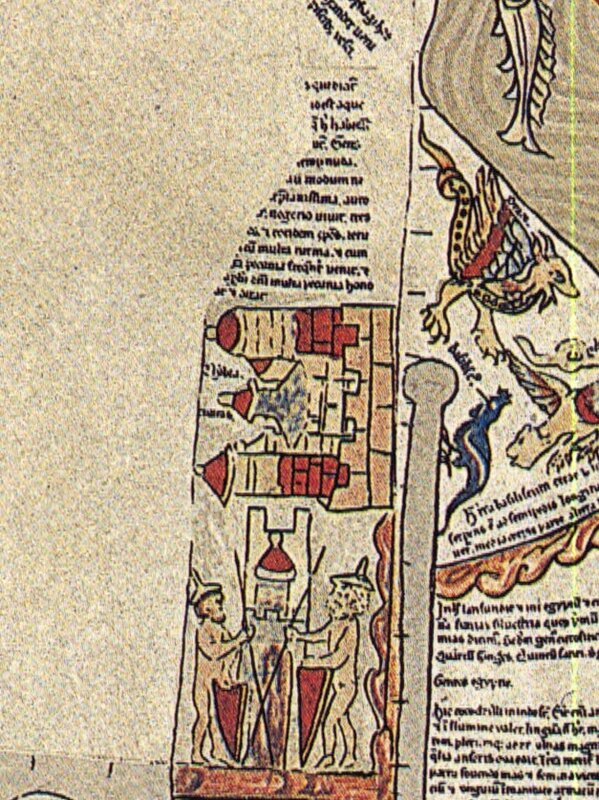
This conflation may be the result of their unification in the 12th-century, when they were brought under one crown. In Old Nubian, this united kingdom was referred to as Dotawo, a geographic term, in contrast to the regional and linguistic connotations of Migi/Makur/Arwa. Made up of the Old Nubian terms “upper” and “lower,” the name references the king’s dominion over the upper and lower Nile, although foreign geographers continued to prefer an-Nuba, Nubia, and Aethiopia.

12th-century world map by Arab geographer Al Idrisi, listing “Al Tajuwin” (people of Tajuwa) west of “an-Nuba” (Nubia/Nubians). Source: 1001 Inventions
Neighbouring Dotawo to the west was the kingdom of Tajuwa, inhabited by the predecessors of the modern Daju ethnic group. Assuming the medieval term had the same ethnolinguistic meaning as modern Daju, this would place the toponym within the broader regional trend found in Migi/Makuria/Arwa. It may be the case that the areas beyond Dotawan and Tajuwan control followed this pattern, similar to the modern use of Rol Naath (Nuer Land) by Nuer people in South Sudan. Without written documentation or systematic study of oral history, however, this remains mere speculation.
Post-Medieval Sudan
Around the 15th-century, Tajuwa and Dotawo fell like Kush before them. The Tajuwa were replaced by the Tunjur Kingdom, also named for their ruling tribe. Dotawo, on the other hand, was split among two sultanates (Islamic kingdoms). In the north was the Abdallab Sultanate, Abdallab meaning “the descendants of Abdalla,” referencing founding Sultan Abdalla Jamma’, with the -ab ending borrowed from the East Sudanese Beja language.
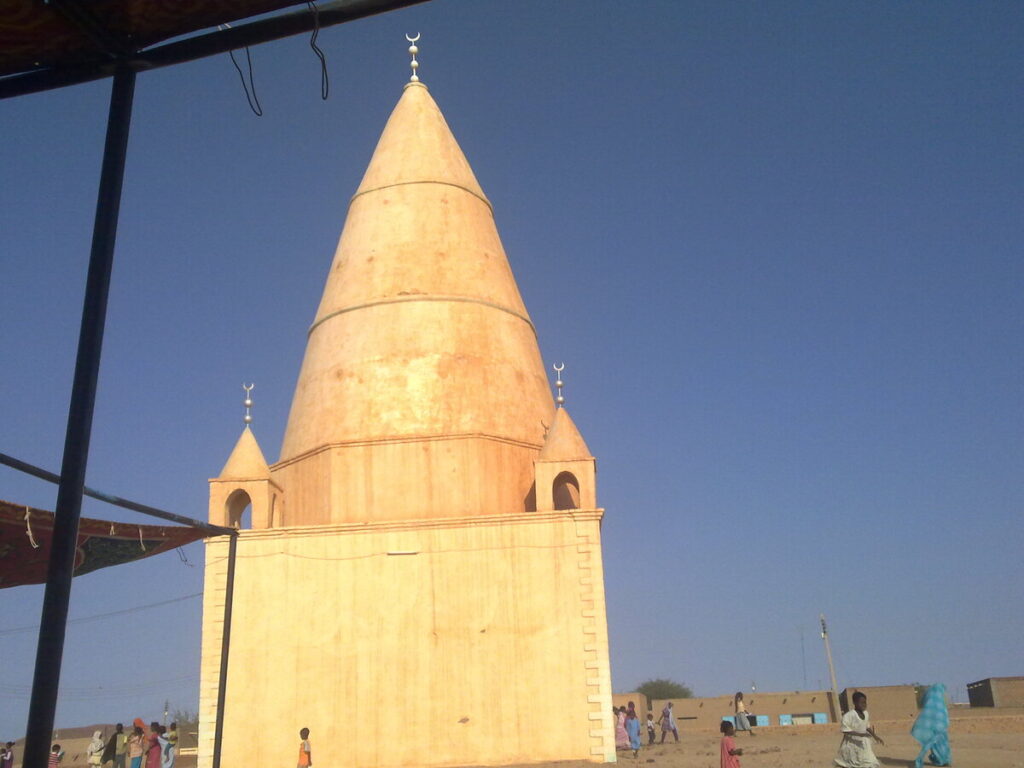
The tomb of Ajib Al Manjuluk, an Abdallabi sheykh. Source: Wikimedia Commons
The southern portion of Dotawo, on the other hand, was ruled by the Funj, whose name means “foreigner” in various southern Sudanese languages, likely referring to their “foreign” religion of Islam. The Funj conquered the Abdallab, hence leading to the whole area being named the Kingdom of Sinnar, referencing their capital city. Funj sources claim Sinnar is the name of a girl who once lived at the site of the capital, although Sudanese linguist Awn Al Sharif Gasim speculates this term stems from the Nubian term Essin Arti, “isle of water,” a reference to the city’s location between two rivers. Despite the ascension of Sinnar, however, the earlier term Nubia endured in foreign geography.
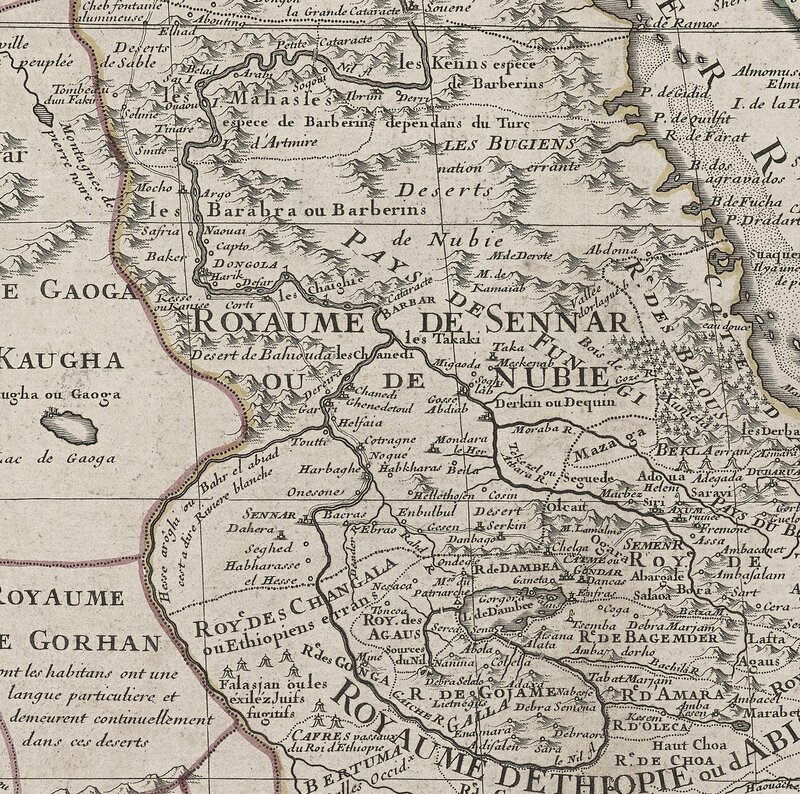
An 18th-century map by French cartographer Guillaume Delisle depicting “The Kingdom of Sennar, or Nubia.” Source: Wikimedia Commons
The Funj Sultanate’s founding was followed by the fall of their western neighbour, the Tunjur, who were supplanted by the Muslim Keira dynasty, hailing from the local Fur tribe. Hence, the region took the name of Dar Fur, land of the Fur, the term dar being borrowed from Arabic, a testament to the influence of Arabic among the Keira.
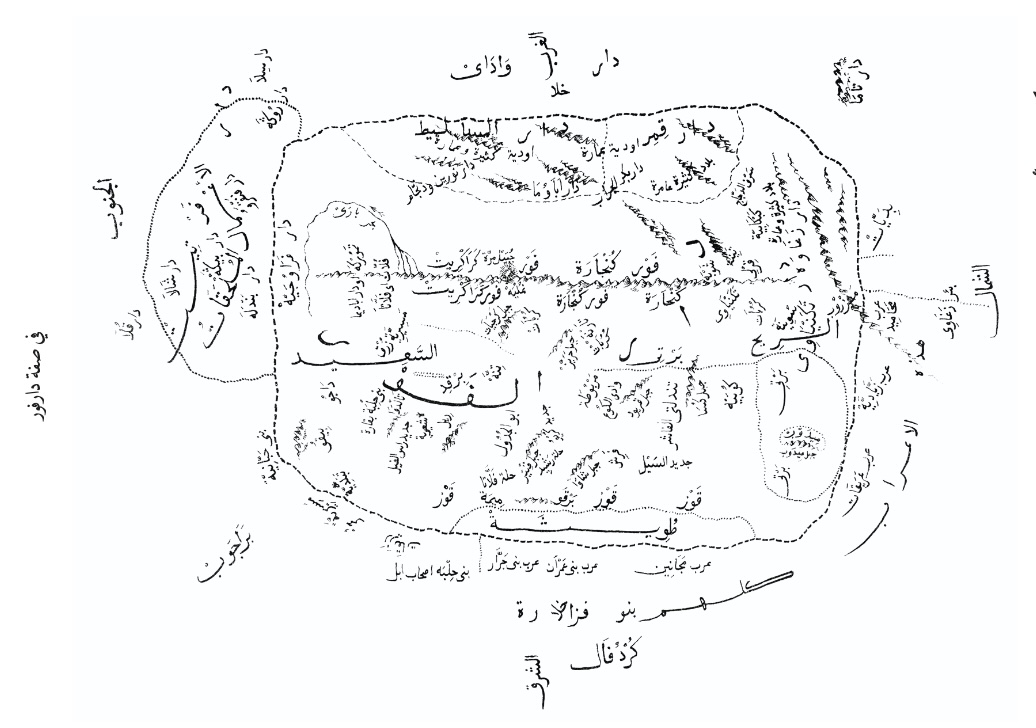
It is in this era we see the emergence of the term as-Sudan, used to describe the general area that the Fur and Funj Sultanates fell into. Originating in medieval Arab geography, this term was a catch-all for the lands south of the Sahara, similar to Greek Aethiopia.
Modern Sudan
Attentive readers will notice that, although the aforementioned kingdoms ruled within what we call Sudan today, none of them ruled all of modern Sudan. While the peoples of what we call Sudan did interact, it wasn’t until the arrival of the Ottoman Empire in 1820 that they were merged into a “Sudan” distinct from the rest of Africa.
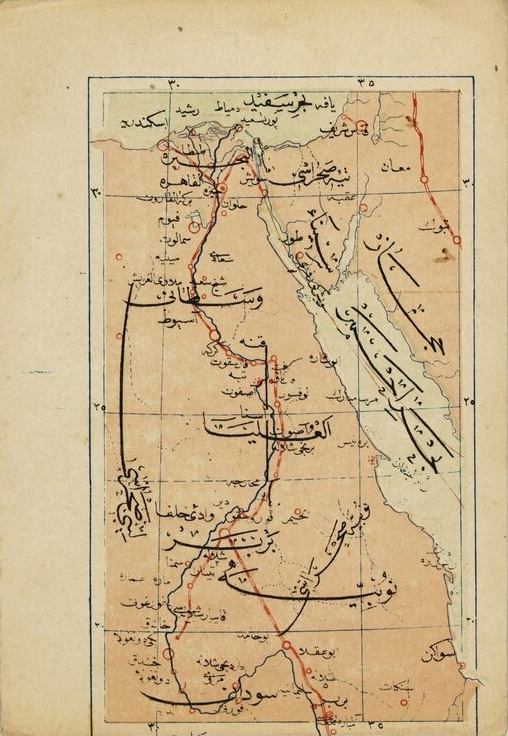
This terminology was inherited by British colonialists, who, in 1899, conquered the territory, naming it the Anglo-Egyptian Sudan. Initially, they used the terms sudany and Sudanese exclusively for non-Arab and non-Muslim Sudanese, similar to Funj historians. Eventually, the term was expanded to all Sudanese tribes, as a means of distinguishing them from Egyptians. When the Sudanese nationalist movement emerged in the 20th-century, it aimed to unite the peoples of Anglo-Egyptian Sudan under a single flag, using the term “Sudanese” as the basis for an all-encompassing civic identity.
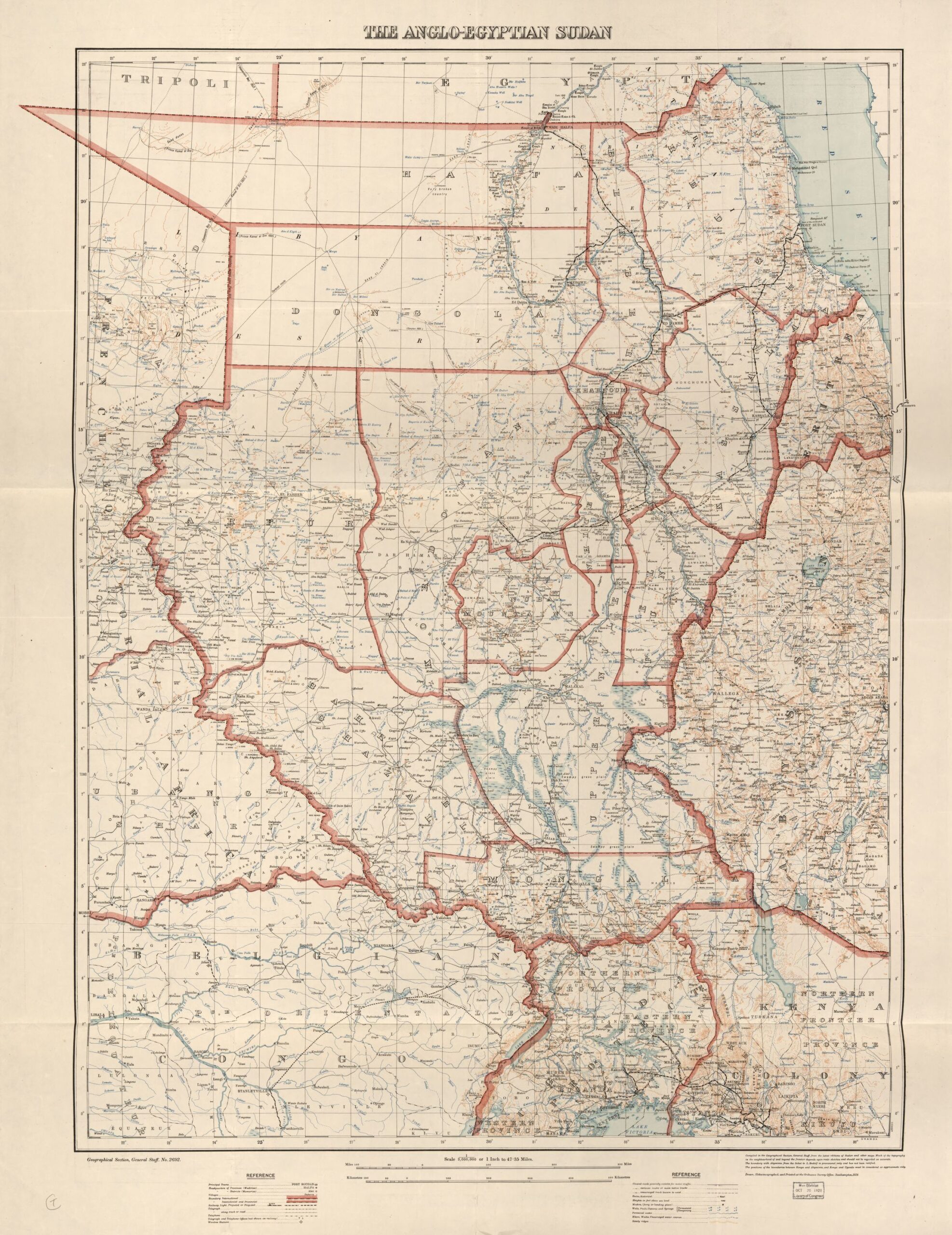
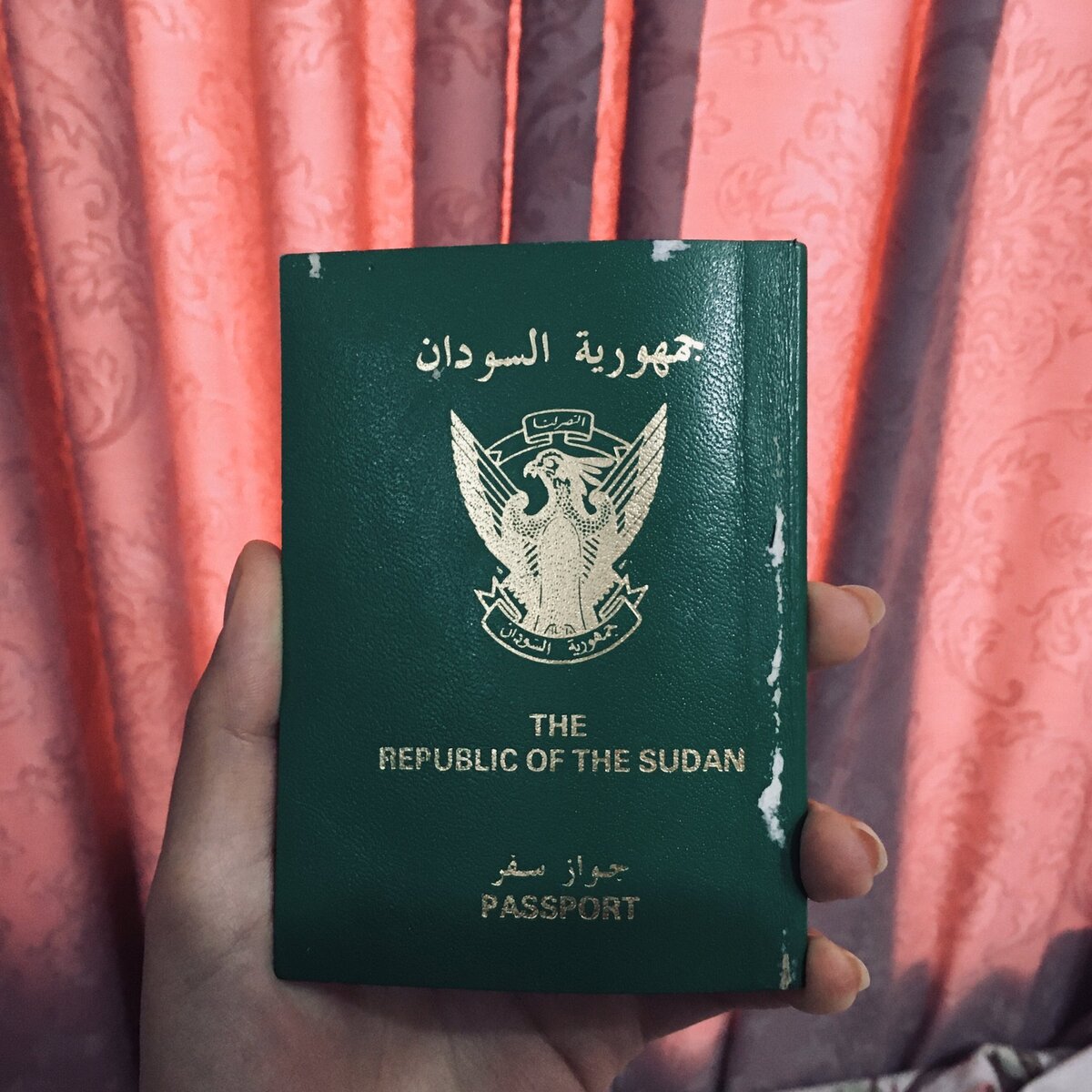
Some Sudanese Arabs initially rejected the name, recalling its historic meaning, and suggested “Sinnar” as an alternative. For unclear reasons — perhaps mere expedience — the Sudanese nationalist movement settled on “the Republic of the Sudan,” which continues to be the country’s official name.
Unity, however, was not as easy as Sudanese nationalists had hoped. By 2011, the South Sudanese populace overwhelmingly voted for secession, leading to debates on a new name for their new country. Names considered included:
- The Kush Republic
- The Nile Republic
- Azania (a Greek name used for southern East Africa)
- Juwama (a portmanteau of Juba, Wau, and Malakal, three of South Sudan’s major cities)
According to the South Sudanese information minister at the time, using the already established “South Sudan” is more convenient, and consequently, remains in use today.

Every now and then, I come across people — admittedly, mostly online — who have some misgivings about the Sudans’ current names. Some decry its generic nature; after all, Black people are not unique to Sudan. Others decry its origin in foreign terminology. For some, the current name is even emblematic of what they find to be the root cause of Sudan’s conflicts: unity based on colonially-designed borders, which must be revised along with the name.
This article isn’t the place to weigh in on the debate. However, as is the case with the study of ancient Sudanese personal names, study of ancient toponyms can allow insights into what our ancestors saw as important, how they saw themselves, and how others saw them. Were they united by their geography? The ethnic origin of their rulers? Their physical attributes? Rather than look at these kingdoms’ names as a pool of labels that can be stripped from their context and slapped onto the country, it’s important to ask what values they express — and how much they reflect the Sudan we want to build.
500WM Columnist Hatim Eujayl is a Sudanese-American writer involved in various projects to promote Sudanese culture. His most famous works include the Sounds of Sudan YouTube channel, the Geri Fai Omir Kickstarter, and the Sawarda Nubian font. More of his writing can be found on his Substack, ‘My Sudani-American LiFE,’ where he discusses Sudanese literature and cinema. He can be reached on Instagram @massintod or by email at [email protected].